


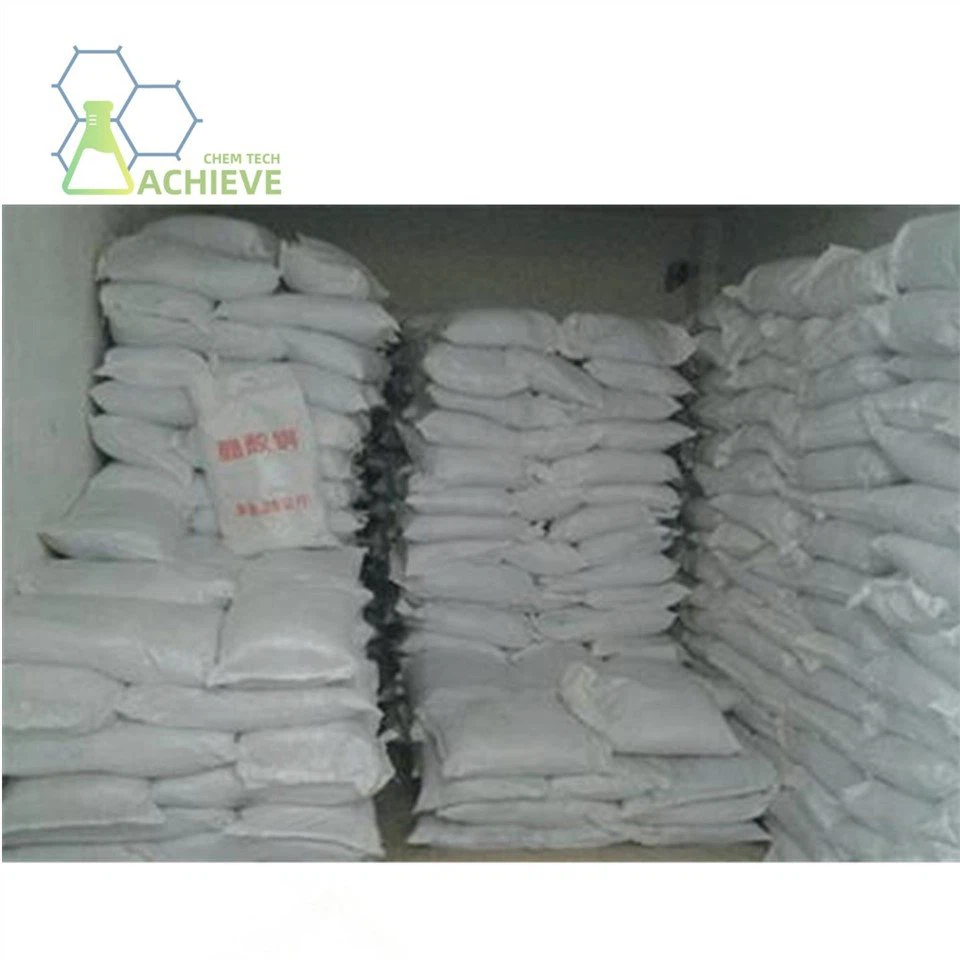


Shaanxi BLOOM Tech Co., Ltd. is one of the most experienced manufacturers and suppliers of pure melamine cas 108-78-1 in China. Welcome to wholesale bulk high quality pure melamine cas 108-78-1 for sale here from our factory. Good service and reasonable price are available.
Pure Melamine sale is used as an analytical reagent for organic elements, as well as for the synthesis of organic and resin, and as a tanning agent and filler for leather processing. Organic microanalysis, standard sample for determination of nitrogen, organic synthesis, synthetic resin. The chemical properties are stable at room temperature and nonflammable. The aqueous solution is weakly alkaline (pH = 8). It can form melamine salt with hydrochloric acid, sulfuric acid, nitric acid, acetic acid and oxalic acid. In neutral or slightly alkaline conditions, it condenses with formaldehyde to form various hydroxymethyl melamine, but in slightly acidic conditions (pH = 5.5 ~ 6.5), it reacts with hydroxymethyl derivatives to form resin. In the case of hydrolysis of strong acid or strong alkali aqueous solution, the amine group is gradually replaced by hydroxyl group to form cyanuric acid diamide, further hydrolyze to form cyanuric acid monoamide, and finally form cyanuric acid.

|
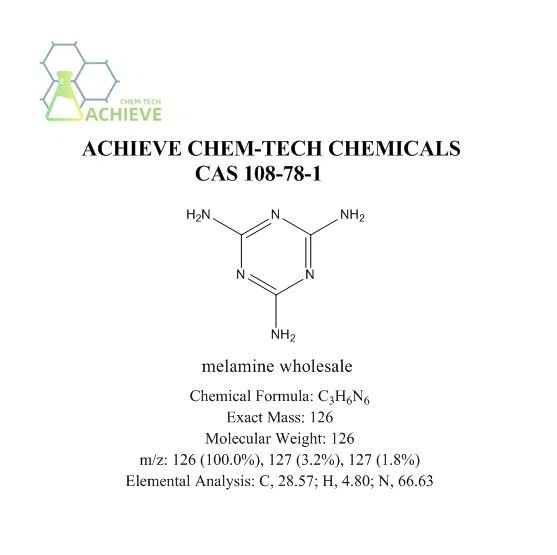
Chemical Formula |
C3H6N6 |
|
Exact Mass |
126 |
|
Molecular Weight |
126 |
|
m/z |
126 (100.0%), 127 (3.2%), 127 (1.8%) |
|
Elemental Analysis |
C, 28.57; H, 4.80; N, 66.63 |


Pure Melamine is an important organic chemical raw material with the chemical formula C ∝ H ₆ N ₆. Since its discovery in the 19th century, melamine has been widely used in various industrial fields due to its unique chemical properties and stability. However, in recent years, the illegal addition of melamine has attracted widespread attention due to food safety incidents. The following is a detailed explanation of its purpose:
Industrial use
The main industrial use of melamine is as a raw material for producing melamine formaldehyde resin (MF resin). MF resin has the following characteristics:
High hardness and heat resistance: MF resin has a higher hardness than urea formaldehyde resin, is non flammable, and is resistant to water, heat, and aging.
Chemical corrosion resistance: MF resin has good arc resistance, chemical corrosion resistance, and excellent insulation performance.
Glossiness and mechanical strength: MF resin has high surface glossiness and strong mechanical strength, making it suitable for various processing techniques.
Based on the above characteristics, MF resin is widely used in the following fields:
Decorative panels: MF resin can be used to make fire-resistant, earthquake resistant, and heat-resistant laminated boards and decorative panels, which are used for pasting panels on airplanes, ships, furniture, and house decoration materials. Its modified resin can be used as a metal coating with bright color, durability, and good hardness.
Production of melamine formaldehyde resin (MF resin)

Coatings: MF resin, after etherification, can be used as a bonding agent for advanced thermosetting coatings and solid powder coatings, and is used for metal coatings and high-end amino resin decorative paints for vehicles and electrical appliances.
Molding powder: MF resin can be made into melamine plastic through mixing, granulation and other processes. It has the characteristics of non toxicity, anti pollution, and anti impact, and is suitable for advanced insulation materials such as daily utensils, sanitary ware, imitation porcelain tableware, and electrical equipment.
Paper processing agent: MF resin, after etherification with ether, can be used as a paper processing agent to produce advanced paper such as wrinkle resistant, shrink resistant, and non rotting banknotes and military maps.
Wooden building formwork: MF resin can be used in the manufacturing and processing of wooden building formwork, which can be used for waterproofing the surface of the formwork and adhesion of the wood core board, increasing the number of times the formwork can be reused.
Melamine has good flame retardant properties and is often used as a flame retardant. The flame retardant mechanism mainly includes:
Heat absorption decomposition: Melamine decomposes at high temperatures, absorbing a large amount of heat and reducing the surface temperature of the material.
Release inert gases: During the decomposition process, release inert gases such as nitrogen to dilute oxygen concentration and suppress combustion.
Formation of carbonization layer: The decomposition products of melamine can form a carbonization layer on the surface of the material, isolating oxygen and heat transfer.
Based on the above characteristics, melamine is widely used in flame retardant treatment of materials such as plastics, rubber, textiles, etc. For example, melamine phosphate is a common derivative of melamine, which has good flame retardant properties and is widely used in the manufacture of flame-retardant plastics, coatings, textiles, and other products.

As a water reducing agent

In the construction industry, melamine can be used as a water reducing agent to improve the performance of concrete and increase construction efficiency. Its mechanism of action includes:
Dispersion effect: The polar groups in melamine molecules can adsorb onto the surface of cement particles, forming electrostatic repulsion and dispersing cement particles.
Lubrication effect: Melamine can reduce the friction between cement particles and improve the fluidity of concrete.
Water retention function: Melamine can reduce the bleeding of concrete mixtures, improve the uniformity and strength of concrete.
Based on the above characteristics, melamine water reducer is widely used in large-scale projects such as high-rise buildings, bridges, tunnels, etc.
Melamine can react chemically with formaldehyde to produce stable compounds, thereby reducing the volatility of formaldehyde. Based on this characteristic, melamine is used as a formaldehyde cleaner and widely applied in indoor air purification, furniture formaldehyde removal, and other fields. For example, melamine can be used to prepare formaldehyde cleaning agents, which can help eliminate formaldehyde pollution in the environment. Melamine glue softener can improve the performance of glue, making it more suitable for various bonding needs. By softening the adhesive, melamine can improve the fluidity and permeability of the adhesive, thereby enhancing the bonding strength and durability. This characteristic makes melamine have important application value in the adhesive industry.

Application in the construction water reducing agent industry
In the construction industry, melamine can be used as a water reducing agent to improve the performance of concrete and increase construction efficiency. The polar groups in the melamine water reducing agent molecules can adsorb onto the surface of cement particles, forming electrostatic repulsion and evenly dispersing the cement particles in water. This can reduce the agglomeration phenomenon between cement particles, improve the fluidity of concrete, make concrete easier to pour and vibrate, and ensure the compactness and uniformity of concrete. Melamine water reducer can reduce the friction between cement particles and improve the fluidity of concrete. During the concrete construction process, good fluidity can enable the concrete to better fill every corner of the formwork, reduce the occurrence of quality defects such as honeycombing and pockmarks, and improve the appearance quality and mechanical properties of the concrete structure. Melamine water reducer can reduce the bleeding of concrete mixtures, improve the uniformity and strength of concrete. Bleeding can cause water marks on the surface of concrete, affecting its appearance, and increasing the porosity inside the concrete, reducing its strength and durability. The water retention effect of water reducing agents can effectively avoid these problems and ensure the quality of concrete.
Application in the adhesive industry
Melamine can be used to produce various high-performance adhesives to meet the bonding needs of different industries. For example, melamine amino resin is a resin with high heat and chemical resistance, widely used in the manufacture of high-temperature adhesives. This adhesive can maintain good bonding performance in high temperature environments and is suitable for bonding components with high heat resistance requirements in fields such as aerospace and automotive manufacturing. In the field of aerospace, it can ensure the structural integrity of aircraft, rockets and other aircraft in high-temperature flight environments; In automobile manufacturing, it can be used for bonding engine peripheral components to improve the performance and reliability of automobiles. Melamine glue softener can improve the performance of glue, making it more suitable for various bonding needs. It can improve the fluidity and wettability of the adhesive, allowing the adhesive to better penetrate the surface of the bonded material and enhance the bonding strength. At the same time, the softener can also adjust the curing speed of the adhesive, flexibly adjust it according to different process requirements, and improve production efficiency. In industries such as electronics and precision instruments that require high bonding quality, melamine glue softener plays an important role.

Stability Analysis

Physical Stability
Pure melamine is a white monoclinic crystal at normal temperature and pressure, without any irritating odor. Its density is 1.573 g/cm³ and its melting point is as high as 343°C (decomposition temperature). Its physical state is stable and it is not prone to volatilization or decomposition. However, it may undergo decomposition reactions at high temperatures (such as above the melting point), releasing toxic gases. Additionally, melamine is slightly soluble in organic solvents such as ethanol and ethylene glycol, and insoluble in cold water, ether, and benzene, which enables it to maintain stability in specific solvent systems.
Chemical stability
The tricarboxyamide molecule has a stable structure, containing three amino groups and a triazine ring. It is not prone to react with acids, bases or oxidants at room temperature. However, its chemical stability may decrease under strong acids, strong bases or high temperatures. For example, when heated with formaldehyde in an acidic medium, it can condense to form tricarboxyamide formaldehyde resin, which is the basis for the industrial production of melamine tableware. Additionally, tricarboxyamide may decompose at high temperatures to produce toxic substances such as cyanide, and its use must be strictly controlled.


Environmental Stability
Tricarboxyamide degrades slowly in the natural environment and may persist for a long time through soil and water bodies. Its biodegradability is low, and it requires professional treatment to reduce environmental pollution. In industrial applications, tricarboxyamide often exists in the form of resins (such as melamine resins), and such materials have high chemical stability, are resistant to water and chemical corrosion, and are suitable for long-term use.
Safety Analysis
Acute toxicity
Trisodium cyanurate itself has a relatively low toxicity, but its metabolites in the body (such as cyanide) may pose a threat to health. Animal experiments have shown that a large dose of trisodium cyanurate can cause urinary system stones, bladder cancer and other diseases. There are relatively few cases of acute poisoning in humans, but long-term low-dose exposure may lead to chronic health problems, such as kidney function damage.
Chronic exposure risks
The chronic exposure of trisodium cyanurate is mainly related to food contamination. For example, in the 2008 milk product contamination incident in China, unscrupulous merchants added trisodium cyanurate to milk powder to increase the protein detection value, resulting in a large number of infants suffering from kidney stones. This incident highlighted the potential hazards of trisodium cyanurate in food. Currently, countries have strict limits on the residue of trisodium cyanurate in food (such as China stipulates that the content of trisodium cyanurate in infant formula milk powder should not exceed 1 mg/kg).
Industrial application safety
In the industrial field, trisodium cyanurate is mainly used to produce melamine resins and flame retardants. Qualified melamine tableware is formed by the condensation of trisodium cyanurate and formaldehyde, with high chemical stability, heat resistance, acid and alkali resistance, and compliance with food safety standards. However, inferior melamine tableware may contain residual monomers or decomposition products (such as formaldehyde, trisodium cyanurate), which may migrate to food under high temperature or acidic conditions, posing a threat to health. Therefore, it is crucial to choose melamine tableware that meets national standards.
Environmental and occupational safety
During the production of trisodium cyanurate, dust, exhaust gas and other pollutants may be produced, which need to be reduced through closed production and exhaust gas treatment measures. In addition, trisodium cyanurate wastewater needs to be treated professionally to meet standards before discharge to avoid water pollution.
Summary of comprehensive assessment and recommendations
Stability summary
Pure trisodium cyanurate is physically and chemically stable at room temperature, but it may decompose under high temperature or strong acid-base conditions. Its resin form (such as melamine resin) has higher stability and is suitable for long-term use.
Safety recommendations
Food field: Strictly prohibit the use of trisodium cyanurate as a food additive, strengthen food testing to ensure that the residue is within the safety standard.
Industrial application: Select qualified raw materials, control production conditions, avoid residual monomers; melamine tableware should avoid high-temperature (such as microwave heating) or acidic environments for use.
Environmental management: Strengthen the treatment and monitoring of trisodium cyanurate production waste to reduce environmental pollution.
Public education: Raise consumers' awareness of the safe use of melamine tableware to avoid misuse and health risks.
FAQ
1. What is Pure Melamine?
Pure melamine is a white crystalline powder, which is an organic compound with the chemical formula C₃H₆N₆. It is widely used in industrial production and chemical synthesis.
2. What are the main applications of pure melamine?
It is mainly used for manufacturing industrial products such as flame-retardant materials, plastics, coatings, adhesives, and textile finishing agents, which can effectively enhance the durability and stability of the materials.
3. How to properly store pure melamine?
It should be stored in a dry, cool and well-ventilated place, avoiding contact with moisture or acidic substances. Store it sealed and keep it away from people who are not authorized.
Hot Tags: pure melamine cas 108-78-1, suppliers, manufacturers, factory, wholesale, buy, price, bulk, for sale, Burgess Reagent Synthesis, Homosalate Solution, Carbazochrome