




Shaanxi BLOOM Tech Co., Ltd. is one of the most experienced manufacturers and suppliers of stannous chloride solution cas 7772-99-8 in China. Welcome to wholesale bulk high quality stannous chloride solution cas 7772-99-8 for sale here from our factory. Good service and reasonable price are available.
Stannous chloride solution, chemical composition tin (II) chloride, chemical formula SnCl2, CAS 7772-99-8, is an inorganic compound with a white crystalline powder appearance. Dissolve in water to form stannous chloride solution, soluble in alcohol, and easily soluble in concentrated hydrochloric acid. Avoid contact with oxides, alkalis, and moisture. Soluble in water, ethanol, acetone, and ether, insoluble in xylene. It has strong reducibility and can reduce CrO ₄² ⁻ to Cr ³ ⁺, Cu ² ⁺ to Cu ⁺, Ag ⁺ to Ag, etc; Easy to oxidize into insoluble chlorine oxides in the air, metal tin particles need to be added to acidic solutions to prevent oxidation.

Reacts with alkali to produce water and oxide precipitates, and excess alkali generates soluble stannous salts. Commonly used in the textile industry, as well as in industries such as glass and enamel. Used in industries such as dyes, fragrances, mirror making, electroplating, etc; And used as ultra-high pressure lubricating oil, bleaching agent, reducing agent, mordant, decolorizing agent, and analytical reagent; Used for the determination of silver, arsenic, molybdenum, and mercury. Strong reducing agent; Organic reaction catalyst.
|
Chemical Formula |
Cl2Sn |
|
Exact Mass |
190 |
|
Molecular Weight |
190 |
|
m/z |
190 (100.0%), 188 (74.3%), 192 (63.9%), 190 (47.5%), 186 (44.6%), 188 (28.5%), 189 (26.4%), 187 (23.6%), 194 (17.8%), 191 (16.9%), 189 (15.1%), 192 (14.2%), 196 (11.4%), 194 (10.2%), 194 (9.1%), 192 (7.6%), 190 (4.6%), 182 (3.0%), 193 (2.7%), 191 (2.4%), 184 (2.0%), 184 (1.9%), 198 (1.8%), 196 (1.5%), 186 (1.3%), 185 (1.0%) |
|
Elemental Analysis |
Cl, 37.39; Sn, 62.61 |
|
|
|


Stannous chloride solution (chemical formula SnCl2), as an important inorganic compound, has demonstrated irreplaceable application value in various fields such as chemical engineering, electronics, medicine, materials science, etc. due to its unique chemical properties such as strong reducibility, mordanticity, catalytic activity, etc.

1. Electroplating industry: the core material for metal surface treatment
The application of stannous chloride in the field of electroplating has expanded from traditional tin plating to high-end alloy coatings, and technological breakthroughs are reflected in:
Acidic tin plating: used as the main salt, tin in the plating solution is in a divalent state, with high cathode efficiency and a dosage of 40-60 kg/L. The coating is uniform and corrosion-resistant, widely used in electronic components, automotive parts and other fields.
Alloy coating: Cu Sn and Ni Sn alloy coatings are prepared by co deposition with metals such as copper and nickel, significantly improving the wear resistance, conductivity, and weldability of the materials. For example, the Cu-Sn-P alloy coating developed by a certain enterprise has a hardness of HV 300 and a contact resistance reduced to 5 m Ω· cm ², meeting the high-frequency signal transmission requirements of 5G communication devices.
Sensitization treatment: In ABS plastic electroplating, stannous chloride is used as a sensitizer to increase the adhesion between the coating and the substrate by 30%, reduce the coating detachment rate to below 0.5%, and achieve an annual production capacity of over 10 million square meters.


2. Organic synthesis and catalysis: promoters of green chemistry
The catalytic and reducing effects of stannous chloride in organic synthesis have promoted the development of green chemistry processes
Esterification catalyst: Reduces esterification reaction time by 50%, increases ester yield to 98%, and has mild reaction conditions (60 ℃) and simple post-treatment. It is widely used in the synthesis of fragrances and pharmaceutical intermediates.
One pot synthesis: Under solvent-free conditions, 2-naphthol, aromatic aldehyde, and amino ester were catalyzed to synthesize amino ester alkyl naphthol derivatives with a yield of 92%.
The reaction time was shortened to 2 hours, saving 20% of raw materials and significantly improving environmental friendliness.
Precious metal flotation separation: used in the form of multicomponent complexes for flotation separation of precious metals such as platinum, palladium, rhodium, etc., with a separation efficiency of 99%, a 40% reduction in reagent usage, and a 30% reduction in analysis costs. It has important application prospects in the field of mineral resource recovery.


4. Medicine and Biotechnology: Innovative Tools for Life Sciences
The application of stannous chloride in the pharmaceutical field has expanded from traditional drug synthesis to modern biotechnology
Antiinfective drugs: As raw materials involved in the synthesis of certain antibiotics, they exert antibacterial effects by inhibiting bacterial cell wall synthesis, with MIC values as low as 0.5 μ g/mL against Gram positive bacteria.
Anticancer drugs: In the synthesis of platinum based anticancer drugs, they participate as reducing agents in the preparation of precursors such as cisplatin and carboplatin, improving the solubility and bioavailability of the drugs. The IC50 value of a new platinum based anticancer drug has been reduced to 0.1 μ M.
Bioactive molecules: used for synthesizing organotin compounds with antioxidant, anti-inflammatory and other biological activities. A certain tin containing peptide showed an inhibition rate of 80% on tumor cells in vitro experiments, providing a new direction for the development of new anti-cancer drugs.


3. Dyes and Printing: The Behind the Scenes Heroes of Color Technology
The application of stannous chloride in the dye industry has improved the performance and production efficiency of dyesDye additives: As additives in dyeing, printing, and bleaching processes, they enhance the affinity of dyes, improve dyeing uniformity and color fastness by 20%,and are widely used in the dyeing of natural fibers such as cotton, linen, and silk.
Reducing agent: In the synthesis of dye intermediates, Stannous chloride solution participates in the reduction reaction of nitro compounds as a reducing agent, reducing the reaction time from 10 hours to 2 hours and increasing the product purity to 99.5%, meeting the environmental requirements of high-end textiles.
Matchmaker: In the dyeing of protein fibers such as wool and silk, it serves as a mordant to enhance the dye uptake and color fastness, resulting in a wash fastness of 4-5 levels for dyed fabrics.


5. Electronics Industry: Key Materials for Semiconductor and Display Technology
The application of stannous chloride in the electronics industry has promoted the progress of semiconductor and display technology
Solar cells: As a dopant, it enhances the conductivity of p-type silicon, increasing the photoelectric conversion efficiency of solar cells to 22%. After adopting this technology, a certain enterprise's annual production capacity exceeded 5 GW.
LED lighting: In the preparation of LED chips, as a precursor for metal organic chemical vapor deposition (MOCVD), the crystal quality of the epitaxial layer is improved, resulting in an increase in LED luminous efficiency to 200 lm/W and an extension of lifespan to 50000 hours.
Display technology: As a key component of etching solution in the manufacturing of liquid crystal displays (LCDs) and organic light-emitting diodes (OLEDs), it improves the resolution and yield of circuits. After a panel manufacturer adopted this technology, the yield of 4K OLED panels increased to 95%.


1. New energy materials: core additives for energy storage and conversion
The application of stannous chloride in the field of new energy has promoted the development of battery technology and hydrogen energy industry
Lithium ion battery: As an additive for negative electrode materials, it enhances the cycling stability of silicon-based negative electrodes, resulting in a capacity retention rate of 80% even after 500 cycles. A silicon carbon composite negative electrode material developed by a certain enterprise has a specific capacity of 1500 mAh/g.
Solid state electrolyte: In the preparation of sulfide solid state electrolytes, as a dopant, the ion conductivity is increased to 10 ⁻ S/cm, and the interface impedance is reduced to 50 Ω· cm ², meeting the requirements of all solid state batteries.
Hydrogen energy storage: In the synthesis of metal organic framework (MOF) hydrogen storage materials, the ligand regulates the pore structure, increasing the hydrogen storage capacity to 6.5 wt% and achieving a hydrogen absorption rate of 2 wt%/min at 77 K.


2. Environmental Governance: Innovative Technologies for Water Treatment and Soil Remediation
The application of stannous chloride in environmental governance provides an efficient solution for pollution control:
Heavy metal removal: As a flocculant, it removes heavy metal ions such as lead and mercury from water with a removal rate of 99%, and the effluent quality meets the national first-class A standard. After adopting this technology, the annual treatment capacity of a certain sewage treatment plant has been increased to 1 million tons.
Organic pollution degradation: As a catalyst in the Fenton reaction, it enhances the generation efficiency of hydroxyl radicals, increasing the COD removal rate of printing and dyeing wastewater to 90% and the chromaticity removal rate to 95%.
Soil remediation: As a reducing agent, it stabilizes hexavalent chromium in soil, reducing its toxicity by 90%. The remediated soil can meet the standards for agricultural land. After adopting this technology in a contaminated site remediation project, the remediation cycle was shortened to 6 months.


3. Advanced Materials: Innovative Raw Materials for Nanotechnology and Composite Materials
The application of stannous chloride in the field of advanced materials has promoted the development of nanotechnology and composite materials
Nanomaterials: As a reducing agent, tin nanoparticles with controllable particle size up to 5 nm are prepared. In the negative electrode material of lithium-ion batteries, the rate performance of the battery is improved to 5C, and the capacity retention rate reaches 90%.
Composite materials: In the preparation of polyimide/tin composite materials, as fillers, the thermal conductivity of the material is improved to 2.5 W/(m · K), and the coefficient of thermal expansion is reduced to 15 ppm/℃, meeting the requirements of electronic packaging materials.
Intelligent material: in the synthesis of pH responsive hydrogel, it acts as a cross-linking agent to regulate the swelling behavior of gel, so that the swelling ratio of gel is 5 at pH=7.4 and 1.5 at pH=5.0, which is used in drug controlled release systems.


Synthesis of tin chloride solution:
The technology of synthesizing chloride through diaphragm electrolysis belongs to the field of inorganic chemical industry.
Prepare cathode and anode electrolytes with a certain concentration using dilute hydrochloric acid; The cathode and anode plates made of refined tin are respectively placed in the cathode and anode frames of the electrolytic cell;
Under the action of direct current, anodic tin loses electrons to form tin, which enters the anodic solution and combines with chloride ions to form tin chloride electrolyte; The electrolyte is concentrated in a reactor containing a certain amount of tin;
Dichlorides are obtained from concentrated solutions after purification, crystallization, and solid-liquid separation.
This method provides a new method for generating tin chloride through processes such as electrolysis, concentration, purification, and crystallization. During the electrolysis process, harmful gases such as chlorine and hydrogen chloride will not be produced. At the same time, it provides synthesis methods for tin trichloride in addition to concentrated hydrochloric acid and chlorine methods. It has the advantages of high operability, low cost, strong environmental friendliness, high safety, and can be used for industrial promotion.
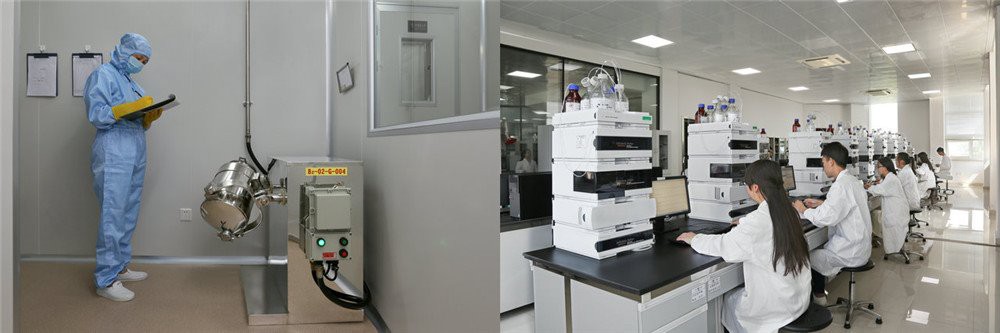
Stanous chlorite is packed in iron barrels or wooden barrels or plastic barrels lined with plastic bags. The net weight of each barrel is 25kg, 30kg or 50kg, and the words "sealed storage" are marked on the package. It should be stored in a cool, ventilated and dry warehouse, and the temperature should not be higher than 32 ℃. The container must be sealed and moisture-proof. It cannot be stored and transported together with oxidant. Rain and sunlight shall be prevented during transportation. Handle with care during loading and unloading to prevent package damage. In case of fire, water, sand and various fire extinguishers can be used to put out the fire.
Prevent inhalation of tin dust when making tin flowers in the production process to avoid chronic bronchitis. Contact of stannous chloride solution with skin can cause eczema. The maximum allowable concentration of inorganic compounds of tin in the United States is 2mg/m3 (calculated by metallic tin). Production personnel should wear work clothes, gas masks, gloves and other labor protection products, pay attention to the protection of respiratory organs and skin, the production equipment should be closed, and the workshop should be well ventilated.
Testing method:
Test according to the analytical method specified in HG/T 2526-93.
In acidic media, divalent tin reacts with ammonium iron sulfate to reduce trivalent iron to divalent iron. Under sulfur phosphorus mixed conditions, sodium diphenylamine sulfonate is used as an indicator to titrate divalent iron with potassium dichromate standard titration solution to calculate the content of stannous chloride.
Oxidation of divalent tin to tetravalent tin using a mixture of hydrochloric acid and nitric acid, masking of interfering ions with citric acid. In an acidic medium, sodium sulfide reacts with heavy metal ions to form colored sulfides, which are visually compared to standard solutions.
Under acidic conditions, precipitate sulfate ions with barium chloride and visually compare them with a standard turbidity solution of barium sulfate.
In acidic solution, arsenic As (III) is further reduced to arsine using potassium iodide and stannous chloride. When arsine gas interacts with mercuric bromide test paper, brownish yellow spots are produced, which are compared with the standard color chart for the determination of hydrogen sulfide precipitates in alkaline solution (calculated as Pb). After sample treatment, flame atomic absorption spectroscopy is used for determination.
FAQ
What is stannous chloride used for?
What is STANNOUS CHLORIDE and where is it found? This chemical is used for the tinplating of steel in the making of tin cans as well as a food additive to some canned and bottled foods where it serves as a color-retention agent and antioxidant. It is also used in production of ornamental glass called aurene glass.
Is stannous chloride hazardous?
Exposure to Stannous Chloride can cause headache, nausea, vomiting and fatigue.
Why does stannous chloride turn gold purple?
The tin(II) chloride reduces the chloroauric acid from the dissolution of gold in aqua regia to a colloid of elemental gold supported on tin dioxide to give a purple precipitate or coloration.
What does stannous chloride do in toothpaste?
Stannous chloride (SnCl2) is a commonly used active ingredient in toothpastes, as it contains both anti-plaque and anti-gingivitis properties. It forms a complex with proteins in saliva and on tooth surfaces, which can disrupt the formation of plaque and prevent bacterial adhesion to tooth surfaces.
Hot Tags: stannous chloride solution cas 7772-99-8, suppliers, manufacturers, factory, wholesale, buy, price, bulk, for sale, 3 4 5 Trimethoxyphenylboronic acid, Iridium III chloride, Thioacetic acid powder, 6 Aminoquinoxaline CAS 6298 37 9, 3-Bromobiphenyl, Trypsin Powder CAS 9002 07 7