


Bauxite powder was discovered in 1825 by the Danish physicist H.C. Oersted, who used the interaction of potassium amalgam and aluminum chloride to obtain aluminum amalgam, and then used the distillation method to remove the mercury, making the metal aluminum for the first time. The production of aluminum metal was initially conducted by chemical method. That is, the sodium method created by the French scientist H. Sainte Claire Diwill in 1854 and the Russian physical chemist H.H. Bekatov in 1865( Н。Н.Бекетов) The chemical method of magnesium method was founded. France, which adopted chemical method to start industrial production in 1855, is the first country in the world to produce aluminum. The discovery of bauxite (1821) was earlier than the aluminum element and was mistaken for a new mineral at that time. To produce aluminum from bauxite, it is necessary to first produce aluminum oxide, and then electrolytic aluminum. The mining of bauxite began in France in 1873, and the production of alumina from bauxite began in 1894. The Bayer process was adopted, and the production scale was only more than 1t per day. By 1900, a small amount of bauxite was mined in France, Italy and the United States, with an annual output of only 90000 tons. With the development of modern industry, aluminum, as a metal and alloy, has been applied to aviation and military industry, and then expanded to civil industry. Since then, the aluminum industry has developed rapidly. By 1950, the world's production of aluminum metal has reached 1.51 million tons, and increased to 20.92 million tons in 1996, becoming the second important metal after steel.
In addition to the centralized distribution of bauxite in China, the majority of bauxite deposits are large and medium-sized. There are 31 large deposits with reserves of more than 20 million tons, accounting for 49% of the total reserves of the country; There are 83 medium-sized deposits with reserves ranging from 20 to 5 million tons, accounting for 37% of the total reserves of the country, and 86% of the total reserves of large and medium-sized deposits. The quality of bauxite in China is relatively poor, and diasporic bauxite, which is difficult to process and consumes a lot of energy, accounts for more than 98% of the country's total reserves. Among the retained reserves, the primary ore (Al2O360% ~ 70%, Al/Si ≥ 12) accounts for only 1.5%, the secondary ore (Al2O351% ~ 71%, Al/Si ≥ 9) accounts for 17%, the tertiary ore (Al2O362% ~ 69%, Al/Si ≥ 7) accounts for 11.3%, the fourth ore (Al2O3>62%, Al/Si ≥ 5) accounts for 27.9%, the fifth ore (Al2O3>58%, Al/Si ≥ 4) accounts for 18%, the sixth ore (Al2O3>54%, Al/Si ≥ 3) accounts for 8.3%, the seventh ore (Al2O3>48%, Al/Si ≥ 3 6) 1.5%, and the rest are of unknown grade.
Another disadvantage of China's bauxite is that there are not many bauxite deposits suitable for open-pit mining, accounting for only 34% of the country's total reserves according to statistics. Unlike lateritic bauxite abroad, China's ancient weathering crust bauxite is often associated with a variety of minerals. In the bauxite distribution area, the overlying strata often contain industrial coal seams and high-quality limestone. There are semi-soft clay, hard clay, iron ore and pyrite in the ore-bearing rock series. Bauxite ores are also associated with gallium, vanadium, lithium, rare earth metals, niobium, tantalum, titanium, scandium and other useful elements. In some areas, the above paragenetic minerals often form industrial deposits together with bauxite. Gallium, vanadium and scandium in bauxite also have recovery value.
China's bauxite has a relatively high degree of geological work. By the end of 1994, 32.5% of the retained reserves of bauxite in China belonged to the exploration stage and 55.8% belonged to the detailed survey stage. Together, the reserves with the above degree of detailed survey accounted for 88.3% of the total retained reserves in China.
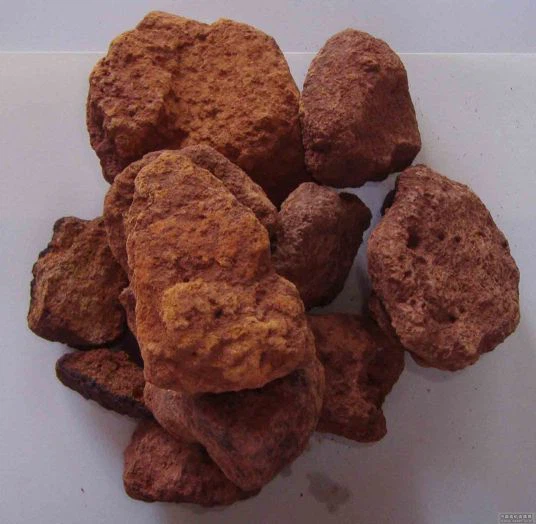
Typical deposit:
1. Guizhou bauxite deposit:
The Xiaoshanba Bauxite Mine in Xiuwen began exploration in 1957, with a total of 20.264 million tons of proved bauxite and an average ore grade of 67.91%. In 1979, the Wulongsi mining area was put into production. The ore bed was stratified, with a gentle occurrence, a dip angle of 5 °~10 °, and inclined to the northeast.
2. Shanxi bauxite deposit:
The first exploration was carried out in the Ke'e ore block of the Ke'e bauxite deposit in 1960, and then in the Pujiayu ore block. A total of 62.656 million tons of bauxite were discovered, with an average ore grade of 64.36%. In 1986, Shanxi Aluminum Plant began to mine Xiaoyi bauxite. The ore types are compact, coarse and pisolitic.
3. Henan bauxite deposit:
The deposit was explored as refractory clay ore from 1961 to 1964 and was put into production in 1966. The total proved bauxite is 9.497 million tons. The geological age of the ore-bearing layer is the same as that of the Ke'e deposit in Xiaoyi, Shanxi, which belongs to the Benxi period of the Late Carboniferous.
4. Pingguo bauxite deposit:
The mining area has an area of 1750km2, and there are accumulated ores within 132km of the distribution of layered ore bodies. The primary ore was first explored from 1959 to 1961. Due to the high sulfur content of the primary ore, it could not be used. In 1974, it was transferred to the accumulation ore for exploration. The total proved bauxite reserves before and after the exploration amounted to 126098000 tons, with an average grade of 64.69%. Due to the high sulfur content of layered ore (1.5%~7%), it is still difficult to use in industry.
5. Zunyi bauxite deposit:
The mine was explored in 1989, with proved reserves of 11.12 million tons and average ore grade of 53.62%. The occurrence shape of the ore bed is complex, there are many oreless skylights, and the ore-bearing coefficient is small, about 0.5. These rock layers are in-situ lateritized and denuded into bauxite, clay minerals and other weathering crust materials, which are accumulated in situ, and a small part of them are formed by the slight migration and accumulation of nearby weathering crust bauxite minerals and clay minerals due to the role of slope deposit.
6. Penglai bauxite deposit:
The deposit is a modern lateritic bauxite deposit. The general survey and exploration were carried out from 1959 to 1961. In 1975, nine ore bodies including Robben 5 and 6 were explored again. The total proved bauxite reserves reached 21.906 million tons, with an average grade of 44.4%. Bauxite is distributed on the top of gentle hills with an elevation of about 30~60m. It is a Tertiary to Quaternary basalt weathered laterite type gibbsite bauxite deposit.
7. Zibo Wangcun Bauxite Mine:
Wangcun Bauxite Mine is located in the northwest of Zibo Basin. A detailed survey was carried out in 1956, and a preliminary and detailed survey was carried out from 1964 to 1965. Open mining began in 1958 and ended in 1967. In 1965, it began to develop infrastructure and put into operation in 1966. The total proved bauxite in this mine is 2.945 million tons, which is a small deposit.