


If your dog or cat has ever dealt with a flea infestation or a tick bite, you know how frustrating - and harmful - these parasites can be. Fipronil spot-on has become one of the most widely used topical treatments for controlling these ectoparasites, and for good reason. A single application to the back of your pet's neck can protect them for weeks. But how does it actually work on both fleas and ticks? This guide breaks down the science in plain language, so you can feel confident about what you're putting on your pet.
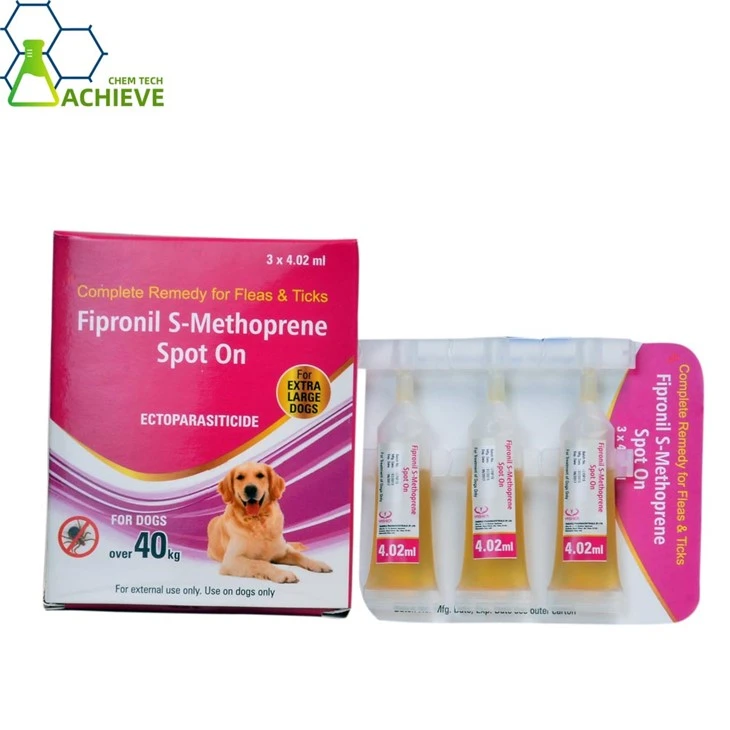
Fipronil Spot-On
1.General Specification(in stock)
(1)API(Pure powder)
PE/Al foil bag/ paper box for Pure powder
(2)Spot-On
cat:0.5ml
dog:0.67ml:2-10kg/1.34ml:10-20kg/2.68ml:20-40kg/4.02ml:40-60kg
(3)Solution
(4)Drops
2.Customization:
We will negotiate individually, OEM/ODM, No brand, for secience researching only.
Product Code:BM-9-018
Fipronil CAS 120068-37-3
Analysis: HPLC, LC-MS, HNMR
Technology support: R&D Dept.-3
How Does Fipronil Spot-On Act on Both Fleas and Ticks?
A Broad-Spectrum Phenylpyrazole Compound
Fipronil spot-on is a chemical in the phenylpyrazole class that kills a wide range of insects and ticks. Fipronil is very important because it only hurts certain cells. It sticks strongly to receptors in the nerves of spiders and insects but not as strongly to receptors in humans. It is safe for cats and dogs because they can pick and choose.
Ticks (Ixodida) and fleas (Siphonaptera) are from different parts of the evolutionary tree. Ticks are arthropods and fleas are insects. However, fipronil works on both of their brains because they have a major weakness. Pesticide Biochemistry and Physiology has a study that shows that fipronil kills both types of parasites by targeting the same receptor.
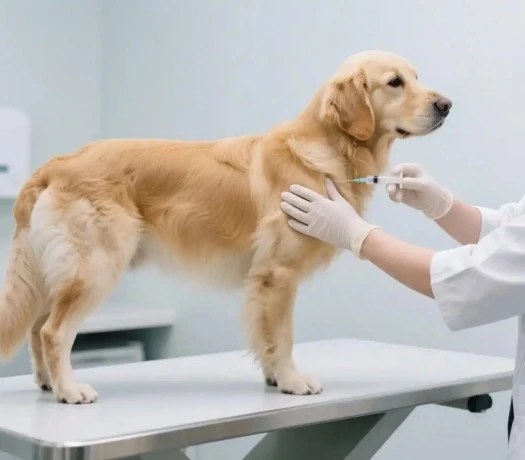

It is one of the few active ingredients that can kill two types of bugs at the same time in a topical solution.
Contact Action Without Systemic Absorption
One big difference between fipronil spot-on and other flea treatments is that it mostly works by affecting the touch rather than the whole body. After being put on the skin, the chemical moves across the pet's body through the oil glands. Fleas and ticks can take in fipronil through their legs or cuticles when they touch treated skin or hair. They don't need to feed on blood to do this. Adult fleas start to die 24 hours after they touch a person, while ticks usually die between 24 and 48 hours.
There is a very high chance that this quick touch kill will stop parasites from eating and stop the disease from spreading.
Shared GABA-Gated Chloride Channel Targets in Fleas and Ticks
The Neurological Receptor Fleas and Ticks Share
Gamma-aminobutyric acid (GABA)-gated chloride channels are used by both fleas and ticks to control nerve messages. By stopping nerve activity, these channels help keep the nervous system stable. Clβ ions flow into the neuron when GABA binds to the receptor. This stops nerve activity. This system helps animals move, control their muscles, and understand what their senses are telling them.
When fipronil binds to these chloride channels, it stops the flow of chloride ions. When the inhibitory switch is locked in the "off" position, the parasite's nervous system can't control the messages that make cells excited.Neurons fire without control, seizures happen, and finally the person is paralyzed.
One active ingredient may affect the nervous systems of both fleas and ticks at the same time because this process is shared by both bug and spider groups.
Selectivity Between Parasite and Host Receptors
People who have pets should be afraid that something that kills bugs could also hurt their pet. The shape of the receptor holds the key. Fipronil binds to GABA-A receptors in humans and GABA-gated chloride channels in insects, but they do so in different ways. It binds to animal receptors several hundred times more strongly than it does to human receptors. This gives you a lot of room for error when you use the amounts that are written on the label. The different makeup of fipronil means that it is safe for both cats and dogs to use.
It kills bugs without hurting them.
Fipronil Spot-On Contact Distribution Across the Pet's Skin
How Sebaceous Glands Carry the Compound Across the Body
If you put fipronil spot-on on a small area, like the skin between your shoulder blades or at the back of your neck, it doesn't stay put. It breaks down in the lipid-rich environment of the sebaceous glands, which then spreads the chemical. It moves sebum across the skin's surface and along hair shafts all the time, which takes fipronil away from where it was put on.
The chemical builds up to an amount that can be measured on the dorsal skin surface in 24 hours. The covering spreads to the ventral and side areas in 48 to 72 hours.Because it spreads itself, ectoparasiticide can cover the whole body with just one treatment or spot.
Sprays or dips, on the other hand, need to be used all over the body at the same time. This is what makes external fipronil different.
Why Skin Physiology Affects Coverage and Duration
Fipronil spot-on works differently on different species depending on how thick their skin is, how many hair cells they have, and how much grease they make. Dogs' skin is larger (0.5–2 mm) and has 30–50 hair follicles per cm², while cats' skin is thinner (0.3–1 mm on average at the neck) and has more hair follicles (50–80 per cm²). More squalene is found in cat saliva, which makes it easier for fipronil to break down and be released.
Due to this, a 0.5 mL dose of the drug can leave 0.12 mg/cm² of residue on cat skin, but only 0.08 mg/cm² on dog back skin.
It's been thirty days, and the amount of fipronil on cat skin is still about 60% of what it was at the beginning. On dog skin, it's still about 40%. The dose for cats stays at 0.5 mL no matter what weight they are. For dogs, the dose ranges for four weight groups from 0.67 mL to 4.02 mL.
Why Does Blocking Parasite Chloride Channels Disrupt Nervous Function?
Chloride Ion Flow and Neural Inhibition
It helps to know what chloride channels do when they're not blocked in order to understand why blocking them is so bad. There are GABA-gated chloride channels in the nerves of both insects and spiders that control how much movement there is. There are receptors nearby that GABA binds to when a cell fires. This opens up channels for chloride. Chloride ions rush in and make the cell too charged, so it can't fire again right away. This inhibitory feedback loop keeps brain circuits from going too fast.
When fipronil blocks these routes, the inhibitory stimulus stops working. Neurons can fire at any time.

Muscles are always getting messages to get excited, which can make them twitch and move in jerky ways. Extreme hyperexcitability for a long time makes it impossible for the parasite to feed, latch on, or live. Neurotoxic cascades happen quickly; fleas show signs like jumping around and shaking their legs within minutes of contact.
The Role of Glutamate-Gated Chloride Channels
Not only does fipronil block GABA receptors, but it also stops GluCl channels, which are only found in invertebrates and not humans. Channels made of GluCl stop signals from getting through to muscle neurons and sensory pathways in invertebrates. You make the brain even messier when you block both GABA-gated and glutamate-gated chloride channels at the same time.
This makes the effect that kills happen faster. Ectoparasites like fleas, ticks, lice, and other related species are very hard for fipronil to kill. One reason for this is that it fights two kinds of sensors.
From Ectoparasite Contact to Paralysis: The Fipronil Spot-On Mechanism
The Timeline from Skin Contact to Parasite Death
There is a well-known cellular process that goes from getting parasites to death. Fipronil is taken in through the cuticle, the waxy outer layer that guards fleas and ticks from chemicals in the environment, when they touch treated skin or clothes. Once fipronil gets inside, it goes quickly toward the brain and spinal cord. It starts to bind to GABA-gated and GluCl chloride channels as soon as it is taken in.
Within 15 to 30 minutes of contact, fleas often show clear signs, such as moving around randomly and not being able to hold on to things.Most people are fully protected from fleas for 24 hours after being exposed to them.


It takes ticks 24 hours to become paralyzed and 48 hours to die because their coats are thicker and their metabolisms are slower. This difference in kill speed is not because insects and spiders are less good at killing ticks, but because of how their bodies work.
Breaking the Flea Life Cycle
Fipronil spot-on doesn't just kill adults when it's put on them. It kills adult fleas before they can finish feeding on blood and have their own young, which is the most important part of the flea life cycle. For flea females to lay eggs that will hatch, they need to eat blood. They can't lay eggs if they don't. Studies show that covering an area with something just once can cut the number of flea eggs laid there by more than 90% in the first week.
In some types, fipronil is mixed with S-Methoprene, an insect growth regulator that stops flea eggs and pupae from turning into adults that can reproduce. It works like a hormone for young insects. This method stops the reinfestation process more fully because it targets more than one stage of life at the same time. In tests, mixed products get rid of worms 98% of the time or more. Because of this, fipronil is clearly one of the best ways to keep bugs away from pets.
Conclusion
The GABA-gated chloride channel is a weakness in the nervous system that both fleas and ticks share, and this is how fipronil spot-on works. Because it only affects the right receptors, it is safe for cats. That's because it spreads through oil glands, so it can cover a lot of skin from one spot. Worms can be killed by it even if they don't bite. You can be sure to use this product if you know how it works, whether you have an ongoing issue or are just keeping an eye out for problems that might happen.
Frequently Asked Questions
Q: Does fipronil spot-on work on ticks as well as fleas?
+
-
A: Yes, fipronil spot-on can kill ticks and fleas. Fipronil works on GABA-gated chloride channels that are found in both fleas and ticks, as well as other animals. It takes 48 hours for most ticks to die after coming into contact with treated skin or fur.
Q: How long does a fipronil spot-on application remain effective?
+
-
A: From what I've seen, one application can keep fleas and ticks away for up to four weeks. There are some products with better solvent formulas that make this window last eight weeks longer. This is because they make it easier for sebum to spread the drug and keep it coming out of hair follicle pools.
Q: Is the dosage different for cats and dogs?
+
-
A: Yes, cats and dogs need a different amount. It doesn't matter how much a cat weighs; they always get the same amount of 0.5 mL because their skin is smaller and they have more hair fibers. Based on their weight, dogs need different amounts: 0.67 mL for 2–10 kg, 1.34 mL for 10–20 kg, 2.68 mL for 20–40 kg, and 4.02 mL for 40–60 kg.
Partner with Bloomtechz - Your Trusted Fipronil Spot-On Supplier
Bloomtechz has been making fine chemicals and organic compounds for more than 12 years, so we can help with any order. Every batch of fipronil spot-on that comes out of our 100,000-square-meter GMP-approved plant meets the strictest quality standards all over the world. The factory is also certified by the US-FDA, EU-GMP, CFDA, and JP. We have API powder, spot-on recipes that are ready to use, OEM/ODM customization, and we can help you with all of your legal paperwork. 24 big companies around the world trust Bloomtechz as a reliable fipronil spot-on provider. They give you exact wait times, clear pricing, and triple-link quality assurance. If your order doesn't meet their standards, they'll give you a full refund. Get in touch with our team right away to get a quote based on the exact number of items you need and the details you give us.
Contact us: Sales@bloomtechz.com.
References
1.. Gant, D. B., Bloomquist, J. R., & Bhatt, D. L. (1998). A comparison of the mammalian and insect GABA receptor as targets for fipronil. Pesticide Biochemistry and Physiology, 61(2), 93–102.
2. Hainzl, D., Cole, L. M., & Casida, J. E. (1998). Mechanisms for selective toxicity of fipronil insecticide and its sulfone metabolite and desulfinyl photoproduct. Chemical Research in Toxicology, 11(12), 1529–1535.
3. Cole, L. M., Nicholson, R. A., & Casida, J. E. (1993). Action of phenylpyrazole insecticides at the GABA-gated chloride channel. Pesticide Biochemistry and Physiology, 46(1), 47–54.
4. Jennings, K. A., Canerdy, T. D., & Keller, R. J. (2002). Human exposure to fipronil from dogs treated with Frontline. Veterinary and Human Toxicology, 44(6), 301–303.
5. Dryden, M. W., Payne, P. A., & Smith, V. (2005). Efficacy of fipronil and methoprene combination spot-on products for long-term control of flea populations on cats. Veterinary Parasitology, 130(1–2), 185–190.
6. Rust, M. K., & Dryden, M. W. (1997). The biology, ecology, and management of the cat flea. Annual Review of Entomology, 42, 451–473.