


Parasites infest millions of dogs and cats. These small invaders may kill pets and impair digestion. These risks have changed veterinary medicine, making antiparasitic drugs essential for prevention. Milbemycin oxime pills are known to cure several parasite species orally. Pet owners want safe, effective remedies that simplify medication and give total protection. Parasite life cycles are complex; thus, medicines must target specific developmental stages before parasites enter host animals. Modern veterinary drugs are scientifically accurate and easy to administer, making preventive care easier for pet owners. Understanding how these therapies work, which parasites they cure, and how to administer them helps pet caretakers make informed health management decisions. Milbemycin oxime tablets' mechanism of action, parasite spectrum coverage, and role in veterinary integrated pest management are explained in this paper. The science behind this macrolide derivative and its clinical applications helps pet owners and veterinary professionals understand its value in companion animal health across life stages and environmental exposure scenarios.
1.General Specification(in stock)
(1)API(Pure powder)
(2)Tablets
For dogs:2.3mg/5.75mg/11.5mg/23.0mg
For cats: 5.75mg/11.5mg/23.0mg
(3)Pill press machine
https://www.achievechem.com/pill-press
2.Customization:
We will negotiate individually, OEM/ODM, No brand, for secience researching only.
Internal Code: BM-2-067
Milbemycin oxime CAS 129496-10-2
Main market: USA, Australia, Brazil, Japan, Germany, Indonesia, UK, New Zealand , Canada etc.
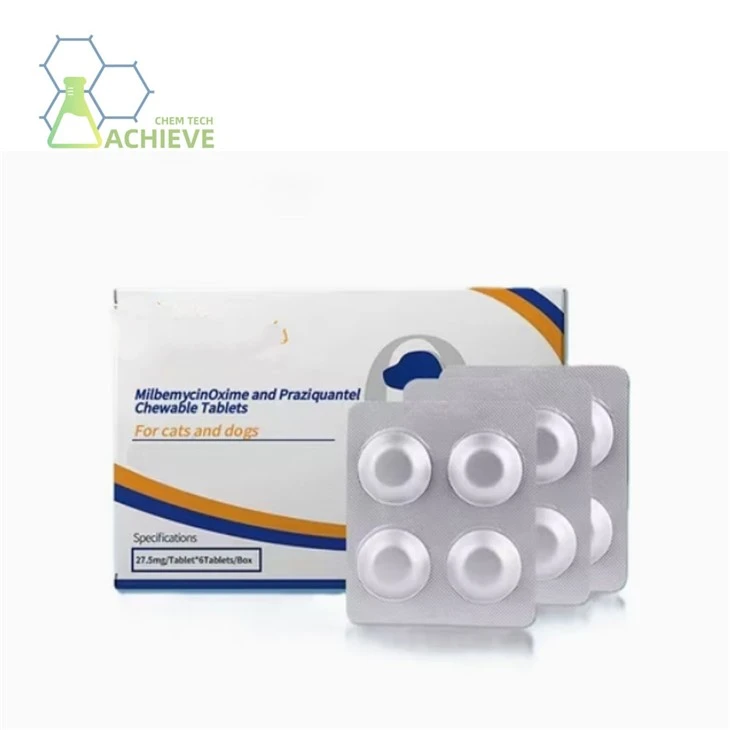
We provide milbemycin oxime tablets, please refer to the following website for detailed specifications and product information.
Product: https://www.bloomtechz.com/oem-odm/tablet/milbemycin-oxime-tablets.html
Which Common Parasites Can Milbemycin Oxime Tablets Help Manage in Cats and Dogs?
Veterinary parasitology investigates the various parasites that utilise pets as hosts, some of which cause widespread health issues. Milbemycin oxime pills destroy a common category of intestinal parasites in dogs and cats. Knowing this medication's target range helps veterinarians determine the best treatment options and informs pet owners when it will function best.

Dogs and cats can get heartworm disease, a terrible parasite. This is particularly true in mosquito-prone areas. Dirofilaria immitis larvae enter the circulation via mosquito bites. They become foot-long heart and lung worms. Milbemycin oxime tablets kill heartworm larvae before they reach the heart and blood vessels. Giving it monthly during mosquito season prevents parasites from growing, reducing the risk of infection for sick pets.
Another significant parasite group this drug eliminates is intestinal nematodes. Ancylostoma and Uncinaria hookworms feed on blood on gut walls, making animals anaemic. Toxocara roundworms live in the gut. They fight for food and may block intestines in severe infestations. Scientists name whipworms Trichuris vulpis.
Their thread-like front sections become lodged in stomach walls, producing swelling and diarrhoea. The drug kills intestinal worms by disrupting the neurological system. This improves digestion and nutrient absorption.
Clinical tests have shown clearance rates above 95% for the specific nematode species with proper dosing. Its capacity to enter parasite cells and grow up to levels that permanently alter their biology makes the chemical effective. Veterinarians recommend milbemycin oxime pills for deworming animals, particularly those who have been parasitised or reside in parasite-prone areas. To prevent heartworm larvae and cure adult intestinal worms, the medicine works. It aids comprehensive parasite control strategies.

How Does Milbemycin Oxime Tablets Work Through Its Targeted Parasite Control Mechanism?
Milbemycin oxime pills destroy parasites by a complicated metabolic mechanism that exclusively affects invertebrate nervous systems. Parasites and vertebrates have distinct neurotransmitter receptor distribution and blood-brain barrier architecture, causing selectivity. Understanding these scientific elements of the drug helps explain why it works at safe pet dosages.

Milbemycin oxime activates parasite nervous tissue glutamate-gated chloride channels and binds GABA receptors. These receptor systems regulate neuron-muscle cell electrical impulses. This organises activities and maintains vital processes. Neurons get too many chloride ions when the drug connects to these locations, hyperpolarising them and stopping signal transmission. Flaccid paralysis prevents parasites from eating, reproducing, and remaining attached to host tissues.
A succession of cumulative impacts makes this nervous system disturbance deadly. Paralysis prevents intestinal worms from attaching to intestinal walls. Natural peristaltic motions remove them from the digestive system. Long-term neurone shutdown prevents heartworm larvae from developing because their metabolism requires organised cellular processes.
A 16-membered macrocyclic lactone ring modified with oxime and oxymethyl functional groups allows the drug to cross biological membranes and reach therapeutic concentrations in parasite tissues without entering dogs' and cats' central nervous systems. Mammals have safety gaps because vertebrate GABA receptors are mostly in blood-brain barrier-protected brain tissue. Macrolides have a difficult time entering the brain. Parasites lack this barrier and have stronger milbemycin receptor subtypes. Due to biological selectivity, veterinarians may give cats enough to kill all parasites without neurological negative effects. Pharmacokinetic studies show that an oral drug reaches its highest blood levels within hours, spreads through the body's tissues, and kills susceptible parasites before being broken down by the liver and flushed out by the kidneys.
Understanding the Application Range of Milbemycin Oxime Tablets in Veterinary Parasite Care
Veterinary medicine uses milbemycin oxime tablets in a variety of clinical situations, changing dosing plans and treatment lengths to fit the needs of each patient and the parasites they are trying to get rid of. The drug is flexible because it works on different stages of target organisms' lives and can be used with different treatment approaches, from immediate interventions to proactive protection programs.

Most of the time, this medicine is used in veterinary medicine for preventative heartworm treatments. Cardiologists and general practitioners both suggest starting the monthly administration before mosquito season starts, continuing it during times when vectors are active, and adding one more cycle after frost kills all the mosquitoes. This plan makes sure that any larvae that are transmitted during the protection period come into contact with drug concentrations that kill them before they reach cardiac tissues. In places where mosquitoes are present all year, you need to keep taking it once a month, no matter what time of year it is. This will protect you permanently from this potentially deadly infestation.
The medicine can also be used to treat intestinal parasite diseases that have been identified. When vets look at a pet's poop and find hookworm, roundworm, or whipworm eggs, they give the pet treatments that kill adult worms and any larval stages that are present in the tissues. Some parasiticides need to be taken more than once a day, but milbemycin stays in the body for a long time, so only one dose or many treatments spaced out over time are often enough to get rid of all the parasites. Follow-up faecal testing confirms that the treatment worked by showing that there are no parasite eggs in samples taken after treatment. These samples are usually taken three to four weeks after the medication was given to give the body time to get rid of any remaining worms and eggs.


Adding more active ingredients to combination formulations makes them more effective against a wider range of parasites than milbemycin alone. These medicines treat tapeworm infections and ectoparasites like fleas. They cover more things with a single tablet, which makes it easier to use. Veterinarians choose which formulations to use based on each person's risk assessment, which takes into account things like region, lifestyle exposure patterns, and history of infestations. There are dose-specific tablets that are set for different weight ranges. This makes sure that the right amount of medicine is given to all animals, from small cats to big breed dogs. This lowers the risk of underdosing, which lets parasites live, or overdosing, which raises the chance of side effects.
The Science Behind Milbemycin Oxime Tablets and Parasite Nervous System Interaction
Neuroscience is progressively learning how macrolide drugs like milbemycin influence parasite nervous systems at the cellular and subcellular levels. These new insights have helped vets determine the appropriate route of administration and predict parasite resistance to this class of medications. After decades of pharmaceutical study, milbemycin oxime tablets are as efficient against parasites as possible while being safe for humans.
Milbemycin binds to glutamate-gated chloride channels, which are abundant in nematodes and arthropods' peripheral nervous systems. These channels are physically distinct from mammalian ones. Their geometric binding pockets match the medicine's three-dimensional structure. Milbemycin molecules cover these places, keeping the channel open and allowing chloride ions to flow longer than the cell's homeostatic mechanisms. Thus, electrical gradient alterations prevent action potentials. The neuronal communication channels required for organised behaviour are shut off.


Researchers used electrophysiology to study how milbemycin concentration affects isolated parasite neurones. Studies reveal that nanomolar concentrations may open channels and modify membrane potential, although they are several orders of magnitude below the amounts required to affect mammalian brain tissue. The therapeutic index-the ratio of harmful to beneficial doses-is almost 100 times greater in most pet species. Because animals break down and absorb medications differently, this creates several safety gaps. With its high safety rating, regulators have approved its use in young animals, pregnant women, and elderly people when other treatments are too risky.
Some parasite populations are resistant to repeated macrolides due to genetic variations in chloride channel proteins, according to molecular biology research. These resistance genes alter channel shape to diminish drug affinity without destroying channel function. Parasites may withstand treatments that kill vulnerable kinds. Testing field isolates for decreasing sensitivity helps veterinary parasitologists track resistance. This helps them recommend ways to employ different pharmacological types to maintain therapy efficacy. According to what we know, pet parasites are less resistant than livestock parasites. Selection is likely less severe because of fewer treatments and smaller populations.

How Milbemycin Oxime Tablets Support Comprehensive Internal Parasite Management for Pets
Effective parasite control includes more than just giving medications once in a while. It also includes strategies that combine drug treatments with environmental management and diagnostic monitoring. Milbemycin oxime tablets are an important part of these bigger programs because they get rid of parasites reliably and work with other safety measures. Figuring out how to use this medicine as part of a comprehensive care plan makes the most of its benefits while solving the problems that come with using a single measure.

Veterinary parasitologists stress the need for constant year-round protection in places where heartworm spread is unpredictable or where pet owners take their animals on trips to places where heartworms are common. When milbemycin oxime tablets are taken once a month, they set up regular drug exposure patterns that keep protection going all year, even if vector activity changes with the seasons. Compliance support tools, like calendar marking, reminder systems, and medication auto-delivery services, help pet owners stick to dosing plans that don't miss any days of protection. Even short breaks leave vulnerable times when transferred larvae can reach stages of development that make them less likely to get sick again, which could lead to established diseases that need more intensive and expensive treatments.
Environmental sanitation practices help drug control by lowering the number of parasites in places where pets spend time. Taking out the poop from yards and litter boxes on a regular basis gets rid of sources of contamination before eggs hatch and become infectious. This stops the cycle of infection that would otherwise spread to treated animals again. Cleaning floors, bedding, and other places where parasite eggs and larvae might stay between treatments is a good way to keep indoor settings clean. These physical controls work together with the effects of the medications to make a system of defences that lowers the overall number of infestations more effectively than either method alone.


Diagnostic testing is very important for finding out how well a program is working and how infected each animal is. Heartworm antigen tests done once a year can find infections that have already happened because of missed doses or failed treatments. This lets doctors act quickly before the damage to the heart gets too bad. When you look at a person's faeces, you can find intestinal parasite infections that need therapeutic treatment instead of just preventative doses. This helps doctors decide if the patient needs more medicine rounds or a different drug class. Veterinarians look at diagnostic results in the context of each pet's lifestyle, travel history, and the frequency of parasites in the area.
They then make recommendations based on specific risk factors instead of using general rules that might over-treat low-risk animals or not protect individuals with high exposure enough.
Conclusion
Companion animal health is still being affected by parasitic diseases in a wide range of climates and living conditions. Heartworm disease and gut nematode infections used to be very dangerous and kill a lot of animals. But now, safe and effective medicines like milbemycin oxime tablets have made it much easier to avoid and treat these bugs. The selective neurotoxicity of this macrolide derivative against target parasites, along with its good safety profile in mammalian hosts, shows how precise modern drug development processes can be.
To get rid of parasites effectively, medical workers, drug companies, and pet owners who are committed to following consistent preventative measures must work together. Companion animal health is best maintained by understanding the scientific principles behind how medications work, knowing which parasites certain drugs target, and using complete management strategies that go beyond medicine alone. As parasite populations change and the world changes, more study into how to kill parasites and how they become resistant will make sure that there are still effective treatments for pets in the future that need to be protected from these long-lasting biological threats.
FAQ
1. What is the recommended dosing frequency for milbemycin oxime tablets in heartworm prevention?
Most of the time, veterinarians say that milbemycin oxime tablets should be given once a month during heartworm season or all year long in places where mosquitoes are always active. This schedule makes sure that there are enough drugs to kill the larvae before they turn into adult heartworms. Consistent monthly dosing with no missed doses is the best way to protect against disease, because breaks in coverage leave people open to getting sick during times when transferred larvae may have developed too far to be treated.
2. Can milbemycin oxime tablets treat existing heartworm infections in dogs?
The medicine stops heartworm disease by killing the larval stages, but it doesn't kill adult heartworms that are already living in the heart and lungs. When a dog has a heartworm infection, it needs different treatment plans that are meant to get rid of grown worms and deal with the inflammation that happens when dead parasites block blood vessels. In order to keep people from getting new illnesses while they are recovering, preventative drugs like milbemycin oxime tablets may be used after treatment.
3. Are there any dog breeds that should avoid milbemycin oxime tablets due to sensitivity concerns?
Some types of herding dogs have changes in their genes that make them more sensitive to macrolide substances. These changes affect the multidrug resistance gene (MDR1). Collies, Australian Shepherds, and other related breeds may have neurological problems at doses that are safe for other dogs. Before giving milbemycin oxime tablets to at-risk breeds, veterinarians often suggest genetic tests. For animals with proven MDR1 mutations, they may choose different antiparasitic drugs to make sure the treatment is safe.
Partner with BLOOM TECH for Premium Milbemycin Oxime Tablets Supplier Solutions
BLOOM TECH is a reliable company that sells milbemycin oxime tablets. They make pharmaceutical-grade antiparasitic goods in GMP-certified factories that are checked by US-FDA, PMDA, and EU regulatory bodies. We can make everything from the API to the finished tablet because our production process is vertically integrated. This means that we can control quality at every stage of the manufacturing process. We have been experts in organic synthesis for more than 12 years and have built supply relationships with 24 of the biggest pharmaceutical companies in the world. As a result, we can guarantee that veterinary medicine distributors around the world will always have the products they need, at prices that are competitive, and with full technical support.
Our quality control measures include triple-layer testing confirmation, full analytical paperwork for customs clearing, and promises of a full refund for any failure to meet specifications. If you need bulk API powder, finished dosage forms in a range of strengths, or custom OEM formulations made to meet the needs of a specific market, BLOOM TECH's dedicated account management team will make sure that you can communicate clearly and get your orders on time. Email our sales team at Sales@bloomtechz.com to talk about how to buy milbemycin oxime tablets and find out how our streamlined supply chain solutions can help your pet pharmacy business grow.
References
1. American Heartworm Society. Current Canine Guidelines for the Prevention, Diagnosis, and Management of Heartworm Infection in Dogs. Veterinary Parasitology, 2020.
2. Bowman, D.D. et al. Prevalence and Geographic Distribution of Dirofilaria immitis, Borrelia burgdorferi, Ehrlichia canis, and Anaplasma phagocytophilum in Dogs in the United States. Journal of Veterinary Internal Medicine, 2019.
3. European Medicines Agency. Guideline on Pharmaceutical Development of Veterinary Medicinal Products for the Control of Parasites. Committee for Medicinal Products for Veterinary Use, 2018.
4. Geary, T.G. and Moreno, Y. Macrocyclic Lactone Anthelmintics: Spectrum of Activity and Mechanism of Action. Current Pharmaceutical Biotechnology, 2017.
5. Prichard, R.K. and Geary, T.G. Perspectives on the Utility of Moxidectin for the Control of Parasitic Nematodes in the Face of Developing Anthelmintic Resistance. International Journal for Parasitology: Drugs and Drug Resistance, 2019.
6. Companion Animal Parasite Council. General Guidelines: Intestinal Parasites and Heartworm Prevention in Dogs and Cats. Clinical Practice Recommendations, 2021.