


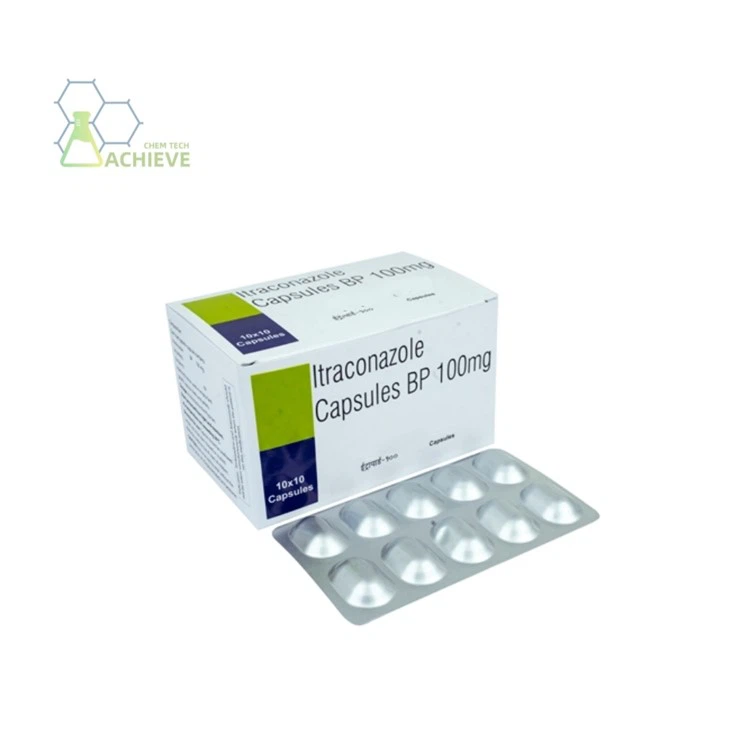


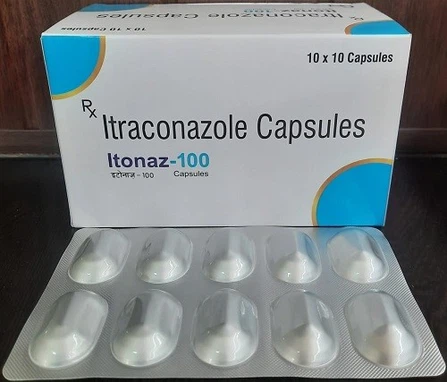
Itraconazole capsule 100 mg are a broad-spectrum antifungal drug belonging to the triazole derivative class. Its core mechanism of action is to inhibit the synthesis of ergosterol, a key component of fungal cell membranes, disrupting the integrity and permeability of the cell membrane, leading to leakage of fungal cell contents and death.
Formulation optimization
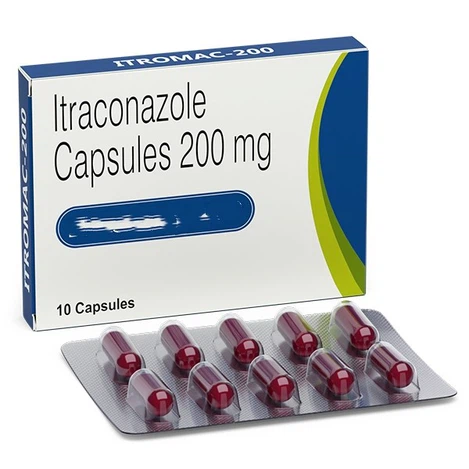
The molecular weight is 705.64, and its capsule form is wrapped in a hard gelatin capsule shell, containing white or light yellow pill shaped particles. The excipients include hydroxypropyl methylcellulose, polyethylene glycol 20000, titanium dioxide, and FD&C blue/red coloring agents to ensure drug stability and visual recognition. To improve bioavailability, capsules should be taken immediately after meals. At this time, gastric acid secretion can promote drug dissolution, increasing the absorption rate to 55% (fasting absorption rate is less than 30%).

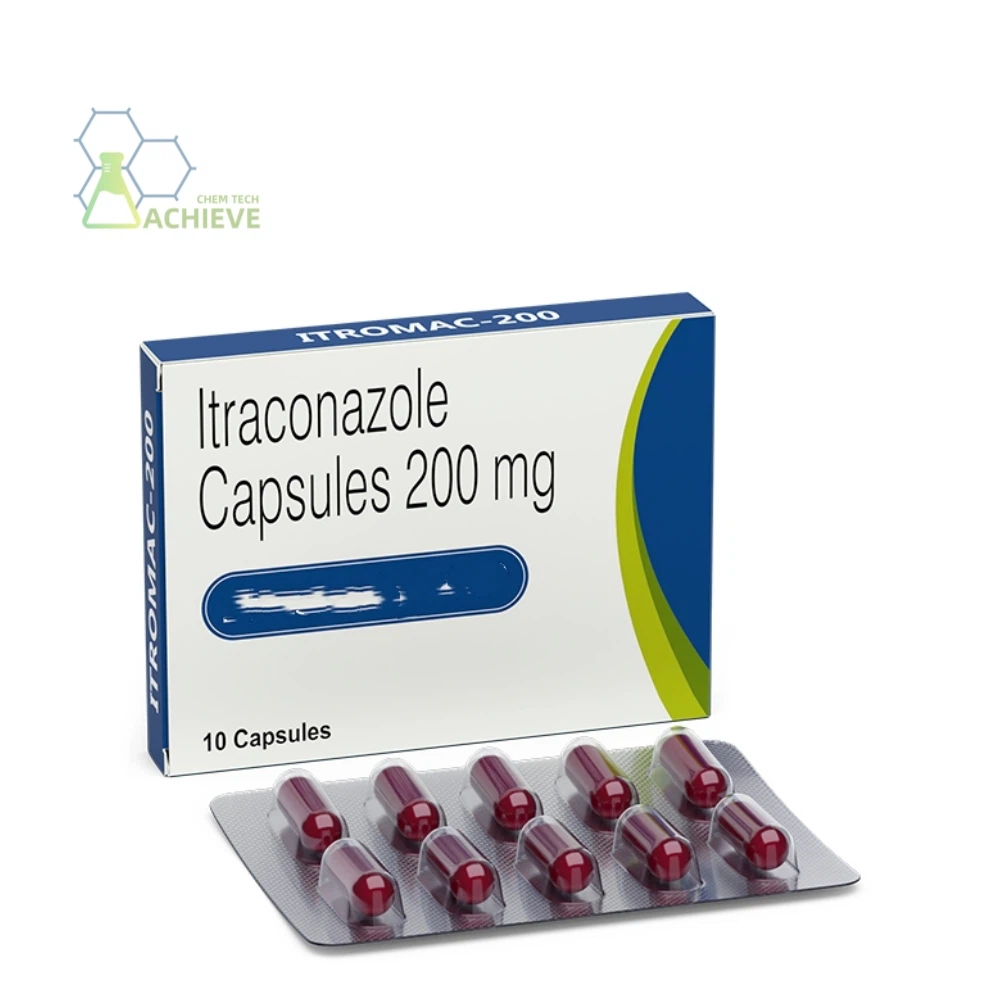

Additional information of chemical compound:

Our product form


Itraconazole +. COA


As a representative of triazole broad-spectrum antifungal drugs, itraconazole capsule 100 mg achieve efficient antifungal activity through multi-target synergistic action. This drug forms a multi-layered antibacterial barrier by inhibiting the synthesis of key components of fungal cell membranes, interfering with energy metabolism, disrupting cell wall integrity, and regulating host immune responses.
1.1 Precise blockade of sterol synthesis pathway
The stability of fugal cell membranes depends on the specific presence of ergosterol, and its synthesis process involves the conversion of lanosterol to ergosterol. Itraconazole blocks the conversion of lanosterol to 14 α - demethylated lanosterol by binding to cytochrome P450 dependent 14 α - demethylase (CYP51) with high affinity. This step is the rate limiting step in the biosynthesis of ergosterol. Drug action leads to abnormal accumulation of lanosterol in the cell membrane, while the accumulation of ergosterol precursor 24 methylene dihydrolanosterol further interferes with membrane fluidity.


1.2 Dual destruction of cell membrane structure and function
Lack of ergosterol leads to significant changes in cell membrane permeability
Decreased membrane fluidity: The interaction between ergosterol and phospholipid molecules weakens, leading to abnormal distribution of membrane proteins
Material transport disorders: ATP dependent ion pump function impaired, increased intracellular potassium ion efflux
Membrane integrity collapse: Electron microscopy observation shows significant vesiculation of Candida albicans cell membrane after 24 hours of treatment
This structural damage directly leads to leakage of fungal cell contents. Clinical studies have shown that itraconazol has a minimum inhibitory concentration (MIC) range of 0.01-0.5 μ g/mL for Candida and 0.25-2 μ g/mL for Aspergillus, demonstrating its potent antibacterial activity.
2.1 Inhibition of cell wall synthesis
Itraconazole inhibits the cross-linking of β - glucan, the main component of the cell wall, by downregulating the expression of the β -1,3-glucan synthase gene (FKS1). Scanning electron microscopy observation showed that after 72 hours of treatment, obvious pores appeared in the cell wall of Aspergillus fumigatus, and the content of pectin decreased by 40% -60%. This effect forms a synergistic effect with echinocandins, providing a theoretical basis for combination therapy.
2.2 Energy metabolism interference
The drug inhibits mitochondrial respiratory chain complex III and blocks ATP synthesis:
Decreased oxygen consumption rate: Candida albicans reduced oxygen consumption by 65%
ATP levels decrease: intracellular ATP concentration drops from the normal value of 3.2 mmol/g to 0.8 mmol/g


Metabolic intermediate volume accumulation: Succinic acid, an intermediate product in the citric acid cycle, accumulates up to three times the normal level
This metabolic inhibition leads to fungal growth arrest in the G1 phase and a decrease of over 80% in cell division index.
2.3 Blockage of biofilm formation
Itraconazol can inhibit the expression of key genes involved in biofilm formation in Candida albicans, such as ALS3 and HWP1
Reduction in biofilm thickness: Laser confocal microscopy measurement shows a decrease in thickness from 120 μ m to 35 μ m
Reduction of extracellular matrix: polysaccharide content decreased by 70%
Enhanced drug penetration: Drug concentration within the biofilm increases by 4-6 times
This characteristic makes it of special therapeutic value for refractory catheter-related infections.
3.1 Pattern recognition receptor activation
Itraconazol can upregulate the expression of Toll like receptor (TLR) 2/4 and enhance the recognition ability of macrophages towards β - glucan. The experiment showed that after drug treatment, the phagocytic index of macrophages increased from 1.2 to 3.8, and the production of reactive oxygen species (ROS) increased by 2.5 times.
3.2 Cytokine regulation
By inhibiting IL-10 secretion while promoting IL-12 and TNF - α release, drugs can reverse Th2 type immune shift. In the cryptococcal meningitis model, the level of IFN - γ in cerebrospinal fluid of the itraconazol treatment group increased fivefold compared to the control group, and the fugal clearance rate increased by 60%.
3.3 Enhancement of neutrophil function
Drugs can enhance the ability of neutrophils to form extracellular traps (NETs):
Increased DNA release: Flow cytometry analysis showed that the proportion of NETs positive cells increased from 15% to 42%
Enhanced bactericidal activity of histones: Histone H2A increases the bactericidal efficiency of Aspergillus by three times
This immune enhancing effect is particularly important in immunocompromised patients, as it can reduce the incidence of disseminated infections.

As a broad-spectrum triazole antifungal drug, itraconazole capsule 100 mg has been widely used in clinical practice, but its oral formulations (such as capsules) still have problems such as large fluctuations in bioavailability, uneven distribution of target organs, and decreased efficacy of drug-resistant strains. In the future, breakthroughs are needed in formulation innovation, molecular modification, and immune synergistic therapy to enhance efficacy, reduce toxicity, and delay the development of drug resistance. Based on the characteristics of the dosage form, a systematic exposition will be provided on its future research directions.
Nanoformulation development: Breaking through the oral absorption barrier
Traditional itraconazol capsules have low drug solubility and significant first pass effects, resulting in a bioavailability of only about 55% (on an empty stomach) to 65% (after a high-fat diet), with significant individual differences. Nanotechnology can significantly improve the oral absorption efficiency of drugs by regulating their particle size and surface properties.
1. Solid lipid nanoparticles (SLNs)
SLNs use solid lipids (such as monoglycerides) as carriers to encapsulate itraconazol in lipid cores through high-pressure homogenization or microemulsification techniques. Its advantages include:
Improving bioavailability:
Liposomes can promote drug absorption through the intestinal lymphatic system, bypass the first pass effect of the liver, and increase bioavailability to over 80% (validated in animal experiments).
01
Control drug release:
By adjusting the melting point of lipids (such as using mixed lipids) and particle size (100-300 nm), 12-24 hour sustained release can be achieved, reducing fluctuations in blood drug concentration.
02
Enhanced stability:
Solid lipids can protect drugs from gastric acid and enzyme degradation, making them suitable for patients with insufficient gastric acid secretion or requiring long-term treatment.
03
Challenge:
Optimize lipid materials to avoid drug burst release caused by crystallization and address the issue of particle size uniformity in large-scale production.
04
2. Dendrimers polymer carriers
Dendritic polymers (such as PAMAM) have highly branched structures and surface functional groups, which can be chemically modified to achieve targeted delivery:
Intestinal targeted delivery:
Connecting vitamin B12 or folic acid on the surface of polymers can promote drug absorption through intestinal epithelial cells through receptor-mediated endocytosis.
01
Penetrating fugal biofilm:
The dendritic structure can destroy the extracellular matrix of the biofilm, enhancing the permeability of drugs to deep fugal infections such as invasive pulmonary aspergillosis.
02
Multi drug co loading:
Its internal cavity can simultaneously encapsulate itraconazol and enhancers (such as voriconazole), delaying the development of drug resistance through synergistic effects.
03
Challenge:
Balancing carrier toxicity and drug loading, and verifying its metabolic safety in the human body.
04
Structural optimization research: precise modification for drug-resistant bacteria
Mutations in the target enzymes CYP51 (such as Y132F, G448S) of drug-resistant fungi (such as azole resistant Candida) lead to a decrease in the binding affinity of itraconazol. Enhancing drug activity or improving pharmacokinetic properties through chemical modification is the key to overcoming drug resistance.
1. Synthesis of Fluorinated Derivatives
Introducing fluorine atoms into itraconazol molecules can alter their electron distribution and lipid solubility, thereby enhancing their antibacterial activity
Mechanism optimization:
Fluorine atoms can enhance the hydrophobic interaction between drugs and CYP51 active sites, overcoming target enzyme mutations in drug-resistant bacteria.
01
Antibacterial spectrum expansion:
Fluorinated derivatives reduce the MIC value of non Candida albicans (such as Candida albicans and Candida krusei) by 2-4 times, while retaining their inhibitory effect on Aspergillus.
02
Improved metabolic stability:
Fluorine atoms can reduce the oxidative metabolism of drugs in the liver, prolong the half-life to more than 24 hours, and reduce the frequency of administration.
03
Challenge:
It is necessary to optimize the fluorine atom introduction site (such as triazole ring or side chain) through high-throughput screening to avoid loss of activity or increased toxicity.
04
2. Precursor design
The prodrug masks the polar groups of the drug through chemical modification, improving its water solubility and membrane permeability, while releasing active ingredients after enzymatic hydrolysis in vivo:
Water solubility improvement:
For example, linking itraconazole capsule 100 mg with succinic anhydride to generate succinate prodrug can increase its solubility in water by 50 times, making it easier to prepare oral solutions or dry suspensions.
01
ntestinal specific activation:
Design connection bonds that are sensitive to intestinal esterases, allowing prodrugs to release drugs preferentially in the colon and reducing the damage of gastric acid to drugs.
02
Drug resistance reversal:
Prodrugs can bypass the efflux pumps of drug-resistant bacteria (such as Cdr1, Mdr1) and restore the accumulation concentration of drugs in cells.
03
Challenge:
It is necessary to balance the stability and enzymatic hydrolysis rate of the prodrug, and verify its efficacy in complex infection models.
04
Combination immunotherapy: activating host defense mechanisms
Traditional antifungal therapy relies on drugs to directly kill bacteria, while immunotherapy enhances host immune response, providing long-term protection and reducing the risk of recurrence. The combination of itraconazol and immunotherapy has the potential for synergistic enhancement.
1. Combined with PD-1 inhibitors
PD-1 is an inhibitory receptor on the surface of T cells, and its expression can be upregulated by fugal infections to evade immune surveillance
Mechanism synergy:
PD-1 inhibitors (such as pembrolizumab) can block the binding of PD-1 to ligand (PD-L1), restoring T cell recognition and killing ability towards fugal antigens.
Enhanced therapeutic effect:
Animal experiments have shown that the combination of itraconazol and PD-1 inhibitors can significantly reduce the mortality rate of invasive candidiasis and decrease the fugal load in the lungs.
Safety advantage:
Oral administration can limit systemic immune activation and reduce the risk of autoimmune diseases.
Challenge:
It is necessary to optimize the timing and dosage of drug administration (such as early combination therapy for infection) to avoid cytokine storms caused by excessive immune activation.
2. CAR-T cell therapy
Chimeric antigen receptor T cells (CAR-T) are genetically modified to express receptors targeting fugal antigens, achieving specific killing:
Target selection:
Heat shock protein 90 (Hsp90) is a key molecule for fugal survival and is lowly expressed in host cells, making it an ideal target.
Persistent enhancement:
By introducing memory T cell epitopes, CAR-T cells can remain in the body for a long time, providing sustained protection.
Indications extension:
In addition to invasive fugal diseases, CAR-T therapy can also be used for maintenance treatment of chronic fugal infections (such as chronic pulmonary aspergillosis).
Challenge:
Need to address the immunogenicity of fugal antigens and optimize the amplification and reinfusion process of CAR-T cells (such as developing a universal CAR-T).
The future development of itraconazole capsules requires the integration of nanotechnology, chemical modification, and immunotherapy to construct a "drug carrier host" integrated treatment system. Nanoformulations can improve oral absorption efficiency, structural optimization can overcome drug resistance, and immunotherapy can activate host defense mechanisms. In the future, interdisciplinary collaboration (such as materials science, synthetic chemistry, immunology) is needed to accelerate the translation of laboratory results into clinical practice, ultimately achieving precision, personalization, and long-term effectiveness of antifungal therapy. For example, the development of SLNs encapsulated fluconazole prodrug capsules combined with PD-1 inhibitors for the treatment of drug-resistant invasive fugal diseases is expected to become the standard protocol for the next generation of antifungal treatments.
Itraconazole capsule 100 mg occupy an important position in the field of antifungal therapy through a multi-level and multi-target antibacterial mechanism. Its mechanism of action involves multiple aspects such as cell membrane disruption, metabolic interference, and immune regulation, reflecting both the molecular characteristics of the drug itself and closely related to the host's immune status. With the deepening understanding of drug resistance mechanisms and drug interactions, as well as the continuous development of new formulation technologies, the clinical application of itraconazole will become more precise and efficient, providing a stronger weapon for the treatment of fugal infections.
Frequently Asked Questions
What are the ingredients in itraconazole?
+
-
Capsules contain 100 mg of itraconazole coated on sugar spheres. Inactive ingredients are hard gelatin capsule, hypromellose, polyethylene glycol (PEG) 20,000, starch, sucrose, titanium dioxide, FD&C Blue No. 1, FD&C Blue No. 2, D&C Red No.
Is itraconazole good for skin?
+
-
Itraconazole is sometimes used for inflammatory skin diseases such as atopic eczema, seborrhoeic dermatitis or psoriasis, if a fungus or yeast is thought to be contributing to the condition.
What is the mechanism of action of itraconazole?
+
-
Itraconazole mediates its antifungal activity by inhibiting 14α-demethylase, a fungal cytochrome P450 enzyme that converts lanosterol to ergosterol, a vital component of fungal cell membranes.
What is itraconazole used for?
+
-
Itraconazole capsule is used to treat fungal infections, such as aspergillosis (fungal infection in the lungs), blastomycosis (Gilchrist's disease), or histoplasmosis (Darling's disease). Sporanox® capsule is also used to treat onychomycosis (fungal infection in the fingernails or toenails).
What is a natural alternative to itraconazole?
+
-
Radish EO has a strong antifungal activity against itraconazole-resistance species of Candida, even more than itraconazole. The antifungal action of some EOs can be increased through the use of low concentrations.
Hot Tags: itraconazole capsule 100 mg, suppliers, manufacturers, factory, wholesale, buy, price, bulk, for sale