




Shaanxi BLOOM Tech Co., Ltd. is one of the most experienced manufacturers and suppliers of 5-Amino-1mq Liquid in China. Welcome to wholesale bulk high quality 5-Amino-1mq Liquid for sale here from our factory. Good service and reasonable price are available.
5-amino-1mq liquid, categorized as a refined NNMT inhibitor (NNMTi) with stringent high-purity specifications, stands out among conventional solid powder or capsule alternatives of the same active ingredient. Distinct from other common solid formulations constrained by gastrointestinal dissolution barriers, this liquid preparation boasts superior bioavailability and markedly enhanced intestinal absorption efficiency. End-users may either ingest it directly via oral administration or blend it into assorted drinks and daily beverages without pre-dissolving procedures; once entering the digestive tract, the active constituent quickly permeates intestinal mucosa to access systemic blood circulation and deliver faster pharmacological onset.
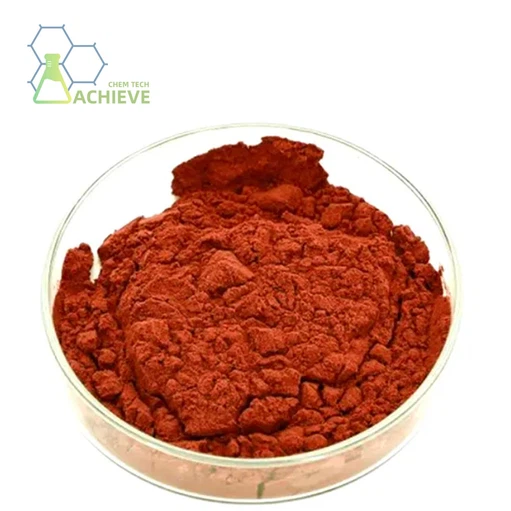
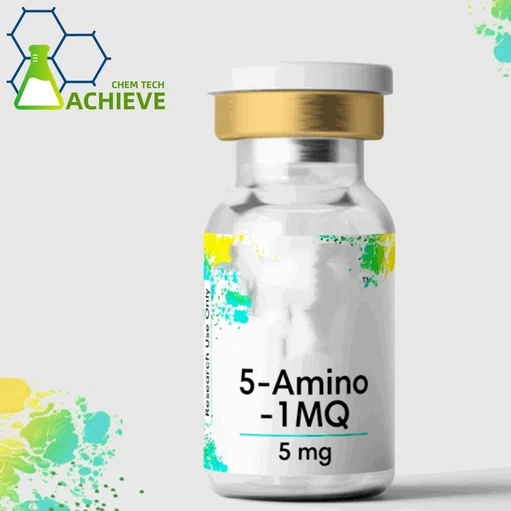
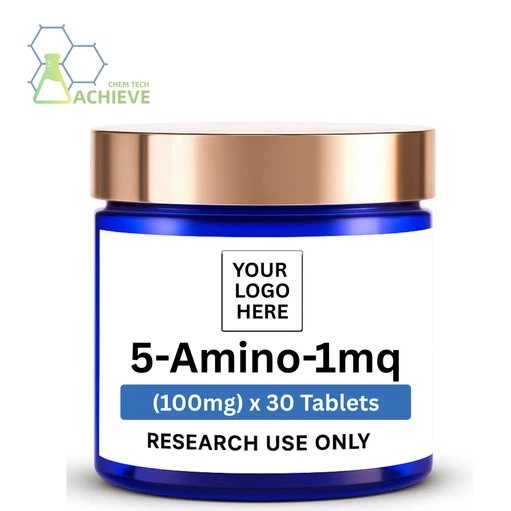
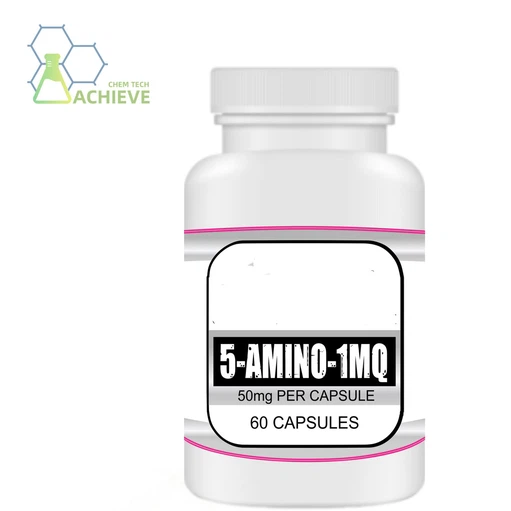
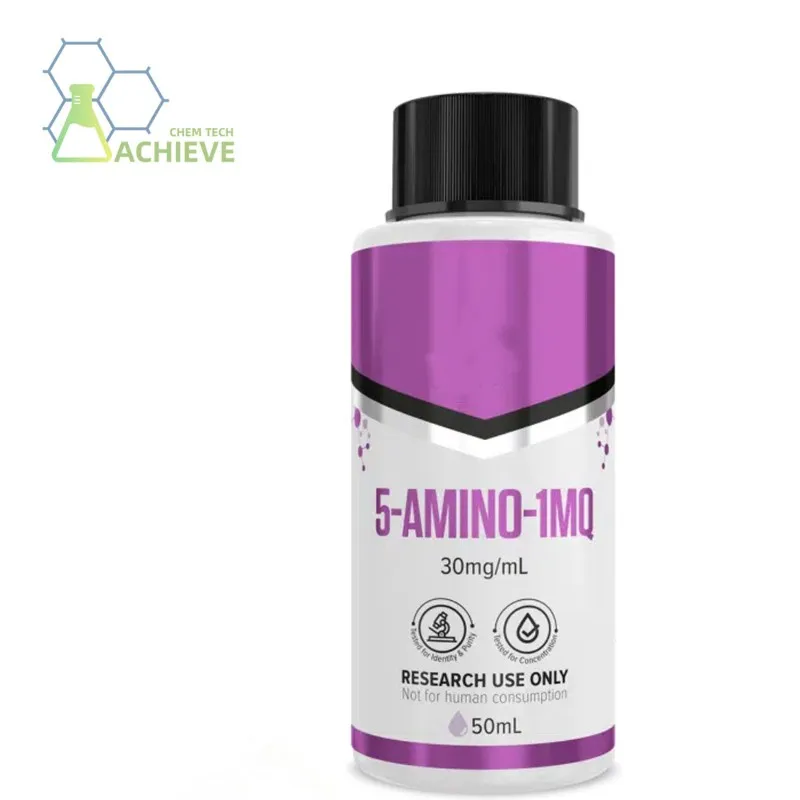
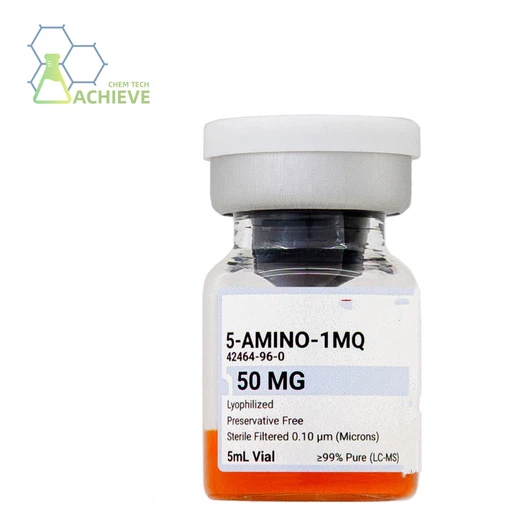
Our Product Forms


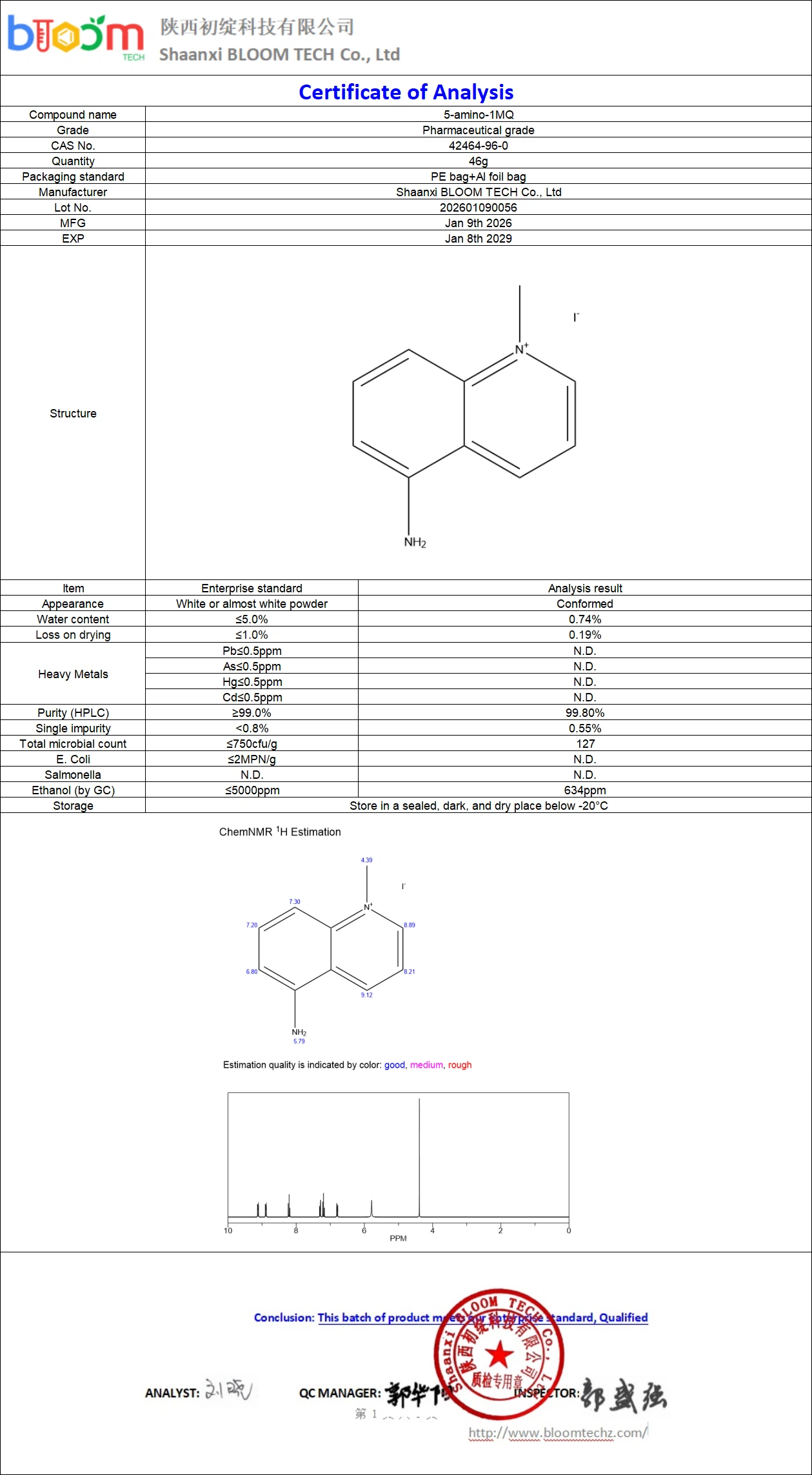
5-amino-1MQ COA

With unique advantages including high purity, easy absorption and controllable dosing, the product shows broad prospects in basic cancer research, preclinical studies and exploratory potential clinical applications. The following elaborates on its core applications and mechanisms in cancer research to provide references for related studies.
Core Applications in Basic Cancer Research
In basic cancer research, 5-amino-1mq liquid is mainly used to investigate the role and mechanism of NNMT in carcinogenesis and cancer progression, screen potential therapeutic targets, and verify the regulation of related metabolic pathways, providing theoretical support for subsequent preclinical and clinical applications. Its applications focus on cell experiments and molecular mechanism studies.
Application in Cancer Cell Line Experiments

The product is a commonly used tool reagent in cancer cell line research. It is widely applied in assays of core biological behaviors of various cancer cells, including proliferation, apoptosis, migration and invasion, helping researchers clarify the effects of NNMT inhibition on cancer cells. To date, it has been used in multiple cell lines such as cervical cancer, glioma, thyroid cancer, renal cancer, bladder cancer and gastric cancer cells.In cervical cancer research, treatment of HeLa cervical cancer cells with the product significantly inhibits cancer cell proliferation in a concentration‑ and time‑dependent manner.
Both proteins are closely related to tumor cell survival, proliferation and therapeutic resistance, further confirming the promoting role of NNMT overexpression in cervical cancer progression and providing new insights for targeted therapy of cervical cancer.
During experiments, the liquid form allows rapid integration into cell culture systems, ensuring uniform drug distribution, avoiding uneven cellular effects caused by insufficient dissolution of powder formulations, and improving the reliability of experimental data.


In glioma research, NNMT expression is significantly higher in primary glioblastoma (malignant brain tumor) than in normal brain tissue. The product inhibits NNMT activity, disrupts the metabolic balance of glioma cells, reduces energy supply, and thereby suppresses glioma cell proliferation and migration, serving as an important tool for metabolic‑targeted research of glioblastoma.In bladder cancer studies, NNMT has been identified as a major regulator of cell migration. Inhibition of NNMT using the product markedly reduces the proliferation and migration of bladder cancer cells, further validating the potential value of NNMT as a therapeutic target for bladder cancer.
Beyond anti-aging and metabolic research applications, this liquid 5-Amino-1mq is widely adopted for laboratory investigations focusing on cancer drug resistance mechanisms. Drug resistance remains one of the leading bottlenecks contributing to unsatisfactory therapeutic outcomes and eventual treatment failure during clinical cancer chemotherapy, and abundant preclinical evidence has confirmed that abnormally elevated NNMT expression is closely correlated with acquired drug resistance across various solid and hematologic malignancies. In relevant in vitro trials, researchers administer this selective NNMT inhibitor to established drug-resistant cancer cell models to investigate.

Application in Exploring Cancer Molecular Mechanisms

When conducting preclinical research exploring cancer-related molecular mechanisms, liquid 5-Amino-1mq serves as a reliable laboratory tool primarily employed to validate the regulatory functions of NNMT-centered metabolic cascades. It helps researchers unpack core molecular events driving tumor initiation and progressive malignant development, meanwhile facilitating the screening and confirmation of prospective anti-tumor therapeutic targets. Its fundamental pharmacological mode of action hinges on selective NNMT suppression: blocking excessive nicotinamide methylation reactions to elevate endogenous intracellular nicotinamide reserves, further accelerating downstream NAD+ biosynthesis.
Excess accumulated NAD+ sequentially triggers the persistent activation of multiple NAD+-reliant intracellular signaling cascades. Specifically, endogenous NNMT catalyzes the complete methylation of nicotinamide to stable 1‑methylnicotinamide. As a potent selective NNMT inhibitor precisely targeting the substrate binding site (IC50 for human NNMT = 1.2 μM), 5-amino-1mq liquid specifically blocks this catalytic reaction, leading to marked intracellular nicotinamide accumulation and distinctly elevated NAD+ levels via the conserved NAD+ salvage pathway. As an essential key coenzyme in all cellular metabolism, NAD+ participates in numerous vital physiological processes including energy metabolism, DNA damage repair and programmed apoptosis.


Thereby inhibiting cancer cell proliferation, promoting apoptosis, and suppressing tumor angiogenesis and metastasis.In addition, the product can be used to explore the association between NNMT and inflammatory response, thus clarifying its indirect role in cancer development. Studies indicate that NNMT is closely related to inflammatory status; its overexpression induces the production and release of inflammatory factors, which are important drivers of carcinogenesis and cancer progression.
Applications in Preclinical Cancer Research
Preclinical research is a critical step in anticancer drug development, which mainly verifies the efficacy, safety, and tolerability of drugs through animal models, providing data support for clinical trials. Benefiting from its ease of administration, rapid absorption, and high bioavailability, the product has been widely used in cancer animal model studies, focusing on three major directions: tumor growth inhibition, metastasis intervention, and combination therapy exploration.
Animal Model Studies on Tumor Growth Inhibition
The product has demonstrated remarkable dose-dependent tumor growth inhibitory effects across validated animal models covering a wide range of malignant cancers. For example, in a classic peritoneal metastasis model of human ovarian cancer, researchers delivered daily intraperitoneal administration at 20 mg/kg/d of the product and found that it effectively inhibited the distant metastasis and rapid proliferation of HeyA8 ovarian cancer cells. No obvious systemic adverse reactions were observed in tested animals even at a relatively high daily dose up to 60 mg/kg/d, confirming its promising safety profile and therapeutic efficacy for prospective ovarian cancer treatment.


In preclinical animal models of gastric cancer, pancreatic cancer, renal cancer, and several other common malignancies, the product also displayed consistent favorable tumor‑suppressive pharmacological effects. Studies have revealed that NNMT is distinctly overexpressed in these established cancer models. Oral or intraperitoneal administration of the product significantly reduces NNMT activity in solid tumor tissues, boosts intracellular NAD+ levels, inhibits rapid tumor cell proliferation, and cuts down tumor volume and weight without obvious damage to surrounding normal organs, indicating reliable high safety and precise targeting features.
In addition, the product exhibits unique advantages in animal models of obesity‑related cancers. Obesity is closely associated with an increased risk of multiple cancers, and NNMT overexpression acts as a key mediator linking obesity and cancer: in the obese state, elevated NNMT activity leads to metabolic disorders and promotes cancer cell proliferation.By inhibiting NNMT activity, 5-amino-1mq liquid regulates systemic metabolism, reduces fat accumulation, and suppresses the occurrence and progression of obesity‑related cancers, providing a novel strategy for the prevention and treatment of such cancers. Its liquid formulation also facilitates long‑term oral administration, meeting the requirements of long‑term intervention studies for obesity‑related cancers.

Animal Model Studies on Tumor Metastasis Intervention

Tumor metastasis is one of the leading causes of death in cancer patients, and exploring methods to inhibit metastasis is a major focus in cancer research. The product can effectively intervene in the metastatic process by inhibiting NNMT activity, which has been validated in multiple cancer metastasis models.

In a bladder cancer cell metastasis model, NNMT knockout significantly reduced the migration ability of bladder cancer cells, and the product, as an NNMT inhibitor, achieved similar effects. Intraperitoneal or oral administration inhibited bladder cancer cell migration and invasion and reduced the formation of distant metastases, through mechanisms involving cellular metabolic regulation and downregulation of metastasis‑related proteins.
In non‑small cell lung cancer models, inhibiting NNMT activity also markedly suppressed tumor growth and metastasis, further confirming the potential value of the product in tumor metastasis intervention.
Furthermore, NNMT has been identified as a promising potential serum tumor marker in colorectal cancer, oral squamous cell carcinoma, and multiple other malignant tumor models, with its abnormal overexpression closely related to invasive tumor metastasis. The product can lower the circulating level of this specific tumor marker and restrain distant metastasis by selectively inhibiting NNMT enzymatic activity, providing valuable new directions for early clinical diagnosis and targeted metastasis intervention. Its unique liquid formulation is rapidly absorbed in tested animals, acting promptly to effectively block the formation and progressive development of metastatic lesions.

Preclinical Exploration of Combination Therapy
Monotherapy often has limitations in cancer treatment, and combination therapy has become the mainstream approach. With good compatibility and targeting, the product can be used in combination with chemotherapeutic agents, immunotherapeutic drugs, etc., showing synergistic effects in preclinical studies.

In chemotherapy combination studies, the product enhances the efficacy of chemotherapeutic drugs while reducing their toxic side effects.For instance, in cervical cancer and gastric cancer models, combining the product with common chemotherapeutics such as cisplatin and 5‑fluorouracil significantly improves the killing effect on cancer cells and reduces damage to normal cells.
The mechanism is related to metabolic regulation and increased chemosensitivity of cancer cells: by inhibiting NNMT, the product disrupts the energy supply of cancer cells, making them more vulnerable to chemotherapy, while protecting the metabolic balance of normal cells and reducing side effects.
In immunotherapy combination exploration, the product enhances the efficacy of immunotherapy by modulating the tumor microenvironment. Inflammatory responses and metabolic disorders in the tumor microenvironment suppress immune cell activity.The product inhibits NNMT, reduces inflammatory factor levels, improves the tumor microenvironment, promotes immune cell infiltration and activation, and thereby enhances the recognition and killing of tumor cells by immunotherapeutic agents, offering a new strategy for cancer immune combination therapy.

FAQ
What is the half life of 5 amino 1mq?
+
-
According to published rat pharmacokinetic research quantified via LC-MS/MS detection, oral-administered 5-amino-1MQ (shortened as 5-AMQ) has a mean terminal elimination half-life of roughly 6.90 ± 1.20 hours, while its intravenous counterpart displays a shorter half-life averaging 3.80 ± 1.10 hours. Classified as a selective Nicotinamide N-methyltransferase (NNMT) small-molecule inhibitor, this quaternary ammonium compound achieves around 38.4% oral bioavailability in rodent trials, an acceptable absorption rate for positively charged quinolinium derivatives that typically face poor intestinal permeability. Developed primarily for preclinical research targeting metabolic dysfunction, it elevates intracellular NAD+ pools via NNMT suppression to regulate lipid metabolism, insulin sensitivity and overall bodily metabolic function.
What is the other name for 5 amino 1MQ?
+
-
5-Amino-1-methylquinolinium iodide, commonly referred to as 5‑Amino‑1mq, functions as a potent selective small-molecule nicotinamide N-methyltransferase (NNMT) inhibitor in preclinical biological research. In cellular experiments using murine C2C12 myoblast lines, this compound effectively facilitates orderly myoblast differentiation and accelerates the fusion process toward mature myotube formation. Meanwhile, it is capable of awakening dormant senescent muscle stem cells (muSCs) and repairing their impaired physiological functions, which prominently upgrades the inherent regenerative potential of naturally aged skeletal muscle tissue.
Hot Tags: 5-Amino-1mq Liquid, suppliers, manufacturers, factory, wholesale, buy, price, bulk, for sale