


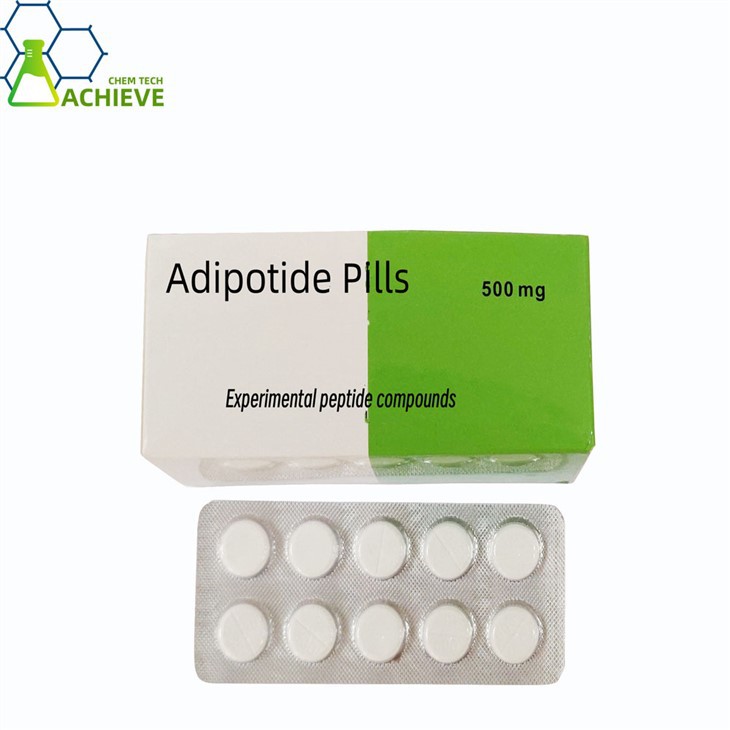



Shaanxi BLOOM Tech Co., Ltd. is one of the most experienced manufacturers and suppliers of adipotide pills in China. Welcome to wholesale bulk high quality adipotide pills for sale here from our factory. Good service and reasonable price are available.
Adipotide pills present a fascinating yet understudied potential in aquaculture obesity management, where oral administration could selectively reduce visceral fat in farmed fish species prone to excessive adiposity, such as Atlantic salmon or bluefin tuna, improving both meat quality and metabolic health without the stress of repeated injections. The pill's formulation challenges-particularly peptide degradation in cold-blooded digestive systems-have led to innovative enteric coatings derived from chitin-based biomaterials, which resist enzymatic breakdown in piscine stomachs while releasing Adipotide in the alkaline midgut. Curiously, early trials in zebrafish reveal that gut microbiota, particularly Vibrio and Aeromonas species, may enzymatically modify Adipotide's structure, either enhancing or inhibiting its activity-a phenomenon not observed in mammalian models. Another unexplored avenue is its role in insect lipid metabolism: when incorporated into feeder insect diets (e.g., mealworms for reptile nutrition), Adipotide Pills could indirectly regulate fat accumulation in captive insectivores, offering a stealthy nutritional intervention.
|
|
|



Adipotide Powder COA

The dilemma of oral bioavailability of peptide drugs
Adipotide pills, as a peptide analog targeting the blood vessels of adipose tissue, faces the same bioavailability problem as other peptide drugs in the development of its oral formulation. This problem stems from the complex interaction between the physical and chemical properties of peptide drugs and the physiological environment of the gastrointestinal tract. It mainly manifests in the following four aspects:
The destructive effect of the gastrointestinal chemical barrier
The oral absorption of peptide drugs must first overcome the chemical barrier of the gastrointestinal tract. The highly acidic environment in the stomach (pH 1.2 - 3.0) causes the polypeptides to be protonated, resulting in the unfolding or even breaking of their spatial structure. For example, semaglutide is prone to deamidation under the action of pepsin, and although the D-type amino acids in Adipotide can resist some protease degradation, the direct destruction by gastric acid cannot be ignored. After entering the small intestine, the alkaline environment (pH 6.5 - 8.0) reduces the risk of acid hydrolysis, but more than 20 types of peptidases such as trypsin and chymotrypsin will specifically cleave the peptide bonds, breaking down the polypeptides into inactive amino acid fragments. Experimental data shows that the degradation rate of unmodified insulin in the gastrointestinal tract exceeds 99%, while if Adipotide does not take protective measures, the proportion of its intact molecule reaching the absorption site may be less than 1%.
Physical Limitations of Mucosal Permeation
The mucosal layer of the gastrointestinal tract constitutes a physical barrier for the absorption of peptide drugs. The dense structure formed by the tight junctions between the epithelial cells of the small intestine allows only small molecules such as water and ions to pass freely, while substances with a molecular weight greater than 500 Da require specific transport mechanisms. The molecular weight of Adipotide is approximately 2.5 kDa, far exceeding the molecular threshold of the paracellular pathway. Its transmembrane transport mainly relies on passive diffusion and carrier-mediated endocytosis. However, hydrophilic peptide drugs have poor lipid solubility and are difficult to penetrate the phospholipid bilayer of the cell membrane. Studies have shown that the transmembrane permeability of common peptides is only 1/100 - 1/1000 of that of small molecule drugs, while the D-type amino acid structure of Adipotide, although it can enhance protease resistance, further reduces its lipid solubility, exacerbating the difficulty of permeation.
Metabolic Elimination Due to the First-pass Effect
Even if some peptide drugs manage to penetrate the mucosal barrier, they still need to confront the first-pass effect in the liver. The portal venous system directly transports substances absorbed in the gastrointestinal tract to the liver. The liver contains abundant metabolic enzymes (such as cytochrome P450, peptidases) that quickly eliminate foreign substances. For Adipotide, the lysine residues in its D(KLAKLAK)₂ sequence are common sites of action for liver peptidases, which may cause the drug to be degraded during its first passage through the liver. Experiments have shown that the oral bioavailability of unmodified peptides is typically less than 2%, and even with structural optimization strategies, such as extending the half-life of semaglutide through the fatty acid side chain, the oral formulation Rybelsus has a bioavailability of only about 1%.
Limitations of Current Technology Strategies
In response to the aforementioned challenges, the current development of oral formulations of peptide drugs mainly relies on the following technical approaches, but all of them have significant limitations:

Chemical modification technology
Introducing lipid-soluble groups through reactions such as esterification and amidation can enhance the membrane permeability of peptide drugs. For example, semaglutide has a C18 fatty acid side chain attached at the 26th position of lysine, increasing its oral bioavailability to 1%. However, such modifications may alter the binding affinity of the drug to the target. If the targeting sequence CKGGRAKDC of Adipotide is modified, it may affect its specific binding to the Prohibitin receptor, leading to a decrease in efficacy.
Penetration enhancer (PE) technology
Using substances such as SNAC and EDTA to promote absorption by altering cell membrane fluidity or opening tight junctions. SNAC has been successfully applied in the oral formulation of semaglutide, but its mechanism of action highly depends on the molecular compatibility between the drug and PE. If Adipotide adopts a similar strategy, it needs to screen PE that is compatible with the D-type amino acid structure and verify its long-term safety for the gastrointestinal mucosa.


Nanocarrier technology
Carriers such as liposomes and polymer nanoparticles can protect drugs from enzymatic degradation by encapsulating them, and achieve targeted delivery through surface modification. However, the preparation process of nanocarriers is complex, and the drug loading capacity is usually less than 10%, and it may trigger an immune response. In addition, Adipotide has a large molecular weight, and it is necessary to develop nanosystems that can efficiently load large-molecule peptides. Current related research is still in the early stage.
Enteric coating technology
Using pH-sensitive materials to release drugs at specific sites in the intestine, which can avoid degradation in the stomach. However, the enzyme environment in the small intestine will still degrade the drug, and enteric preparations cannot solve the problems of mucosal penetration and first-pass effect. Experimental results show that the bioavailability of peptide drugs with simple enteric coating is usually less than 5%.

Potential breakthrough directions for Adipotide oral formulation
Based on the current technological progress, the development of Adipotide oral formulation can explore the following innovative strategies:
Combining chemical modification with penetration enhancers, for example, introducing SNAC binding sites in the fatty acid side chain of Adipotide, while optimizing the PE formulation to match its molecular structure. Such strategies have demonstrated synergistic effects in the oral formulation of semaglutide, increasing the bioavailability by 3-5 times compared to a single technology.
Using thiolated polymers or cationic high-molecular-weight materials, prolonging the retention time of the drug on the mucosal surface through covalent bonds or charge interactions. Experiments have shown that mucosal-adhesive nanoparticles can increase the oral bioavailability of insulin to 13.2%. This technology may be applicable for the local enrichment of Adipotide.
Adding soybean trypsin inhibitor or leucine-rich peptides to the formulation can inhibit the activity of gastrointestinal peptidases. It is necessary to control the dosage of the enzyme inhibitor to avoid excessive inhibition, which may lead to abnormal pancreatic function.
For the short exposure window of Adipotide in the stomach, developing pH-responsive formulations that trigger drug release using the acidic environment of the stomach, and combining the local buffering effect of SNAC to protect the drug activity. Such strategies have been successfully applied to the development of somatulip peptide gastric absorption formulations.
The "interference" effect of the intestinal microbiota
Adipotide pills, as a peptide analog targeting the blood vessels in adipose tissue, the development of its oral formulation may encounter the complex "interference" effect of the intestinal microbiota. This interference mainly manifests in four aspects: metabolic degradation, competitive inhibition, barrier function influence, and immune regulation.


I. The metabolic degradation effect of gut microbiota on Adipotide
The gut microbiota encodes over 3,000 enzymes, which can extensively metabolize peptide-based drugs. Although the D-type amino acids in the Adipotide molecule can resist partial protease degradation, the specific peptidases produced by the gut microbiota (such as leucine aminopeptidase, proline oligopeptidase) may cleave it by recognizing its peptide bond sequence. For example, the arginine-lysine bond (R-K) in the targeted sequence CKGGRAKDC of Adipotide is a potential action site for common proteinases in the gut microbiota, which may lead to the inactivation of the drug. In addition, the short-chain fatty acids (such as acetic acid, propionic acid) produced by the microbiota metabolism may indirectly affect the solubility and stability of Adipotide by changing the intestinal pH value.
II. Competitive Inhibition of Metabolites of Gut Microbiota and Adipotide
The metabolites produced by the gut microbiota may competitively bind to transporters or receptors with Adipotide. For instance, butyric acid produced by the fermentation of dietary fiber by the microbiota can enhance the drug efflux by upregulating the expression of P-glycoprotein (P-gp) in intestinal epithelial cells, thereby reducing the absorption efficiency of Adipotide. Additionally, secondary bile acids synthesized by the microbiota (such as deoxycholic acid) may regulate the expression of intestinal tight junction proteins by activating the Farnesoid X Receptor (FXR), thereby indirectly affecting the transmembrane transport of Adipotide.
III. Disruption of Gut Microbiota Balance and Damage to Intestinal Barrier Function
Disruption of the gut microbiota (such as a decrease in the ratio of Firmicutes to Bacteroidetes) may lead to damage to the intestinal mucosal barrier function. The lipopolysaccharides (LPS) produced by the microbiota, by activating the Toll-like receptor 4 (TLR4) signaling pathway, induce the release of pro-inflammatory cytokines (such as IL-6, TNF-α) from intestinal epithelial cells, disrupting the integrity of tight junction proteins (such as occludin, occludin-1). This disruption of barrier function may trigger "intestinal leak syndrome", causing Adipotide to enter the portal venous system before being fully absorbed, thereby reducing its bioavailability for targeting adipose tissue.
IV. Potential Impact of the Gut Microbiota-Immune Axis on the Efficacy of Adipotide
The gut microbiota regulates the host immune system through the "gut-microbiota-brain axis", which may indirectly affect the anti-obesity effect of Adipotide. For instance, short-chain fatty acids produced by the microbiota (such as butyric acid) can promote the differentiation of regulatory T cells (Treg) and inhibit the activation of pro-inflammatory M1-type macrophages. If the treatment with Adipotide leads to changes in the microbiota composition (such as a decrease in the abundance of Bifidobacterium), it may weaken this immune regulatory effect, thereby exacerbating fat tissue inflammation and counteracting its weight loss effect. Additionally, the metabolic products of the microbiota (such as tryptophan derivatives) may affect the expression of genes related to adipose tissue angiogenesis by activating the aryl hydrocarbon receptor (AhR), generating antagonistic or synergistic effects with the targeted mechanism of Adipotide.
V. Countermeasures and Future Directions
In response to the interference of intestinal flora, the development of Adipotide oral preparations can explore the following strategies:
Structural modification: By glycoengineering or fatty acid side-chain modification, enhance the drug's resistance to bacterial enzyme;
Microbial community regulation: Combine the use of probiotics (such as Akkermansia) or prebiotics (such as fructooligosaccharides), optimize the microbial community composition to reduce metabolic degradation;
Formulation technology: Utilize nano-crystal or liposome encapsulation technology to protect the drug from the influence of microbial metabolites;
Administration timing: Select the time period when the microbial community's metabolic activity is low (such as at night) for administration, reducing the risk of competitive inhibition.
Hot Tags: adipotide pills, suppliers, manufacturers, factory, wholesale, buy, price, bulk, for sale