




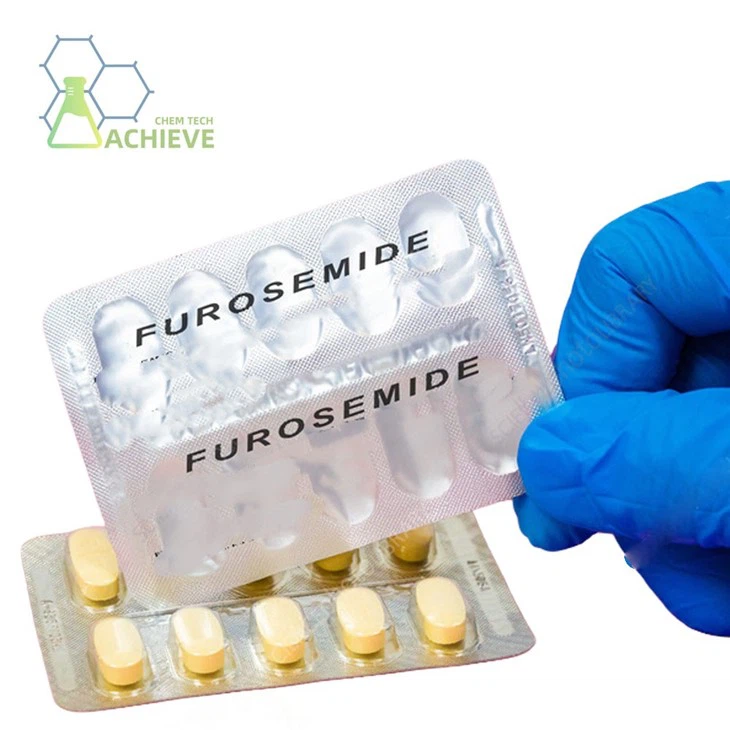
Furosemide, also known as lasix, is a classic potent loop diuretic widely used in clinical practice.Furosemide tablet 10 mg is an oral tablet containing lasix, with a dosage of 10 milligrams per tablet. Lasix belongs to the Loop Diuretic class of potent diuretics, which increases urine excretion by inhibiting the reabsorption of sodium and chlorine in the Loop of Henle in the kidneys, thereby helping the body eliminate excess water and salt. The main mechanism of action of lasix lies in its physiological effects on the kidneys. In the ascending segment of the Henry's loop, lasix blocks the sodium potassium chloride co transporter (NKCC2), reducing the reabsorption of sodium and chloride. Due to the reduced reabsorption of sodium and chlorine, more water is retained in urine, thereby increasing urine output.
By increasing urine excretion, lasix can reduce blood volume in the body, thereby lowering blood pressure. For edema caused by heart failure, cirrhosis or kidney disease, lasix can help alleviate symptoms by reducing fluid retention in the body.
Our products




Furosemide COA


Its primary site of action is the thick ascending limb of the renal medullary loop. Furosemide tablet 10 mg exerts powerful diuretic effects by inhibiting ion transport, and also possesses additional pharmacological activities such as vasodilation and circulatory improvement, with a broad range of clinical applications.
Its main mechanism of action is to block the Na⁺-K⁺-2Cl⁻ symporter on the luminal membrane of the thick ascending limb of the medullary loop.
This markedly reduces the reabsorption of sodium, potassium and chloride ions, raises the osmotic pressure within the tubular lumen, and prevents massive water reabsorption by the kidneys, thereby producing a rapid and potent diuretic effect. Urine output increases significantly shortly after administration, eliminating excess water and sodium from the body. Its diuretic potency is far higher than that of thiazide diuretics. Since it increases the excretion of electrolytes, close monitoring is required during medication use to guard against electrolyte disorders such as hypokalemia, hyponatremia and hypochloremia.


In terms of the cardiovascular system, lasix dilates renal blood vessels to increase renal blood flow. It also dilates pulmonary and peripheral veins, reduces venous return and alleviates cardiac preload, thus rapidly relieving pulmonary congestion and limb edema. For these properties, it is a first-line emergency drug for acute and chronic heart failure as well as acute pulmonary edema. In addition, it accelerates the excretion of uric acid, calcium and magnesium ions in the body, serving as an adjuvant therapy for hypercalcemia and hyperkalemia. It is also used to speed up the renal elimination of toxins and drugs.
Clinically, lasix is mainly indicated for various edematous diseases, including cardiogenic, hepatogenic and nephrogenic edema. It is also applied in the combined treatment of hypertensive emergencies and refractory hypertension. Thanks to its rapid onset and strong efficacy, it plays a vital role in critical care and the correction of body fluid imbalance. The dosage and treatment course must be strictly controlled during administration. Dynamic monitoring of electrolytes, renal function and blood pressure is essential to avoid adverse reactions including dehydration, hypotension and ototoxicity, so as to ensure medication safety.


Lasix, as a highly effective diuretic, belongs to the category of loop diuretics and its chemical name is 4-chloro-N-furfuryl-5-sulfamoylantranilic acid. This drug exerts a potent diuretic effect by inhibiting the reabsorption of sodium and chloride ions by the renal tubules, increasing the excretion of electrolytes and water. Since its first synthesis in the 1960s, lasix has become a commonly used medication worldwide for the treatment of edematous diseases such as heart failure, cirrhosis ascites, nephrotic syndrome, and hypertension.
In the manufacturing field, the large-scale production of furosemide tablet 10 Mg requires strict adherence to Good Manufacturing Practice (GMP) to ensure the safety, efficacy, and quality control of each batch of products. The production process covers multiple links such as raw material synthesis, formulation processing, packaging, and quality control, involving interdisciplinary technologies such as chemical synthesis, formulation engineering, and analytical chemistry.

product key technologies
Raw materials and active ingredients
The core active ingredient of the product is lasix, whose chemical name is 4-chloro-N-furanmethyl-5-sulfonylbenzoic acid, molecular formula is C ₁ ₂ H ₁ ₁ ClN ₂ O ₅ S, and molecular weight is 330.75 g/mol. Lasix is a white to slightly yellow crystalline powder that is almost insoluble in water, but soluble in dilute alkaline solutions (such as sodium hydroxide solution). This characteristic requires adjustment of solubility through excipients in the formulation process.
Raw material source: The synthesis of lasix usually starts with 4,6-dichlorobenzoic acid-3-sulfonyl chloride, which is reacted with ammonia to generate an intermediate, and then condensed with 6-furanomethylamine to obtain it. The world's major producing countries include China, India, the United States, Brazil, etc. Among them, companies such as Shandong Boshan Pharmaceutical Co., Ltd. in China and Aurobindo Pharma Ltd in India provide raw materials for the international market.
Composition of excipients and preparations
The formulation of the product needs to balance drug stability, compressibility, and bioavailability. Typical excipients include:
Fillers: lactose, microcrystalline cellulose (MCC) - adjust tablet weight and volume to ensure uniformity of content.
Adhesive: PVP, starch - promotes particle formation and prevents fragmentation.
Disinfectant: Crosslinked carboxymethyl cellulose sodium (CCNa), low substituted hydroxypropyl cellulose (L-HPC) - accelerates the disintegration of tablets in the gastrointestinal tract and promotes drug release.
Lubricants: Magnesium stearate, talcum powder - reduces friction between particles and molds during the tablet pressing process to prevent sticking and impact.
Flow aid: Silica (colloidal silica) - improves particle flowability and ensures tablet pressing efficiency.
Special process requirements: Lasix is sensitive to light, and a light blocking agent (such as titanium dioxide) may be added to the formulation, and a light shielding packaging material (such as aluminum foil blister) may be used.
Production process flow
The production of furosemide tablet 10 mg follows GMP (Good Manufacturing Practice), and the typical process flow is as follows:
Raw material pretreatment
The raw material of lasix needs to be wet ground or air flow crushed to achieve the target particle size (usually D90<100 μ m) to improve the dissolution rate. Sift the auxiliary materials (such as 80 mesh sieve) to remove lumps or foreign objects.
Mixing and granulation
Dry mixing: Pre mix lasix with some fillers (such as lactose) in a high-speed mixer for 10-15 minutes to ensure even distribution of the main drug.
Wet granulation: Add a binder solution (such as PVP ethanol solution), use a granulation mechanism to form soft materials, and sieve (such as a 16 mesh sieve) to obtain wet particles.
Drying: Wet particles are dried in a fluidized bed dryer at 50-60 ℃ until the moisture content is less than 3%, and then sieved into whole particles (such as a 20 mesh sieve).
Total mixing and tablet pressing
Dry particles are mixed with residual excipients (disintegrants, lubricants) in a three-dimensional mixer for a total of 15-20 minutes.
Control the weight difference (± 5%), hardness (40-80 N), and brittleness (<1%) of the tablets by rotating the tablet press.
Coating (optional)
To mask bitterness or improve appearance, film coating (such as hydroxypropyl methylcellulose coating solution) can be applied to control weight gain by 2-4%.
Packaging and Quality Inspection
Tablets are packaged in blister packs or bottles, sealed, and subjected to tests for content uniformity, dissolution rate (such as paddle method with a 30 minute dissolution rate of ≥ 80%), microbial limit, etc.
The finished product must comply with USP (United States Pharmacopeia) or EP (European Pharmacopoeia) standards.
Key points of quality control
Content determination: High performance liquid chromatography (HPLC) was used to determine the content of lasix (98.0% -102.0%).
Regarding substances: Inspection checklist impurities ≤ 0.5%, total impurities ≤ 1.0%.
Residual solvents: detect residual amounts of ethanol, dichloromethane, etc. (in accordance with ICH guidelines).
Particle moisture: determined by Karl Fischer method, controlled at ≤ 3.0%.
Particle size distribution: D10, D50, D90 determined by laser diffraction method.
Dissolution curve: Similar factor (f2) to the reference formulation ≥ 50.
Stability: Accelerated test (40 ℃/75% RH) for 6 months, with a content change of ≤ 5% and an increase in related substances of ≤ 0.5%.

Overview of Furosemide Analytical Technology
Lasix is a widely used diuretic in clinical practice. The detection and analysis of its raw materials, pharmaceutical preparations and biological samples serve as core components of pharmaceutical quality control, pharmacokinetic research and clinical monitoring.
Currently, the mainstream analytical system is centered on high-performance liquid chromatography (HPLC) combined with spectroscopic and hyphenated chromatographic techniques, enabling the determination of purity, assay content, related substances and in vivo drug concentrations. The entire analytical workflow features high sensitivity and excellent reproducibility, complying with the standards of pharmacopoeias worldwide.
RP-HPLC Method for Quantitative Assay
Reversed-phase high-performance liquid chromatography (RP-HPLC) is the preferred method for assay determination and is also the official method specified in major pharmacopoeias.
A C18 octadecylsilane-bonded silica column is commonly adopted as the chromatographic column. The mobile phase generally consists of a mixture of methanol, water and glacial acetic acid, whose ratio is adjusted to optimize retention time and peak shape.
The flow rate is maintained at approximately 1.0 mL/min, and the detection wavelength is set at 233 nm or 287 nm, corresponding to the characteristic ultraviolet absorption peaks of lasix.
This method offers satisfactory resolution and effectively eliminates interferences from excipients and degradation products. It is applicable to the assay of lasix in various dosage forms including raw materials, tablets and injections. System suitability parameters such as theoretical plate number, tailing factor and repeatability must meet specified requirements to ensure accurate quantitation results.
Detection and Analysis of Related Substances
Examination of related substances is a key part of quality control. Lasix tends to degrade under light exposure, high temperature, acidic or alkaline conditions, generating aromatic ring-substituted impurities and degradation intermediates. Gradient elution HPLC is applied for impurity separation and limit testing.
Adjustment of the mobile phase gradient improves the separation of impurities with distinct polarities. The self-reference method or external standard method is used to quantify known and unknown impurities, with strict limits set for individual impurities and total impurities to guarantee medication safety.
For the screening of trace impurities, liquid chromatography-mass spectrometry (LC-MS) is adopted. The qualitative capability of mass spectrometry facilitates structural identification of impurities, supporting process traceability and degradation pathway investigation.
Auxiliary and Clinical Analytical Techniques
In addition, supplementary analytical techniques are also applied. Ultraviolet-visible spectrophotometry is easy to operate and widely used for rapid qualitative identification and preliminary content screening.
Titration, a traditional chemical analytical method, is now only used for rough testing of raw materials in a small number of manufacturers. In clinical settings, solid-phase extraction combined with HPLC or LC-MS/MS is employed for biological samples such as human blood and urine to eliminate matrix interferences.
This approach allows the monitoring of in vivo plasma drug concentrations and provides data support for individualized medication and pharmacokinetic studies.


Intelligent manufacturing
Combining Industry 4.0 technology to achieve interconnectivity and data analysis of production equipment. For example, real-time monitoring of tablet press pressure, tablet weight and other parameters through sensors, and automatic adjustment of process conditions to reduce human intervention.
Green manufacturing
Using environmentally friendly solvents (such as ethanol instead of dichloromethane), energy-saving equipment (such as low-temperature drying technology), and waste recycling (such as solvent recovery) to reduce the impact of production on the environment.
Personalized healthcare
Develop 3D printed customized tablets to meet the personalized needs of patients. For example, for children or elderly patients, adjusting tablet size, shape, and dosage can improve medication adherence.

FAQ
Will lasix remove fluid from legs?
+
-
Yes, Lasix (furosemide) can help reduce swelling in all parts of the body, including the feet and legs. However, you should not take this medication unless advised by a doctor, as it can cause serious adverse effects.
How bad is lasix for your kidneys?
+
-
Kidneys: This drug can make kidney problems worse or even cause new ones. If furosemide causes problems for your kidneys, your doctor may need to reduce your dose, or you may need to stop taking the drug. Liver: This drug can increase the level of liver enzymes in your body.
Hot Tags: furosemide tablet 10 mg, suppliers, manufacturers, factory, wholesale, buy, price, bulk, for sale