




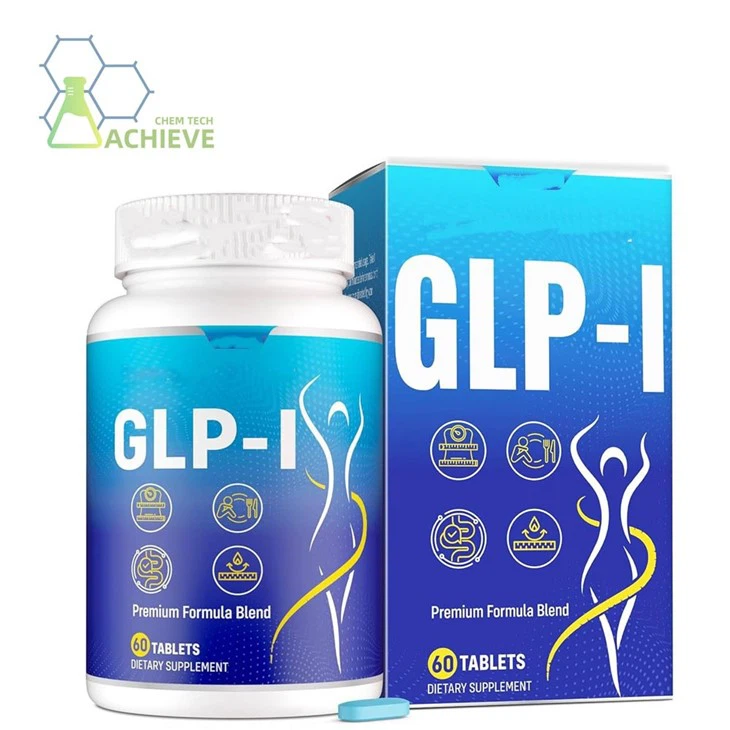
GLP Tablet (Glucagon Like Peptide-1) is an intestinal insulinotropic hormone secreted by intestinal L cells. Its core function includes stimulating pancreatic beta cells to secrete insulin (glucose dependent) while inhibiting pancreatic alpha cells to secrete glucagon, forming a "bidirectional regulation" mechanism and effectively reducing postprandial blood glucose fluctuations. It can inhibit gastrointestinal peristalsis, prolong the time food stays in the stomach, and reduce the rapid rise of postprandial blood sugar.
Acting on the appetite regulation center of the hypothalamus in the central nervous system, enhancing satiety and reducing food intake. It can promote fat breakdown, inhibit fat synthesis, improve blood lipid profile (reduce triglycerides, increase high-density lipoprotein cholesterol), and has potential cardiovascular protective effects. Natural GLP-1 is easily degraded by dipeptidyl peptidase-4 (DPP-4) in the body, with a half-life of only 1-2 minutes. Tablets need to be swallowed whole and cannot be broken, chewed, or crushed. They should be taken with a glass of water.


| Product Name | GLP-1 Powder | GLP-1 Tablet | GLP-1 Capsule | GLP-1 Liquid Drops |
| Product Type | Powder | Tablet | Capsules | liquid |
| Product Purity | ≥99% | ≥99% | ≥99% | ≥99% |
| Product Specifications | 100g/1kg/etc. | 3mg/7mg/14mg | 0.25mg/0.5mg/1mg | 0.68mg/1mg/3mg |
| Product Form | Organic synthesis | Take Orally | Take Orally | External application |
|
|
|


GLP-1 COA
 |
||
| Certificate of Analysis | ||
| Compound name | GLP-1 | |
| Grade | Pharmaceutical grade | |
| CAS No. | 87805-34-3 | |
| Quantity | Customized | |
| Packaging standard | Customized | |
| Manufacturer | Shaanxi BLOOM TECH Co., Ltd | |
| Lot No. | 202601090032 | |
| MFG | Jan 9th 2026 | |
| EXP | Jan 8th 2029 | |
| Item | Enterprise standard | Analysis result |
| Appearance | White or almost white powder | Conformed |
| Water content | ≤5.0% | 0.52% |
| Loss on drying | ≤1.0% | 0.35% |
| Heavy Metals | Pb≤0.5ppm | N.D. |
| As≤0.5ppm | N.D. | |
| Hg≤0.5ppm | N.D. | |
| Cd≤0.5ppm | N.D. | |
| Purity (HPLC) | ≥99.0% | 99.90% |
| Single impurity | <0.8% | 0.47% |
| Total microbial count | ≤750cfu/g | 92 |
| E. Coli | ≤2MPN/g | N.D. |
| Salmonella | N.D. | N.D. |
| Ethanol (by GC) | ≤5000ppm | 400ppm |
| Storage | Store in a sealed, dark, and dry place below -20°C | |
|
|
||


GLP Tablet (glucagon like peptide-1) is a major breakthrough in the treatment of diabetes and obesity. It can achieve comprehensive improvement in blood glucose regulation, weight control and metabolism by simulating the physiological effects of natural GLP-1
Manufacturing process: innovative fusion of biosynthesis and chemical synthesis
The manufacturing process of GLP-1 is mainly divided into two categories: biological synthesis and chemical synthesis. In actual production, a combination of the two is often used to optimize cost and efficiency.
Biosynthetic method
The biosynthetic method focuses on microbial fermentation and expresses GLP-1 precursor peptides through genetically engineered yeast or Escherichia coli. For example, in Novo Nordisk's production of semaglutide, yeast cells are designed to secrete GLP-1 main chains, and after fermentation, the fermentation broth containing the target peptide is harvested.


The advantage of this method lies in the easy availability of raw materials and low production costs, but the purity of the product is low and requires multiple subsequent purification steps. The fermentation broth needs to be sequentially subjected to techniques such as low-pressure ion exchange chromatography, medium high pressure reverse phase chromatography, and tangential flow filtration to gradually remove impurities and concentrate the target peptide.
Chemical synthesis method
The chemical synthesis method is mainly based on solid-phase synthesis, which gradually couples amino acids to form polypeptide chains through resin carriers.Company's Tilpotide adopts a solid-liquid mixing method: first, four short peptide fragments are segmented and synthesized by liquid-phase synthesis, and then the fragments are connected into complete peptides by solid-phase synthesis. The chemical synthesis method can accurately control the peptide sequence and modification sites, but the yield is low when synthesizing long chains, and the coupling efficiency and purification steps need to be optimized.


Semi fermentation method
The semi fermentation method combines the advantages of biological and chemical synthesis, first producing GLP tablet main chain through fermentation, and then introducing fatty acid side chains or non natural amino acids through chemical modification.
For example, the C18 fatty acid side chain of semaglutide is chemically coupled to the main chain, significantly prolonging its half-life. This method combines the large-scale production capacity of fermentation method with the structural accuracy of chemical synthesis method, becoming the mainstream manufacturing path for long-acting GLP-1 drugs.

Key raw materials: precise control from amino acids to side chains
The manufacturing of GLP tablets relies on high-quality raw materials, and their selection directly affects drug activity and stability

Amino acids and protecting groups
Peptide synthesis requires the use of high-purity (≥ 99%) L-type amino acids, among which the introduction of non natural amino acids (such as alpha aminoisobutyric acid) can enhance the drug's resistance to enzymatic hydrolysis. In addition, protective groups need to be used during the synthesis process to protect the amino acid side chains and prevent side reactions from occurring. The removal of protective groups requires strict control of conditions to ensure the integrity of the polypeptide chain.
Fatty acid side chains
Fatty acid side chains are the key to prolonging the half-life of GLP-1 drugs. The C18 diacid side chain of semaglutide is covalently linked to the main chain, increasing molecular hydrophobicity and promoting its binding with plasma albumin, thereby reducing renal filtration. The synthesis of fatty acid side chains requires high-purity raw materials (≥ 98%), and chain length and saturation must be controlled to ensure drug metabolic stability.


Absorption enhancer
Oral GLP-1 drugs need to overcome the low pH and enzymatic environment of the gastrointestinal tract, and the application of absorption enhancers (such as SNAC) is crucial. SNAC (Sodium N - (8- [2-hydroxybenzoyl] - amino) octanoate) locally increases the pH value in the stomach, reduces the degradation of peptides by gastric proteases, and promotes drug cross cellular transport. Its purity needs to be ≥ 99%, and the particle size distribution needs to be controlled to optimize absorption efficiency.
Quality control: comprehensive guarantee from purity to stability
The quality control of GLP-1 oral tablets runs through the entire production process, including raw material inspection, intermediate purification, and finished product stability testing.
Purity control

Structural confirmation

stability test

Future Trends: Technological Innovation and Adaptation Expansion
The manufacturing technology of GLP-1 oral tablets is developing towards greater efficiency and precision, while its indications continue to expand.

Small molecule GLP-1 receptor agonist
Currently, most oral GLP-1 drugs are peptides that require absorption enhancers to enhance their bioavailability. The development of small molecule agonists can overcome this limitation by directly absorbing them orally, simplifying production processes, and reducing costs. For example,Orforglipron has entered phase III clinical trials and has been shown to significantly reduce blood sugar and body weight when taken orally once a day.
Multi targeted drugs
Dual/triple agonists of GLP-1 and receptors such as GIP and GCGR can synergistically regulate metabolism and enhance therapeutic efficacy. As the world's first GLP-1/GIP dual agonist, Tilpotide has a better weight loss effect than single target drugs. The manufacturing of future multi-target drugs requires optimization of the synthesis and purification processes of polypeptide chains to ensure correct folding and proportional control of each active region.


Indications expansion
GLP-1 shows potential in cardiovascular risk, diabetes nephropathy, non-alcoholic steatohepatitis (NASH), Alzheimer's disease and other fields. For example, semaglutide can reduce the risk of cardiovascular events by 26%, and its manufacturing process needs to meet higher purity and stability requirements to support long-term treatment needs.
Continuous production technology
The traditional batch production mode has the problems of low efficiency and high cost. Continuous production technology (such as continuous flow chromatography and continuous drying) can achieve seamless connection from raw materials to finished products, significantly improving production efficiency. For example, spray drying technology maintains polypeptide activity through instant drying, with high productivity and low cost, and has become the mainstream of polypeptide drying.

FAQ
Is GLP-1 similar to Ozempic?
No, GLP-1 is not the same as Ozempic. GLP-1 (glucagon-like peptide-1) is a natural hormone produced in the gut, whereas Ozempic is a brand-name, synthetic drug. Ozempic belongs to a class of medications called GLP-1 receptor agonists, which mimic the natural hormone to manage blood sugar and reduce appetite.
What is GLP-1 for weight loss?
GLP-1 (glucagon-like peptide-1) weight loss involves using prescription, often weekly injections to mimic a natural hormone that regulates appetite and blood sugar. These medications slow stomach emptying and signal satiety to the brain, helping users feel full longer, reducing food cravings, and achieving significant, sustained weight loss, typically 10–20% of body weight.
What are the negative side effects of GLP-1?
Common GLP-1 receptor agonist side effects (like Ozempic, Wegovy) include nausea, vomiting, diarrhea, constipation, abdominal pain, and fatigue, which often improve over time. Serious, though rare, risks include pancreatitis, gallbladder disease, kidney damage, gastroparesis (stomach paralysis), and potential "Ozempic face".
Who cannot take GLP-1?
GLP-1 medications (such as Ozempic, Wegovy, Mounjaro) should not be taken by individuals with a personal or family history of medullary thyroid carcinoma (MTC) or Multiple Endocrine Neoplasia syndrome type 2 (MEN2), or those with a history of pancreatitis. They are also unsuitable for pregnant/breastfeeding individuals and those with severe gastrointestinal diseases like gastroparesis.
Hot Tags: glp tablet, suppliers, manufacturers, factory, wholesale, buy, price, bulk, for sale