


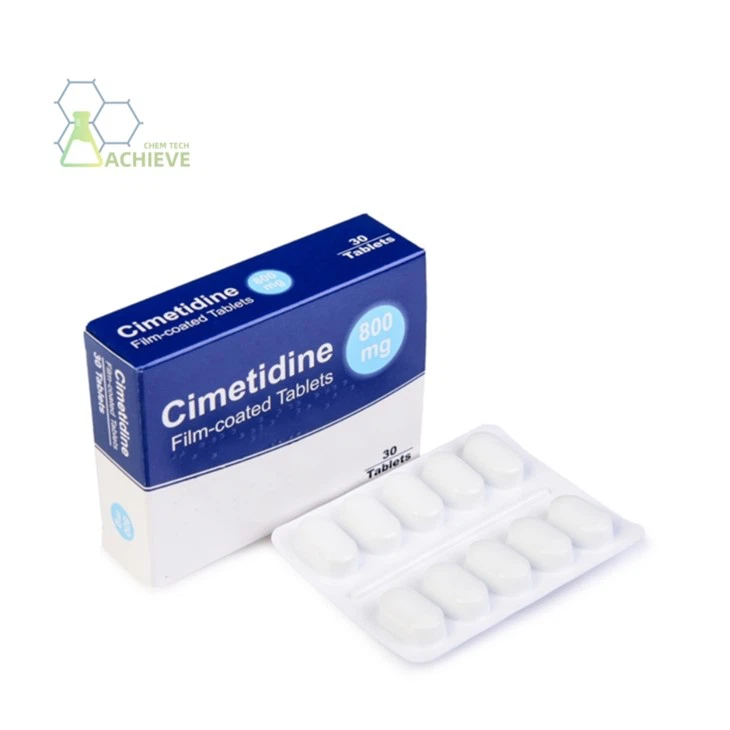

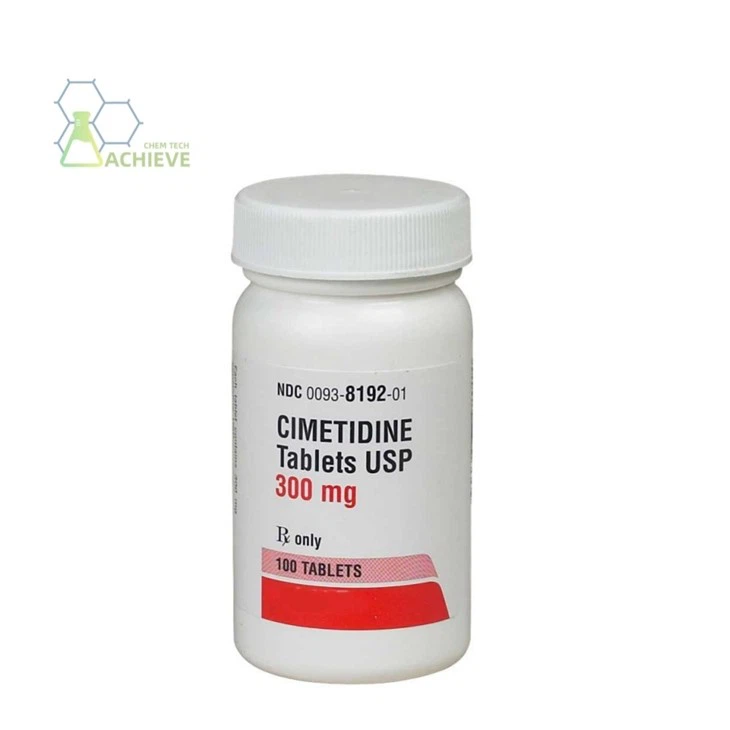


Cimetidine tablets 400mg are a classic H2 receptor antagonist that significantly inhibits gastric acid secretion by blocking H2 receptors on gastric wall cells. Since its launch in 1976, it has become one of the core drugs for treating stomach acid related diseases due to its definite efficacy and safety. This drug is suitable for the excessive secretion of gastric acid in pathological conditions such as gastric ulcer, duodenal ulcer, gastroesophageal reflux disease (GERD), Zollinger Ellison syndrome, etc. It can also alleviate self limiting symptoms such as occasional heartburn and acid reflux.



Additional information of chemical compound:
| Product Name | Cimetidine Powder | Cimetidine Tablets | Cimetidine Injection | Cimetidine Capsules | Cimetidine Cream |
| Product Type | Powder | Tablets | Injection | Capsules | Cream |
| Product Purity | ≥99% | ≥99% | ≥99% | ≥99% | ≥99% |
| Product Specifications | Customizable | Customizable | Customizable | Customizable | Customizable |
| Product Package | Customizable | Customizable | Customizable | Customizable | Customizable |
Our product form


Cimetidine +. COA
 |
||
Certificate of Analysis |
||
|
Compound name |
Cimetidine | |
|
CAS No. |
51481-61-9 | |
|
Grade |
Pharmaceutical grade | |
|
Quantity |
Customized | |
|
Packaging standard |
Customized | |
| Manufacturer | Shaanxi BLOOM TECH Co., Ltd | |
|
Lot No. |
20250109001 |
|
|
MFG |
Jan 12th 2025 |
|
|
EXP |
Jan 8th 2029 |
|
|
Structure |
|
|
| TEST STANDARD | GB/T24768-2009 Industry. Stnndard | |
|
Item |
Enterprise standard |
Analysis result |
|
Appearance |
White or almost white powder |
Conformed |
|
Water content |
≤4.5% |
0.30% |
| Loss on drying |
≤1.0% |
0.15% |
|
Heavy Metals |
Pb≤0.5ppm |
N.D. |
|
As≤0.5ppm |
N.D. | |
|
Hg≤0.5ppm |
N.D. | |
|
Cd≤0.5ppm |
N.D. | |
|
Purity (HPLC) |
≥99.0% |
99.5% |
|
Single impurity |
<0.8% |
0.48% |
|
Residue on ignition |
<0.20% |
0.064% |
|
Total microbial count |
≤750cfu/g |
80 |
|
E. Coli |
≤2MPN/g |
N.D. |
|
Salmonella |
N.D. | N.D. |
|
Ethanol (by GC) |
≤5000ppm |
400ppm |
|
Storage |
Store in a sealed, dark and dry place at-20 degrees |
|
|
|
||


Cimetidine tablets 400mg, as a classic H2 receptor antagonist, significantly inhibit gastric acid secretion by blocking H2 receptors on gastric wall cells. They are widely used in human medicine for the treatment of gastric acid related diseases. With the development of veterinary medicine, Cimetidine Tablets have gradually become an important drug for treating abnormal gastric acid secretion and related diseases in livestock pets in veterinary clinical practice due to their precise efficacy and safety.
1.1 Causes and pathological mechanisms
Gastric ulcer and duodenal ulcer are common digestive system diseases in pets (especially dogs and cats), mainly caused by excessive secretion of gastric acid, damage to gastric mucosal protective mechanisms, or Helicobacter pylori infection (less common in pets). Long term use of nonsteroidal anti-inflammatory drugs (NSAIDs), stress (such as surgery, trauma, infection), or irregular diet are common triggers.
1.2 Clinical manifestations
Dogs: vomiting (possibly bloody), abdominal pain, decreased appetite, weight loss, black stool (gastrointestinal bleeding).
Cats: vomiting, loss of appetite, abdominal tightness, rough hair, weight loss.


1.3 Therapeutic effect
Cimetidine Tablets promote ulcer healing by inhibiting gastric acid secretion, lowering the pH value in the stomach, reducing the stimulation of gastric acid on the ulcer surface. Meanwhile, its antihistamine effect can alleviate symptoms such as nausea and vomiting caused by gastric acid stimulation.
1.4 Medication plan
Dogs: 5-10mg/kg body weight, orally or intravenously, 3-4 times a day; Or 10-20mg/kg body weight, orally, twice a day.
Cat: 5mg/kg body weight, orally, once every 8-12 hours.
Course of treatment: usually lasts for 4-8 weeks until the ulcer heals.
1.5 Clinical Cases
Case 1: An 8-year-old male German Shepherd dog was diagnosed with gastric ulcer by endoscopy due to vomiting and black stool caused by long-term use of NSAIDs to treat arthritis. Administer 8 mg/kg body weight of Cimetidine Tablets orally, three times a day, while discontinuing NSAIDs and administering gastric mucosal protectants. After 2 weeks of treatment, vomiting stopped and black stool disappeared; Four weeks later, endoscopic re examination showed ulcer healing.
Case 2: A 5-year-old female domestic cat experienced loss of appetite and vomiting due to stress (moving), and X-ray examination revealed duodenal ulcers. Administer Cimetidine Tablets 5mg/kg body weight orally, once every 12 hours, and provide supportive treatment. After one week of treatment, the symptoms improved significantly; Fully recovered after 2 weeks.
2.1 Causes and pathological mechanisms
GERD is caused by dysfunction of the lower esophageal sphincter (LES) or delayed gastric emptying, leading to acid reflux into the esophagus and causing inflammation, ulcers, and even narrowing of the esophageal mucosa. Commonly seen in short nosed breeds of dogs (such as bulldogs, Boston Terriers) and obese pets.
2.2 Clinical manifestations
Dogs: Reflux, vomiting (possibly with blood), difficulty swallowing, weight loss, excessive saliva secretion.
Cats: Reflux, loss of appetite, weight loss, cough (due to irritation of the trachea by stomach acid).


2.3 Therapeutic effect
Cimetidine Tablets reduce gastric acid secretion, lower reflux acidity, alleviate esophageal mucosal damage, promote inflammation resolution, and ulcer healing. Meanwhile, its antihistamine effect can alleviate symptoms such as cough and vomiting caused by gastric acid stimulation.
2.4 Medication plan
Dogs: 5-10mg/kg body weight, orally or intravenously, 3-4 times a day; Or 10-20mg/kg body weight, orally, twice a day.
Cat: 5mg/kg body weight, orally, once every 8-12 hours.
Course of treatment: usually lasts for 8-12 weeks, and can be changed to a maintenance dose (such as once a day) after symptoms improve.
2.5 Clinical Cases
Case 1: A 3-year-old male French bulldog was diagnosed with reflux esophagitis through endoscopic examination due to frequent reflux and vomiting. Administer 10mg/kg body weight of Cimetidine Tablets orally, three times a day, while adjusting the diet (small to multiple meals, high protein and low-fat) and raising the bowl. After 4 weeks of treatment, reflux and vomiting stopped; After 8 weeks, endoscopic re examination showed healing of the esophageal mucosa.
Case 2: A 7-year-old female Maine Coon cat was diagnosed with reflux esophagitis on X-ray examination due to coughing and loss of appetite. Administer Cimetidine Tablets 5mg/kg body weight orally every 12 hours, along with cough suppressants and supportive treatment. After 2 weeks of treatment, the cough was relieved; Complete recovery after 4 weeks.
3.1 Causes and pathological mechanisms
Stress ulcers are common in stress states such as intensive care, surgery, trauma, or infection, where increased gastric acid secretion and reduced gastric mucosal blood flow lead to gastric mucosal damage. Drug induced gastritis is mainly caused by long-term use of NSAIDs, glucocorticoids, or certain antibiotics (such as tetracycline).
3.2 Clinical manifestations
Stress ulcer: vomiting (possibly bloody), black stool, abdominal pain, shock (when severe bleeding occurs).
Drug induced gastritis: vomiting, loss of appetite, abdominal pain, black stool.


3.3 Therapeutic effect
Cimetidine Tablets inhibit gastric acid secretion, reduce gastric acid damage to the gastric mucosa, and promote ulcer healing. Meanwhile, its antihistamine effect can alleviate symptoms such as nausea and vomiting caused by gastric acid stimulation.
3.4 Medication plan
Preventing stress ulcers: High risk pets (such as postoperative and intensive care) should be given Cimetidine Tablets at a dose of 3-5mg/kg body weight, orally or intravenously, 3-4 times a day.
Treatment of stress ulcer/drug-induced gastritis: 5-10mg/kg body weight, orally or intravenously, 3-4 times a day; Or 10-20mg/kg body weight, orally, twice a day.
Course of treatment: usually lasts for 7-14 days until symptoms improve.
3.5 Clinical Cases
Case 1: A 10-year-old male Golden Retriever was diagnosed with stress ulcer through endoscopic examination due to vomiting and black stool after femoral head replacement surgery. Administer cimetidine tablets 400mg at a dose of 8mg/kg body weight orally, three times a day, along with hemostatic medication and supportive treatment. After 3 days of treatment, vomiting stopped and black stool decreased; Fully recovered in 7 days.
Case 2: A 4-year-old female poodle was diagnosed with drug-induced gastritis through endoscopic examination due to vomiting and loss of appetite caused by long-term use of NSAIDs to treat arthritis. Administer Cimetidine Tablets 5mg/kg body weight orally every 12 hours, while discontinuing NSAIDs and administering gastric mucosal protectants. After 5 days of treatment, the symptoms improved significantly; Complete recovery in 10 days.
4.1 Causes and pathological mechanisms
Gastrinoma is a rare endocrine tumor that secretes large amounts of gastrin, stimulates excessive secretion of gastric acid, and leads to refractory gastric ulcers and diarrhea. Systemic mastocytosis is caused by the release of histamine and other mediators by mast cells, leading to increased gastric acid secretion and gastrointestinal symptoms.
4.2 Clinical manifestations
Gastrinoma: refractory gastric ulcer, diarrhea, weight loss, abdominal pain.
Systemic mastocytosis: vomiting, diarrhea, skin erythema, itching, abdominal pain.


4.3 Therapeutic effect
Cimetidine Tablets alleviate symptoms such as ulcers and diarrhea caused by excessive gastric acid secretion by inhibiting gastric acid secretion and lowering the pH value in the stomach. Meanwhile, its antihistamine effect can alleviate allergic reactions caused by mast cell release mediators.
4.4 Medication plan
Gastrinoma: Initial dose of 600-1200mg/day, taken orally in divided doses, adjusted according to gastric acid secretion (up to 2400mg/day).
Systemic mastocytosis: 5-10mg/kg body weight, orally or intravenously, 3-4 times a day.
Course of treatment: Long term maintenance therapy is required, with regular monitoring of gastric acid secretion and symptom relief.
4.5 Clinical Cases
Case 1: A 6-year-old male Border Collie was diagnosed with gastrinoma due to refractory gastric ulcer and diarrhea, with elevated serum gastrin levels. Administer Cimetidine Tablets 800mg/day orally in divided doses, along with antidiarrheal medication and supportive treatment. After 2 weeks of treatment, the diarrhea decreased; After 4 weeks, the ulcer healed and gastrin levels decreased.
Case 2: A 5-year-old female Labrador Retriever was diagnosed with systemic mastocytosis through skin biopsy due to repeated vomiting, diarrhea, and skin erythema. Administer 10mg/kg body weight of Cimetidine Tablets orally, three times a day, along with antihistamines and supportive therapy. After one week of treatment, the symptoms improved significantly; Fully recovered after 2 weeks.
5.1 Causes and pathological mechanisms
Chronic gastritis can be caused by irregular diet, infection (such as Helicobacter pylori, which is less common in pets), autoimmune diseases, or long-term use of medications (such as NSAIDs). Vomiting syndrome refers to frequent vomiting in pets without clear organic lesions, which may be related to gastric acid stimulation, delayed gastric emptying, or central nervous system abnormalities.
5.2 Clinical manifestations
Chronic gastritis: vomiting, loss of appetite, weight loss, abdominal pain, excessive saliva secretion.
Vomiting syndrome: frequent vomiting (possibly with blood), abdominal pain, and anxiety.


5.3 Therapeutic effect
Cimetidine Tablets alleviate vomiting symptoms by inhibiting gastric acid secretion, reducing the stimulation of gastric acid on the gastric mucosa. Meanwhile, its antihistamine effect can alleviate nausea and vomiting reflex caused by gastric acid stimulation.
5.4 Medication plan
Chronic gastritis: 5-10mg/kg body weight, orally or intravenously, 3-4 times a day; Or 10-20mg/kg body weight, orally, twice a day.
Vomiting syndrome: 5mg/kg body weight, taken orally, every 8-12 hours.
Course of treatment: usually lasts for 2-4 weeks, and can be gradually reduced after symptoms improve.
5.5 Clinical Cases
Case 1: A 7-year-old male corgi dog was diagnosed as chronic gastritis by endoscopy due to long-term vomiting and anorexia. Administer cimetidine tablets 400mg at a dose of 8mg/kg body weight orally, three times a day, while adjusting diet (small to multiple meals, easily digestible) and administering gastric mucosal protectants. After 2 weeks of treatment, vomiting stopped and appetite returned; Complete recovery after 4 weeks.
Case 2: A 3-year-old female Siamese cat was diagnosed with vomiting syndrome due to frequent vomiting and no clear organic lesions. Administer Cimetidine Tablets 5mg/kg body weight orally every 12 hours, along with anti anxiety medication and supportive treatment. After one week of treatment, the frequency of vomiting decreased; Completely stop after 2 weeks.
Frequently Asked Questions
Why is cimetidine not used anymore?
+
-
Cimetidine may significantly increase the blood levels of loperamide, which can lead to serious and potentially fatal complications such as cardiac arrhythmias and cardiac arrest, especially if loperamide is taken in excessive doses.
Are cimetidine and omeprazole the same?
+
-
Cimetidine (Tagamet HB) and omeprazole (Prilosec) are both used to treat heartburn and other stomach acid problems, but they belong to different classes of medications.
What to avoid when taking cimetidine?
+
-
This medication may also interact with the following:
Caffeine.
Carbamazepine.
Carmustine.
Delavirdine.
Estrogen or progestin hormones.
Itraconazole.
Ketoconazole.
Medications for irregular heartbeat.
What is the problem with cimetidine?
+
-
Cimetidine is usually well tolerated. But mild side effects, such as diarrhea, headaches, and liver enzyme elevations, can still occur. Cimetidine can also cause more rare side effects, including confusion, breast enlargement in men, and joint and muscle pain.
Can cimetidine cure acid reflux?
+
-
Cimetidine is a gastric acid reducer used in the short-term treatment of duodenal and gastric ulcers. [1] Therefore, the drug effectively manages gastric hypersecretion and is used to manage reflux esophagitis disease and prevent stress-related gastric ulcers.
Hot Tags: cimetidine tablets 400mg, suppliers, manufacturers, factory, wholesale, buy, price, bulk, for sale