




Shaanxi BLOOM Tech Co., Ltd. is one of the most experienced manufacturers and suppliers of plecanatide pills in China. Welcome to wholesale bulk high quality plecanatide pills for sale here from our factory. Good service and reasonable price are available.
Plecanatide pills (Prikanatide) represent a novel class of oral guanylate cyclase C (GC-C) agonists. As targeted gastrointestinal agents clinically indicated for irritable bowel syndrome (IBS) and chronic idiopathic constipation, they have emerged as one of the core therapeutics for functional gastrointestinal disorders owing to their unique dual pharmacological effects. This drug is a synthetic polypeptide sharing high sequence homology with uroguanylin, a naturally occurring peptide secreted by the human intestine. It can precisely target specific receptors on intestinal epithelial cells and nerve terminals, overcoming the limitations of traditional laxatives, including single-mode action, frequent intestinal discomfort and poor tolerability.
Unlike osmotic and stimulant laxatives, which only improve defecation by modulating intestinal osmotic pressure and promoting gut motility, it exert dual effects: facilitating defecation and inducing intestinal analgesia.
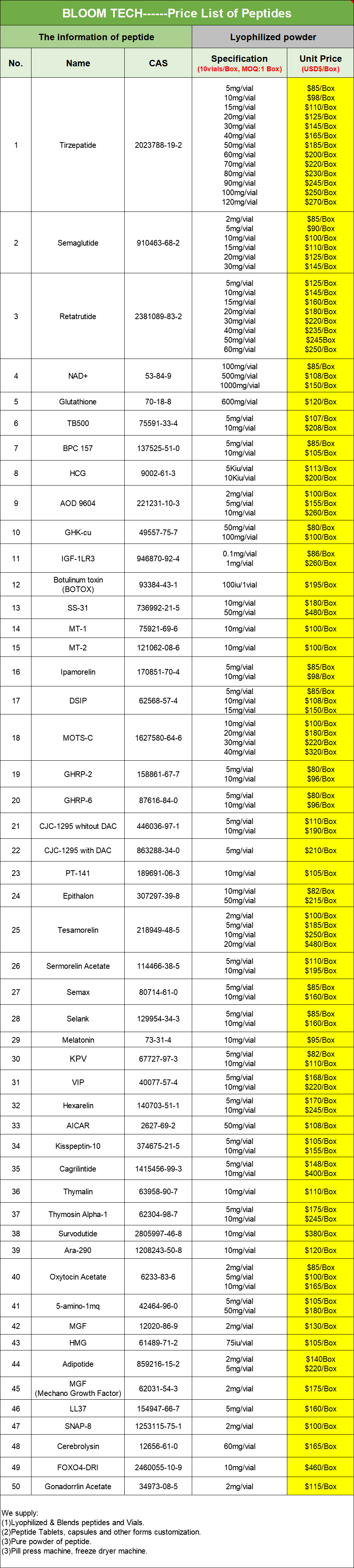
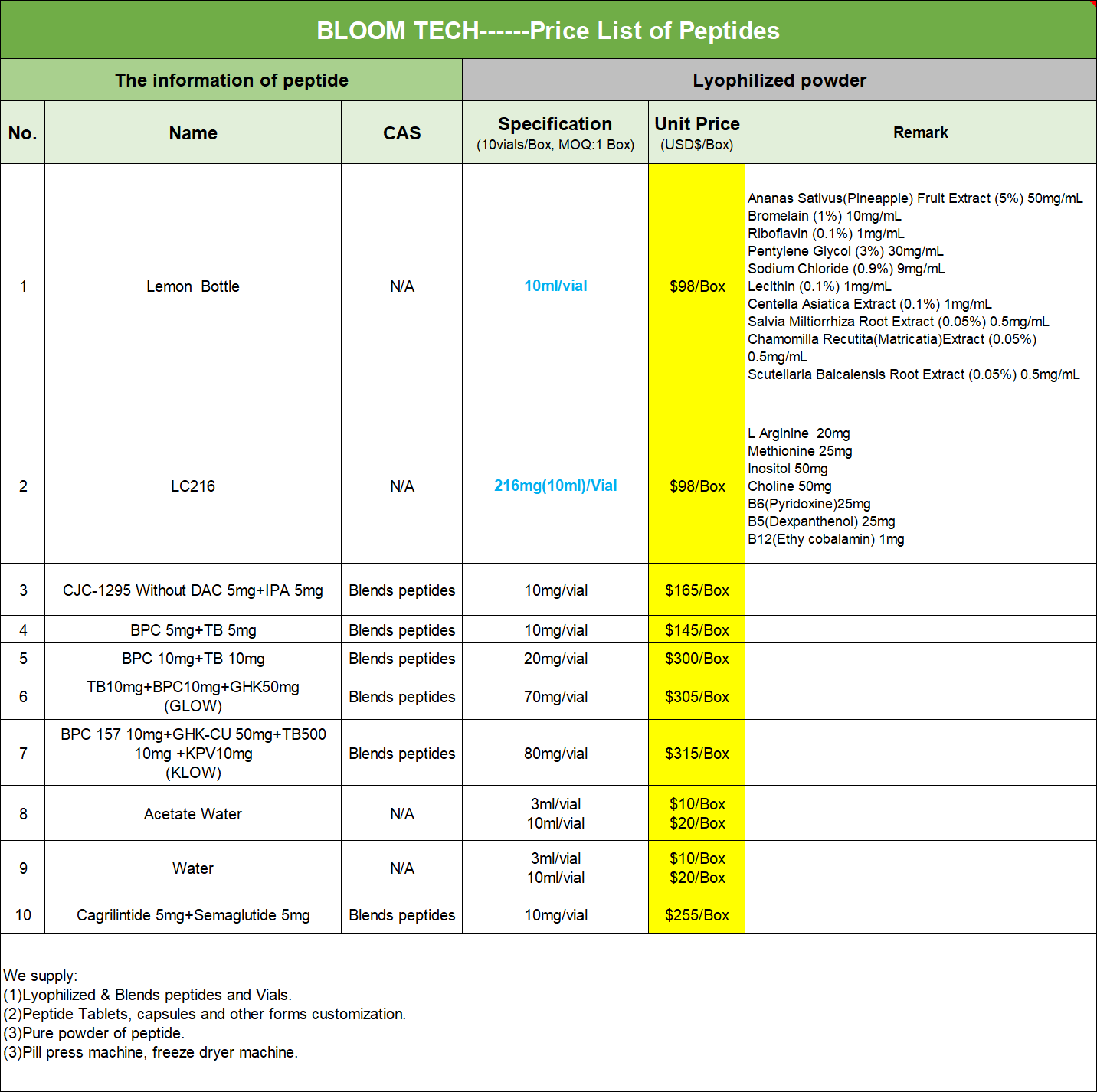
Our products Form
|
|
|
 |



Plecanatide COA


Plecanatide benefits users by softening feces and improving quality of life
Plecanatide pills exerts its stool-softening effect primarily by catalyzing an increase in intracellular cyclic guanosine monophosphate (cGMP) levels, which triggers a series of ion transport processes, ultimately promoting the transfer of water out of cells to hydrate the stool. This mechanism can be divided into three key steps, focusing on the transport patterns of ions such as chloride and sodium.
1. Elevated cGMP Activates Chloride Channels on the Cell Surface, Initiating Ion Secretion
When prikanatide binds to specific targets on the cell surface, it efficiently catalyzes the conversion of intracellular guanosine triphosphate (GTP) into cyclic guanosine monophosphate (cGMP), leading to a significant increase in intracellular cGMP concentration. As a key intracellular signaling molecule, cGMP directly activates specific chloride channels on the cell membrane, disrupting the homeostatic balance of chloride ions inside and outside the cell.


Upon activation, these chloride channels selectively allow intracellular chloride ions (Cl⁻) to flow outward. At this stage, the intracellular chloride ion concentration is higher than the extracellular concentration, and a certain membrane potential difference exists. Driven by both concentration and electrochemical gradients, chloride ions are secreted in large quantities and rapidly from the cell into the extracellular space. This marks the initial step of the entire secretion-promoting process and serves as the foundation for subsequent ion and water transport.
2. Outward Flow of Chloride Ions Drives Passive Transport of Sodium Ions, Maintaining Electrochemical Balance
Chloride ions (Cl⁻) carry a negative charge. When they flow outward in large quantities, the concentration of negative charges in the extracellular region significantly increases, disrupting the electrochemical balance between the inside and outside of the cell. According to the principle of electrochemical balance, negatively charged chloride ions exert an electrostatic attraction on surrounding positively charged ions. The most abundant and mobile positively charged ions in the extracellular environment are sodium ions (Na⁺).


To maintain electrochemical neutrality inside and outside the cell, sodium ions (Na⁺) attracted by chloride ions passively follow the flow of chloride ions, moving from the intracellular to the extracellular space. This transport process does not require cellular energy consumption and is classified as passive transport. Its rate and magnitude directly depend on the intensity of chloride ion outflow-the greater the secretion of chloride ions, the larger the passive transport of sodium ions. Ultimately, this leads to the simultaneous accumulation of chloride and sodium ions in the extracellular region, altering the osmotic pressure balance between the intracellular and extracellular environments.
3. Ion Accumulation Drives Passive Water Penetration, Hydrating Stool for Softening
As chloride ions (Cl⁻) and sodium ions (Na⁺) accumulate in large quantities in the extracellular region, the total ion concentration outside the cell becomes significantly higher than inside, creating a distinct osmotic pressure gradient. The movement of water consistently follows the principle of osmosis, flowing from areas of low osmotic pressure to areas of high osmotic pressure. Therefore, intracellular water (H₂O) passively crosses the cell membrane and moves toward the extracellular region of higher osmotic pressure to mitigate the osmotic pressure difference between the inside and outside of the cell.


After a substantial amount of water is transferred to the extracellular space, it thoroughly hydrates the surrounding stool, gradually reducing its hardness and viscosity. Initially dry and dense stool becomes looser and more fluid as its fibrous structure is adequately hydrated. This softens the stool, making it easier to pass.
Throughout this process, the activation and outward flow of chloride ions serve as the core driving force, the passive transport of sodium ions is key to maintaining electrochemical balance, and the penetration of water is the direct mechanism for achieving stool softening.
This process primarily occurs at the cellular level and relies on ion channels and transport mechanisms on the cell membrane. It does not depend on specialized regulation by intestinal structures, further highlighting prikanatide's characteristic of acting locally at the cellular level.

Mechanism for Regulating Visceral Hypersensitivity (IBS-Specific Mechanism)

Core Target: Activation of Intestinal Guanylate Cyclase C (GC-C) Receptors
The core pathological mechanisms underlying irritable bowel syndrome (IBS) include disturbed intestinal motility, gut microbiota dysbiosis, impaired intestinal barrier function and visceral hypersensitivity. Among these, visceral hypersensitivity constitutes the key driver of recurrent abdominal distension, pain and discomfort in patients, as well as a hallmark distinguishing IBS from ordinary chronic constipation.
The prerequisite for plecanatide pills to produce visceral analgesia and modulate hypersensitivity lies in the specific activation of GC-C receptors on intestinal mucosal epithelial cells and intestinal wall nerve terminals.
Widely expressed on the mucosal surface of the small intestine and colon, GC-C receptors serve as specific targets for local intestinal signal transduction without extensive systemic distribution. This feature underpins the localized intestinal action and favorable safety profile of the drug.
As an exogenous GC-C agonist, prikanatide competitively binds to GC-C receptors alongside the endogenous ligand uroguanylin, rapidly stimulating receptor enzymatic activity and triggering synthesis and accumulation of the second messenger cyclic guanosine monophosphate (cGMP), which persistently elevates cGMP concentrations within the intestinal lumen and around enteric nerves.


Differing from conventional agents that merely regulate intestinal smooth muscle contraction, abundant cGMP not only acts on epithelial cells to modulate ion transport and improve defecation, but also directly targets intestinal afferent nerve pathways as a master signaling molecule governing visceral hypersensitivity, fundamentally rectifying pathological hyperalgesia in IBS patients.
Under pathological conditions, patients with IBS exhibit persistent low-grade intestinal inflammation and increased intestinal barrier permeability. Minor stimulation of the intestinal mucosa can be amplified via neural pathways, resulting in hyperalgesia and allodynia.
Even physiological distension from colonic contents and normal intestinal peristalsis may trigger marked abdominal pain and bloating. Through sustained activation of the GC-C-cGMP signaling cascade, prikanatide stabilizes the intestinal mucosal microenvironment, alleviates inflammatory stress in the gut lining and reduces persistent stimulation of nerve terminals by inflammatory mediators. This serves as a prerequisite mechanism enabling comprehensive relief of IBS symptoms.


Modulation of Vagal Afferent Nerve Terminals by Luminal cGMP
Intestinal sensory signal transmission in humans relies primarily on two pathways: the vagus nerve and spinal afferent nerves. Vagal afferent fibers mainly transmit mild sensations arising from subtle intestinal tension, abdominal distension and dull pain, and constitute the principal neural pathway mediating postprandial abdominal dullness and bloating in IBS patients.
Luminal cGMP generated following GC-C receptor activation by plecanatide pills diffuses through gaps in the intestinal mucosa and selectively acts on vagal afferent terminals within the myenteric plexus and submucosa of the intestinal wall to modulate neural signal transduction.
Under physiological conditions, mechanical signals generated by mild intestinal distension and peristalsis propagate via vagal afferents to the central nervous system, producing mild abdominal perception. In IBS patients, however, vagal afferent terminals are sensitized with a markedly lowered signal threshold; ordinary physiological stimuli become excessively amplified, leading to persistent bloating, abdominal tightness and dull discomfort.


Elevated luminal cGMP regulates ion channel function on vagal nerve terminals, inhibiting calcium influx and facilitating potassium efflux to stabilize neuronal membrane potential, reduce excitability of vagal afferent fibers and substantially raise the threshold for signal conduction. This effect directly blocks transmission of aberrant signals induced by mild mechanical stimulation and low-grade inflammation from the gut to the central nervous system, diminishing central perception of abdominal discomfort and rapidly alleviating hallmark IBS symptoms including bloating, postprandial abdominal dull pain and abdominal tightness.
Furthermore, cGMP-mediated modulation of the vagus nerve is sustained and target-specific: it suppresses only pathological nociceptive and hypersensitive signaling without interfering with physiological peristaltic signals. Consequently, adverse effects such as intestinal hypoesthesia and stasis of gut motility are avoided, preserving normal intestinal physiological function.
Analgesic Mechanism of Luminal cGMP on Spinal Afferent Nerve Terminals
Spinal afferent nerves form the core pathway transmitting nociceptive pain signals from the intestine, predominantly mediating severe abdominal pain triggered by marked colonic distension, intestinal spasm and mucosal irritation.


They account for paroxysmal colicky pain and severe pre-defecation abdominal pain in IBS patients and represent the primary neural pathway responsible for hyperalgesia linked to visceral hypersensitivity.
Spinal afferent nerve terminals remain persistently sensitized in IBS patients with abnormally elevated receptor responsiveness. Minor colonic distension or faecal stimulation can elicit intense pain signals featuring accelerated conduction and augmented intensity, resulting in frequent, severe abdominal pain episodes. Luminal cGMP produced by prikanatide directly targets spinal afferent nerve terminals in the colonic wall to exert specific analgesic and desensitizing effects, blocking the generation and propagation of pain signals at the peripheral neural level.

The development of prikanatide originated from mechanistic research into natural intestinal polypeptide hormones. In the 1990s, researchers discovered that uroguanylin secreted by the human intestine activates GC-C receptors and regulates intestinal ion transport, uncovering a novel target for developing new laxative agents.
Subsequently, research teams carried out structural modification and optimization based on the molecular scaffold of uroguanylin and identified prikanatide, a polypeptide compound with enhanced stability and superior target selectivity.
Around 2010, multiple preclinical studies verified that prikanatide possesses dual activities: promoting defecation and modulating intestinal neural sensitivity, paving the way for clinical trials.
In 2017, prikanatide tablets obtained the first marketing approval in the United States for the treatment of chronic idiopathic constipation and constipation-predominant irritable bowel syndrome. Benefiting from its unique dual pharmacological mechanism, the drug rapidly filled an unmet medical need for targeted IBS therapy and became a landmark innovative agent in the management of functional gastrointestinal disorders.
FAQ
Is prikanatide the same as Trulance?
+
-
What Is Trulance? Trulance® (plecanatide) 3 mg tablets is a prescription medicine used in adults to treat Irritable Bowel Syndrome with Constipation (IBS-C) and Chronic Idiopathic Constipation (CIC).
What is the mechanism of action of prikanatide?
+
-
Elevation of intracellular cGMP stimulates secretion of chloride and bicarbonate into the intestinal lumen, mainly through activation of the cystic fibrosis transmembrane conductance regulator ion channel, resulting in increased intestinal fluid and accelerated transit.
Hot Tags: plecanatide pills, suppliers, manufacturers, factory, wholesale, buy, price, bulk, for sale