


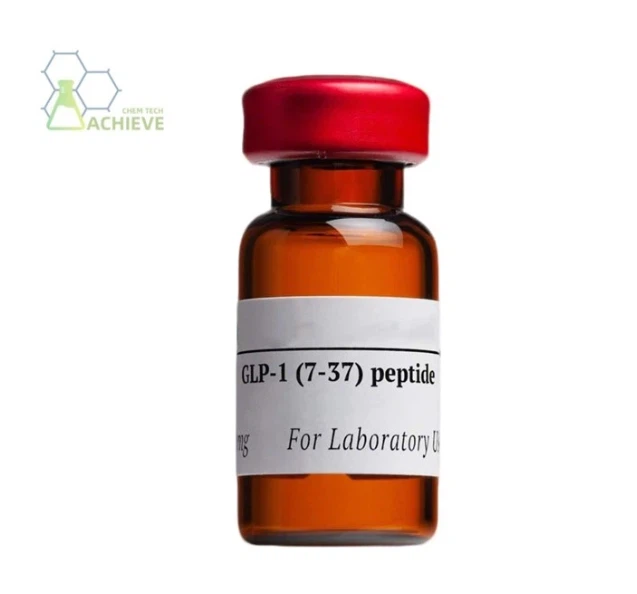


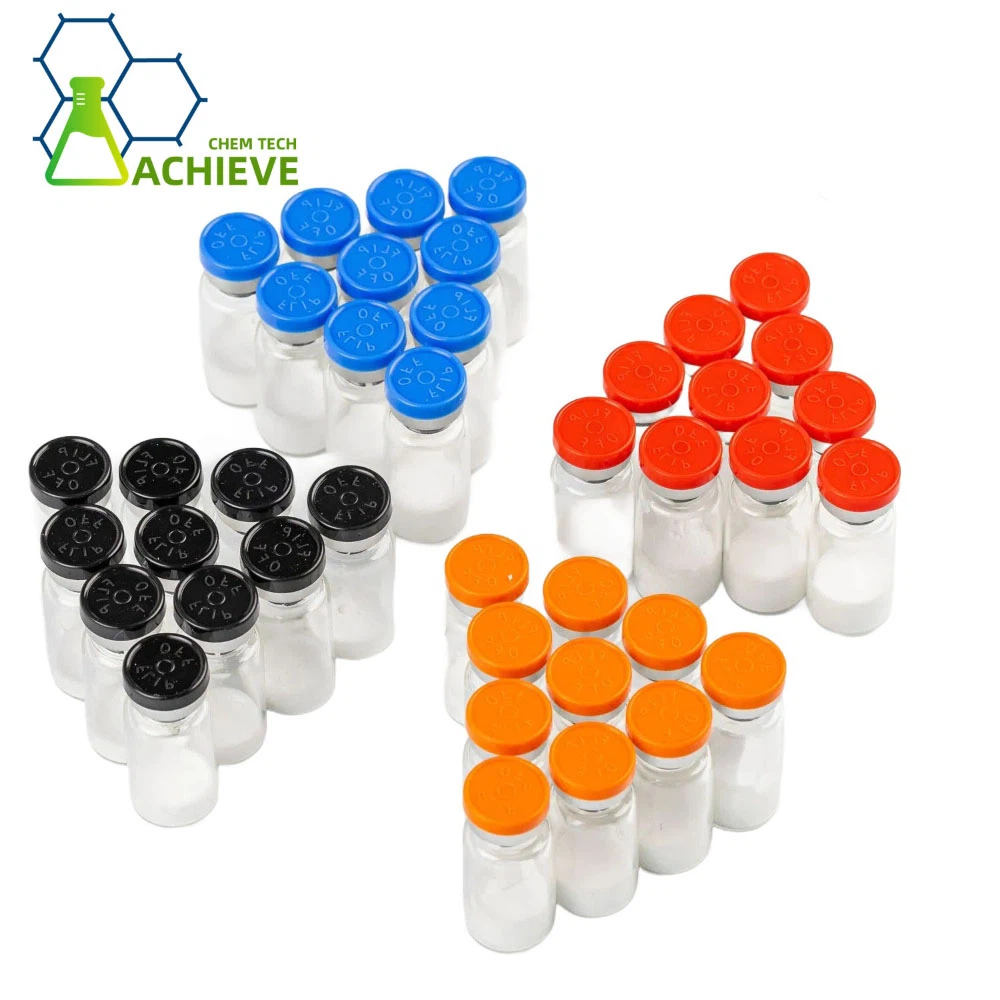
Shaanxi BLOOM Tech Co., Ltd. is one of the most experienced manufacturers and suppliers of glp-1 7-37 peptide in China. Welcome to wholesale bulk high quality glp-1 7-37 peptide for sale here from our factory. Good service and reasonable price are available.
As a type of active peptide secreted by intestinal L cells, GLP-1 7-37 Peptide can form specific binding with relevant targets in the body through its unique molecular structure. Through the coordinated regulation of multiple links and pathways, it can implement precise and gentle interventions in the body's metabolic processes, avoiding metabolic disorders. Among the many regulatory processes it participates in, two core regulatory effects are particularly prominent and crucial, which work together and synergistically to maintain the dynamic balance of the body's metabolism.
Our Products Description



GLP-1 7-37 COA
 |
||
| Certificate of Analysis | ||
| Compound name | GLP-1 7-37 | |
| Grade | Pharmaceutical grade | |
| CAS No. | 106612-94-6 | |
| Quantity | 33g | |
| Packaging standard | PE bag+Al foil bag | |
| Manufacturer | Shaanxi BLOOM TECH Co., Ltd | |
| Lot No. | 202501090068 | |
| MFG | Jan 9th 2025 | |
| EXP | Jan 8th 2028 | |
| Structure |
|
|
| Item | Enterprise standard | Analysis result |
| Appearance | White or almost white powder | Conformed |
| Water content | ≤5.0% | 0.54% |
| Loss on drying | ≤1.0% | 0.42% |
| Heavy Metals | Pb≤0.5ppm | N.D. |
| As≤0.5ppm | N.D. | |
| Hg≤0.5ppm | N.D. | |
| Cd≤0.5ppm | N.D. | |
| Purity (HPLC) | ≥99.0% | 99.98% |
| Single impurity | <0.8% | 0.52% |
| Total microbial count | ≤750cfu/g | 95 |
| E. Coli | ≤2MPN/g | N.D. |
| Salmonella | N.D. | N.D. |
| Ethanol (by GC) | ≤5000ppm | 500ppm |
| Storage | Store in a sealed, dark, and dry place below -20°C | |
|
|
||
|
|
||


| Chemical Formula | C151H228N40O47 |
| Exact Mass | 3353.67 |
| Molecular Weight | 3355.72 |
| m/z | 3354.67(100.0%), 3355.67(81.1%), 3353.67(61.2%), 3356.68(36.4%), 3355.67(14.8%), 3356.67(12.0%), 3357.68(10.6%), 3356.68(9.7%), 3354.67(9.0%), 3357.68(7.8%), 3356.68(7.2%), 3357.68(6.8%), 3355.67(5.9%), 3357.68(5.4%), 3358.68(3.5%), 3358.68(3.3%), 3355.68(2.6%), 3358.68(2.2%), 3356.68(2.1%), 3355.68(1.8%), 3354.67(1.6%), 3358.68(1.6%), 3356.68(1.5%), 3357.67(1.4%), 3358.68(1.2%), 3354.67(1.1%), 3359.69(1.1%), 3356.67(1.1%), 3357.68(1.1%), 3359.69(1.0%), 3358.68(1.0%) |
| Elemental Analysis | C,54.05; H,6.85; N,16.70; O,22.41 |

These two core effects are respectively the targeted blocking effect on the secretion of glucose raising substances by alpha cells in specific scenarios of high glucose load in the body, and the moderate slowing effect on the entire process of gastrointestinal operation. The former can effectively avoid abnormal blood sugar rise under high glucose conditions, while the latter can steadily regulate the absorption rhythm of nutrients. The two work together to provide solid support for the body's metabolic regulation system and ensure the orderly development of metabolic activities.
Regulation of alpha cell secretion and intervention of hepatic glucose release under high glucose environment
GLP-1 7-37 Peptide has significant scene specificity in regulating alpha cells under high glucose conditions, and its intervention process exhibits multidimensional synergistic characteristics, which can be elaborated from the following aspects:
(I) The specificity of regulatory triggering is that the peptide only initiates targeted intervention on alpha cells when the body is in a high glucose load state, and has almost no regulatory effect in a low glucose environment.
This scenario dependence can avoid interference with normal blood glucose levels and reduce the risk of metabolic disorders.


(II) Targeted pathway of action, this peptide can induce subtle changes in receptor conformation by specifically binding to targeted receptors on the surface of alpha cells, thereby activating intracellular signaling chains, promoting elevated levels of cyclic adenosine monophosphate.
Further regulating protein kinase activity, and ultimately blocking the synthesis and release process of glucose raising substances.
Achieving precise control of alpha cell secretion function.
(III) Indirect regulation of hepatic glucose release can significantly reduce the rate of hepatic glycogen breakdown by blocking the secretion of glucose raising substances by alpha cells, while inhibiting the conversion of non sugar substances to glucose in the liver.
Thereby reducing hepatic glucose release and avoiding further increase in blood glucose levels under high glucose conditions, forming a dual regulatory loop of "blocking secretion and reducing release".


(IV) Reversibility of regulatory effects: When the body's blood glucose levels fall back to the normal range, the blocking effect of GLP-1 7-37 Peptide on alpha cells will gradually weaken, alpha cell secretion function will return to normal, and liver glucose release will also return to baseline, ensuring the flexibility and adaptability of metabolic regulation.
Data source:
Carl Frederik Nagell, Andre Wettergren, Cathrine Ørskov, Jens Juul Holst. Inhibitory effect of GLP-1 on gastric motility persists after vagal deafferentation in pigs. Panum Institute, University of Copenhagen, Denmark. 2006.
Michael A. Nauck, Ulrich Niedereichholz, Rainer Ettler, et al. Glucagon-like peptide 1 inhibition of gastric emptying outweighs its insulinotropic effects in healthy humans. American Journal of Physiology - Endocrinology and Metabolism, 1997, 273(5): E981-E988.
The regulatory mechanisms and manifestations of delayed gastric emptying and inhibition of gastrointestinal motility
The regulatory effect of GLP-1 7-37 Peptide on the gastrointestinal motility system focuses on the moderate slowing down of gastric contents emptying process and precise inhibition of gastrointestinal peristalsis rhythm. Its regulatory mechanism has complex characteristics of multiple pathways and targets, and is not a simple intervention in a single link, but the result of multi-level synergistic effects. The specific regulatory performance and action details can be broken down in detail from the following four dimensions:
The significant delay effect of gastric emptying process can be achieved through the synergistic intervention of multiple pathways and targets, which can significantly prolong the emptying cycle of gastric contents. Compared with the normal physiological state of gastric emptying speed, this active peptide can achieve a delay effect of 2 to 4 times. Under normal physiological conditions, the emptying process of gastric contents in the human body can usually be completed within 1 to 2 hours. However, under the regulation of this peptide,


This process can be extended to 2 to 8 hours, and the specific delay time may vary slightly depending on the peptide concentration and metabolic status of the body. It is worth noting that this delaying effect is not a complete blockage or stagnation of gastric emptying, but rather a precise regulation of the contraction amplitude and frequency of gastric smooth muscle, allowing gastric contents to be released to the small intestine at a slow and uniform pace. This not only avoids nutrient absorption disorders caused by rapid entry of gastric contents into the intestine, but also provides sufficient time for subsequent digestion and absorption processes, ensuring the full utilization of nutrients.
It has a targeted inhibitory effect on gastrointestinal peristalsis. The regulation of gastrointestinal peristalsis by this peptide is not a systemic indiscriminate inhibition, but has clear targeting selectivity. Its target is mainly concentrated on smooth muscle cells in the stomach body, gastric antrum, and upper small intestine, and has almost no significant regulatory effect on smooth muscle cells in the lower intestine. By binding to specific receptors on the surface of smooth muscle cells in the targeted area, this peptide can effectively inhibit the contractile activity of smooth muscle cells.


On the one hand, it reduces the frequency of gastrointestinal peristalsis and slows down the propulsion speed of gastrointestinal contents in the intestine. On the other hand, it can slightly weaken the contraction force of gastrointestinal peristalsis, avoiding disturbances such as intestinal spasms and insufficient nutrient absorption caused by excessive gastrointestinal peristalsis, and ensuring that gastrointestinal operation is always in a stable and orderly state.
Data source:
Mietlicki-Baase EG, Ortinski PI, Rupprecht LE, et al. The food intake-suppressive effects of glucagon-like peptide-1 receptor signaling in the ventral tegmental area are mediated by AMPA/kainate receptors. Am. J. Physiol. Endocrinol. Metab, 2013, 305: E1367-E1374.
Marathe CS, Rayner CK, Jones KL, Horowitz M. Glucagon-like peptides 1 and 2 in health and disease: a review. Peptides, 2013, 44: 75-86.

So the above two regulatory effects are the core links of the active peptide's involvement in metabolic regulation of the body. Intervention in alpha cell secretion and hepatic glucose release under high glucose conditions can effectively avoid abnormal blood glucose elevation; The regulation of gastric emptying and gastrointestinal peristalsis can be achieved by slowing down the rate of nutrient absorption and assisting in maintaining metabolic balance. The two work together to form the core physiological regulatory system of this active peptide.

References
Baggio LL, Drucker DJ. Biology of incretins: GLP-1 and GIP. Gastroenterology, 2007, 132(6): 2131-2157.
Holst JJ. The physiology of glucagon-like peptide 1. Physiological Reviews, 2007, 87(4): 1409-1439.
Deacon CF, Holst JJ. Immunoassays for the incretin hormones GIP and GLP-1. Best Practice & Research. Clinical Endocrinology & Metabolism, 2009, 23(4): 425-432.
Toft-Nielsen MB, Mads Bad S, Holst JJ. Determinants of the effectiveness of glucagon-like peptide-1 in type 2 diabetes. The Journal of Clinical Endocrinology and Metabolism, 2001, 86(8): 3853-3860.
Graaf C, Donnelly D, Wootten D, et al. Glucagon-like peptide-1 and its class B G protein-coupled receptors: a long march to therapeutic successes. Pharmacological Reviews, 2016, 68(4): 954-1013.
FAQ
- What is the difference between GLP-1 7 36 and 7 37?
GLP-1(7–36)-amide is the main functional form, while GLP-1(7–37) is the minor form expressed with less activity. GLP-1 acts through a glucose-dependent way. The basic and primary function of GLP-1 is to activate pancreatic β cells to produce insulin and consequently lower blood glucose [8].
- Is GLP-1 7 37 the same as Ozempic?
GLP-1 is a natural hormone that helps control appetite and boost weight loss, while Ozempic is an effective medication that mimics GLP-1's effects for lasting results. At Cape Fear Physical Medicine and Rehab, Ozempic offers a proven, convenient way to curb hunger and support your weight loss journey.
Hot Tags: glp-1 7-37 peptide, suppliers, manufacturers, factory, wholesale, buy, price, bulk, for sale, Medetomidine hydrochloride, Tetrahydrobiopterin BH4 Powder, 3-Hydroxytyramine, epinephrine hcl powder, Octreotide Acetate Powder, Ethacridine Lactate Monohydrate CAS 6402 23 9