




Shaanxi BLOOM Tech Co., Ltd. is one of the most experienced manufacturers and suppliers of ketoconazole powder cas 65277-42-1 in China. Welcome to wholesale bulk high quality ketoconazole powder cas 65277-42-1 for sale here from our factory. Good service and reasonable price are available.
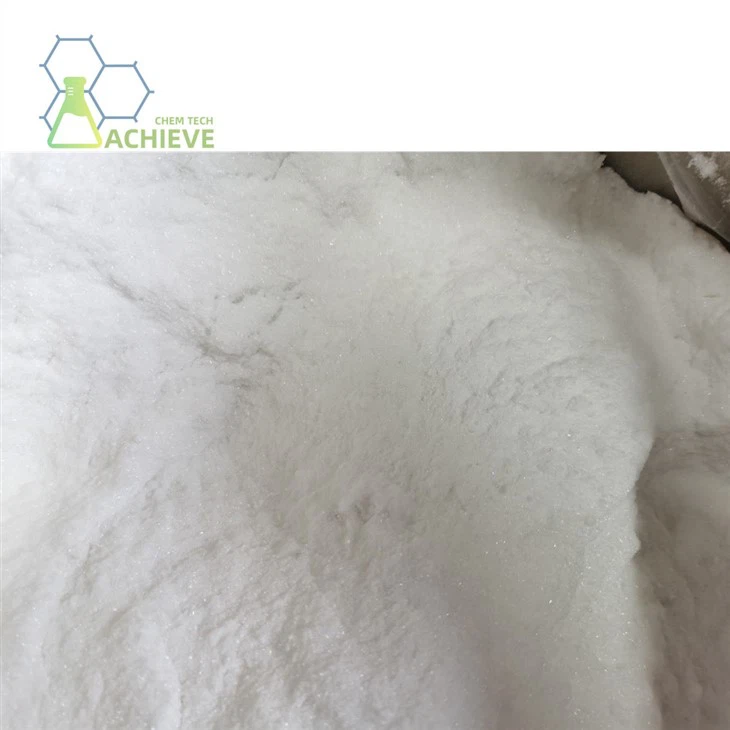
Ketoconazole powder, also known as cis-1-acetyl-4- [4- [[2- (2,4-dichlorophenyl) -2- (1H-imidazol-1-ylmethyl) -1,3-dioxolan-4-yl] methoxy] phenyl] piperazine, is a white to light yellow to light orange crystalline powder that is odorless and tasteless. The molecular formula is C26H28Cl2N4O4, CAS 65277-42-1, and it is a broad-spectrum imidazole antifungal drug. It is soluble in chloroform, soluble in methanol, slightly soluble in ethanol, and almost insoluble in water. These solubility characteristics are of great significance for their application in pharmaceutical formulations, such as selecting appropriate solvents for formulation preparation. As a broad-spectrum antifungal drug of imidazole class, it exerts antifungal effects by inhibiting ergosterol synthesis and increasing cell membrane permeability. It is sensitive to both superficial and deep fungal infections.

|
|
|


|
Chemical Formula |
C26H28Cl2N4O4 |
|
Exact Mass |
530 |
|
Molecular Weight |
531 |
|
m/z |
530 (100.0%), 532 (63.9%), 531 (28.1%), 533 (18.0%), 534 (10.2%), 532 (3.8%), 535 (2.9%), 534 (2.4%), 531 (1.5%) |
|
Elemental Analysis |
C, 58.76; H, 5.31; Cl, 13.34; N, 10.54; O, 12.04 |

This product dissolves easily in stomach acid and is easily absorbed. When the acidity of stomach acid decreases, it can reduce absorption. After absorption, it is widely distributed in the body and can cause inflammation in joint fluid, saliva, bile, urine, breast milk, tendons, skin soft tissues, feces, etc. The penetration of the blood-brain barrier is poor, and in most cases, the drug concentration in cerebrospinal fluid is below 1mg/L. This ketoconazole powder can cross the blood placental barrier. The serum protein binding rate is over 90%.


After a single oral administration of 200mg and 400mg of the product, the peak blood concentrations (cmax) were 3.6mg/L ± 1.65mg/L and 6.5mg/L ± 1.44mg/L, respectively. The peak time (tmax) is 1-4 hours. The bioavailability of this product after meals is approximately 75%. The half-life of blood elimination (t1/2) is 6.5-9 hours. Some drugs are metabolized into several inactive metabolites in the liver. Mainly excreted by bile, only 13% of the administered dose is excreted by the kidneys, of which 2% to 4% is excreted in its original form in the urine.
This product belongs to the imidazole antifungal class. It has antibacterial and bactericidal effects on fungi, yeasts (Candida, Pityrosporum, Sphingomonas, Cryptococcus), biphasic fungi, and fungal classes; Except for the order Entomophthorales, this Ketoconazole has weaker effects on Aspergillus, Sporothrix, certain dark spore families, and the genus Trichoderma. The main mechanism of action of this product is highly selective interference with the activity of fungal cytochrome P-450, thereby inhibiting the biosynthesis of ergosterol on the fungal cell membrane.


Stir a mixture of 1-acetyl-4-4- (4-hydroxyphenyl) piperazine, sodium cyanide, dimethyl sulfate, and benzene at 40 ° C for 1 hour, then add 2- (2,4-dichlorobenzene) -2- (1H-imidazol-1-ylmethyl) -1,3-dioxolan-4-ylmethyl methanesulfonate and stir at 100 ° C for a certain period of time. The reaction product is processed to obtain Ketoconazole powder.
1. Deprotonation:
Use a strong base (such as sodium hydride NaH, although you mentioned sodium cyanide NaCN, here we assume NaH) to deprotonate 1-acetyl-4- (4-hydroxyphenyl) piperazine, generating the corresponding oxygen anion intermediate.
2. Methylation:
In the presence of a strong base, dimethyl sulfate ((CH3 O) ₂ SO ₂) is used to methylate deprotonated intermediates, producing methylated products.
3. Condensation reaction:
The methylation product is condensed with 2- (2,4-dichlorobenzene) -2- (1H-imidazol-1-ylmethyl) -1,3-dioxolan-4-ylmethyl methanesulfonate at a higher temperature (such as 100 ℃) to produce ketoconazole.
4. Post processing:
Obtain pure ketoconazole through appropriate post-processing steps such as extraction, drying, concentration, and purification.
Due to the complexity of directly writing the detailed chemical equations of the entire synthesis route in the text, involving multiple steps and intermediates, I will provide a simplified representation of each key step:
Step 1: deprotonation
C9H12N2O2Ac + NaH→C9H11N2O2−Na+ + AcH
Note: Ac here represents acetyl group, and this step is usually not directly written as a chemical equation because it is a fast and reversible process.
Step 2: Methylation
C9H11N2O2- Na++(CH3O) 2SO2 → C9H14N2OMe+Na2SO4+other by-products
Here, OMe represents methoxy (CH3-).
Step 3: Condensation reaction
C9H14N2O2OMe+C13H11Cl2N2O3S (imidazole derivatives) → C22H22Cl2N3O4 (ketoconazole)+by-products
Note: The structure of imidazole derivatives here has been simplified and may involve more complex molecular rearrangements and bond formation in actual reactions.
Post processing: The post-processing steps typically include cooling the reaction mixture, quenching (if a strong base is used), extraction (extracting the product from the aqueous phase with an organic solvent), drying (removing water from the organic phase), concentration (removing the solvent by distillation or rotary evaporation), and purification (such as crystallization, chromatographic separation, etc.).
Ketoconazole is an important imidazole antifungal drug, and its synthetic route usually involves multiple steps, including deprotonation, methylation, condensation, and other reactions. This article will take the synthesis route starting from 1-acetyl-4- (4-hydroxyphenyl) piperazine as an example, and describe in detail the operation process of each step and its corresponding chemical equation.
Detailed steps and chemical equations
Step 1: deprotonation and methylation
Operation process:
(1) Preparation of reactants:
Weigh 2.4 parts (by mass, the same below) of 1-acetyl-4- (4-hydroxyphenyl) piperazine and place it in a dry three necked bottle. Add an appropriate amount of anhydrous solvent (such as dimethylformamide DMF or dimethyl sulfoxide DMSO) to ensure that the reactants are fully dissolved.
(3) Deprotonation reaction:
Stir at low temperature for a period of time (such as 30 minutes) to deprotonate the hydroxyl group in 1-acetyl-4- (4-hydroxyphenyl) piperazine, forming an oxygen anion intermediate.
(2) Add sodium hydride:
Slowly add 0.4 parts (theoretically calculated by stoichiometric ratio, but usually slightly excessive due to reaction efficiency and safety) of 78% sodium hydride in an ice salt bath (or using other cooling methods to lower the temperature of the reaction system to below 0 ℃). Continuous stirring is required during the addition process, and the feeding speed should be controlled to prevent danger caused by local overheating.
(4) Methylation reaction:
Slowly add 75 parts (excess to improve methylation efficiency) of dimethyl sulfate dropwise to the reaction system. During the dropwise addition process, it is necessary to maintain low temperature and continue stirring. Dimethyl sulfate undergoes nucleophilic substitution reaction with oxygen anion intermediates to produce methylated intermediate products.
Chemical equation:
Due to the fact that deprotonation and methylation are two continuous and rapid processes, it is difficult to directly write chemical equations with clear boundaries between them. But we can merge it into a simplified representation:
C9H12N2O2 (OH)+NaOH+(CH3O) 2SO2 → C9H14N2O2 (OMe)+H2O+Na2SO4 (and other by-products)
Note: The above equation is only a schematic representation, and various by-products may be generated in actual reactions, such as unreacted raw materials, solvates, hydrolysis products, etc.
Step 2: Condensation reaction
Operation process:
(1) Heating and stirring:
Gradually raise the reaction system to room temperature and continue stirring for a period of time (such as 1 hour) to ensure complete methylation reaction. Then, heat up to the specified temperature (such as 100 ℃) and prepare for the condensation reaction.
(2) Add condensing agent:
Slowly add 4.2 parts of 2- (2,4-dichlorobenzene) -2- (1H-imidazol-1-ylmethyl) -1,3-dioxolan-4-ylmethyl methanesulfonate while stirring. In this step, the feeding speed needs to be controlled to prevent side reactions caused by local overheating.
(3) Condensation reaction:
Stir the reaction mixture at 100 ℃ overnight (or determine the reaction time based on TLC/HPLC monitoring results). During this process, the intermediate products of methylation undergo a condensation reaction with the condensing agent, forming the skeletal structure of ketoconazole.
Chemical equation:
Due to the complex intermolecular rearrangement and bond formation and cleavage involved in condensation reactions, it is difficult to write detailed stepwise chemical equations. But we can give a general statement:
C9H14N2O2 (OMe)+C13H11Cl2NO3S (imidazole derivative) → C22H22Cl2N3O3 (ketoconazole skeleton)+by-products
Note: The above equation is also a schematic representation, and the by-products generated in actual reactions may include unreacted raw materials, solvates, hydrolysis products, and possible rearrangement or isomerization products. In addition, due to the complexity of reaction conditions such as temperature, solvent, reaction time, etc., they may all have an impact on the yield and purity of the product.
Step 3: Post processing
Operation process:
(1) Cooling and quenching:
After the reaction is complete, first let the reaction system cool naturally to room temperature. Then, slowly add an appropriate amount of water or ice water to quench the reaction, in order to neutralize the remaining alkalinity and possible active intermediates. Caution should be exercised during the quenching process to prevent severe heat release or the generation of hazardous gases.
(3) Drying and concentration:
Dry the washed organic phase using desiccants such as anhydrous sodium sulfate, anhydrous potassium carbonate, or molecular sieves to remove residual moisture. Then, the solvent is concentrated to a certain volume through methods such as vacuum distillation or rotary evaporation to obtain the crude product of ketoconazole.
(2) Extraction and Separation:
Transfer the quenched reaction mixture to a separatory funnel and add an appropriate amount of organic solvent (such as dichloromethane, ethyl acetate, etc.) for extraction. Due to the high solubility of ketoconazole in organic solvents, while most inorganic salts and by-products remain in the aqueous phase, ketoconazole can be transferred from the aqueous phase to the organic phase through multiple extractions. After extraction, combine the organic phases and wash with saturated saline solution to remove residual inorganic salts.
(4) Purification:
The crude product of ketoconazole usually contains unreacted raw materials, by-products, and impurities, which need to be purified by appropriate purification methods such as crystallization, recrystallization, chromatographic separation, etc. Among them, crystallization is one of the most commonly used purification methods. By selecting appropriate solvents and crystallization conditions (such as temperature, concentration, stirring speed, etc.), ketoconazole can be precipitated in pure crystal form, resulting in high-purity products.
Ketoconazole powder was successfully synthesized from 1-acetyl-4- (4-hydroxyphenyl) piperazine through deprotonation, methylation, and condensation reactions. Through detailed step descriptions and corresponding chemical equations, we have gained a deep understanding of the reaction mechanism and operational points of this synthesis route. However, it should be noted that there may be multiple influencing factors and uncertainties in the actual synthesis process, so adjustments and optimizations need to be made according to specific circumstances. In addition, in order to obtain high-purity and high-yield ketoconazole products, appropriate measures and methods need to be taken in the purification step.
Hot Tags: ketoconazole powder cas 65277-42-1, suppliers, manufacturers, factory, wholesale, buy, price, bulk, for sale, 3 Nitrobenzonitrile, Hinokitiol powder, 2 4 Quinolinediol, boronic acid B 1 naphthalenyl 2 3 4 5 6 7 8 d7 , Benzo b naphtho 1 2 d furan 9 bromo , CAS 2189692 44 0