



Shaanxi BLOOM Tech Co., Ltd. is one of the most experienced manufacturers and suppliers of 4-methoxypyridine cas 620-08-6 in China. Welcome to wholesale bulk high quality 4-methoxypyridine cas 620-08-6 for sale here from our factory. Good service and reasonable price are available.
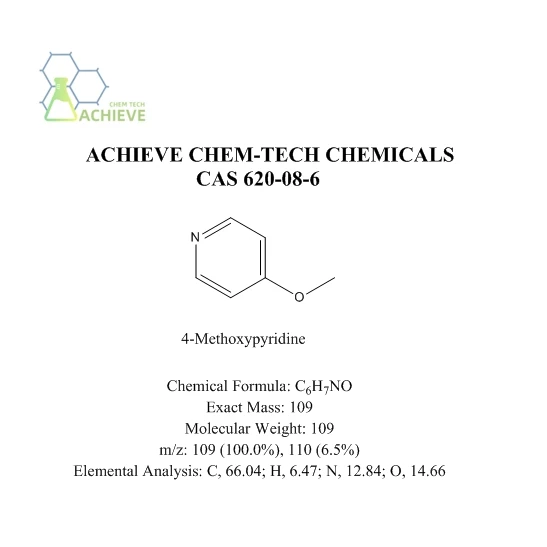
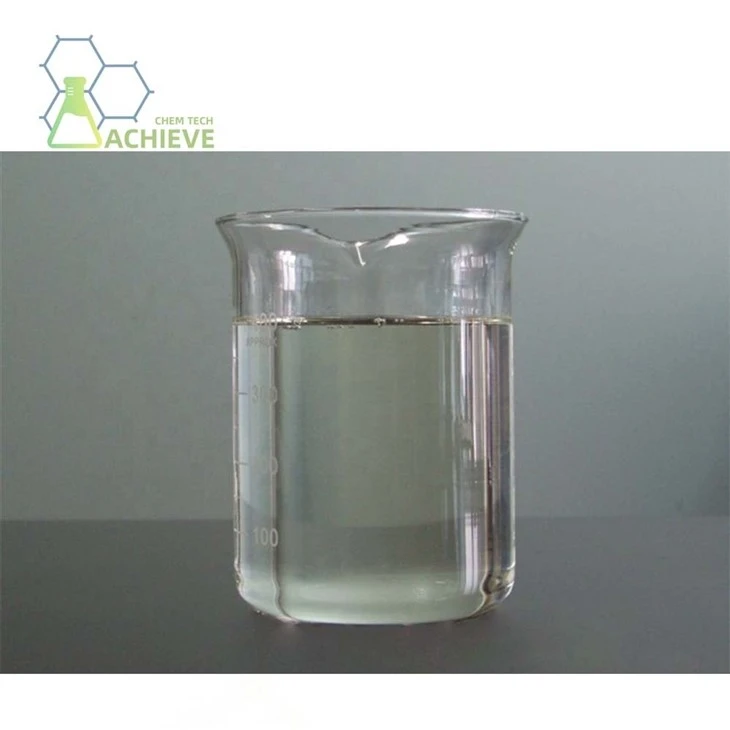
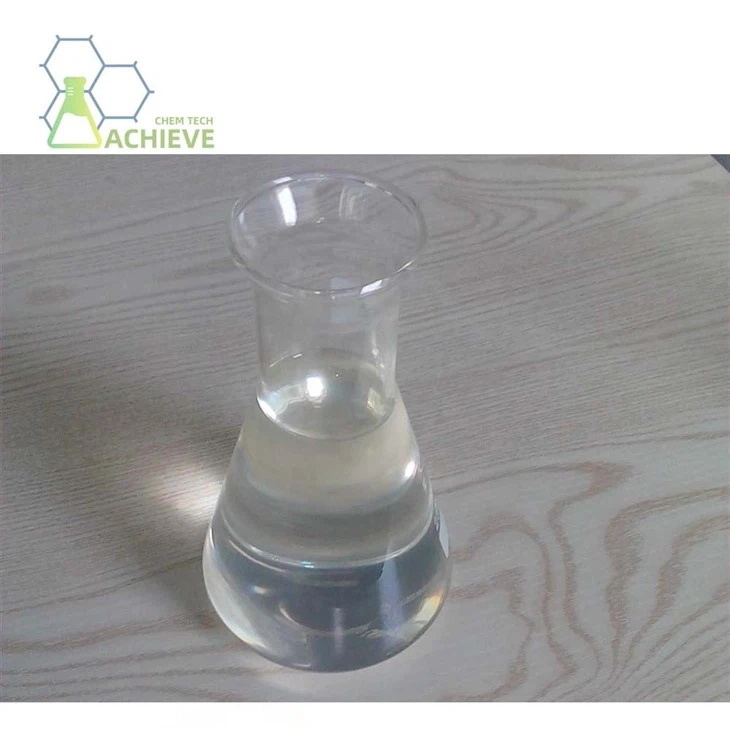
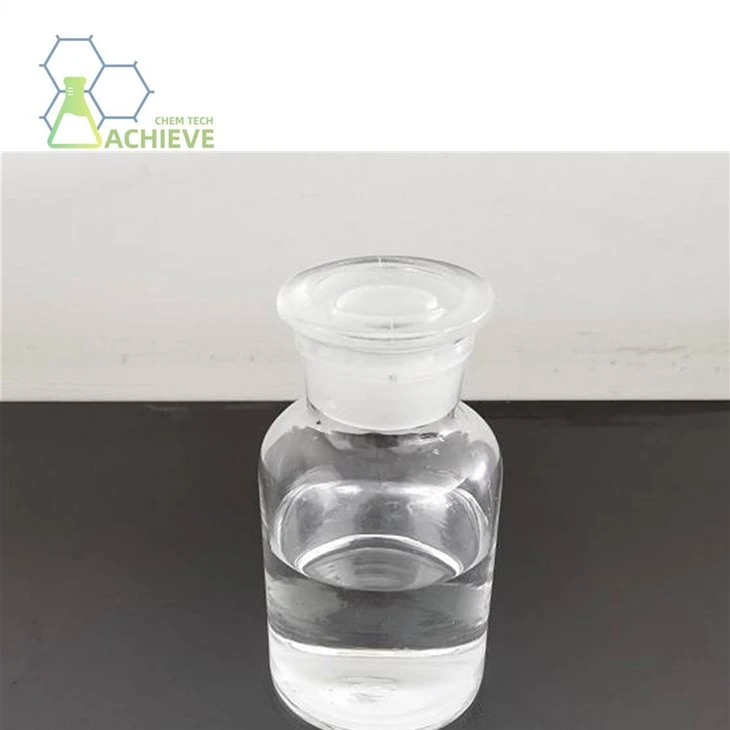
4-Methoxypyridine, with the chemical formula C6H7NO and CAS 620-08-6, is an organic compound with unique properties. Usually manifested as a transparent colorless to light yellow liquid. In the field of chemistry, especially in its application as a pharmacutical intermediat, it plays an important role. It can dissolve in common organic solvents such as ethyl acetate, dichloromethane, and alcohol solvents, as well as low polarity ether solvents, but its solubility in water is poor.
Belonging to pyridine derivatives with certain alkalinity, it can be used as an intermediat in organic synthesis, biochemistry, and fine chemical synthesis, and can be used for the prepration of drug molecules, pesticide molecules, and bioactive molecules. The chemical properties are relatively stable and will not decompose under normal circumstances, but the molecules have significant alkalinity and can form salts with volatile acids. In addition, it can also be oxidized into corresponding nitrogen oxides by oxidants, so it is necessary to avoid oxidants and volatile acids and store them in a sealed and dry environment at room temprature.

|
|
|

|
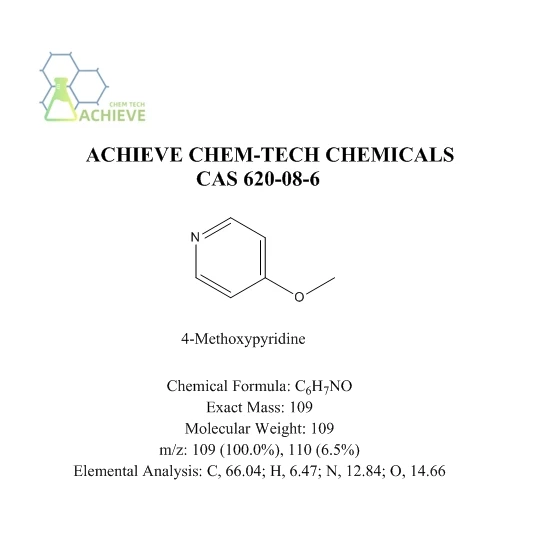
Chemical Formula |
C6H7NO |
|
Exact Mass |
109 |
|
Molecular Weight |
109 |
|
m/z |
109 (100.0%), 110 (6.5%) |
|
Elemental Analysis |
C, 66.04; H, 6.47; N, 12.84; O, 14.66 |

In the pharmacutical industry, 4-Methoxypyridine mainly serves as an intermediat for drug synthesis, participating in the construction of various active molecules, and its applications cover fields such as digestive system drugs, detoxifiers, and antiviral drugs.
1. Synthesis of digestive system drugs
It is the core raw material for synthesizing the laxative Bisacodyl. Bisacodine stimulates the intestinal wall nerve plexus, promotes intestinal peristalsis, and is commonly used to treat constipation and preoperative intestinal prepration.


In its synthetic pathway, the pyridine ring structure of 4-methoxypyridin provides the necessary alkaline center and lipophilicity for drug molecules, ensuring the absorption and efficiency of the drug in the intestine.
2. Organic phosphate ester detoxifying agents
It is a key intermediat for the synthesis of Pralidoxime. Jiefending is used to treat pesticide poisoning (such as dichlorvos and dimethoate poisoning) by reviving acetylcholinesterase inhibited by organic phosphate esters.
The pyridine ring in its molecular structure synergistically interacts with the oxime group to form a strong binding ability for acetylcholinesterase, while the introduction of 4-methoxy group optimizes the pharmacokinetic properties of the drug and improves its bioavailability.


3. Anti HIV protease inhibitors
Recent studies have shown that it can be used as a raw material for synthesizing anti HIV protease inhibitors. This type of inhibitor blocks the activity of HIV virus protease, preventing virus replication. The pyridine ring structure of 4-methoxypyridin provides a rigid skeleton for the inhibitor molecule, while the methoxy group enhances the binding force between the molecule and the target enzyme through hydrogen bonding, thereby improving the inhibitory activity.
In the pesticide industry, it is mainly used to synthesize new insecticides and acaricides. Its mechanism of action involves interfering with the nervous system function of pests or damaging cell membrane structure, and it has the characteristics of high efficiency, low toxicity, and environmental friendliness.


1. Synthesis of insecticides
It is an intermediat for synthesizing certain new insecticides, for example, by introducing substituents such as fluorine and chlorine, insecticides with gastric toxicity and contact killing effects can be prepared.
This type of insecticide has significant activity against Lepidoptera (such as cabbage worms and cotton bollworms) and Coleoptera (such as scarab beetles) pests, and its mechanism of action is to interfere with the transmission of neurotransmitters in pests, leading to paralysis and death.
2. Synthesis of acaricides
In the agricultural field, it is an essential intermediat for synthesizing acaricides containing pyridine rings, such as imidacloprid. Imidacloprid kills mites by inhibiting the electron transport chain of their mitochondria, blocking energy synthesis. The introduction of 4-methoxy group optimized the lipid solubility of acaricides, improving their permeability and shelf life on plant leaves.
Research field: Biomarkers and molecular probes

In scientific research, it is mainly used for biological labeling, reactive oxygen species detection, and cell imaging. Its fluorescence properties and chemical stability make it an ideal biological research tool.
1. Biomarkers
By chemical modification (such as introducing fluorescent groups or biotin), biomolecules such as proteins and nucleic acids can be labeled for cell localization, protein interactions, and gene expression research. For example, 4-methoxypyridin fluorescein conjugate can be covalently labeled with antibodies for immunofluorescence detection.
2. Reactive oxygen species detection
4-methoxypyridin erivatives can be used as probes to detect intracellular reactive oxygen species (such as superoxide anions and hydrogen peroxide). Its methoxy group generates fluorescent products through oxidation responss, and quantifies the level of reactive oxygen species through changes in fluorescence intensity, providing a tool for the study of oxidative stress-related diseases.


3. Cell imaging
Its lipophilicity makes it easy to penetrate the cell membrane and achieve organelle imaging by specifically binding to organelles such as mitochondria and endoplasmic reticulum. For example, the 4-methoxypyridin rhodamine conjugate can label mitochondria for studying mitochondrial dynamic changes.
In industry, it is mainly used as an antioxidant for rubber and lubricating oil. Its mechanism of action is to capture free radicals or decompose peroxides, delaying material aging.
1. Rubber anti-aging agent
It can be used as an anti-aging agent for rubber (such as natural rubber and styrene butadiene rubber), reducing the attack of oxygen and ozone on rubber by forming hydrogen bonds with rubber molecular chains.


Its methoxy group enhances the antioxidant capacity of anti-aging agents through electron donating effect, prolonging the service life of rubber.
2. Lubricating oil antioxidant
In lubricating oil, free radicals can be captured to prevent oxidation and deterioration of the lubricating oil. Its pyridine ring structure forms coordination bonds with the metal surface, reducing metal catalytic oxidation responss and thus improving the stability and service life of lubricating oil.

As an important organic synthesis intermediat, it has wide applications in fields such as medicine, pesticides, and fine chemicals. There are various synthesis methods for it, among which the synthesis of product through bromination and methylation is a commonly used method. This method uses 4-methylpyridine as the starting material, obtains 4-bromomethylpyridine through bromination respons, and then undergoes methylation respons with methanol to obtain the target product.
This experiment mainly utilizes bromination respons and methylation respons to achieve the synthesis of 4-methoxypyridine. Firstly, the methyl group of 4-methylpyridine is converted to bromomethyl group through bromination respons, generating 4-bromomethylpyridine. Then, the methyl bromide is converted to methoxy group through methylation respons, ultimately obtaining the target product.
1. Bromination reaction
C6H7N+C4H4BrNO2 → C6H6BrN+Byproducts
(1) Reagent preparation:
Weigh an appropriate amount of 4-methylpyridine and bromination reagents (such as N-bromosuccinimide, NBS), and place them in dry respons flasks. Meanwhile, prepare solvents (such as dichloromethane or chloroform) and neutralizing agents (such as sodium carbonate or sodium bicarbonate).
(2) Reaction operation:
Under ice bath conditions, slowly add the bromination reagent to a solvent containing 4-methylpyridine, stirring while adding. After dripping, continue stirring and reacting under ice bath conditions for a period of time (such as 30 minutes to 1 hour).
(3) Post treatment:
After the respons is completed, pour the response solution into a separating funnel and add an appropriate amount of neutralizing agent solution (such as saturated sodium carbonate solution) for washing. After separating the water layer, dry the organic phase with a desiccant (such as anhydrous sodium sulfate). Then, the solvent is removed by a rotary evaporator to obtain the crude product.
(4) Purification:
Separate the crude product by column chromatography (such as silica gel column) and elute with an appropriate eluent (such as petroleum ether/ethyl acetate mixed solvent). Collect the eluent containing the target product and remove the solvent using a rotary evaporator to obtain pure 4-bromomethylpyridine.
2. Methyletherification reaction
C6H6BrN +methanol+CH3NaO → C6H7NO+NaBr+H2O
(1) Reagent preparation:
Weigh an appropriate amount of 4-bromomethylpyridine, methanol, and alkali (such as sodium methoxide or sodium hydroxide), and place them in dry respons flasks. Meanwhile, prepare solvents (such as methanol) and desiccants (such as anhydrous sodium sulfate).
(2) Reaction operation:
Mix methanol and alkali and add them to a respons bottle containing 4-bromomethylpyridine. Heat and reflux the respons for a period of time (such as 2 to 4 hours). Pay attention to controlling the respons temperture and stirring speed.
(3) Post treatment:
After the respons is completed, cool the respons solution to room temperture and pour it into a separating funnel. Wash the respons solution with an appropriate amount of water, separate the water layer, and dry the organic phase with a desiccant. Then, the solvent is removed by a rotary evaporator to obtain the crude product.
(4) Purification:
Separate the crude product by column chromatography (such as silica gel column) and elute with an appropriate eluent (such as methanol/dichloromethane mixed solvent). Collect the eluent containing the target product and remove the solvent using a rotary evaporator to obtain pure the product.

I. Foundation of Pyridine Derivative Research (Late 19th Century – Early 20th Century)
In 1881, German chemist Hans Hantzsch established the Hantzsch pyridine synthesis method, laying a foundation for the systematic preparation of substituted pyridines. In the following decades, chemists focused on the functionalization of pyridine rings. Due to its special electronic effects, 4-substituted pyridine became a key research direction. However, restricted by harsh reaction conditions and poor selectivity in the early stage, 4-methoxypyridine had not been specifically synthesized and isolated.
II. First Synthesis and Structural Confirmation (Mid-20th Century)
From the 1930s to the 1950s, with the clarification of the mechanism of nucleophilic aromatic substitution, researchers adopted 4-halopyridine as the raw material and realized the targeted synthesis of it for the first time via Williamson ether synthesis with sodium methoxide. Meanwhile, the methylation route of 4-hydroxypyridine (4-pyridone) was also developed. The product was identified as it through structural characterization, with its molecular formula defined as C₆H₇NO and CAS No. 620-08-6 confirmed.
III. Process Optimization and Large-Scale Production (Mid-to-Late 20th Century)
From 1960 to 1980, the application of phase-transfer catalysis and mild methylating reagents such as dimethyl sulfate improved the synthetic yield and reduced the production cost of it. At the same time, new synthetic routes including the reduction of 4-pyridine N-oxide were reported, further enriching preparation methods. It promoted the transformation of it from laboratory synthesis to small-scale industrial production to meet the market demand for pharmaceutical intermediates.
IV. Application Expansion and Value Recognition (Late 20th Century to Present)
Since the 1990s, as a key heterocyclic intermediate, it has been widely applied in fields such as neurotransmitter receptor ligands, total synthesis of alkaloids, and construction of drug molecules. Its unique electronic effect and coordination ability make it an important building block for organic synthesis and pharmaceutical chemistry research. Its commercial production scale continues to expand, making it an essential product in the fine chemical industry.
Hot Tags: 4-methoxypyridine cas 620-08-6, suppliers, manufacturers, factory, wholesale, buy, price, bulk, for sale, Bromocyclohexane CAS 108 85 0, Uridine Powder, 4,4'-Dimethylbiphenyl CAS 613-33-2, 3 Bromobenzotrifluoride CAS 401 78 5, 4-Bromobenzotrifluoride, Magnesium Ethoxide