






Shaanxi BLOOM Tech Co., Ltd. is one of the most experienced manufacturers and suppliers of 4-methylquinoline cas 491-35-0 in China. Welcome to wholesale bulk high quality 4-methylquinoline cas 491-35-0 for sale here from our factory. Good service and reasonable price are available.
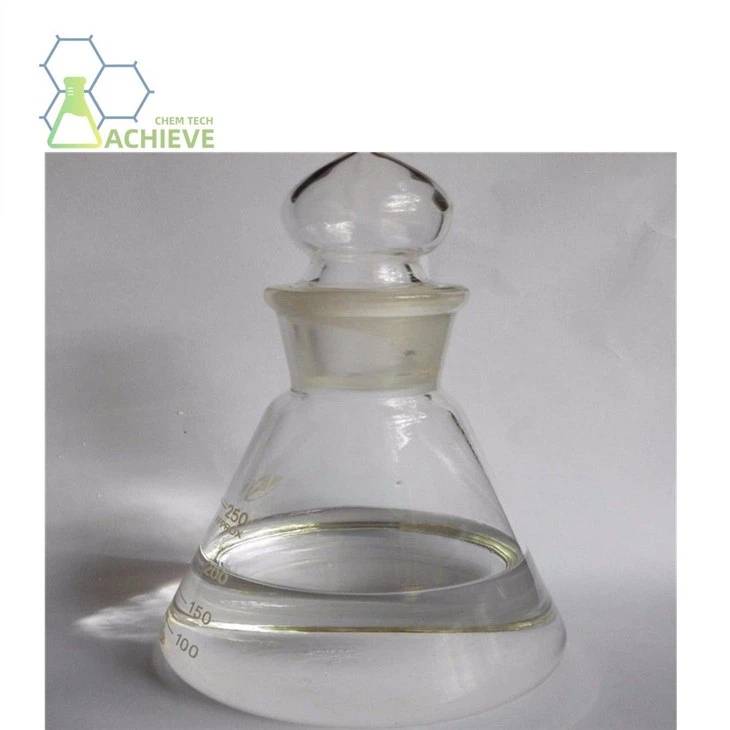
4-Methylquinoline, as an organic compound, has a chemical formula of C10H9N, CAS 491-35-0, and a molecular weight of 143.19. It emits a unique burnt herbal floral aroma, and at room temperature, it presents a colorless, transparent oily liquid form. The color of this liquid is clear and transparent, similar to many common organic solvents, giving people a pure and bright feeling. It also has a certain degree of volatility. Under appropriate conditions, it can slowly evaporate into gas. This volatility makes 4-methylquinolin more convenient for processing and operation in certain application fields, such as dye manufacturing and pharmaceutical intermediate synthesis. It occupies an important position in the dye manufacturing industry and is mainly used as a dye intermediate. It can participate in the synthesis of various dyes, especially blue dyes such as quinoline blue. These dyes are widely used in industries such as textiles, leather, and papermaking due to their bright colors and stable chemical properties. Through precise chemical reactions and process control, the introduction of this product can significantly improve the color, fastness, and environmental performance of dyes.

|
|
|


|
Chemical Formula |
C10H9N |
|
Exact Mass |
143 |
|
Molecular Weight |
143 |
|
m/z |
143 (100.0%), 144 (10.8%) |
|
Elemental Analysis |
C, 83.88; H, 6.34; N, 9.78 |

In the development process of cinema, the emergence of color film undoubtedly brought audiences a richer and more realistic visual experience. In the production process of color film, 4-methylquinolin plays an indispensable role as an important sensitizer.
Color cinematography film refers to unexposed color photographic film in a format suitable for cinematography cameras, as well as finished cinematography film prepared for use in projectors that carry color images. Since the birth of movies, people have been exploring how to incorporate color into the film's visuals. Early color film systems, such as the system patented by Edward Raymond Turner in 1899 and tested in 1902, and the successful commercialization of the Kinemacolor system in 1909, were all based on the principle of adding or subtracting colors. However, these systems all have some limitations, such as unrealistic colors and unstable images. It was not until the 1930s, with the introduction of tricolor stripe technology, that color film truly became commercialized and gradually became the mainstream of film production.
In the production process of color film, sensitizers are an indispensable part. The main function of sensitizing agents is to improve the photosensitivity of the film, enabling it to achieve sufficient exposure even under weaker light conditions. 4-methylquinolin is a commonly used sensitizer, and its application in color film has the following effects:
Improving photosensitivity:
4-methylquinolin, as an organic synthetic intermediate, has specific functional groups in its molecular structure that can react with photosensitive emulsions in the film, thereby improving the photosensitivity of the film. This allows the film to obtain sufficient exposure even under weaker lighting conditions, ensuring the quality and clarity of the image.
Control exposure time:
During the filming process of a movie, the length of exposure time has a significant impact on the brightness and color reproduction of the image. By adjusting the amount of 4-methylquinolin added and reaction conditions, the exposure time of the film can be controlled, resulting in a more ideal visual effect.
Improving color reproduction:
The color reproduction of color film is one of the important indicators to measure its quality. The addition of 4-methylquinolin can improve the sensitivity and response speed of film to color, making the colors in the film more vivid and realistic.
In the actual film production process, 4-methylquinolin is widely used in various types of color film. Whether used for filming different types of films such as natural landscapes, urban landscapes, or portraits, 4-methylquinolin can play its unique role. For example, in some films that require long-term exposure or low light environments, adding an appropriate amount of 4-methylquinolin can ensure that the film obtains sufficient exposure, thereby achieving clear and bright visual effects. Meanwhile, in some films that require high color reproduction, the addition of 4-methylquinolin can also improve the color reproduction of the film, making the colors in the film more vivid and realistic.
In the field of organic synthesis, 4-methylquinolin is also an important intermediate. It can participate in various organic synthesis reactions, such as addition, substitution, oxidation, etc. By utilizing the specific functional groups and reactivity of 4-methylquinolin, scientists can synthesize organic compounds with complex structures and specific functions. These compounds have important application value in fields such as medicine, pesticides, and spices, providing strong support for the development and application of organic chemistry.
Architectural design & planning cepteur sint occaecat cupidatat proident, taken possession of my entire soul, like these sweet mornings of spring which I enjoy with my whole...Architectural design & planning cepteur sint occaecat cupidatat proident, taken possession od my entire soul, like these sweet mornings of spring which I enjoy with my whole Lorem ipsum dolor sit ament, consectetur adipisicing elit,sed do eiusmod tempor incididunt labore et dolore magna aliqua. it enim ad minim veniam.
Innovation driven development, creating leading technologies
Our company's mission also emphasizes the importance of innovation driven development. We deeply understand that only by constantly innovating can we stand invincible in the fierce market competition. To this end, we are committed to researching and producing innovative and leading chemicals.
Final Solution
Firstly
We focus on research and development investment and talent cultivation. We have established a professional R&D team and center, introduced top domestic and foreign scientific research talents and technical experts, continuously increased R&D investment, and promoted technological innovation and product upgrading. We have also established close cooperative relationships with universities and research institutions to jointly carry out scientific research projects and technological innovation.
Secondly
We focus on technological innovation and industrial upgrading. We continuously monitor industry dynamics and market trends, actively introduce and apply new technologies, processes, and materials, promote product upgrades and industrial structure optimization and adjustment. We also pay attention to the protection and management of intellectual property rights, strengthen the application and maintenance of patents, and ensure that the company's technological innovation achievements are effectively protected.
Finally
We focus on market expansion and brand building. We actively explore domestic and international markets, strengthen communication and cooperation with customers, and improve the visibility and reputation of our products. We also focus on brand building and promotion, strengthen the shaping and maintenance of brand image, and improve the company's brand value and market competitiveness.

4-methylquinoline is an organic compound. Its chemical formula is C10H9N. It is an aromatic compound with a structure of benzene ring and pyrrole ring. It is a colorless to pale yellow liquid with a unique odor. It has a wide range of applications in the fields of chemistry and medicine. It is an important organic synthetic intermediate commonly used in the synthesis of chemicals such as drugs, dyes, and pesticides.

Experimental steps for preparing 4-methylquinoline from butenone and aniline [1]; Add activated silferc (1.72g, 10mmol ferric chloride) to a stirred solution of aniline (1g, 10mmol) in acetic acid (10ml) under a nitrogen atmosphere. Stir the reaction mixture for 5 minutes and slowly add methyl vinyl ketone (MVK) (0.83g, 11.8 mmol) within 15 minutes. Heat the reaction mixture to 70 ℃ and maintain it between 70-75 ℃ for one hour. Add anhydrous zinc chloride (1.46g/10mmol) and reflux the reaction for further two hours. The reaction mixture was cooled, filtered, alkalized with 10% NaOH solution, extracted with ethyl acetate (3 x 20ml), dried over anhydrous Na2SO4, and evaporated to obtain the product 4-methylquinoline; The yield is 55%.

The specific steps for preparing 4-methylquinoline from 4-methyltetrahydroquinoline are as follows: 4-methyltetrahydroquinoline (0.2 mmol), N-hydroxyphthalimide (20 mol%, 0.04 mmol), copper oxide (5 mol%, 0.01 mmol), 4-dimethylaminopyridine (1 equivalent, 0.2 mmol), and acetonitrile (2 mL) are added to the reactor. The reaction mixture is then stirred at 120 ° C under an oxygen atmosphere for 12 hours, followed by concentration under reduced pressure. The residue was separated by column chromatography using ethyl acetate/petroleum ether as the eluent, with a volume ratio of 1:15. Purification resulted in the target product 4-methylquinoline (yield 99%).

4-Methylquinoline (also known as Lepidine), with the chemical formula C₁₀H₉N, is a nitrogen-containing six-membered heterocyclic compound. It is formed by the fusion of a benzene ring and a pyridine ring, and has a methyl group (-CH₃) attached to the 4th position (the second carbon atom of the pyridine ring). As an important member of the quinoline derivatives, the discovery and research history of 4-methylquinoline is closely related to the overall development of quinoline compounds. Its scientific exploration can be traced back to the 19th century, and gradually deepened with the advancement of organic chemistry technology in the mid-20th century.


Early Research: Discovery and Structural Analysis of Quinoline Compounds
The history of quinoline compounds dates back to 1810 when German chemist Friedlieb Ferdinand Runge first isolated quinoline from coal tar. This discovery laid the foundation for subsequent research. However, due to the limitations of chemical analysis methods at that time, the structure and properties of quinoline compounds were not systematically clarified for several decades. It was not until the middle of the 19th century that chemists, through elemental analysis and functional group reactions, gradually determined the basic structure of quinoline - formed by the copolymerization of a benzene ring and a pyridine ring. This breakthrough provided a theoretical framework for the subsequent research on methyl quinoline derivatives.
Isolation and Nomenclature of 4-Methylquinoline
The clear isolation and naming of 4-methylquinoline began in the late 19th century to the early 20th century. With the maturity of coal tar distillation technology, chemists discovered various quinoline derivatives from the coal tar fractions. Among them, 4-methylquinoline was identified separately due to its unique physical and chemical properties (such as a melting point of 9-10°C and a boiling point of 261-263°C). Although the discoverer was not detailedly recorded in the early literature, based on the research history of quinoline compounds, the isolation of 4-methylquinoline might have originated from the systematic analysis of the quinoline components in coal tar. At the end of the 19th century, chemists selected extraction, crystallization, and other methods to distill the fraction containing 4-methylquinoline (260-267°C) from the heavy pyridine residue oil of coal tar. Then, through sulfonation, crystallization, and recrystallization and other steps, they purified it and finally obtained a high-purity product. This process marked the recognition of 4-methylquinoline as an independent compound by the scientific community.
Mid-20th Century: Exploration of Synthesis Methods and Industrial Applications
In the mid-20th century, with the advancement of organic synthesis technology, the method for preparing 4-methylquinoline gradually shifted from natural extraction to chemical synthesis. During the 1940s and 1950s, chemists developed various synthetic routes, such as:
Sulfonation-ammonolysis method: Using coal tar distillate as the raw material, sulfonic acid salts are produced through the sulfonation reaction, and then obtained through steps such as ammonia hydrolysis and distillation to obtain 4-methylquinoline.
Catalytic rearrangement method: Utilizing catalysts such as sodium metal, the Gabriel-Colman rearrangement reaction is employed to construct the isoquinoline ring, and then methyl groups are introduced. This method improves the synthesis efficiency and promotes the industrial production of 4-methylquinoline.
Meanwhile, the industrial value of 4-methylquinoline gradually emerged. As a dye intermediate, it is used to synthesize dyes such as quinoline blue; in the field of medicine, it participates in the preparation of antimalarial drugs, antibacterial drugs, and other medications; moreover, it is used as a sensitizing agent for color film, enhancing the sensitivity of the film. These applications drove the market demand for 4-methylquinoline and made it an important product in the chemical industry.
Since the latter half of the 20th century: Environmental Impact and Biodegradation Research
With the development of industry and agriculture, 4-methylquinoline has gradually become a common pollutant in soil, surface water and groundwater due to its wide use. Its difficulty in biodegradation and potential toxicity (such as inducing skin tumors in rats) have drawn the attention of the environmental science community. From the end of the 20th century to the beginning of the 21st century, researchers began to explore the biodegradation pathways of 4-methylquinoline. For instance, a study in 2024 confirmed that Comamonas testosteroni could effectively degrade 4-methylquinoline in an alkaline environment (pH = 9) and at 30°C, with the degradation efficiency significantly affected by the inoculum amount and initial concentration. This discovery provided new ideas for environmental remediation and promoted the development of 4-methylquinoline pollution treatment technologies.
Hot Tags: 4-methylquinoline cas 491-35-0, suppliers, manufacturers, factory, wholesale, buy, price, bulk, for sale, Thioacetamide Solution CAS 62 55 5, Magnesium Ethoxide, 1 Methylpiperazine CAS 109 01 3, 5 Chloro 2 Nitrotoluene CAS 5367 28 2, 5 Chloroindole 2 carboxylic Acid CAS 10517 21 2, D-tert-Butylglycine