




Shaanxi BLOOM Tech Co., Ltd. is one of the most experienced manufacturers and suppliers of ara-290 peptide in China. Welcome to wholesale bulk high quality ara-290 peptide for sale here from our factory. Good service and reasonable price are available.
ARA-290 peptide (Cibinetide) is a short peptide derived from erythropoietin (EPO), which has the unique advantage of being able to exert tissue protective effects without causing erythropoiesis. In the field of ophthalmology and retinal research, it has become an important tool for basic research and preclinical research in recent years, showing the potential intervention value for retinal nerve protection, hematal domain improvement, diabetes retinopathy and other ophthalmic disease models.
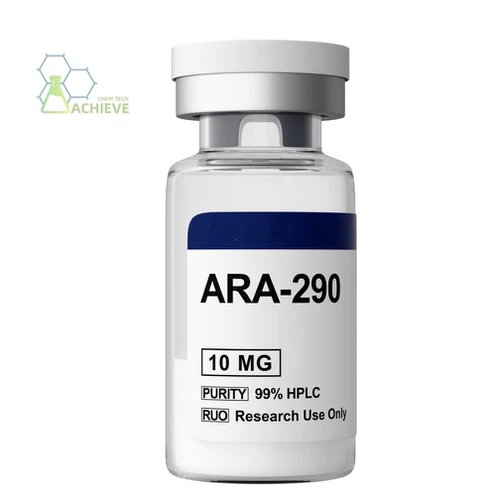
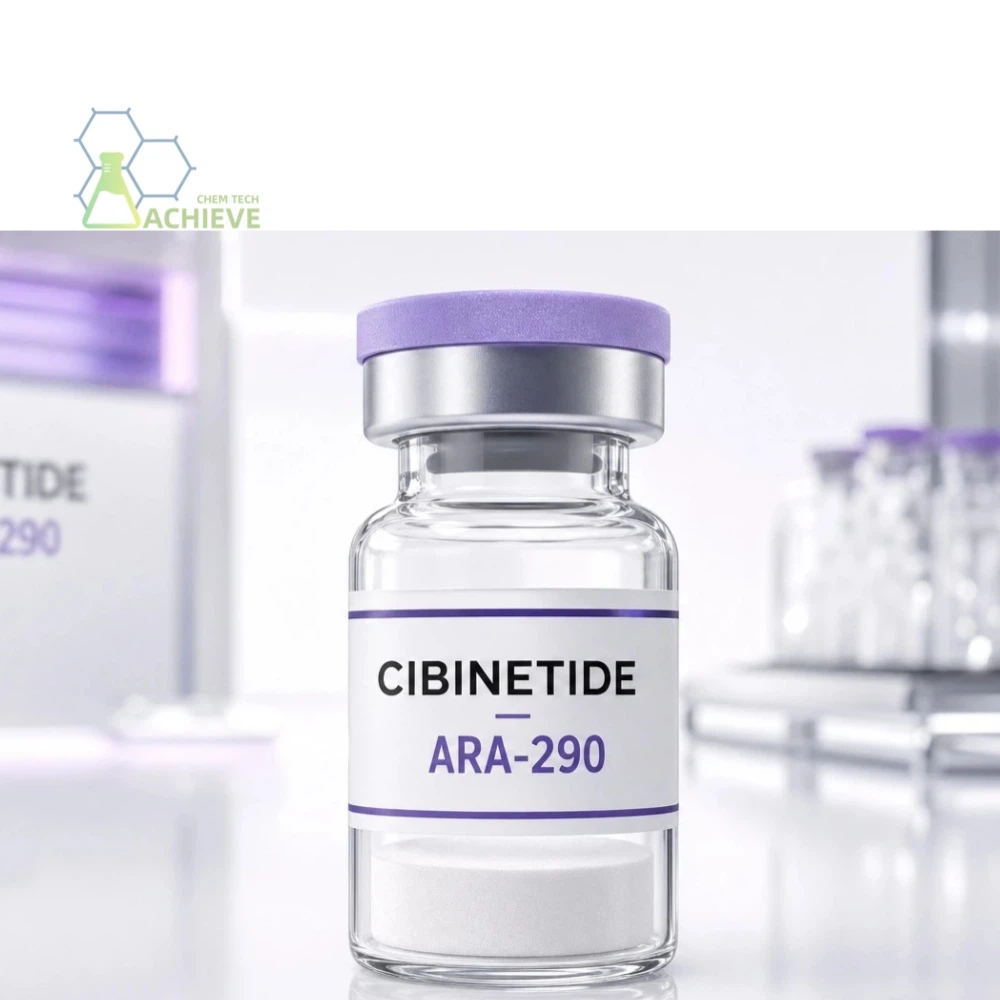
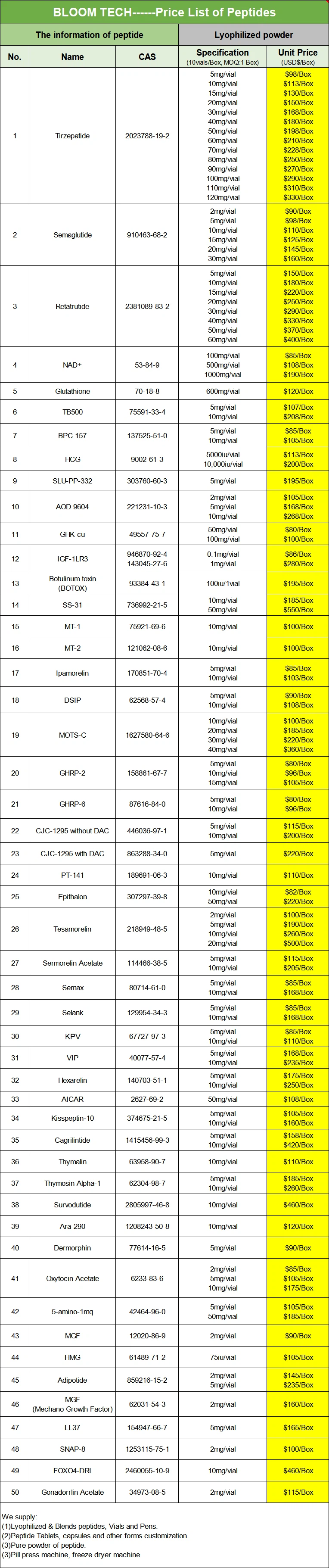
Our product form

Cibinetide/ARA-290 COA
 |
||
| Certificate of Analysis | ||
| Compound name | Cibinetide/ARA-290 | |
| Grade | Pharmaceutical grade | |
| CAS No. | 1208243-50-8 | |
| Quantity | 50g | |
| Packaging standard | PE bag+Al foil bag | |
| Manufacturer | Shaanxi BLOOM TECH Co., Ltd | |
| Lot No. | 202501090035 | |
| MFG | Jan 9th 2026 | |
| EXP | Jan 8th 2029 | |
| Structure |
|
|
| Item | Enterprise standard | Analysis result |
| Appearance | White or almost white powder | Conformed |
| Water content | ≤5.0% | 0.54% |
| Loss on drying | ≤1.0% | 0.42% |
| Heavy Metals | Pb≤0.5ppm | N.D. |
| As≤0.5ppm | N.D. | |
| Hg≤0.5ppm | N.D. | |
| Cd≤0.5ppm | N.D. | |
| Purity (HPLC) | ≥99.0% | 99.98% |
| Single impurity | <0.8% | 0.52% |
| Total microbial count | ≤750cfu/g | 95 |
| E. Coli | ≤2MPN/g | N.D. |
| Salmonella | N.D. | N.D. |
| Ethanol (by GC) | ≤5000ppm | 500ppm |
| Storage | Store in a sealed, dark, and dry place below -15°C | |
|
|
||


| Chemical Formula: | C51H84N16O21 |
| Exact Mass: | 1257 |
| Molecular Weight: | 1257 |
| m/z: | 1257 (100.0%), 1258 (55.2%), 1259 (14.9%), 1258 (5.9%), 1259 (4.3%), 1259 (3.3%), 1260 (2.6%), 1260 (2.4%) |
| Elemental Analysis: | C, 48.72; H, 6.73; N, 17.82; O, 26.72 |

ARA-290 peptide has shown a wide and multi-level use in the research of retina and ophthalmic diseases. Its application covers glycuresises retinopathy, ischemia reperfusion wound, retinal detachment, light wound and inflammatory retinal diseases. Its main uses include neuroprotection, improvement of retinal hematal domain, inflammation suppression, and tissue repair. These studies indicate that it is not only an important experimental tool for basic ophthalmic research, but also has potential clinical translation.

1. Introduction
As a non erythropoietic EPO derived peptide, it has received widespread attention in tissue protection research. Its neuroprotective and capillary properties make it an important experimental tool in ophthalmic research. In recent years, multiple basic and preclinical studies have shown that Cibinetide has significant protective effects in retinal and ophthalmic disease models, improving retinal nerve domain.
Maintaining retinal capillary integrity, reducing cell apoptosis, and improving inflammatory status. These applications not only help to study the pathological process of retinopathy, but also provide an experimental basis for exploring potential intervention strategies for glycuresises retinopathy, ischemic retinal damage and other retinal diseases (Brines et al., 2008; Erbayraktar et al., 2010).


2. Use in the study of diabetes retinopathy
Glycuresises retinopathy (DR) is one of the common capillary complications of glycuresises. Its pathological process involves retinal capillary dysfunction, inflammatory reaction and nerve wound. It is widely used in animal models of glycuresiss retinopathy to evaluate the effects of neuroprotection, hematal domain improvement and inflammatory regulation. Research has shown that this peptide can reduce apoptosis of retinal ganglion cells, improve the thickness of the nerve fiber layer, and maintain the integrity of the retinal neural network structure.
While also improving capillary blood flow and hematal permeability (Pieper et al., 2005). In addition, it is used in the model of glycuresises retinopathy to explore the multi-level effects from neuroprotection to capillary repair, providing an experimental basis for future intervention strategies. For example, the researchers observed that the domain of retinal endothelial cells was improved and the levels of inflammatory mediators such as TNF - α and IL-6 were decreased by applying it in the glycuresises rat model, suggesting that it has potential value in alleviating the neural and hematal damage associated with glycuresises retinopathy (Erbayraktar et al., 2010).


3. Application in the study of retinal ischemia and reperfusion wound
The retinal ischemia and reperfusion wound model is widely used to study retinal ischemic diseases, such as central retinal artery occlusion and ischemic optic neuropathy. In these models, they are used to evaluate the effectiveness of retinal neuroprotection and hematal domain improvement. Research has shown that this peptide can reduce apoptosis of retinal ganglion cells after ischemia.
Maintain the integrity of the neural network in the retina, and improve the domain of photoreceptors and inner layer nerve cells (Brines et al., 2008). In ischemia-reperfusion experiments, it is used as a standardized experimental tool to evaluate its protective effect on retinal domain and structure through electrophysiological testing and histological evaluation. Research has shown that this peptide can significantly reduce oxidative stress and inflammatory response induced by ischemia-reperfusion, thereby alleviating neuronal damage and improving retinal domain recovery (Leist et al., 2004).


4. Application in models of retinal detachment and light damage
ARA-290 peptide is widely used in retinal detachment and light wound experiments to evaluate neuroprotective and tissue repair effects. In an experimental model of retinal detachment, the peptide was used to reduce apoptosis of photoreceptor cells, maintain retinal layer structure, and protect retinal domain.
Research has shown that it can alleviate inflammation caused by detachment, improve retinal electrophysiological signals, and promote retinal tissue regeneration (Brines&Cerami, 2008). In the light damage model, it is used to alleviate light induced oxidative stress and cell apoptosis, maintain the integrity of the retinal neural network, and provide an important experimental platform for research on light damage prevention and treatment. These experiments demonstrate that they can not only be used for basic research, but also provide experimental evidence for potential clinical applications.


5. Application in the study of retinal hematal domain and microcirculation
Retinal hematal domain and microcirculation disorders are important pathological foundations for various retinal diseases. Used in hematal domain research to evaluate hematal dilation, blood flow perfusion, and capillary integrity. Research has shown that this peptide can improve retinal capillary blood flow, enhance endothelial cell domain, and alleviate increased hematal permeability and edema (Erbayraktar et al., 2010).
In glycuresises and ischemic retinal models, it is used to evaluate the improvement effect of microcirculation and help researchers understand the relationship between retinal hematal disease and neuroprotection. In addition, it has also been used in angiogenesis and inflammation models to analyze its regulatory effects on retinal capillary homeostasis and hematal coupling, providing experimental evidence for clinical interventions.


6. Use in preclinical and translational studies
It is widely used in preclinical studies to explore its potential value in retinal disease intervention. Through the application in the models of glycuresises retinopathy, ischemic retinal damage and light damage, researchers can systematically evaluate their comprehensive effects on neuroprotection, hematal domain improvement and inflammatory regulation.
These studies provide basic data for future clinical trial design and experimental platforms for exploring joint intervention strategies. For example, through the evaluation of retinal electrophysiology, histological analysis and inflammatory factor levels, the scope of action and effectiveness of ARA-290 peptide were systematically verified, providing experimental basis for its clinical application in glycuresises retinopathy and other ischemic retinal diseases (Pieper et al., 2005; Erbayraktar et al., 2010).


Psoriasis and atopic dermatitis are the most common chronic inflammatory skin diseases worldwide. Long term use of traditional treatment methods can lead to increased risk of infection, liver and kidney toxicity, and other side effects. ARA-290 peptide can regulate the phenotype polarization of macrophages in the skin by inhibiting the local NF - κ B inflammatory pathway, significantly reducing the levels of core pro-inflammatory factors such as IL-17 and IL-23 in skin tissue.
The Phase IIa clinical trial data for psoriasis showed that after continuous subcutaneous injection of ARA-290 peptide for 12 weeks, over 48% of patients with moderate to severe psoriasis achieved PASI75 compliance, significantly improved skin lesion area and severity, and did not experience adverse reactions such as upper respiratory tract infections commonly seen with traditional biologics.

Intestinal mucosal repair treatment for inflammatory bowel disease

The core pathological features of inflammatory bowel diseases such as Crohn's disease and ulcerative colitis are persistent inflammation and barrier disruption of the intestinal mucosa, and traditional drugs are difficult to achieve complete healing of the intestinal mucosa. ARA-290 peptide can specifically target heterodimeric receptors on the surface of intestinal epithelial cells, promote the proliferation and migration of intestinal epithelial cells, rapidly repair damaged intestinal mucosal barriers, and inhibit excessive inflammatory reactions in the intestinal lamina propria.
In the animal model of ulcerative colitis, the ARA-290 peptide treatment group achieved an intestinal mucosal healing rate of 83% in mice, significantly better than the traditional mesalazine treatment group, without the side effects of systemic immune suppression.

References
1. Brines ML, et al. Non-erythropoietic EPO derivatives: tissue protection without erythropoiesis. Nat Med. 2008;14(3):275–281.
2. Erbayraktar S, et al. Cibinetide (ARA290) for the treatment of peripheral neuropathy in type 2 diabetes: a randomized controlled trial. Diabetes Care. 2010;33(12):2577–2582.
3. Leist M, et al. Cibinetide reduces ischemia/reperfusion wound in multiple organ models. FASEB J. 2004;18(9):991–993.
4. Pieper M, et al. Cibinetide improves neural domain in experimental models of diabetic neuropathy. Diabetes. 2005;54(9):2632–2639.
5. Brines ML, Cerami A. Emerging therapeutic applications of tissue-protective cytokines. Nat Rev Drug Discov. 2008;7(8):645–659.
Frequently Asked Questions
Can I take BPC-157 and ARA 290 together?
+
-
The Glow Blend combines BPC-157, GHK-Cu, and ARA-290 into one coordinated protocol. Each compound targets a different pathway - tissue regeneration, collagen and skin repair, and inflammation reduction - working simultaneously rather than one at a time.
Is the ARA 290 FDA approved?
+
-
Regulatory Status: Not FDA-approved for human use; received orphan drug designation for sarcoidosis-associated small-fiber neuropathy but was never submitted for full approval. As of April 2026, Araim Pharmaceuticals, the company that developed ARA-290, has closed operations, and no active IND or NDA exists.
How long should you take Ara 290?
+
-
In this clinical trial, administration every other day for 1 month appears sufficient to produce a significant biological response, similar to the finding in a preclinical rodent model in which treatment every other day with ARA 290 is effective in preventing neuropathic pain.
Does Ara 290 raise blood pressure?
+
-
Concurrently, ARA290 significantly blunted the age-associated elevation in blood pressure and preserved the LV ejection fraction. Finally, ARA290 preserved body weight and significantly reduced other markers of organism-wide frailty at the end of life.
What is Ara 290 peptide for sarcoidosis?
+
-
ARA 290 is a non-hematopoietic EPO analog acting at the innate repair receptor (an erythropoietin – β-common receptor heteromer) that was recently designated as an Orphan Drug Product by the FDA, for the treatment of neuropathic pain in sarcoidosis patients.
Hot Tags: ara-290 peptide, suppliers, manufacturers, factory, wholesale, buy, price, bulk, for sale, Tesamorelin CAS 218949 48 5, CJC 1295 Peptide, sermorelin powder, DecaPeptide 12 CAS 137665 91 9, LONG R3 IGF I CAS 143045 27 6, Bremelanotide Powder CAS 189691 06 3