




Shaanxi BLOOM Tech Co., Ltd. is one of the most experienced manufacturers and suppliers of exenatide peptide in China. Welcome to wholesale bulk high quality exenatide peptide for sale here from our factory. Good service and reasonable price are available.
Exenatide Peptide is an artificially synthesized glucagon like peptide-1 (GLP-1) receptor agonist, consisting of a peptide chain of 39 amino acids. Its chemical structure is highly similar to the natural GLP-1 hormone secreted by mammalian intestines, but through optimization of the amino acid sequence, it significantly prolongs the half-life in vivo and enhances the stability of drug efficacy. It is prone to deamidation reaction (Asn residue converted to Asp) in high temperature or high pH environment, resulting in reduced activity. His and Trp residues are prone to oxidative degradation and require strict protection from light during storage. The peptide bonds involved in Asp are prone to breakage under alkaline conditions, which affects drug stability.
Our Products Form


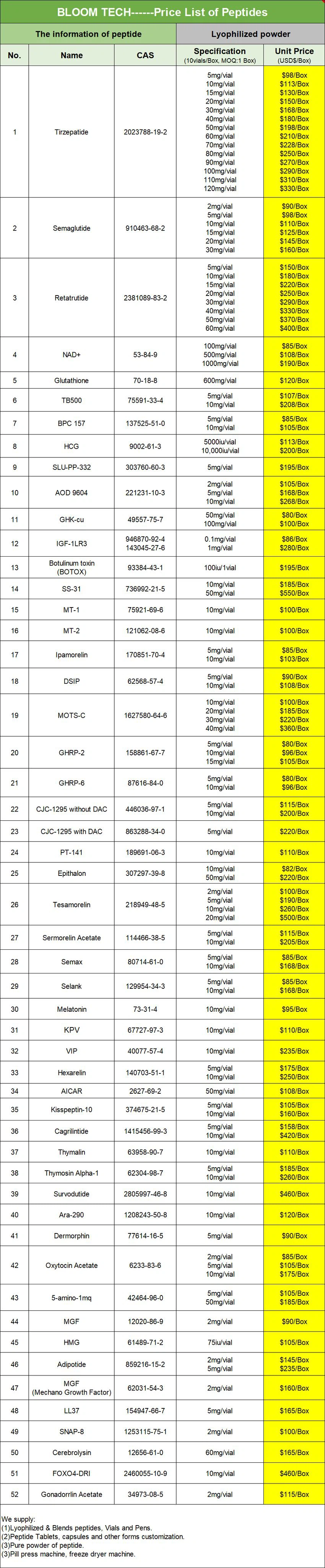
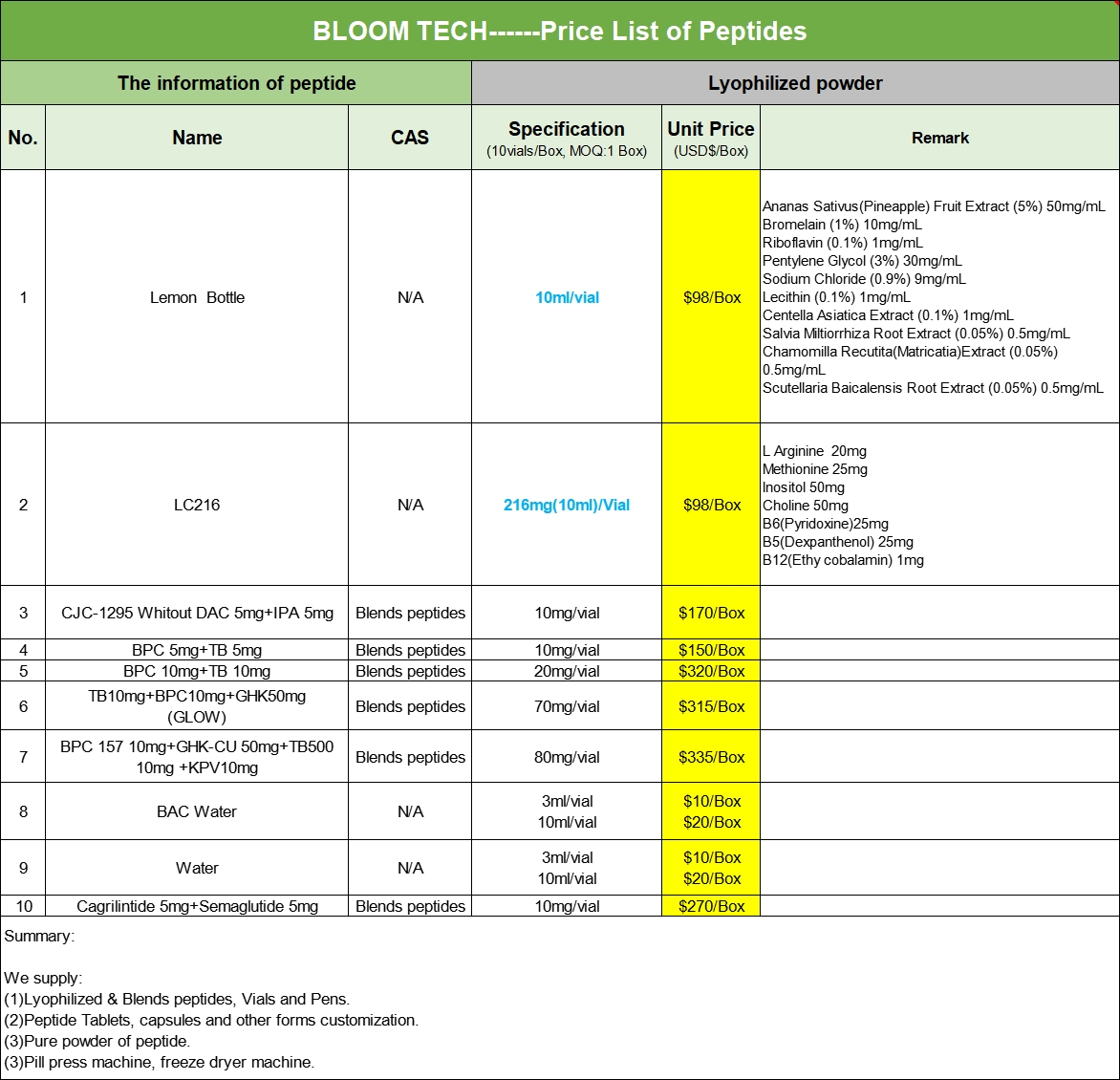

Exenatide/Exenatide acetate COA


As the world's first approved glucagon like peptide-1 (GLP-1) receptor agonist, Exenatide Peptide is mainly used in the treatment of type 2 diabetes. Its role is not limited to precise glucose reduction and weight management. In recent years, research has found that it can regulate the liver biological clock through multiple ways to improve the liver metabolic rhythm disorder. As the core organ of body metabolism, the liver's physiological functions (glucose and lipid metabolism, detoxification, energy conversion, etc.) are precisely regulated by the biological clock. The disorder of the liver biological clock is closely related to type 2 diabetes, non-alcoholic fatty liver disease (NAFLD), liver cirrhosis and other metabolic liver diseases.
Core components and physiological functions of liver circadian clock
The core of the liver circadian clock is the transcription translation feedback loop (TTFL) composed of clock genes, which drives the rhythmic expression of thousands of genes in liver cells, thereby regulating various physiological functions of the liver and achieving synchronous adaptation to the external environment (light, food).
Positive feedback loop: The core positive regulatory factors are CLOCK (clock circular regulator) and BMAL1 (brain and muscle ARNT like 1), both of which belong to basic helix loop helix (bHLH) transcription factors. CLOCK forms a heterodimer with BMAL1, which binds to the E-box element in the promoter region of downstream target genes, activating negative regulatory factors and transcription of downstream rhythmic genes. It is the "core engine" that drives the circadian rhythm. Among them, BMAL1 is the key to maintaining rhythm, and its periodic fluctuations in expression levels determine the amplitude and period of the biological clock.


Negative feedback loop: The core negative regulatory factors include the PER family (Period 1/2/3) and the CRY family (Cryptochrome 1/2). After the CLOCK/BMAL1 complex activates the transcription of PER and CRY genes, PER and CRY proteins are synthesized and accumulated in the cytoplasm, and then form heterodimers that enter the nucleus and bind to the CLOCK/BMAL1 complex, inhibiting its transcriptional activity and reducing the expression of its own and downstream genes; As PER and CRY proteins undergo ubiquitination degradation, their inhibitory effects gradually weaken, and the CLOCK/BMAL1 complex reactivates transcription, forming a complete 24-hour feedback loop.
Auxiliary regulatory factors: In addition to core clock genes, members of the nuclear receptor family such as REV-ERB α/β and ROR α/β/γ act as auxiliary regulatory factors and participate in the fine regulation of TTFL. REV-ERB α/β can inhibit BMAL1 expression by binding to the RORE element in the BMAL1 promoter region; ROR α/β/γ competes with REV-ERB to bind to RORE elements, activating BMAL1 expression. The dynamic balance between the two further stabilizes the circadian rhythm and connects the circadian rhythm with metabolic pathways.

Physiological functions of liver circadian clock

Regulation of glucose metabolism: The liver biological clock regulates the expression of glucose metabolism related genes through temporal regulation, achieving day night regulation of blood glucose homeostasis. During the daytime (feeding period), the biological clock drives the expression of genes such as glycogen synthase (GS) and glucokinase (GK) to increase, promoting the liver's uptake of glucose, synthesis of glycogen, and lowering blood sugar levels; At night (fasting period), the gene expression of glycogen phosphorylase (GP) and key gluconeogenesis enzymes (PEPCK, G6Pase) is upregulated, promoting hepatic glycogen breakdown and gluconeogenesis, maintaining stable fasting blood glucose, and avoiding hypoglycemia.
Regulation of lipid metabolism: The liver biological clock regulates the rhythmicity of fatty acid synthesis, oxidation, and cholesterol metabolism. At night, the expression of fatty acid oxidation related genes (PPAR α, CPT1A) increases, promoting fatty acid oxidation for energy supply; During the day, the expression of fatty acid synthesis related genes (SREBP-1c, FAS) is upregulated, promoting fatty acid synthesis and storage. At the same time, the expression of cholesterol synthesis key enzyme (HMGCR) also shows a circadian rhythm, synchronized with the body's lipid requirements.


Detoxification and bile acid metabolism: The detoxification function of the liver (such as drug metabolism and toxin clearance) is regulated by the biological clock, and the expression of cytochrome P450 family (CYP450) members (such as CYP3A4, CYP2C9) has a significant circadian rhythm, with the highest expression level at night and the strongest detoxification ability; The expression of the key enzyme for bile acid synthesis (CYP7A1) also exhibits a circadian rhythm, which synergizes with the eating rhythm to promote fat digestion and absorption.
Energy metabolism and autophagy regulation: The liver biological clock is closely related to mitochondrial energy metabolism, and the expression of genes related to mitochondrial oxidative phosphorylation has rhythmicity, ensuring that the body's energy supply matches the demands of day and night activities; At the same time, liver autophagy activity is also regulated by the biological clock, with a significant increase in autophagy activity during the fasting period at night. By degrading damaged mitochondria (mitochondrial autophagy) and abnormal proteins, liver cell homeostasis is maintained, providing raw materials for gluconeogenesis.

Reference information source:
1. Molecular mechanism and metabolic regulation of liver circadian clock Chinese Journal of Hepatology, 2024
2. Circadian clock regulation in the liver: Mechanisms and metabolic implications. Nature Reviews Gastroenterology & Hepatology, 2025.
3. Post transcriptional regulation mechanism of insulin on liver BMAL1 protein Chinese Journal of Biochemistry and Molecular Biology, 2024
4. Liver as a Nexus of Daily Metabolic Cross Talk. Int Rev Cell Mol Biol, 2025.
5. The regulatory mechanism of the biological clock metabolism autophagy axis is associated with diseases Progress in Physiological Sciences, 2025
6. Insulin post-transcriptionally modulates Bmal1 protein to affect the hepatic circadian clock. PubMed, 2024
The core molecular mechanism of Exenatide regulating liver circadian rhythm
GLP-1 receptor is a member of the G protein coupled receptor (GPCR) B family, widely expressed on the surface of liver cells such as parenchymal cells, hepatic stellate cells, and Kupffer cells. Its expression has a certain circadian rhythm and co regulates liver metabolism with the liver circadian clock. The binding of Exenatide Peptide to GLP-1 receptors in the liver is the basis for its regulation of the liver biological clock, and it has the following characteristics:

High affinity and specificity: Exenatide has a dissociation constant (Kd) of approximately 0.3 nM with liver GLP-1 receptors, which is higher in affinity than natural GLP-1 (Kd of approximately 1.0 nM). It only specifically binds to GLP-1 receptors and does not cross bind with other nuclear receptors (such as PPAR alpha and REV-ERB alpha), avoiding off target effects and ensuring the accuracy of regulatory action.
Rhythmic binding characteristics: The binding of Exenatide to GLP-1 receptors has a circadian rhythm, synchronized with the expression rhythm of GLP-1 receptors in the liver - during the daytime (feeding period), the expression level of GLP-1 receptors in the liver is higher, and the binding affinity of Exenatide is enhanced, with a more significant regulatory effect; At night (fasting period), receptor expression levels decrease, binding affinity weakens, and excessive interference with the liver's circadian rhythm at night (such as hepatic glucose output and fatty acid oxidation) is avoided.


Continuity of receptor activation: Exenatide, ranked second, is glycine (Gly), which can resist the enzymatic degradation of dipeptidyl peptidase 4 (DPP-4), with a half-life extended to 2.4 hours. After subcutaneous injection, it can continue to exert its effect in the body, continuously activating the GLP-1 receptor in the liver, achieving long-term regulation of the liver biological clock, and avoiding rhythm fluctuations.
Research has shown that knocking out the GLP-1 receptor in the liver completely eliminates the regulatory effect of Exenatide on the liver circadian rhythm, confirming that its regulatory effect depends on the activation of GLP-1 receptors. This is also one of the core characteristics that sets Exenatide apart from other hypoglycemic drugs such as metformin and sulfonylureas.

Reference information source:
1. Molecular mechanism study of Exenatide regulating liver circadian rhythm Chinese Pharmacological Bulletin, 2024
2. The GLP-1 receptor agonist, Exenatide, Administration Time Differentially Affects Circadian Rhythms in Diabetic db/db Mice. University of Kentucky College of Medicine, 2024
3. The mechanism by which exenatide inhibits pyroptosis and improves hepatic insulin resistance through PPAR delta BioTech, 2026
4. Exenatide ameliorates hepatic steatosis and attenuates fat mass and FTO gene expression through PI3K signaling pathway in nonalcoholic fatty liver disease. PMC, 2024
5. Exenatide Attenuates Non-Alcoholic Steatohepatitis by Inhibiting the Pyroptosis Signaling Pathway. Frontiers in Endocrinology, 2021
6. The regulatory effect and clinical significance of GLP-1 receptor agonists on liver circadian rhythm Chinese Journal of Endocrinology and Metabolism, 2024
Frequently Asked Questions
Q: Why can exenatide cause a false decrease in blood triglyceride test results?
+
-
A: Exenatide strongly slows gastric emptying and inhibits intestinal fat absorption. It can reduce postprandial chylomicron output in a short period, leading to abnormally low triglyceride readings that do not reflect true baseline lipid metabolism.
Q: Does exenatide have any effect on heart rate variability independent of blood glucose?
+
-
A: Yes. By activating central GLP‑1 receptors, exenatide can moderately increase parasympathetic tone and improve heart rate variability. This mild cardioprotective effect is independent of glucose lowering and weight loss.
Q: Why is exenatide less likely to cause gallstone‑related events compared with semaglutide and liraglutide?
+
-
A: Exenatide has a weaker effect on inhibiting gallbladder contraction. Its shorter half‑life and lower receptor activation intensity lead to less bile stasis, so the risk of gallstone formation is significantly lower in clinical data.
Q: Can exenatide affect the pharmacokinetics of levothyroxine?
+
-
A: Yes. It delays gastric emptying and may reduce the absorption rate of oral levothyroxine. Although it does not greatly affect steady‑state levels, it may cause transiently lower T3/T4 in the first few weeks of combination use.
Q: Why does exenatide show weak neuroprotective effects in animal models of Parkinson's disease?
+
-
A: GLP‑1 receptors are widely expressed in midbrain dopaminergic neurons. Exenatide can reduce microglial activation and oxidative stress, protecting dopaminergic neurons. This effect is unrelated to blood glucose regulation.
Hot Tags: exenatide peptide, suppliers, manufacturers, factory, wholesale, buy, price, bulk, for sale, Kisspeptin powder, DecaPeptide 12 CAS 137665 91 9, sermorelin powder, Epitalon Powder CAS 307297 39 8, Lpamorelin Powder CAS 170851 70 4, GLP 1 Peptide CAS 87805 34 3