




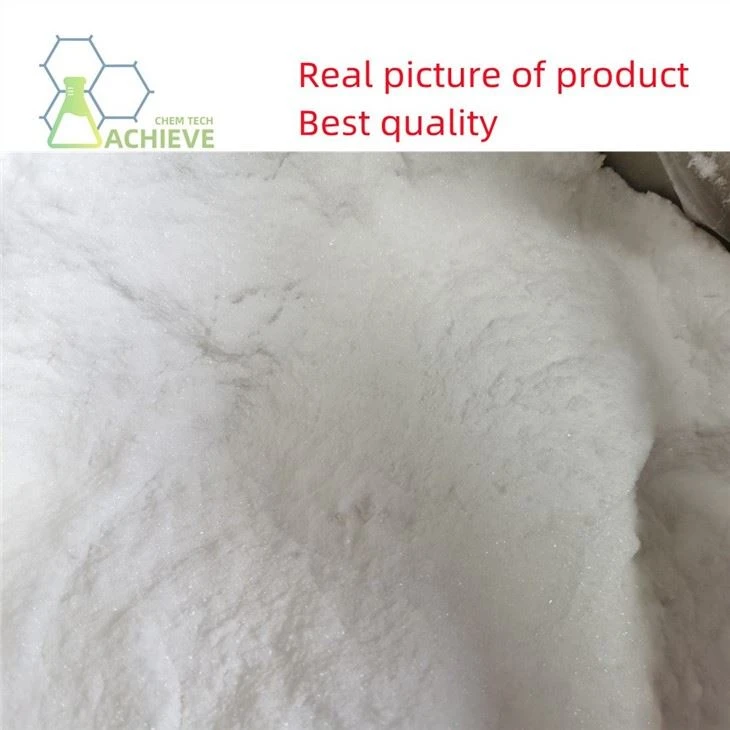
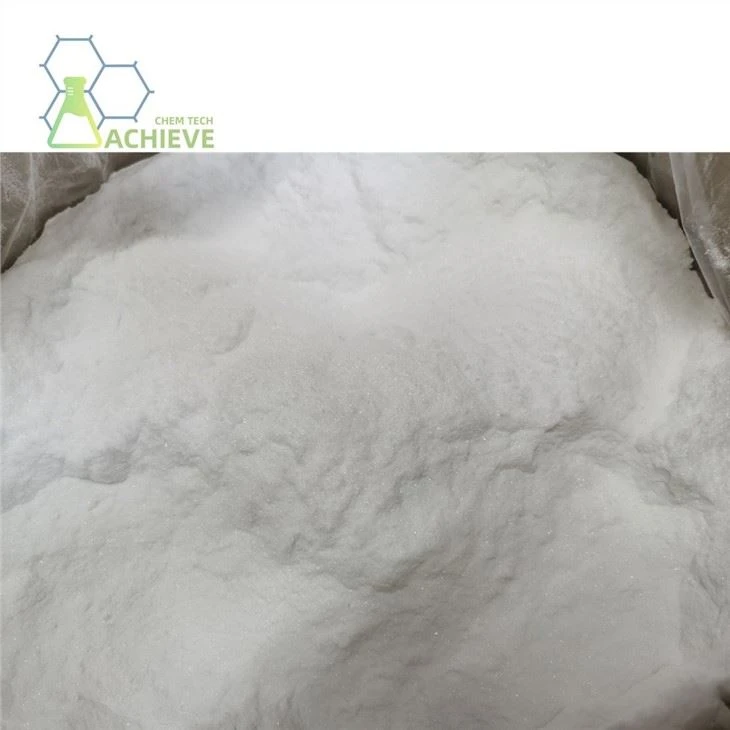

Caprolactam powder, chemical formula C6H11NO, CAS 105-60-2, It is one of the important organic chemical raw materials. The appearance is white powder or crystal, with a mint and acetone odor, and a greasy feeling. Dissolve in water, chlorinated solvents, petroleum hydrocarbons, cyclohexene, benzene, methanol, ethanol, and ether. The main purpose is to produce polyamide chips (usually referred to as nylon-6 chips or nylon-6 chips) through polymerization, which can be further processed into nylon fibers, engineering plastics, plastic films, etc. The quality and indicators of nylon-6 slices vary depending on the application field. It has high barrier properties, oil resistance, and wear resistance, and is commonly used in food packaging, pharmaceutical packaging, and industrial packaging. Nylon 6 film also has applications in agriculture and construction fields. It has excellent mechanical properties, wear resistance, and chemical stability, and is widely used in fields such as textiles, automobiles, electronics, electrical, and consumer goods.

|
Chemical Formula |
C6H11NO |
|
Exact Mass |
113 |
|
Molecular Weight |
113 |
|
m/z |
113 (100.0%), 114 (6.5%) |
|
Elemental Analysis |
C, 63.69; H, 9.80; N, 12.38; O, 14.14 |
|
|
|


Chemical property:
1. Polymerization occurs when heated.
2. Caprolactam club model.
3. Caprolactam Club Model
4. It reacts with acetic acid and nitrogen trioxide mixture to explode and thermally decomposes to emit toxic nitrogen oxide smoke.
5. In case of high heat, open fire or contact with oxidant, there is a risk of combustion. It is decomposed by high heat to produce toxic nitrogen oxides.
The powder and air can form an explosive mixture. When it reaches a certain concentration, it will explode when it meets Mars. Combustion decomposition products include carbon monoxide, carbon dioxide and nitrogen oxides.

Caprolactam powder is an important chemical raw material mainly used in the production of nylon 6 fibers and resins. Caprolactam plays a crucial role in the textile industry, with a wide and diverse range of applications.

1. Production of nylon 6 fiber
The main application in the textile industry is the production of nylon 6 fiber. Nylon 6 fiber is an important member of synthetic fibers, with advantages such as high strength, wear resistance, and good elasticity. These characteristics make it an indispensable material in the textile industry.
(1) Civilian textiles: Nylon 6 fiber has a wide range of applications in the field of civilian textiles. It can be spun into various civilian silk, such as underwear, socks, shirts, etc. These textiles not only provide a comfortable wearing experience, but also have good durability and wrinkle resistance.
(2) Industrial textiles: In addition to civilian textiles, nylon 6 fiber is also widely used in the field of industrial textiles. It can be spun into high-strength and wear-resistant industrial textiles such as tire cords, canvas cords, parachutes, insulation materials, fishing net threads, and seat belts. These products play an important role in fields such as automotive, aerospace, and fisheries.


2. Production of nylon 6 engineering plastics
It can also be used to produce nylon 6 engineering plastics. Nylon 6 engineering plastic has the characteristics of high strength, good thermal stability, and excellent chemical corrosion resistance, which make it widely used in multiple fields.
(1) Automotive parts: Nylon 6 engineering plastic plays an important role in the automotive industry. It can be used to produce automotive components such as gears, casings, hoses, oil resistant containers, etc. These components not only have excellent mechanical properties, but also have good heat resistance and corrosion resistance, which can meet the high standard requirements of automobile manufacturing.
(2) The electronics and electrical industry: Nylon 6 engineering plastics also play an important role in the electronics and electrical industry. It can be used for producing cable sheaths, electrical enclosures, mechanical equipment, etc. These products not only have excellent insulation performance, but also have good heat resistance and corrosion resistance, which can ensure the normal operation of electronic and electrical equipment.
(3) Other industrial fields: In addition to the automotive and electronic electrical industries, nylon 6 engineering plastics are also widely used in other industrial fields, such as equipment parts in the textile industry and components of precision machines. These products not only have excellent mechanical properties, but also have good wear resistance and corrosion resistance, which can meet the needs of various complex working conditions.


3. Production of nylon 6 film
Caprolactam powder can also be used to produce nylon 6 film. Nylon 6 film has high barrier properties, oil resistance, and wear resistance, which make it widely used in the packaging industry.
(1) Food packaging: Nylon 6 film plays an important role in the field of food packaging. It can be used to produce various food packaging bags, cling film, etc. These packaging materials not only have good barrier properties, which can prevent food oxidation and deterioration, but also have good oil resistance and wear resistance, which can meet the high standard requirements of food packaging.
(2) Medical packaging: Nylon 6 film also plays an important role in the field of medical packaging. It can be used to produce medical packaging bags, infusion bags, etc. These packaging materials not only have good barrier properties and oil resistance, but also have good biocompatibility and sterility, which can ensure the safety and effectiveness of medical supplies.
(3) Industrial packaging: In addition to food and medical packaging, nylon 6 film is also widely used in the field of industrial packaging. It can be used to produce various industrial packaging bags, wrapping films, etc. These packaging materials not only have good barrier properties and oil resistance, but also have good stretchability and winding properties, which can meet the packaging needs of various industrial products.


The molecular formula of caprolactam is C6H11NO, with a molecular weight of 113.16. It appears as a white powder or particle and has an oily texture. It is an important raw material for producing nylon 6, which is polymerized to produce the polymer material nylon 6. Nylon 6 has excellent mechanical properties, wear resistance, and chemical stability, which make it widely applicable in the textile industry.
Synthesis of caprolactam:
First, cyclohexanone of high purity and hydroxylamine sulfate are condensed at 80-110 ℃ to form cyclohexanone oxime. The separated cyclohexanone oxime is converted into crude caprolactam by Beckmann rearrangement at 80-110 ℃ with fuming sulfuric acid as catalyst. High purity caprolactam is prepared from crude caprolactam through extraction, distillation and crystallization. Cyclohexanone, the raw material of oxime process, can be obtained by hydrogenation of phenol to cyclohexanol and dehydrogenation; Or cyclohexanol and cyclohexanone are generated by air oxidation of cyclohexane, and the separated cyclohexanol is also generated by catalytic dehydrogenation.
Toluene is oxidized to benzoic acid under the action of cobalt salt catalyst. Benzoic acid is hydrogenated in liquid phase with palladium catalyst on activated carbon support to generate hexahydrobenzoic acid. In fuming sulfuric acid, hexahydrobenzoic acid reacts with nitrosyl sulfuric acid to generate caprolactam. Toluene process has a certain development prospect due to its abundant toluene resources and low production cost.
Cyclohexane undergoes photochemical reaction with chloronitrosyl under the irradiation of mercury vapor lamp and is directly converted into cyclohexanone oxime hydrochloride. In the presence of fuming sulfuric acid, cyclohexanone oxime hydrochloride is converted into caprolactam through Beckmann rearrangement.
Phenol is hydrogenated in the presence of nickel catalyst to obtain cyclohexanol, which is purified and dehydrogenated to obtain crude cyclohexanone. Cyclohexanone is purified and reacted with hydroxylamine to obtain cyclohexanone oxime, which is then shifted by Beckmann to form caprolactam. The sulfuric acid in the reaction product is neutralized with ammonia to obtain ammonium sulfate, a by-product. Pure caprolactam was obtained from crude caprolactam after a series of chemical and physical treatments.
The production methodsof caprolactam powder mainly include cyclohexanone method, phenol method, and cyclohexane oxidation method. Among them, the cyclohexanone method is currently the mainstream production process in China. This method separates and purifies cyclohexanone, and then undergoes hydroxylation reaction and Beckmann rearrangement reaction to generate caprolactam. With the advancement of technology and the improvement of environmental requirements, the production process of caprolactam is expected to be further optimized to achieve higher efficiency and lower environmental impact.
Frequently Asked Questions
What is caprolactam made of?
+
-
Caprolactam is a chemical compound consisting of carbon, nitrogen, oxygen and hydrogen. It is made by using either cyclohexane or phenol. Conventionally, caprolactam is produced by oxidizing cyclohexane, or from phenol or toluene. Hydroxylamine sulfate is manufactured by the oxidation of ammonia to nitrous oxide.
What is caprolactam used for?
+
-
Caprolactam - It is manufactured from raw materials such as Benzene, Sulphur (as Sulphur-di-oxide and Oleum), Ammonia, Carbon-di-oxide. It is used in manufacturing Nylon Tyre cord, Nylon filament yarn, Engineering plastics, etc. The major sectors catered to are the Textile and Automobile Industries.
Is caprolactam a plastic?
+
-
Caprolactam (CPL) is an organic compound with the formula (CH2)5C(O)NH. This colourless solid is a lactam (a cyclic amide) of caproic acid. Global demand for this compound is approximately five million tons per year, and the vast majority is used to make nylon 6 filament, fiber, and plastics.
Is caprolactam soluble in water?
+
-
Caprolactam is soluble in water, most oxygenated and chlorinated solvents, and some hydrocarbons. Caprolactam derives its name from ε-aminocaproic acid, or 6-aminohexanoic acid; in principle, the lactam is formed when the terminal carboxylic acid and amino groups react to form the amide.
What are the side effects of caprolactam?
+
-
Acute (short-term) exposure to caprolactam may result in irritation and burning of the eyes, nose, throat, and skin in humans. Headaches, malaise, confusion, and nervous irritation have been observed in workers exposed to caprolactam by inhalation.
Hot Tags: caprolactam powder 105-60-2, suppliers, manufacturers, factory, wholesale, buy, price, bulk, for sale, Sodium Cyanoborohydride Solution CAS 25895 60 7, Potassium Formate Powder, Acetamide Powder, 5 Bromo m xylene CAS 556 96 7, Raw Materials, Basic Chemicals