




Shaanxi BLOOM Tech Co., Ltd. is one of the most experienced manufacturers and suppliers of k-catalyst cas 1318-93-0 in China. Welcome to wholesale bulk high quality k-catalyst cas 1318-93-0 for sale here from our factory. Good service and reasonable price are available.
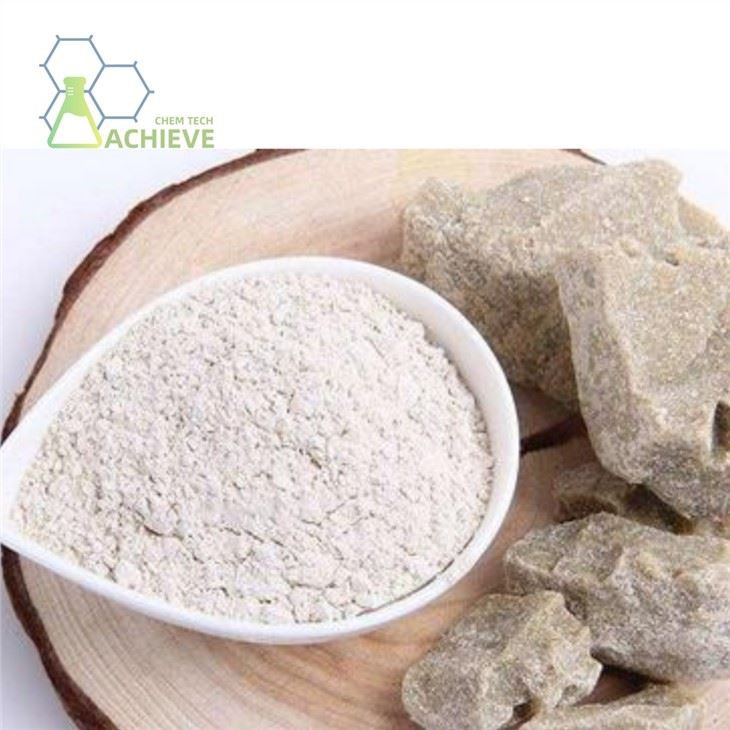
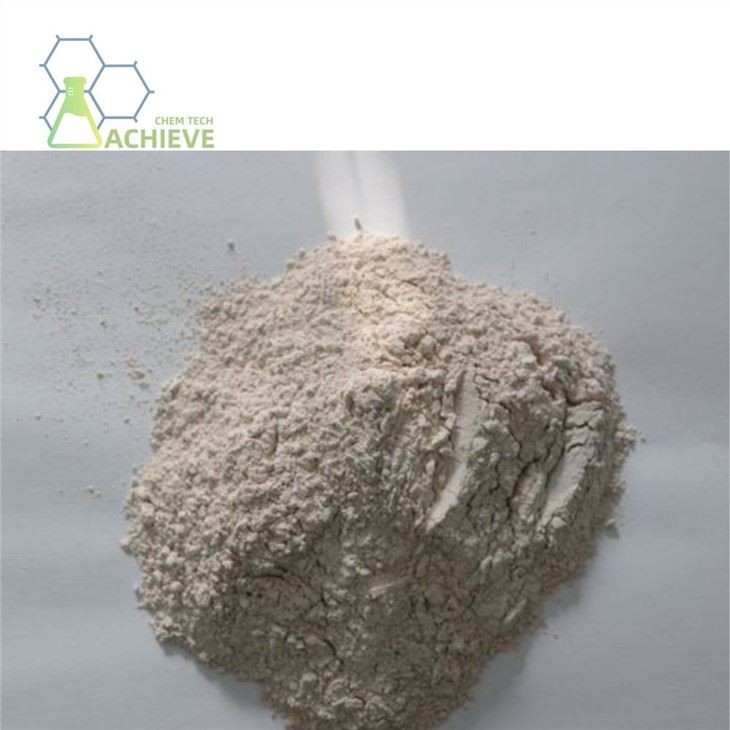
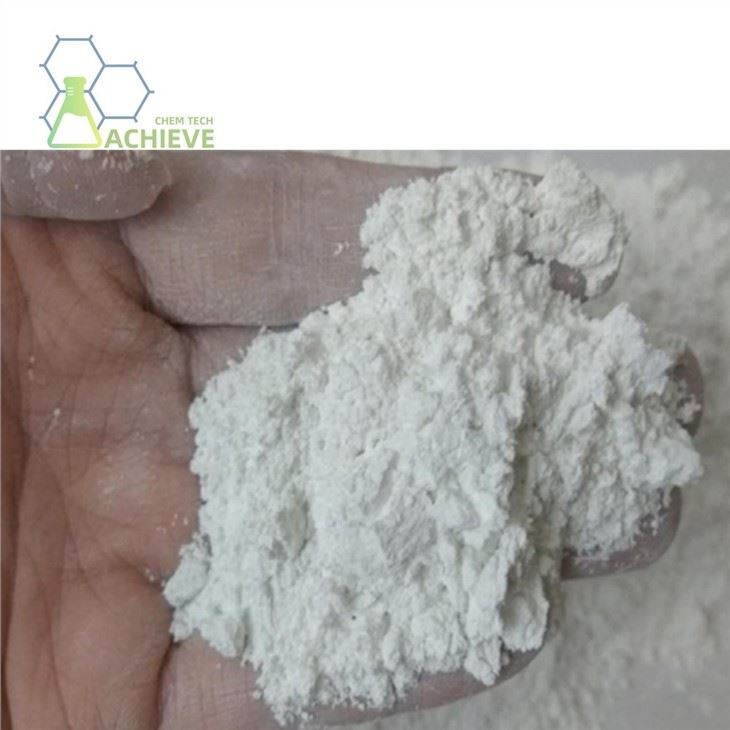
K-CATALYST is a layered mineral composed of extremely fine hydrous aluminosilicate, also known as Jiaoling stone and microcrystalline kaolinite, molecular formula: Al2O9Si3, CAS 1318-93-0. It is the main component of bentonite, which is altered by volcanic condensates and other igneous rocks in alkaline environment. White, sometimes light grey, pink, light green. The scaly ones have complete cleavage. Very soft. It feels slippery. When water is added, the volume can increase several times and become paste. It has strong adsorption and cation exchange performance. Montmorillonite is mainly formed by weathering of basic igneous rocks in alkaline environment, and some are the products of decomposition of volcanic ash deposited on the sea floor. It is the main component of bentonite. Bentonite is produced in many places in China, such as Liaoning, Heilongjiang, Jilin, Hebei, Henan and Zhejiang. The montmorillonite deposits with industrial value in China mostly occur in Mesozoic volcanic rock series. The montmorillonite organic complex is prepared by using its cation exchange property, and is widely used for high-temperature grease lubrication, rubber, plastic and paint.
Different granularity


Cation exchangeability is one of the most important properties of montmorillonite. The cations adsorbed between montmorillonite layers are exchangeable, and the total amount of these cations is called "cation exchange capacity" (CEC). In aqueous media, other exchangeable cations and water molecules can enter the interlayers, and this process is reversible. By modifying montmorillonite using its cation exchangeability, various products such as sodium bentonite, lithium montmorillonite, activated clay, pillared montmorillonite, and organic montmorillonite can be prepared.
Montmorillonite contains a large number of hydroxyl groups in its structure, has strong hydrophilicity, and has significant water absorption and swelling characteristics. The swelling of montmorillonite is mainly based on the hydration of interlayer cations, which adsorb water molecules to form a hydration film, increase the interlayer spacing, and cause swelling. The hydration and swelling of montmorillonite mainly includes three stages:
(1) Surface hydration: There are a large number of unsaturated broken bonds on the surface and end faces of the montmorillonite structure, such as Si-OH, Al-OH, etc. They can form hydrogen bonds with water molecules or adsorb water molecules through adsorbed exchangeable cations.
(2) Ion hydration: Interlayer exchangeable cations are hydrated to form hydrated cations.
(3) Osmotic hydration: When the interlayer distance increases to a certain extent, the ion concentration difference inside and outside the crystal layer causes an osmotic pressure difference, water molecules enter the interlayer, and cations diffuse into the water to form a double electric layer, generating repulsion, increasing the interlayer distance and causing expansion.
Among the three hydration methods mentioned above, the latter two are the main ones.
Due to the weak interlayer binding force of montmorillonite, water molecules can easily penetrate into the interlayer, increasing the interlayer distance, and the layers are dispersed and peeled off. The hydrated particles exist in the form of a small number of unit cells aggregated, or unit cells or crystal layers stacked in parallel. In the water medium, since montmorillonite particles are all negatively charged and repel each other, it is difficult to form large particle aggregates at low concentrations, so it has good suspension and can be used as a suspending agent. Generally, the suspension increases with the increase of pH value, and is better under alkaline conditions than under neutral and acidic conditions.
When montmorillonite is mixed with water, the surface hydration energy and cationic hydration energy are greater than the interlayer attraction, causing the volume of montmorillonite to expand and form independent sheets. At the edges of the montmorillonite sheets, due to the breakage of the aluminum-oxygen bond and the silicon-oxygen bond, the end face of the sheet is positively charged, which can attract the negative charge on the surface, and the edges and faces are mutually associated to form a large three-dimensional network structure. The water molecules, emulsion particles, etc. are wrapped and isolated to increase their movement resistance, thereby achieving a thickening effect. As time goes by, this colloidal structure tends to be stable. When shear force is applied, the colloidal structure is destroyed, the mutually attractive sheets are dispersed again, the resistance to the movement of the particles is reduced, and the viscosity of the system is reduced. The addition of charged particles such as dispersant sodium hexametaphosphate can be adsorbed on the end face of montmorillonite, neutralizing the edge positive charge, thereby destroying the stability of the "card palace" structure. The addition of positive charge can neutralize the acid anions, restore the end face positive charge, re-form the colloidal structure, and further increase the viscosity.
Montmorillonite colloid is a non-Newtonian fluid, and its viscosity changes with shear rate or time. Under the action of shear force, the continuous three-dimensional spatial network structure of montmorillonite colloid is easily destroyed, and the flakes are redispersed, the system viscosity decreases, and the colloid begins to flow, with shear thinning characteristics; when the clay system is subjected to a constant shear rate, as the colloid structure is destroyed, the viscosity decreases with time until the equilibrium viscosity is reached. When the shear force is removed, under static conditions, as time goes by, the hydrogen bonds are restored, and the dispersed flakes gradually associate into a three-dimensional network structure gel due to the attraction of positive and negative charges, and the system viscosity increases. This process of colloidal structure destruction and recovery is reversible, which is called the thixotropy of montmorillonite. The thixotropy index TI can be expressed by the viscosity ratio of the same rotor at a rotation speed of 10R and R.
Montmorillonite is a natural inorganic mineral material with good stability and good weather resistance.
(1) Good chemical stability
Montmorillonite is insoluble in water and various solvents. It is not reduced or oxidized at room temperature. It has a wide pH range. Its structure is not easily affected by acids, alkalis, salts, etc. It has good compatibility with organic anions, alcohol solvents, etc.
(2) Good thermal stability
The dehydroxylation temperature is a measure of the heat resistance of montmorillonite, reflecting the quality of its thermal stability. The dehydroxylation temperature of montmorillonite is generally 550℃-750℃. At this temperature, the structural hydroxyl groups are removed but the layer structure is not destroyed, showing good thermal stability.
(3) Good biological stability
Montmorillonite is not affected by bacteria, microorganisms, etc. Its suspension is not easy to mold and deteriorate when placed under hot and humid conditions, especially in a humid environment or at a high temperature of 30-40℃ in summer. It will not be enzymatically degraded, smelly, or have a reduced viscosity like organic thickeners such as cellulose and xanthan gum. It has excellent anti-corrosion and anti-degradation properties.

Purification method:
There are many methods for purifying bentonite, which can be divided into dry method and wet method according to the purification process.
Dry method:
Dry method is to fully mix the bentonite ore that has been ground to a certain fineness with air into a fluidized state. Under the action of the centrifugal force of the classifier and the suction force of the fan, most of the coarse particles and particles with a large specific gravity are separated from the fine-grained minerals.
Wet method:
During wet purification, the water medium provides sufficient space and power for the expansion and hydration of the montmorillonite interlayer. Through stirring and adding dispersants, the montmorillonite colloid particle size will be smaller, making it easier to separate from the impurity minerals that cannot reach the colloidal particle size.
According to the separation principle, it can be divided into physical method and chemical method purification.
1) Physical purification method:
Physical purification methods include air selection, gravity washing, centrifugation, cyclone classification, phosphate method, ultrasonic oscillation method, electrophoresis method, flocculation method, etc. According to the requirements of bentonite grade and product purity, several methods are usually used in combination. According to the grade and application requirements of bentonite, high-grade bentonite (montmorillonite content is about 80%) can be purified by air selection; low-grade bentonite can be purified by wet method; bentonite containing coarse particle impurities such as feldspar and calcite can be purified by gravity washing; impurities with particle size similar to montmorillonite or wrapped in montmorillonite need to be removed by chemical methods, and bentonite used in medical and food applications generally cannot be purified by chemical methods.
2) Chemical purification method:
Chemical purification method can be divided into chemical centrifugal purification method and sodium centrifugal purification method. The former adds a dispersant, usually phosphate, on the basis of the centrifugal purification method. The phosphate ions are adsorbed on the end face of montmorillonite, which reduces the number of effective sheets forming the colloidal structure, increases the negative charge, strengthens the repulsion between the sheets, reduces the viscosity of the system, exposes the fine impurity minerals, and makes it easier to settle in water under the action of gravity, and then achieves the purpose of separation from montmorillonite through centrifugation. Compared with the centrifugal purification method, it improves the inclusion and encapsulation state of montmorillonite and impurity minerals, but does not improve the suspension and dispersibility of calcium-based montmorillonite. Therefore, the purity of the obtained montmorillonite is higher, but the yield is lower. The latter adds a raw material pretreatment process on the basis of the former, modifies the calcium-based bentonite into sodium-based bentonite, and then performs centrifugal purification, which improves the dispersion and suspension of montmorillonite, increases the fine-particle montmorillonite in the slurry, and increases the yield while improving the purity.

Synthesis method of high-purity K-CATALYST: dissolve bentonite in aqua regia, then add sodium hydroxide (Na0H) to prepare synthetic solution, and then synthesize montmorillonite crystals by keeping the solution sealed at a temperature above 90 ° C and below 100 ° C.

The name of product comes from Montmorillon in France, the place where it was first discovered. The montmorillonite subfamily belongs to one of smectite minerals (the other subfamily is saponite saponite), which is an important clay mineral, generally massive or earthy. The molecular formula is (Na, Ca) 0.33 (Al, Mg) 2 [Si4O10] (OH) 2 · nH2O. It is a clay mineral with three-layer lamellar structure composed of aluminum oxide octahedron in the middle and silicon oxide tetrahedron in the upper and lower. It contains water and some exchange cations between crystal structural layers, has high ion exchange capacity and high water absorption expansion capacity. Montmorillonite crystal belongs to monoclinic silicate mineral with aquifer structure.
It particles are small, about 0.2~1 μ m, with colloidal dispersion characteristics, and are usually produced as a massive or earthy aggregate. Under the electron microscope, montmorillonite can be seen as flake crystals, which are either white gray, light blue or light red. When the temperature reaches 100~200 ℃, montmorillonite will gradually lose water. Montmorillonite after dehydration can also reabsorb water molecules or other polar molecules. When they absorb water, they can also expand and exceed the original volume several times. Montmorillonite has a variety of uses, and its characteristics are used in chemical reactions to produce adsorption and purification. It can also be used as a filler for paper making, rubber and cosmetics, as a raw material for oil decolorization and oil cracking catalyst, as well as as a mud for geological drilling, a binder for metallurgy and medicine (mainly for K-CATALYST powder).
Ex (H2O) 4 {(Al2-x, Mgx) 2 [(Si, Al) 4O10] (OH) 2} is also called microcrystalline kaolinite. In the above formula, E is the exchangeable cation between layers, mainly including Na+and Ca2+, followed by K+and Li+. X is the number of layer charges of the unit chemical formula when E is used as a univalent cation, generally between 0.2 and 0.6. According to the types of main interlayer cations, it can be divided into sodium montmorillonite, calcium montmorillonite and other component varieties. In the crystal chemical formula, H2O (crystal water or interlayer water, etc.) is usually written at the end of the formula, but in product, H2O is written at the front, indicating that H2O and exchangeable cations are filled in the interlayer domain together. E and H2O form a hydration state by weak hydrogen bond. If E is a univalent ion, the ionic potential is small, forming a continuous layer of water molecules; If E is a divalent cation, two layers of continuous water molecules are formed. This shows that the water molecules entering the interlayer are not directly related to the layer grid (single layer). The content of water is related to the humidity and temperature of the environment, which can be up to four layers.
Hot Tags: k-catalyst cas 1318-93-0, suppliers, manufacturers, factory, wholesale, buy, price, bulk, for sale, 1 AMINO 2 NAPHTHOL 4 SULFONIC ACID, Iridium III chloride, CHICAGO SKY BLUE 6B, Cerium sulfate powder, Consumable