



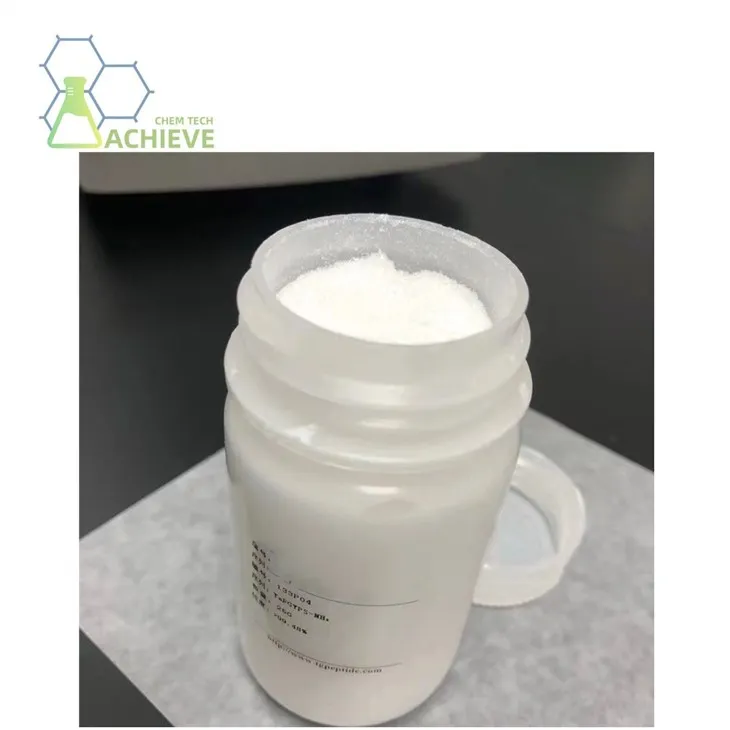
Shaanxi BLOOM Tech Co., Ltd. is one of the most experienced manufacturers and suppliers of polymerization inhibitor 510(npal) cas 15305-07-4 in China. Welcome to wholesale bulk high quality polymerization inhibitor 510(npal) cas 15305-07-4 for sale here from our factory. Good service and reasonable price are available.
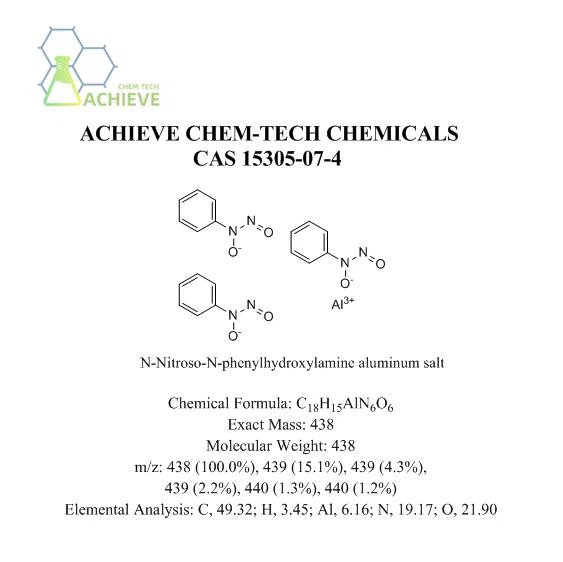
Polymerization Inhibitor 510(NPAL) , whose chemical name is n-nitroso-n-phenylhydroxylamine aluminium salt, is most commonly used in industrial industries as UV curing coatings and inks. The most common and easy-to-use model in curing coatings is inhibitor 510. It is an important analytical reagent, which can form insoluble precipitation with copper, iron, aluminium, titanium, etc. and can be extracted by organic solvents such as chloroform and ethyl acetate. It is mainly used as a precipitant for precipitation separation or weighing analysis; It can also be used as an extractant for extraction separation or photometric analysis, such as separating copper and iron from other metal ions; It is used to precipitate and determine iron from strong acid solution; It is used for the quantitative determination of dark red precipitation formed by vanadate; It is used for the quantitative determination of yellow precipitation formed by titanium; Used for colourimetric determination of aluminium.

|
Chemical Formula |
C18H15AlN6O6 |
|
Exact Mass |
438 |
|
Molecular Weight |
438 |
|
m/z |
438 (100.0%), 439 (15.1%), 439 (4.3%), 439 (2.2%), 440 (1.3%), 440 (1.2%) |
|
Elemental Analysis |
C, 49.32; H, 3.45; Al, 6.16; N, 19.17; O, 21.90 |
|
|
|

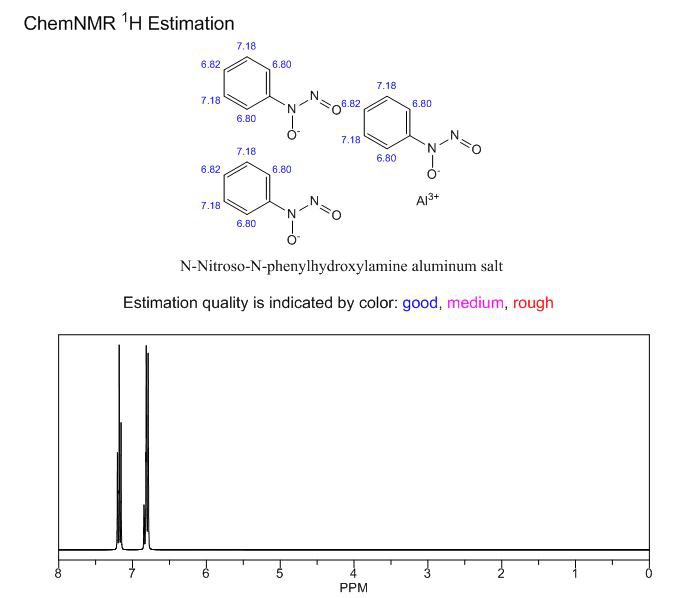
Melting point 167-170 ° C, Boiling point 168-170 ° C, Storage condition below 5 ° C, Hydrolysis sensitivity 4: no reaction with water under neutral conditions, Dangerous goods sign t, Hazard category code 68-36 / 37 / 38-23 / 24 / 25-45, Safety instructions 22-36 / 37 / 39-45-26-53, Dangerous goods transport No. UN 2811 6.1/pg 3, TSCA Yes.

Polymerization Inhibitor 510(NPAL) (CAS number: 15305-07-4), also known as tris (N-nitroso-N-phenylhydroxylamine) aluminum salt, is an organic metal compound with unique chemical properties. Its molecular structure contains three N-nitroso-N-phenylhydroxylamine groups that coordinate with aluminum atoms to form stable complexes. This compound has shown extensive application value in the industrial field, especially in UV curing materials, metal analysis, organic synthesis, and fine chemicals.
In UV curable coatings, inks, and adhesives, N-nitroso-N-phenylhydroxylamine aluminum serves as an efficient polymerization inhibitor, significantly extending the storage stability of the product by inhibiting the free radical polymerization reaction of olefin monomers. Its mechanism of action is based on the synergistic effect of nitroso (- NO) and hydroxylamine (- NHOH) groups in the molecule, which can accurately capture free radicals in the system and block the propagation of chain polymerization reactions.
technical advantage
Low dosage and high efficiency: By adding only 0.01% -0.1% N-nitroso-N-phenylhydroxylamine aluminum in the UV formula, the shelf life of the product can be extended from 6 months for traditional inhibitors (such as hydroquinone) to 12-24 months.


Excellent compatibility: Suitable for various systems such as unsaturated polyester resin, vinyl monomers, acrylic oligomers, etc., and has no negative impact on the transparency, hardness, and adhesion of the final product.
Strong thermal stability: When stored in a dry environment below 25 ℃, its polymerization inhibition effect can be maintained for more than two years, far exceeding the performance of phenolic polymerization inhibitors.
Application Cases
UV ink: In the printing industry, the polymerization inhibitor can prevent the ink from gel during storage, and ensure the color stability of printed matter.
UV Coatings: Used in fields such as automotive coatings and wood coatings to extend the lifespan of paint cans and reduce raw material waste during production.
Photoresist: In semiconductor manufacturing, it acts as a stabilizer for photoresist to prevent spontaneous polymerization before exposure.
As an analytical reagent, qualitative and quantitative analysis of metals can be achieved by forming insoluble precipitates or extractable complexes with metal ions. Its selective precipitation ability comes from the electrostatic interaction between the π electron cloud of the benzene ring in the molecule and the metal ion.
key reaction
Iron ion determination: In a strongly acidic solution, it forms a deep red precipitate with Fe ³ ⁺ and is used for colorimetric determination of iron content.
Titanium ion separation: Generate a yellow precipitate with Ti ⁴⁺, and separate titanium from other metal ions through filtration.


Aluminum ion colorimetric method: forms a colored complex with Al ³ ⁺, used for rapid detection of aluminum content in environmental water samples.
Copper iron extraction: In organic solvents such as chloroform, it preferentially forms extractable complexes with Cu ² ⁺ and Fe ³ ⁺, achieving selective separation of metal ions.
technical indicators
Precipitation efficiency: The precipitation rate of Fe ³ ⁺ and Ti ⁴⁺ can reach over 99%.
Selectivity: In a 1mol/L HCl solution, Fe ³ ⁺ can be quantitatively precipitated without interfering with coexisting ions such as Cu ² ⁺ and Zn ² ⁺.
Sensitivity: The minimum detection limit for aluminum by colorimetric method is 0.01mg/L.
In organic chemistry, polymerization Inhibitor 510(NPAL) can be used as a synthetic intermediate or catalyst to participate in various complex reactions. Its reactivity originates from the oxidizing nature of the nitroso group and the reducing nature of the hydroxylamine group in the molecule.
typical reaction
Free radical initiator: In polymerization reactions, free radicals are generated through decomposition to regulate molecular weight distribution.
Redox catalyst: In the reaction of alcohol oxidation to aldehydes and ketones, it acts as an electron transfer medium to improve reaction selectivity.


Metal ligand: forms complexes with transition metals (such as Cu, Fe) for asymmetric catalytic synthesis of chiral molecules.
Application Examples
Synthesis of pharmaceutical intermediates: Nitroso structures are introduced as key intermediates in the side chain synthesis of anticancer drug paclitaxel.
Polymer material modification: In the anti-static treatment of polyester fibers, hydroxylamine groups are introduced through catalytic reactions.
In the coatings, electroplating, and daily chemical industries, N-nitroso-N-phenylhydroxylamine aluminum exerts multiple functions through its unique chemical properties.
Specific applications
Coating anti settling agent: In solvent based coatings, it prevents pigment settling by forming hydrogen bonds with the surface of the pigment.
Electroplating solution stabilizer: In zinc nickel alloy electroplating, it inhibits the spontaneous reduction of metal ions in the plating solution and improves the uniformity of the coating.
Preservatives for daily chemical products: In shampoo and skincare products, they chelate metal ions to extend product shelf life.


We are the supplier of Polymerization Inhibitor 510(NPAL).
Remark: BLOOM TECH(Since 2008), ACHIEVE CHEM-TECH is our subsidiary of us.

N-Nitroso-N-phenylhydroxylamine aluminum is an important organometallic compound commonly used for catalyzing organic reactions.
Firstly, N-phenylhydroxylamine is prepared by reducing azobenzene. The specific steps are as follows:
(1) Add 50 mL of ethanol to a 100 mL round bottom flask and add azobenzene (5.0 g, 0.03 mol) while stirring.
(2) Use an ice bath to lower the temperature to 0 ℃, then add a concentrated sodium hydroxide (NaOH) solution (10 mL, 10M) dropwise.
(3) After 30 minutes of reaction, the precipitate was filtered and washed and dried with ethanol to obtain a white solid N-phenylhydroxylamine (3.4 g, 90%).
C6H5N2Cl+2NaOH → C6H5NH2+NaCl+H2O
Next, N-phenylhydroxylamine is dissolved in acetic acid, and then N-nitroso N-phenylhydroxylamine is prepared by the action of sodium nitrite. The specific steps are as follows:
(4) Dissolve N-phenylhydroxylamine (1.0 g, 7.8 mmol) in acetic acid (20 mL).
(5) Add sodium nitrite (NaNO2) (0.68 g, 9.8 mmol) aqueous solution dropwise while stirring. During the reaction, keep the temperature below 0 ℃ and stir for 30 minutes.
C6H5NH2+NaNO2+CH3COOH → C6H5NHOH+CH3COONa+H2O
Finally, N-nitroso N-phenylhydroxylamine was reacted with aluminum chloride (AlCl3) in tetrahydrofuran (THF) to obtain N-nitroso N-phenylhydroxylamine aluminum. The specific steps are as follows:
(6) Dissolve N-nitroso N-phenylhydroxylamine (0.5 g, 2.3 mmol) in THF (10 mL).
(7) Add aluminum chloride (AlCl3) dropwise while stirring (0.74 g, 5.5 mmol). The reaction temperature should be kept below 0 ℃, and light should be avoided during the reaction. After the reaction is completed, the solid product of N-nitroso N-phenylhydroxylamine aluminum is obtained by filtration.
C6H5NHOH+AlCl3 → C6H5NOAlCl2+HCl
Hot Tags: polymerization inhibitor 510(npal) cas 15305-07-4, suppliers, manufacturers, factory, wholesale, buy, price, bulk, for sale, Copper II Acetate CAS 142 71 2, 1 10 Phenanthroline Powder CAS 66 71 7, DIPHENYLAMINE 4 SULFONIC ACID BARIUM SALT CAS 6211 24 1, Thiazolyl Blue CAS 298 93 1, Sodium Thiosulfate Pentahydrate CAS 10102 17 7, acetanilide solution