



Shaanxi BLOOM Tech Co., Ltd. is one of the most experienced manufacturers and suppliers of potassium thiocyanate solution cas 333-20-0 in China. Welcome to wholesale bulk high quality potassium thiocyanate solution cas 333-20-0 for sale here from our factory. Good service and reasonable price are available.
Potassium thiocyanate solution, molecular formula CKNS, CAS 333-20-0. Commonly known as potassiu roseate and potassiu rose palmitate, is an inorganic substance with the chemical formula KSCN, which is easily soluble in water and cools down due to a large amount of heat absorption. It is also soluble in alcohol and acetone. It is mainly used to synthesize resins, insecticides, fungicides, mustard oil, thioureas and drugs, and can also be used as chemical reagents. It is a commonly used indicator of iron ions (Fe3+), which will produce blood red flocculent complexes after being added; It is also used to prepare thiocyanate (thiocyanide) solution, test iron ion, copper and silver, urine test, tungsten chromogenic agent, and indicator for volumetric titanium; It can be used as refrigerant and photographic thickener.

|
Chemical Formula |
C23H36O3 |
|
Exact Mass |
360 |
|
Molecular Weight |
361 |
|
Elemental Analysis |
C, 76.62; H, 10.06; O, 13.31 |
|
|
|
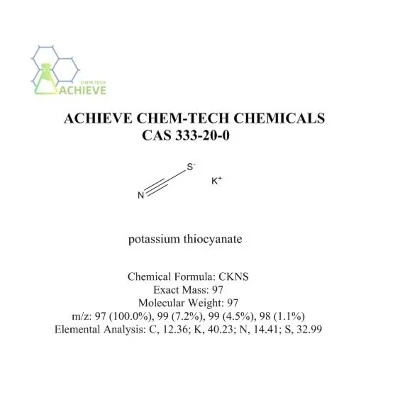
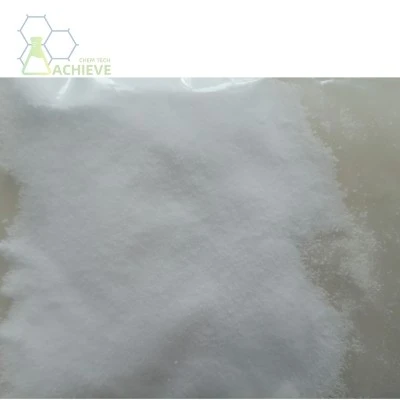

Potassium thiocyanate, also known as potassiu thiocyanate or potassiu roseate, is an inorganic compound that appears as a colorless, hygroscopic monoclinic crystal or powder. It has demonstrated extensive application value in multiple fields, including chemical analysis, electroplating industry, refrigeration technology, dye and printing industry, pharmaceutical and pesticide manufacturing, steel analysis, photography industry, and other special purposes.
1. Applications in the field of chemical analysis
Potassium thiocyanate plays an important role in chemical analysis, and its most significant application is as an indicator and complexing agent for metal ions.
Indicator for iron ions (Fe ³ ⁺):
This characteristic makes potassium thiocyanate solution a sensitive reagent for detecting iron ions. In the laboratory, simply add a small amount of potassiu thiocyanate solution to the test solution. If the solution turns blood red, the presence of iron ions can be confirmed. This method is easy to operate, highly sensitive, and widely used in fields such as water quality monitoring and metal corrosion research.
Indicator for cobalt ion (Co ² ⁺):
In a solution containing ammonium salts, potassiu thiocyanate reacts with cobalt ions to form a blue coordination compound. This reaction also has high sensitivity and can be used for qualitative and quantitative analysis of cobalt ions. For example, in the determination of cobalt content in electroplating solutions, potassiu thiocyanate as an indicator can significantly improve the accuracy of analysis.
Detection of other metal ions: Potassium thiocyanate can also be used to detect copper ions (Cu ² ⁺) and silver ions (Ag ⁺). When reacting with copper ions, the solution exhibits a specific color change;


Reacting with silver ions produces a white precipitate, which can be used for the separation and identification of silver ions. In addition, potassiu thiocyanate can also serve as an indicator for volumetric determination of titanium and a color reagent for tungsten, playing an important role in the analysis of complex metal systems.
Coordination chemistry research: Potassium thiocyanate, as a ligand, can form stable coordination compounds with various metal ions, providing an important model for coordination chemistry research. For example, by studying the coordination behavior of potassiu thiocyanate with transition metal ions, we can gain a deeper understanding of the formation mechanism of coordination bonds and the structural characteristics of complexes.
2. Application in Electroplating Industry
Potassium thiocyanate plays an irreplaceable role in the electroplating industry, with applications covering multiple aspects such as stripping, additives, and electrolyte composition.
Stripping agent: During the electroplating process, potassiu thiocyanate can be used as a stripping agent to remove the deposited metal coating on the substrate surface. For example, in cyanide copper plating and cyanide silver plating processes, potassiu thiocyanate can effectively dissolve copper or silver coatings, achieving clean treatment of the substrate. In addition, it can also be used to remove nickel coatings on copper and copper tin alloy substrates, providing a good foundation for subsequent electroplating processes.
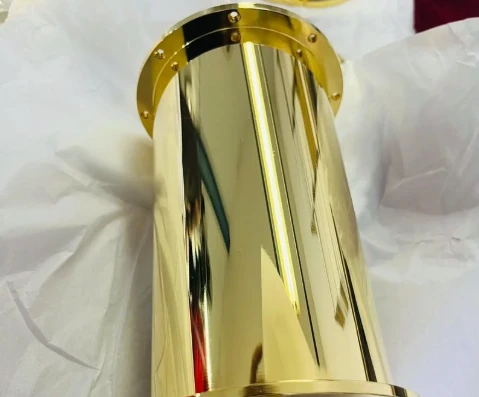
Additive: Potassium thiocyanate as an additive can significantly improve the performance of electroplating solutions. The addition of potassiu thiocyanate in black nickel plating and silver plating electrolytes can adjust the dispersion and coverage of the plating solution, making the coating more uniform and dense. At the same time, it can also suppress the interference of impurity ions in the plating solution and improve the quality of electroplated products.
Electrolyte composition: In specific electroplating processes, potassiu thiocyanate directly participates in the electrodeposition process as the main component of theelectrolyte. For example, in some special alloy electroplating, potassiu thiocyanate can coordinate with metal salts to form a stable complex electrolyte, thereby achieving co deposition of specific alloy components.
3. Application in refrigeration technology
Potassium thiocyanate solution has shown potential applications in refrigeration technology due to its unique physical and chemical properties.
Cryogen: Potassium thiocyanate can be used as a refrigerant, and its refrigeration principle is based on the heat of dissolution effect. When potassiu thiocyanate dissolves in water, it absorbs a large amount of heat, resulting in a significant decrease in solution temperature. This feature makes it suitable for small refrigeration equipment or localized cooling scenarios. For example, in the laboratory, potassiu thiocyanate solution can be used to cool the reaction system or preserve low-temperature samples.

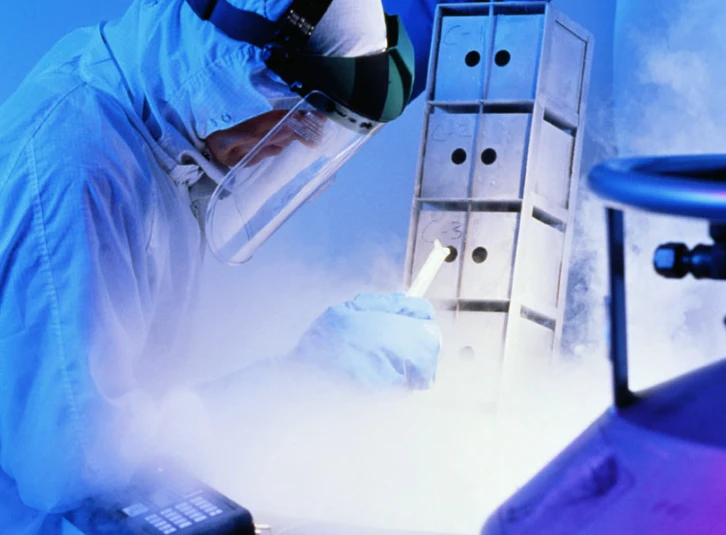
Refrigeration system optimization: In industrial refrigeration systems, potassiu thiocyanate can be used as an auxiliary refrigerant in combination with other refrigerants to improve refrigeration efficiency. Its high heat of dissolution gives it an advantage in rapid cooling processes, which can shorten the refrigeration cycle and reduce energy consumption.
4. Application in Steel Analysis
Potassium thiocyanate has important application value in steel analysis, covering multiple aspects such as steel composition analysis and corrosion research.
Analysis of Steel Composition: Potassium thiocyanate can be used to detect metal elements such as iron, cobalt, and copper in steel.
For example, in the determination of iron content in steel, potassiu thiocyanate as an indicator can significantly improve the accuracy of analysis. At the same time, it can also be used to detect impurity elements such as sulfur, phosphorus, etc. in steel, providing important basis for steel quality control.
Research on Steel Corrosion: Potassiu thiocyanate can be used to study the corrosion behavior of steel in specific environments. For example, in simulating seawater corrosion environment, potassiu thiocyanate can be used as one of the components of the corrosion medium to study its influence on the corrosion rate and corrosion morphology of steel.

In addition, potassiu thiocyanate can also be used to prepare corrosion inhibitors to inhibit the corrosion process of steel.
5. Applications in the Photography Industry
Potassium thiocyanate has important application value in the photography industry, covering multiple aspects such as photographic thickening agents and preparation of photosensitive materials.
Photographic thickening agent: Potassium thiocyanate can be used as a photographic thickening agent to increase the thickness and density of photographic emulsions.
In the process of photographic plate making, the addition of potassiu thiocyanate can improve the clarity and resolution of the printing plate, and enhance the printing quality.
Preparation of photosensitive materials: Potassium thiocyanate can be used to prepare photosensitive materials, such as silver chloride photosensitive paper. Potassiu thiocyanate, as one of the photosensitive components in photosensitive materials, can improve the sensitivity and stability of photosensitive materials. Meanwhile, it can also be used to adjust the development speed and contrast of photosensitive materials, optimizing the photographic effect.

1. Potassium thiocyanate solution can be prepared by reacting potassiu cyanide with sulfur or carbon disulfide with ammonia under pressure to generate ammonium thiocyanate, and then reacting with potassiu carbonate.
Ammonium thiocyanate conversion method is used to synthesize carbon disulfide and ammonia under pressure to generate ammonium thiocyanate and by-product ammonium thiocyanate. After desulfurization and evaporation, ammonium thiocyanate is decomposed into hydrogen sulfide to remove it. When the liquid temperature is 105 ℃, potassium carbonate solution is slowly added to generate potassiu thiocyanate. A large amount of carbon dioxide and ammonia will be produced in the reaction process. Ammonia can be recovered for use. The reaction solution is filtered, the insoluble matter is removed, and then evaporated under reduced pressure. After cooling, crystallization, and centrifugation, industrial potassiu thiocyanate is prepared. The reaction formula is as follows:

2. The crude product is prepared by the double decomposition reaction of potassium salt and ammonium thiocyanate. The refining method is to recrystallize it for many times in boiling ethanol, then dry it under reduced pressure at 100 ℃, and store it in a dryer containing concentrated sulfuric acid.
3. Ammonium thiocyanate conversion method is adopted: sulfur dioxide and ammonia water are synthesized under pressure to generate ammonium thiocyanate and by-product ammonium thiocyanate, and then ammonium thiocyanate is decomposed into hydrogen sulfide through desulfurization and evaporation to remove it. Potassium carbonate solution is slowly added at the liquid temperature of 105 ℃ to generate potassium thiocyanate.
Chemical properties of potassium thiocyanate solution:
The chemical properties of KSCN are unstable at room temperature, and it is easy to deliquescence in the air and absorb a lot of heat to cool down. The chemical property is stable at - 29.5 ~ 6.8 ℃, and the hemihydrate crystal can be obtained at low temperature. It turns blue when heated to about 430 ℃, and becomes colorless again after cooling.
1. Potassium thiocyanide solid reacts with 1:1 sulfuric acid to generate toxic carbonyl sulfide (COS) gas:

2. If potassium thiocyanate is placed in acid solution for a long time, it will react with acid (such as hydrochloric acid) to produce yellow sediment (sulfur) and highly toxic hydrogen cyanide gas:

3. Potassium thiocyanide can be decomposed by metals (such as zinc) in acidic solution to generate hydrogen sulfide and hydrogen cyanide gas:

4. Potassium thiocyanide reacts with potassium bisulfate to form thiocyanate:

5. Potassium thiocyanide decomposes when heated to 500 ℃:

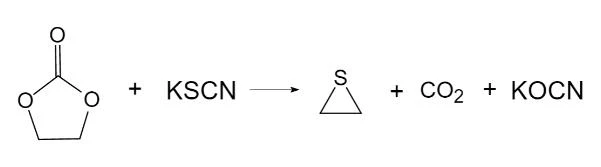
6. Potassium thiocyanate reacts with vinyl carbonate to produce cyclopentane:

The structure of the calcium ore battery is, from bottom to top, FTO conductive glass, an electron transport layer, a light absorbing layer of calcium ore, a hole transport layer and a metal electrode. The invention aims to solve the problems of poor crystallinity of calcium sulfide ore and large lag of calcium sulfide battery. The method of doping potassium thiocyanate in the light absorbing layer of calcium carbonate can change the crystallization kinetics of calcium carbonate, promote the growth of grains, bell the internal defect state, stabilize the phase structure of calcium carbonate, inhibit ion migration, thus effectively improve the crystal quality of calcium carbonate, improve the photoelectric efficiency and stability of calcium carbonate battery, and eliminate the hysteresis effect.
Weighing methanol, screen adhesive, distilled water, magnesium thiocyanate sulfate and sodium chloride, adding distilled water, potassium thiocyanate, magnesium sulfate and sodium chloride into a three necked flask, heating up while stirring to fully dissolve potassium thiocyanate, magnesium sulfate and sodium chloride, adding screen adhesive, stirring at constant temperature, adding methanol, and then stirring reaction to obtain liquid screen adhesive, The liquid screen adhesive prepared by the method has the characteristics of low freezing point, stable bonding strength and difficult to open at high temperature.
Taking sufficient potassium thiocyanate, placing it in the evaporated blood in the oven, and placing it in the dryer for standby after drying; Add 3.88g of dried potassium thiocyanate into an 80ml beaker, and dissolve it with about 30ml of acetone for standby; Add 0.03mol of substituted benzoyl chloride into a dry 250mI four necked bottle, slowly add the dissolved potassium thiocyanate acetone solution during continuous stirring, plug the stopper, stir for reaction, filter out the solid, wash the solid with a small amount of acetone, place the filtrate in a beaker, slowly add 0.03mol of mercuric acid and pipette while stirring, stir, and stand still; After the reaction is fully carried out, filter by suction, wash the filter cake with a small amount of acetone, wash it with absolute ethanol, take out the solid, dissolve it with benzene and recrystallize it to obtain the product.
FAQ
Is potassium thiocyanate a salt?
Potassium thiocyanate is defined as a commonly used source of the thiocyanate anion (−SCN) in organic synthesis, particularly for the conversion of alkyl halides into thiocyanates. It is one of the preferred thiocyanate salts utilized in nucleophilic substitution reactions.
Is potassium thiocyanate a poison?
CONSIDERED A HAZARDOUS SUBSTANCE ACCORDING TO OSHA 29 CFR 1910.1200. Contact with acids liberates very toxic gas. Harmful by inhalation, in contact with skin and if swallowed. Harmful to aquatic organisms, may cause long-term adverse effects in the aquatic environment.
What does potassium thiocyanate do to the body?
Contact with water causes a strong cooling effect. The substance can be absorbed into the body by inhalation and by ingestion. The substance may cause effects on the central nervous system. This may result in excitement and convulsions.
What is the use of potassium thiocyanate?
Potassium Thiocyanate has many uses, such as bleach and as a disinfectant. It is also used in the preparation of silver thiosulfate and to inhibit corrosion at steel joints. It is a reactive substance, which means it can be used in various applications. Potassium Thiocyanate is most often used as a salt.
Hot Tags: potassium thiocyanate solution cas 333-20-0, suppliers, manufacturers, factory, wholesale, buy, price, bulk, for sale, 2-Bromo-3-nitropyridine, Chlorodiphenylphosphine, 3 Aminopyrazine 2 carboxylic acid, Trypsin Powder CAS 9002 07 7, sulfosalicylic acid powder, copper chromite