


The accurate biochemical target is the basis of parasite control and the compound fipronil drops are one of the most studied formulations in this sector. These drops act by blocking a unique neurological route seen in insects and arachnids which interferes with the normal flow of chloride ions across nerve cell membranes. This disruption leads to unregulated firing of the nerves which finally results in paralysis and death of the target parasite . Veterinary researchers, pharmaceutical formulators, and chemical suppliers continue to investigate this molecule due to its selective action on invertebrate neural systems with sparing of mammalian physiology at labelled doses. In this article, we will discuss the biochemical mechanism of chloride channel blockade, how this impacts neuromuscular signalling in fleas and ticks, and why it is important for companies developing parasiticide products to source a reliable, well-manufactured version of this compound. Practical insight to the readers interested in organic synthesis as well as fine chemical manufacturing or pharmaceutical intermediates.
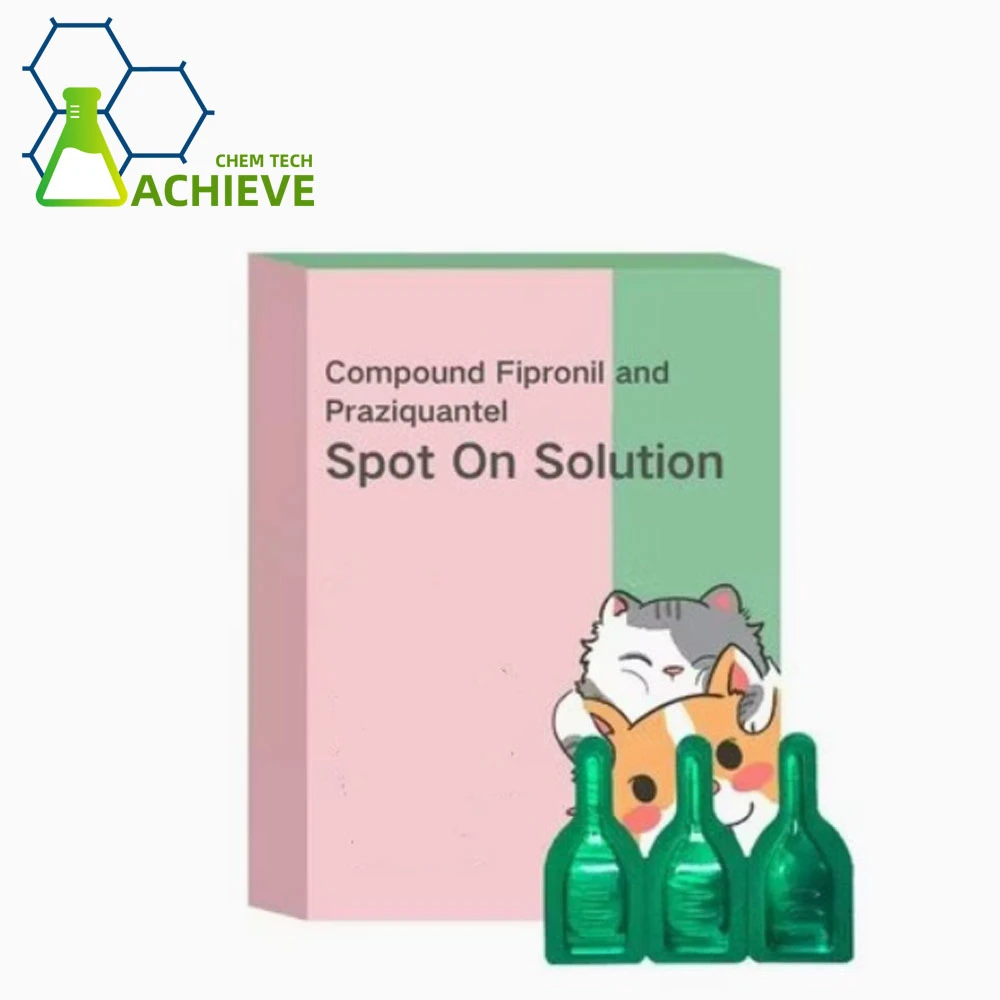
Compound Fipronil And Praziquantel Spot On Solution
1.General Specification(in stock)
(1)Solution
2.Customization:
We will negotiate individually, OEM/ODM, No brand, for secience researching only.
Internal Code: BM-9-022
Compound Fipronil and Praziquantel Spot On Solution
Main market: USA, Australia, Brazil, Japan, Germany, Indonesia, UK, New Zealand , Canada etc.
Manufacturer: BLOOM TECH Xi'an Factory
Analysis: HPLC, LC-MS, HNMR
Technology support: R&D Dept.-4
How Do Compound Fipronil Drops Block GABA-Gated Chloride Channels in Parasite Neurons?
To understand why this substance interferes with nerve signalling, we must first understand the receptor that it affects . GABA ( Gamma-aminobutyric acid ) is an inhibitory neurotransmitter that is present in many species . Insects and arachnids have GABA receptors that activate chloride channels, enabling chloride ions into neurones and reducing neuronal activity. This keeps the neurological system in balance and stops it from firing too much.
Understanding GABA Receptors in Invertebrate Neurons
Invertebrate GABA receptors are physically different from those in mammals, which is why some medications can selectively target parasites. These receptor proteins cross the neuronal membrane and form a channel that opens when GABA binds to its binding site. When it opens, chloride ions flow into the cell, making it less likely that the neurone would fire excessively quickly again. This feedback loop stops nerve impulses from going haywire under normal settings.
The Binding Mechanism of Fipronil at the Receptor Site
Fipronil molecules bind to a different place on the GABA receptor than the normal GABA molecule does,

but the end result is the same: the channel fails to open properly. Scientists call this noncompetitive inhibition because the fipronil molecule is not directly competing with GABA for the same place but rather clogs the mechanism that allows the channel to function. However , once bound , the receptor can no longer allow chloride ions to flow across the membrane , even if GABA molecules are still in the vicinity and ready to bind .
Selectivity for Insect and Arachnid Nervous Systems
Studies have demonstrated that fipronil binds much more strongly to invertebrate GABA receptors than to mammalian GABA receptors.
This difference in binding affinity is the reason formulations containing this substance can be administered to pets without triggering the same neurological disruption in the host animal. This selectivity ratio has been evaluated and published in veterinary pharmacology publications . It has been shown that the binding activity at mammalian receptor sites is considerably lower than at the receptor structures of insects and ticks . This selectivity is the reason for the continued trust that formulators of topical parasiticide medicines have in compound fipronil drops.
Compound Fipronil Drops: Inhibition of Chloride Ion Influx Across Neuronal Membranes
The flow of chloride ions is important for neurones to maintain a steady resting membrane potential. When this flow is interrupted the whole system of communication across the nervous system begins to break down.
The Role of Chloride Ions in Nerve Cell Resting Potential
Neurones are negatively charged on the inside relative to the outside; this is called the resting membrane potential.
Chloride ions entering the cell through GABA-gated channels assist sustain this negative charge, maintaining neurones in a steady non-firing state until a real signal comes along. Without enough chloride flowing in, neurones become unstable and tend to fire without the right triggers.
How Fipronil Interrupts Ion Flow
When fipronil interacts with the GABA receptor, the chloride channel cannot open wide enough to allow substantial ion flow.


The blocking has been directly documented in laboratory electrophysiological investigations using patch-clamp techniques.In these studies a considerable reduction in chloride current across neuronal membranes exposed to fipronil relative to untreated control samples has been seen. In the absence of its typical chloride stabilisation, the membrane potential tends to drift toward a more excitable state. This transition is gradual as more and more receptor sites in the nerve tissue are taken up by fipronil molecules.
Consequences for Cellular Homeostasis
"Blocked chloride channels produce downstream issues for the balance of the cells in addition to the electrical disruption.
Neurones require stable ion gradients for energy use, signalling and structural stability.When the input of chloride stops, cells redirect resources to compensatory mechanisms, which cannot entirely make up for the loss of ion flow. Over time, this imbalance leads to the more severe nervous system failure found in parasites treated with fipronil-based therapies. The manufacturers of fipronil drops are very careful about the purity of the formulation because even slight impurities can change the efficiency of the active molecule to reach and attach to its target receptor.
From GABA Receptor Blockade to Neuronal Hyperexcitation: The Action of Compound Fipronil Drops
The shift from a blocked receptor to a hyper-excited nervous system is not immediate but follows a reasonably predictable biochemical sequence once chloride transport stops.
The Cascade from Blockade to Hyperexcitation
Chloride channels are jammed, unable to open, and signal inhibition across the nervous system is greatly weakened. Neurones that would typically calm down after firing are stuck in a reactive state, ready to fire again at the slightest provocation. This situation carries over to connected neurones because many nerve cells need GABA-mediated inhibition to stop overactive signalling in brain circuits. Researchers that study insect toxicology define this spreading effect as a lack of inhibitory tone across the central nervous system.
Sustained Depolarization and Its Effects


Inhibitory signalling fails, producing trains of depolarisations of the neurones without enough recovery period.This prolonged electrical activity rapidly depletes the cell's energy stores and puts a heavy demand on sodium-potassium pumps that restore normal ion balance after each firing event. Muscle tissue attached to these overstimulated neurones starts to twitch wildly, a visual sign seen in parasites treated with fipronil-based therapy in laboratory observation studies.
Why Hyperexcitation Leads to Parasite Death
Eventually the parasite's nervous system becomes overwhelmed by the extended hyperexcitation. Nerve cells that cannot return to a resting state lose the ability to coordinate locomotion,
eating behaviour and other basic survival processes.Death usually occurs within a time frame that differs with species, dosage and mode of exposure.However, recorded investigations of fleas and ticks indicate incapacitation happening far before total receptor saturation throughout all cerebral tissue. This mechanism explains the continued efficacy of products based on compound fipronil drops even at relatively modest concentrations when applied topically.
How Does Chloride Channel Disruption Affect Neuromuscular Signaling in Fleas and Ticks?
Fleas and ticks depend on working neuromuscular junctions to move, feed and reproduce, and are therefore especially susceptible to interruption of chloride channels.
Neuromuscular Junctions in Ectoparasites
Neuromuscular junctions are the points where the nerve ends meet the muscle fibres. This allows the electrical signals to be translated into physical movement. These junctions in fleas and ticks depend on precise, well-timed control of chloride to prevent over-contraction or random contraction of muscle fibres. When fipronil disrupts the function of chloride channels, the impulses reaching these junctions become irregular, leading muscles to be stimulated in a contradictory or excessive way.
Loss of Motor Control and Paralysis


Field and laboratory investigations both report that ectoparasites exposed to compound fipronil drops commonly show a sequence of early excitement, tremors and paralysis.This process is analogous to the underlying neurological cascade in which early hyperexcitation is replaced by tired, non-functional muscle tissue. The legs and mouthparts are commonly paralysed first, stopping the parasite from feeding or attaching to its host and stopping the infection cycle before death.
Differences in Flea and Tick Physiology
Fleas and ticks are both prevalent ectoparasites, but their response, in terms of speed, to exposure to fipronil differs.
Ticks have a slower metabolic rate, which may prolong the time needed to fully damage the neurological system compared to fleas.Entomologists who have compared the two species of parasites report that fleas can show behavioural alterations within hours, whereas ticks may take longer to show similar levels of impairment.This distinction is important for firms developing combination therapies, as dose and when to apply it is generally based on these physiological variances between target species.
Compound Fipronil Drops and the Disruption of Parasite Nervous System Function
When considering the neural system in its totality, the results of local blocking of receptors may be seen, leading to total breakdown of functionality throughout the parasite's body.
Systemic Effects on the Central Nervous System
When enough GABA receptors are occupied by molecules of fipronil, the disruption spreads beyond individual neurones to wider brain circuits controlling movement, sensory perception and basic survival responses. This is because the central nervous system that controls these functions begins to lose its ability to process information in a meaningful way. Parasites that are exposed to significant concentrations show disorganised movement patterns, diminished reactivity to stimuli, and eventually lose coordinated behaviour altogether.


Timeframe of Nervous System Collapse
The speed of this collapse depends on the concentration applied, the mode of exposure and the individual parasite species involved.Topical applications with fipronil tend to disseminate over the exoskeleton of the parasite and enter neural tissue over hours rather than minutes. This has been shown in studies on veterinary pharmacology, where behavioural alterations that can be measured can be seen within 1 day of exposure and a full failure of the nervous system can be seen within a few days for most common ectoparasite species.
Why This Mechanism Matters for Formulation Quality
The quality of the formulation has a direct impact on the efficacy in delivering fipronil to its target receptors in the nervous system of the parasite.Impurities,uneven particle size and poor solvent selection during manufacture can all limit the efficacy of penetration of the active ingredient into the parasite tissue. Companies that purchase raw materials for the production of parasiticide take advantage of cooperating with suppliers that have strict quality control in the synthesis process, as slight changes in purity might change the binding efficiency of the receptor and hence the product efficacy. This is also the reason why formulators looking for compound fipronil drops for research or manufacturing purposes,

typically prefer vendors with documented quality assurance programs and traceable sourcing histories.
Conclusion
The drops of the compound fipronil drops have a defined and well documented mechanism of action, which is based on the blockage of GABA receptors and the disruption of chloride channels. The process ranges from interference at the level of the receptor to complete nervous system collapse, ultimately disrupting feeding, movement and survival in fleas, ticks and related ectoparasites. Understanding this metabolic process helps formulators, researchers and manufacturers understand the need of accurate synthesis and quality control in the production of parasiticides. As the need for effective and selective pest control solutions persists in the veterinary and agricultural sectors, the procurement of raw material from a reliable chemical supplier is critical for consistent product performance and regulatory compliance.
Frequently Asked Questions
1. What makes fipronil selective toward insects and arachnids rather than mammals?
+
-
Fipronil binds much more quickly to invertebrate GABA receptors than to those of mammals, thereby limiting its neurological effects on pets and other mammals at labelled dosages.
2. How quickly do fleas and ticks respond after exposure to fipronil-based treatments?
+
-
Ticks may take a little longer , fleas will often show behavioural changes in hours . This is due to differences in metabolism and physiology .
3. Why does chloride channel blockade lead to parasite death rather than just temporary paralysis?
+
-
If the stimulation is too much, the neurones run out of energy. This throws coordinated movement and feeding into such disarray that the parasites can't go back to the basics of what they need to survive.
Partner with Bloomtechz: Your Trusted Compound Fipronil Drops Supplier
Bloomtechz brings over a decade of experience in organic synthesis and fine chemical manufacturing, backed by a GMP-certified production site recognized by US, EU, Japanese, and Chinese regulatory authorities. Our quality assurance process involves three independent verification stages, giving clients confidence that every batch meets contractual specifications. As a qualified supplier to more than twenty international pharmaceutical and research organizations, we offer transparent pricing, accurate lead times, and detailed documentation for smooth customs clearance. Companies seeking a reliable compound fipronil drops Supplier for research, formulation, or bulk manufacturing purposes are welcome to reach out directly. Contact our team at Sales@bloomtechz.com to discuss specifications, quality documentation, and pricing tailored to long-term partnership goals.
References
1. Narahashi, Toshio. "Neuronal Ion Channels as the Target Sites of Insecticides." Pharmacology & Toxicology, 1996.
2. Cole, Lewis M., et al. "Fipronil: A New Soil and Systemic Insecticide." Pesticide Science, 1993.
3. Zhao, Xilin, et al. "Fipronil Is a Potent Open Channel Blocker of Glutamate-Activated Chloride Channels in Cockroach Neurons." Journal of Pharmacology and Experimental Therapeutics, 2004.
4. Hainzl, David, and John E. Casida. "Fipronil Insecticide: Novel Photochemical Desulfinylation with Retention of Neurotoxicity." Proceedings of the National Academy of Sciences, 1996.
5. Grant, Douglas B., and Takashi Matsumura. "Fipronil Target Sites: GABA and Glutamate-Gated Chloride Channels." Insect Molecular Biology Reviews, 1998.
6. Tingle, Christopher C. D., et al. "Fipronil: Environmental Fate, Ecotoxicology, and Human Health Concerns." Reviews of Environmental Contamination and Toxicology, 2003.