


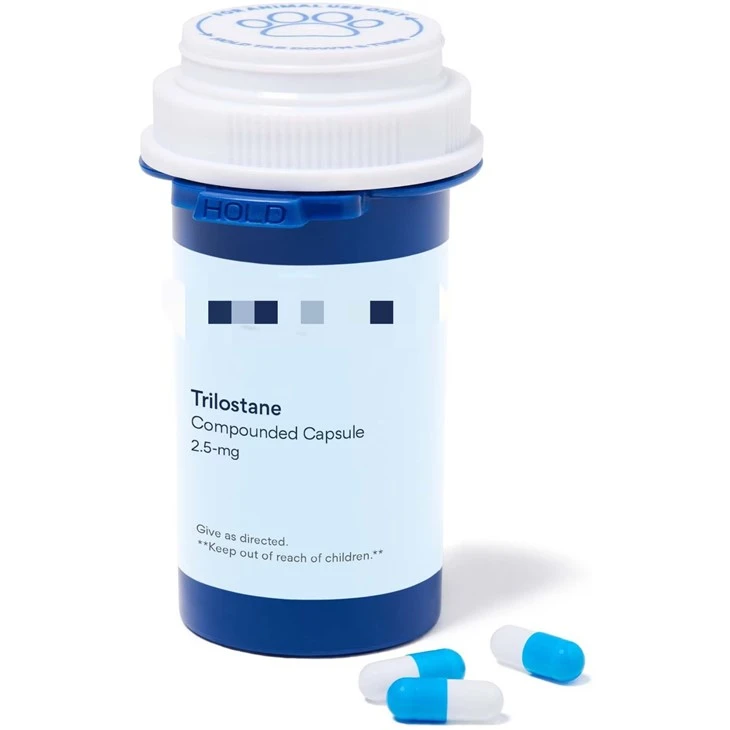
Trilostane tablets are important in endocrine pharmacology today because they act on a single enzyme step in the body's generation of cortisol and aldosterone. To see how this drug alters steroid production we need to look in more detail at what is occurring biochemically in the adrenal cortex. The chemical functions by interfering with the enzyme 3β-hydroxysteroid dehydrogenase which converts precursor steroids into active hormones. In this article, we'll take a tour through the molecular mechanics of trilostane tablets. We'll look at how the molecule binds to its target enzyme, what happens to steroid precursors when the pathway is stopped, and why this chemistry important for researchers and manufacturers dealing with steroid intermediates. If you are acquiring bulk material for laboratory investigation or assessing vendors for pharmaceutical intermediate manufacture, knowing the fundamentals of science may provide clarity to why this substance remains a topic of continued interest in organic synthesizing and fine chemical manufacturing circles.
1.General Specification(in stock)
(1)Injection
Customizable
(2)Tablet
Customizable
(3)API(Pure powder)
PE/Al foil bag/ paper box for Pure powder
HPLC≥99.0%
(4)Pill press machine
https://www.achievechem.com/pill-press
2.Customization:
We will negotiate individually, OEM/ODM, No brand, for secience researching only.
What Makes Trilostane Tablets a Competitive Inhibitor of 3β-HSD?
Competitive inhibition is when a molecule is similar enough to the natural substrate to attach to the same pocket on an enzyme. This is shown with amazing accuracy with trilostane tablets. Trilostane tablets occupy the active site of 3β-hydroxysteroid dehydrogenase mimicking pregnenolone and other steroid precursors.
Structural Similarity to Natural Substrates
The steroid skeleton of trilostane is very similar to the five-membered ring structure of naturally occurring Δ⁵ steroids. This structural overlap permits the molecule to get into the catalytic region of the enzyme without inducing the normal conversion process. Chemists who research organic chemical production routes frequently refer to this form of molecular mimicry as the reason why some synthetic steroids are able to so effectively impede enzyme function. The epoxy group at the 4α,5α location gives trilostane tablets a slightly different shape than pregnenolone, but this variation is modest enough that the enzyme still allows the molecule to fit into its pocket.

Binding Affinity and Reaction Kinetics
Laboratory kinetic investigations have quantified the binding affinity of trilostane relative to the natural substrate. Increasing the concentration of pregnenolone may partly overcome the blocking action, a characteristic of competitive inhibitors and not irreversible ones since the inhibition is competitive. This kinetic characteristic is important for dosage methods, as the degree of inhibition of the enzyme is dependent upon relative concentrations of inhibitor and substrate in the adrenal tissue.
This kinetic profile is often used by researchers working with chemical reagents and steroid intermediates in the design of studies measuring enzyme activity with different substrate loading.
Why Competitive Binding Matters Clinically
The inhibition is reversible and concentration-dependent, hence the pharmacological action of Trilostane tablets may be modulated by changing the dose, and not by a permanent shutdown of adrenal function. This provides clinicians options in handling disorders associated with high cortisol or aldosterone production.

The reversibility of the binding also accounts for the relatively speedy resumption of adrenal hormone secretion when the medicine is stopped, a feature of significant importance for safety monitoring throughout therapy. Organic chemical researchers typically analyze this binding behavior in a similar molecule that they are making to see whether little changes in structure may affect the intensity or length of inhibition.
Trilostane Tablets and the Molecular Conversion of Δ⁵ Steroids Into Δ⁴ Steroids
A key chemical change in the manufacture of steroid hormones is the migration of a double bond from one place to another in the steroid ring system. This change is called the Δ⁵ to Δ⁴ isomerization and is one of the most crucial checkpoints in adrenal steroidogenesis. This is exactly where the main effect of trilostane tablets takes place.
The Role of Δ⁵,⁴-isomerase in Steroid Transformation
The enzyme that completes the two-step conversion is Δ⁵,⁴-isomerase , which works along with 3β-hydroxysteroid dehydrogenase. A Δ⁵ steroid, pregnenolone must first be oxidized at the 3β-hydroxyl group for the double bond to move and create a Δ⁴ steroid, progesterone. Trilostane blocks this linked process by substituting the dehydrogenase component, thereby preventing the isomerase from acquiring its essential substrate. Without this handoff, the whole downstream cascade to cortisol and aldosterone slows down substantially.

Tracing the Pathway From Pregnenolone to Cortisol
Adrenal steroidogenesis is a branched route where pregnenolone is the precursor of many classes of hormones, including glucocorticoids, mineralocorticoids, and sex steroids. Blocking the first Δ⁵ to Δ⁴ conversion with trilostane tablets lowers the efficiency of the whole branching network. This is why the chemical induces the simultaneous synthesis of cortisol and aldosterone rather than one class of hormones in isolation. Fine chemical makers who make steroid intermediates often reference this branching process to explain why certain enzyme inhibitors provide wide hormonal effects rather than limited ones.
Structural Changes During Ring Modification
The real chemical basis for the Δ⁵ to Δ⁴ shift is a minor rearranging of the electrons in the steroid ring structure. The hydroxyl group at carbon three is oxidized to a ketone and the double bond moves from the five-six position to the four-five position. The enzymatic coordination of this conversion must be very tight and any break in the dehydrogenase step will stop the process before isomerization. This ring alteration is widely investigated by researchers involved in steroid intermediates in organic synthesis processes, aiming to understand how structurally analogous inhibitors may be designed for various medicinal targets.
The Enzyme-Substrate Interactions Behind 3β-HSD Inhibition by Trilostane Tablets
The efficiency of a biological reaction is determined by the way in which enzymes interact with their substrates. The link between 3β-HSD and its natural substrates explains why trilostane tablets may so easily block this process. A closer look at the active site shape and cofactor needs makes clear the mechanics.
Active Site Geometry and Molecular Fit
3β-Hydroxysteroid dehydrogenase has a hydrophobic pocket at the active site with a shape complementary to the steroid nucleus. This pocket can accommodate the cyano group and epoxy ring modification of trilostane. The trilostane molecule fits into this pocket, but alters somewhat the orientation required for the typical catalytic activity. The mechanism of the inhibitor is like a near-perfect match, but not complete catalytic compatibility. Chemists looking at the crystal structures of related enzymes find that little modifications in the substituents on the ring may have a huge impact on how strongly the molecule binds.


This is part of the reason why structural analogs of trilostane are commonly used in study.
Cofactor Dependency and NAD⁺ Requirements
The dehydrogenase process needs nicotinamide adenine dinucleotide as a cofactor to receive electrons in the oxidation phase, as is the typical situation. Trilostane binds to the substrate binding site, but the steroid substrate position is blocked and the whole catalytic cycle cannot continue, however the cofactor is still able to connect to its assigned pocket.
This partial interference rather than total enzyme shutdown is consistent with the designation of trilostane as a reversible rather than irreversible inhibitor. It is common in enzyme kinetic studies to assess the rate of synthesis of NADH to quantify the amount of inhibition at different doses of trilostane.
Temperature and pH Sensitivity of the Interaction
The binding of enzyme to substrate is sensitive to environmental factors like temperature and pH, both of which affect the three-dimensional folding of the protein structure.

Adrenal tissue is kept in a generally steady internal environment but laboratory investigations of the inhibitory activity of trilostane under different pH settings have demonstrated that binding affinity may be shifted outside of typical physiological limits. This sensitivity is important for researchers doing in vitro experiments since recreating exact physiological circumstances means that inhibition data represent what occurs in genuine live tissue and not an artifact of the lab.
How Does Reversible 3β-HSD Inhibition Change Steroid Precursor Accumulation?
Blocking an enzyme does not destroy the substrate that feeds into that route. Instead, the precursor molecules start to build up upstream of the blockage site, resulting in quantifiable changes in steroid hormone profiles that can be monitored by researchers and doctors by laboratory testing.
Pregnenolone Buildup and Feedback Signaling
The tablets bind into the active site of the enzyme and a reduction in 3β-HSD activity is seen. Levels of pregnenolone increase , since the molecule cannot effectively move to the next stage in the process. This build-up sends feedback signals in the hypothalamic-pituitary-adrenal axis, which releases more adrenocorticotropic hormone in an effort to compensate for decreased cortisol secretion. Thus, it is crucial to monitor cortisol levels throughout therapy to know such feedback and why compensatory mechanisms may work against the desired therapeutic impact when dose is not strictly controlled.


Shifts in the Ratio of Δ⁵ to Δ⁴ Steroids
This conversion from Δ⁵ to Δ⁴ steroids is greatly slowed. This leads to an altered ratio between the two classes of hormones as typically seen in blood samples in laboratory analysis. This change in ratio is a valuable biochemical measure to check that enzyme inhibition is proceeding as planned. Researchers that research steroid metabolism employ chromatography methods to detect these ratios accurately and provide quantitative proof of the extent to which the trilostane tablets are disrupting the usual biosynthetic sequence.
Downstream Effects on Mineralocorticoid Synthesis
The first dehydrogenase step is also required for aldosterone synthesis, hence mineralocorticoid output is likewise affected by precursor accumulation as well as glucocorticoid output. With this dual effect, electrolyte balance monitoring is typically combined with cortisol testing in therapy procedures. As aldosterone synthesis declines, sodium and potassium levels might change. These are the systemic implications of inhibiting this single enzymatic checkpoint.
Researchers in fine chemicals looking at hormone precursor behavior typically cite this dual route action as a distinctive trait that differentiates 3β-HSD inhibitors from more specifically acting enzyme blocks.
Trilostane Tablets and the Biochemical Relationship Between Enzyme Inhibition and Hormone Reduction
The whole path from binding at the molecule to physiological change at the level of the system is the complete path from chemistry at the enzyme level to detectable decrease in the hormone. In this part, the previous mechanistic explanation is connected to practical results of measuring hormone levels.
Quantifying Cortisol Reduction Over Time
Clinical laboratory results obtained throughout treatment periods often demonstrate a meaningful reduction in circulating cortisol concentrations within days of initiating medication. The decrease is strongly related to the degree of enzyme occupancy obtained by trilostane tablets at cellular level. Since the inhibition is reversible, cortisol lowering tends to follow dosage regimens that seem to be predictable. This allows practitioners to alter therapy according to observed variations in hormone levels, rather than according to predetermined dosing charts.
Aldosterone Suppression and Electrolyte Monitoring
The same enzymatic bottleneck limits the production of mineralocorticoids, therefore aldosterone levels also decline in parallel to the reduction in cortisol. This suppression needs constant monitoring of electrolyte panels to identify any imbalance before it becomes clinically severe. The biochemical connection between enzyme inhibition and electrolyte changes shows how a single molecular interaction may propagate into numerous physiological systems, which highlights the need for rigorous laboratory monitoring as a routine element of any procedure employing this substance.
Reversibility and Hormone Recovery Patterns
Trilostane pills work via competitive reversible inhibition of enzymes, not permanent destruction hence hormone levels usually start to recover when treatment is stopped or decreased. This pattern of recovery is reassuring from the safety standpoint, as it indicates that the adrenal gland may still continue its regular secretion of hormones and is not permanently damaged in its structure. This reversibility has been noted by researchers researching steroidogenesis recovery curves as a crucial differentiating characteristic when comparing trilostane with other enzyme-blocking drugs used in comparable research settings.
Conclusion
The chemistry of 3β-HSD inhibition explains why trilostane tablets continue to be an important topic for pharmacological research and chemical synthesizing applications. This drug competitively inhibits a single enzymatic checkpoint, disrupting the conversion of Δ⁵ steroids to Δ⁴ steroids, and generating quantifiable changes in precursor accumulation and downstream hormone production. The inhibition is reversible, which provides benefits in terms of flexibility and safety, making this chemical of special interest for further research. Such molecular mechanical information allows researchers, producers and procurement teams to make informed choices about sources, especially in the case of steroid intermediates for pharmaceutical development or laboratory research purposes.
FAQ
1. What enzyme does trilostane primarily target?
+
-
The action of trilostane tablets is predominantly by inhibition of 3β-hydroxysteroid dehydrogenase, an enzyme involved in the conversion of Δ⁵ steroid precursors into Δ⁴ steroids in the adrenal cortex.
2. Is the inhibition caused by trilostane permanent?
+
-
No, the inhibition is reversible and competitive. Hormone production may restart when the chemical concentration falls or the therapy is discontinued.
3. Why does blocking one enzyme affect multiple hormones?
+
-
3β-HSD is a branch point of steroid biosynthesis and inhibiting this process decreases glucocorticoid and mineralocorticoid production impacting cortisol and aldosterone jointly.
Partner With Bloomtechz for Reliable Trilostane Tablets Supply
Bloomtechz has 12 years of expertise in organic synthesis manufacturing. It has a GMP certified production network complying with many international standards such as US, EU, JP and CFDA certification. We have a triple-layer verification mechanism in our quality assurance procedure that covers factory inspection, internal QA/QC review and third-party authority testing, which makes customers feel certain on every batch sent. We are a trustworthy trilostane tablets supplier. We provide clear pricing, realistic lead times and full paperwork assistance to facilitate customs clearance. All monitored via our ERP platform for total order visibility. Our long-term cooperation strategy means stable, predictable profit margins and simplified procurement planning for pharmaceutical and research customers. Please contact us immediately at Sales@bloomtechz.com to discuss specs, request documentation or initiate a sample inquiry with our technical team.
References
1. Colby, H.D. and Longhurst, P.A. "Mechanisms Involved in the Species-Specific Adrenotoxicity of Trilostane." Journal of Biochemical Toxicology, 1992.
2. Ruckstuhl, N.S. et al. "Results of Clinical Examinations, Laboratory Tests, and Ultrasonography After Treatment of Dogs with Pituitary-Dependent Hyperadrenocorticism with Trilostane." American Journal of Veterinary Research, 2002.
3. Neiger, R. et al. "Trilostane Treatment of 78 Dogs with Pituitary-Dependent Hyperadrenocorticism." Veterinary Record, 2002.
4. Simpson, E.R. and Waterman, M.R. "Regulation of the Synthesis of Steroidogenic Enzymes in Adrenal Cortical Cells by ACTH." Annual Review of Physiology, 1988.
5. Miller, W.L. and Auchus, R.J. "The Molecular Biology, Biochemistry, and Physiology of Human Steroidogenesis and Its Disorders." Endocrine Reviews, 2011.
6. Payne, A.H. and Hales, D.B. "Overview of Steroidogenic Enzymes in the Pathway from Cholesterol to Active Steroid Hormones." Endocrine Reviews, 2004.