


When pet owners question how a single oral dosage may protect their dog or cat against fleas and ticks for up to 12 weeks, the answer is molecular – within the nervous system of any parasite that dares to attack. Fluralaner kills by interfering with certain ion channels essential to arthropod survival, causing fast paralysis and death. Not only is understanding this process intellectually rewarding, but it also explains why fluralaner has become one of the most trusted active ingredients in contemporary veterinary parasitology.

Fluralaner Tablet
1.General Specification(in stock)
(1)Solution
(2)Tablet
(3)Injection
(4)Spray
(5)Drops
2.Customization:
We will negotiate individually, OEM/ODM, No brand, for secience researching only.
Internal Code:BM-2-079
Fluralaner CAS 864731-61-3
Main market: USA, Australia, Brazil, Japan, Germany, Indonesia, UK, New Zealand , Canada etc.
Manufacturer: BLOOM TECH Xi'an Factory
Analysis: HPLC, LC-MS, HNMR
Technology support: R&D Dept.-4
How Does Fluralaner Inhibit Chloride Ion Channels in Parasites?
The Role of GABA-Gated Chloride Channels in Parasite Neurology
Gamma-aminobutyric acid (GABA) is the main chemical that slows down nerve signals in insects and spiders. It is common for GABA to bind to its receptor on the nerve cell membrane. This opens a path for chloride ions to enter the cell. This influx makes the cell more negatively charged, which calms it down and keeps it from being overstimulated.
The fluralaner molecule attaches to a GABA-Cl channel in a way that doesn't compete with other molecules. This binding closes the channel pore physically, so chloride can't get into the nerve cell even if GABA isn't there. If there is no blocking signal, the cell fires all the time without being managed.
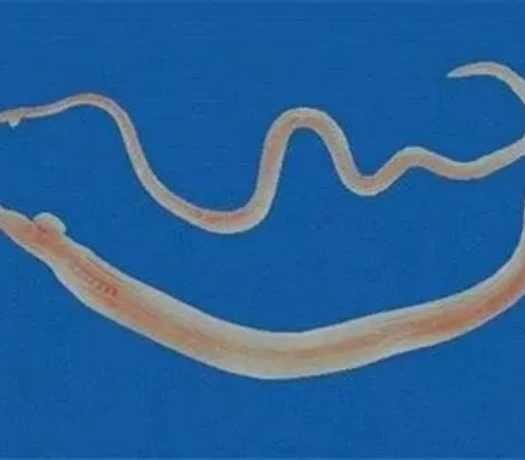

This makes the parasite's muscles and nervous system very excited all the time, which quickly makes it paralyzed and kills it. Electrophysiological studies that have been published show that fluralaner can block this effect at nanomolar doses in arthropod nerve tissue. This proves that it is very effective at killing pests.
Why Chloride Channel Blockade Kills Parasites Rapidly
When trying to get rid of parasites, the rate of action is very important. It only takes minutes for fluralaner to reach the nerve ganglia of a flea or tick that has been treated after it feeds on the blood of a treated host. The GABA-Cl channel blocking is pretty much irreversible in a physiological sense, meaning that the parasite can't just flush the chemical out and get better.
Results from lab tests published in peer-reviewed journals of veterinary pharmacology show that more than 98% of Ctenocephalides felis (cat flea) populations are killed after 12 hours of host treatment, and all of them are gone within 48 hours. If you block the ion channels, it kills the organism's neurons very quickly. This timeline shows that very clearly.
Fluralaner and Glutamate-Gated Chloride Channels in Arthropods
A Second Molecular Target Unique to Invertebrates
If you take fluralaner, it also affects GluCl channels, which are a different type of blocking ion channel than GABA receptors. Invertebrates are the only animals that have these channels. Vertebrates do not have them in their nervous systems. The GluCl channels in arthropods work like the GABA-Cl channels in humans. They let chloride ions into the nerve cell when glutamate binds to them, which stops neural action.
Fluralaner blocks GluCl channels in a way that is similar to how the GABA-Cl receptor does its job. This stops the flow of chloride and takes away a necessary control on how quickly neurons can fire.
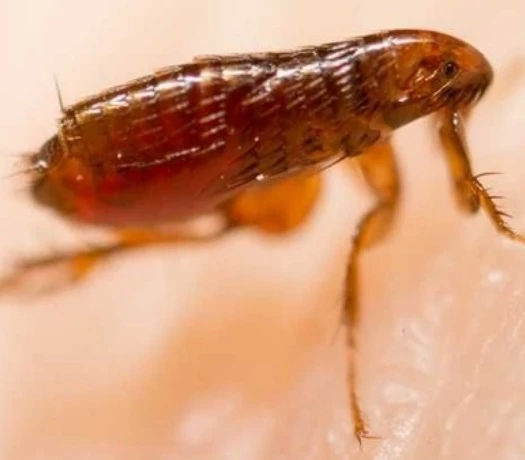

It's important to note that if a population of parasites became weaker against one of the channel types, the other target would still be safe. The fluralaner molecule is structurally better than its single-target predecessors in the isoxazoline class because it can do more than one thing at once.
Synergistic Neurotoxicity Through Dual-Channel Inhibition
When both the GABA-Cl and GluCl channels are blocked at the same time, they work together to damage neurons much more than when either channel is blocked alone. Arthropod neurons: fire chain that gets out of hand, and both inhibition systems stop working. Acetylcholine builds up at neuromuscular junctions, muscle groups contract without relaxing, and the parasite quickly goes from being hyperactive to being completely paralyzed.
When you look at the dose-response curves of single-target isoxazolines and fluralaner next to each other, you can see that they both have a dual inhibition profile with a big drop in the concentration needed to kill neurons. As a result, smaller absolute amounts may still be able to kill parasites effectively, which is an important thing to think about when making safe drugs for animals.
From Ion Channel Disruption to Parasite Paralysis: The Fluralaner Mechanism
How Neuronal Overexcitation Progresses to Whole-Body Paralysis
It is known that when ion channels get blocked, a well-known cascade at the cellular level stops working. When the influx of chloride is blocked at the GABA-Cl- and GluCl-sites, the action potential in the motor neurons keeps spreading. The motor neuron then tells the muscle fibers to tighten, but it never sends the signal to loosen up. The muscles go into a constant tetanic contraction, which makes the insect hard, unable to move together, and unable to feed or breed.
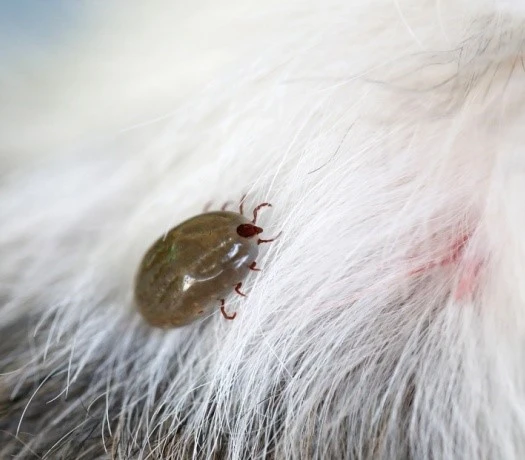
In tick species like Ixodes scapularis and Dermacentor variabilis, the neuromuscular system collapses before the tick can fully engorge itself. This shortens the time that disease-causing pathogens can be transferred to the host.
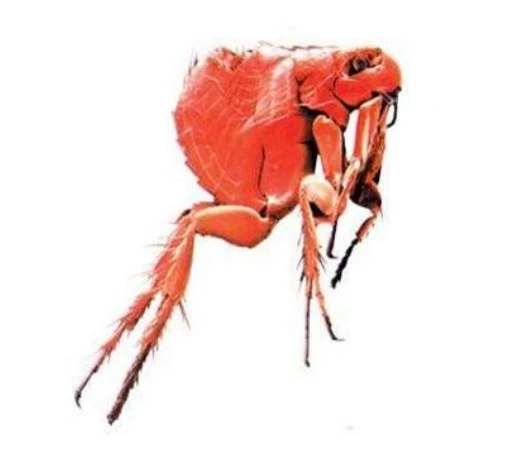

If you expose fleas that can't move, they stop eating and jumping within hours. This stops the spread of diseases like Bartonella spp.
Why Are Chloride Ion Channels Critical Targets for Fluralaner?
When it comes to the nervous systems of insects and ticks, chloride ion channels are not just extra parts that are there; they are necessary for all instances of inhibitory neurotransmission. For neurons to be properly controlled, GABA-Cl and GluCl channels must work properly. Fluralaner works on these lines so that the parasite can't get around or change its path. To make up for it, there isn't a second blocking channel system.
It's important to note that animals have GABA-gated chloride channels, but they are mostly found in the brain and the central nervous system (CNS),
which is protected by the blood-brain barrier (BBB). The molecular weight and structure of fluralaner mean that it can't get through the BBB in dogs and cats because it is lipophilic. It's in the bloodstream of small animals and can be used by parasites, but it doesn't reach brain targets in mammals in clinically relevant amounts. This is why fluralaner is safe for pets at therapeutic doses: it only affects certain structures.
Fluralaner Selectivity Between Arthropod and Mammalian Ion Channels
Structural Differences That Confer Species Selectivity
Amino acid content of the transmembrane region of the channel determines fluralaner differentiation between arthropod and mammalian GABA receptors. Arthropod GABA-Cl receptor subunits are distinct from human GABA-A receptor subunits, particularly in the TM2 pore-lining region. The fluralaner binding pocket steric and electrostatic complementarity more closely matches the arthropod receptor conformation than that of the mammalian receptor.
There are binding energy differentials between the arthropod and human receptor conformations of several kilocalories per mole in molecular docking investigations reported in the pharmacological literature .

This translates into selectivity ratios estimated in orders of magnitude. This is not an accidental safety feature but rather a product of the deliberate structural design of the isoxazoline scaffold.
Safety Profile Supported by the Selectivity Mechanism
This mechanism of selectivity is directly related to the large safety margin shown in animal studies. The regulatory dossiers supporting marketing authorizations in many countries do not show any harmful neurological effects in dogs or cats at doses several times greater than the therapeutic range. This molecular theory is in good agreement with the clinical findings achieved: mammalian neuronal GABA-A is affected, as the medicine does not reach the Cl channels in appropriate concentration.
Structural differences in the receptor limit binding affinity even at peripheral sites. This pharmacokinetic/pharmacodynamic selectivity offers fluralaner a pharmacologically elegant solution to a long-existing veterinary issue.
Conclusion
Fluralaner is a new parasiticide which has a dual-target mode of action that is remarkably efficient in inhibiting GABA-gated and glutamate-gated chloride ion channels in the arthropod nervous system. This causes rapid and permanent hyperexcitation, paralysis, and death of the target parasites. Structural differences between the arthropod and mammalian receptors and pharmacokinetics across the blood-brain barrier produce a selectivity profile that protects companion animals and eliminates the parasites that threaten them. It's a mechanistic story tying molecular pharmacology to clinical outcomes – and helps to explain why drugs based on fluralaner continue to set the standard in veterinary ectoparasite control.
Frequently Asked Questions
Q1: How quickly does fluralaner start killing fleas after a pet takes it?
+
-
Fluralaner begins eliminating fleas within hours of administration. Studies show that over 98% of Ctenocephalides felis are killed within 12 hours, with complete eradication achieved within 48 hours. This rapid onset reflects the speed at which chloride ion channel blockade leads to lethal neurotoxicity in the parasite.
Q2: Is fluralaner safe for both dogs and cats?
+
-
Yes. Fluralaner's safety in companion animals is mechanistically grounded in the structural differences between arthropod and mammalian ion channels, combined with the blood-brain barrier limiting central nervous system exposure. Regulatory agencies across multiple jurisdictions have reviewed and approved fluralaner-based veterinary formulations for use in both dogs and cats within specified dosing guidelines.
Q3: Can parasites develop resistance to fluralaner?
+
-
The dual-target mechanism - simultaneously blocking GABA-gated and glutamate-gated chloride channels - raises the genetic barrier to resistance development compared to single-target compounds. A parasite population would need concurrent mutations conferring reduced sensitivity at both channel types to achieve clinically meaningful resistance, a scenario that is considerably less probable than single-locus resistance emergence.
Partner With Bloomtechz - Your Trusted Fluralaner Supplier for High-Quality Veterinary Active Ingredients
At Bloomtechz, we combine over 12 years of organic synthesis expertise with a GMP-certified production facility that has passed on-site inspections by the US FDA, PMDA, MFDS, and BGV-Hamburg, Germany. Our fluralaner manufacturing adheres to triple-link quality analysis - in-factory testing, our internal QA/QC department, and an accredited third-party authority - ensuring every batch meets the precision that veterinary formulation demands. Whether you require bulk active pharmaceutical ingredients, OEM tablet formulations, or customized specifications for research purposes, our dedicated R&D and production teams are ready to support your project from laboratory scale to commercial volume. As a verified fluralaner supplier with an established international client network spanning the USA, Australia, Germany, Japan, and beyond, Bloomtechz delivers reliable quality, transparent pricing, and consistent lead times. Reach out to our team today at Sales@bloomtechz.com to discuss your requirements.
References
1. Gassel, M., Wolf, C., Noack, S., Williams, H., & Ilg, T. (2014). The novel isoxazoline ectoparasiticide fluralaner: Selective inhibition of arthropod γ-aminobutyric acid- and glutamate-gated chloride channels and comparative binding studies. Insect Biochemistry and Molecular Biology, 45, 111–124.
2. Ozoe, Y., Asahi, M., Ozoe, F., Nakahira, K., & Mita, T. (2010). The antiparasitic isoxazoline A1H binds to invertebrate GABA-gated chloride channels, and the binding is enhanced by ivermectin. Biochemical and Biophysical Research Communications, 391(1), 744–749.
3. Taenzler, J., Roepke, R. K., Frénais, R., & Heckeroth, A. R. (2016). Efficacy of fluralaner against Otodectes cynotis infestations in dogs and cats. Parasites & Vectors, 9(1), 425.
4. Walther, F. M., Allan, M. J., Roepke, R. K., & Nuernberger, M. C. (2014). The effect of food on the pharmacokinetics of oral fluralaner in dogs. Parasites & Vectors, 7, 84.
5. Kilp, S., Ramirez, D., Allan, M. J., Roepke, R. K., & Nuernberger, M. C. (2014). Pharmacokinetics of fluralaner in dogs following a single oral or intravenous administration. Parasites & Vectors, 7, 85.
6. Rust, M. K. (2016). The biology and ecology of cat fleas and advancements in their pest management: A review. Insects, 7(4), 51.