


Introduction to 1-Phenyl-2-Nitropropene
One organic molecule that is highly relevant to both scientific and industrial applications is 1-phenyl-2-nitropropene (P2NP). It is commonly recognized that this material acts as a bridge during the synthesis of several other chemicals. Professionals in the manufacturing of chemicals and related sectors need to understand its qualities, applications, and related safety precautions.
It, often known as P2NP, is a chemical compound that is frequently employed in organic synthesis and medical research. Its chemical structure is made up of a nitro group at the second carbon atom and a phenyl group joined to a propene backbone. This substance is prized for its adaptability as a starting point for the synthesis of other chemical molecules, especially those having industrial or medicinal uses. Its primary use is in the synthesis of amphetamines, where it plays a key role in the production of methamphetamine and other substances that are comparable to it.
Benzaldehyde and nitroethane react condensationally in the presence of an appropriate catalyst and solvent to produce 1-phenyl-2-nitrotropropene. The intended product is produced by this process, and it can then go through additional chemical changes to produce the desired end products. Amphetamines, specialty chemicals, agrochemicals, and pharmaceutical intermediates are all produced using 1-phenyl-2-diphenyropene. Because of its adaptability and synthetic utility, synthetic chemists and researchers consider it an invaluable tool in their toolbox.
It's crucial to remember, nevertheless, that it and its derivatives are controlled by stringent laws because of the possibility that they could be abused in the illegal manufacture of narcotics under prohibition. Therefore, when handling this substance in a laboratory setting, caution and compliance with legal standards are crucial.
Chemical Properties and Structure
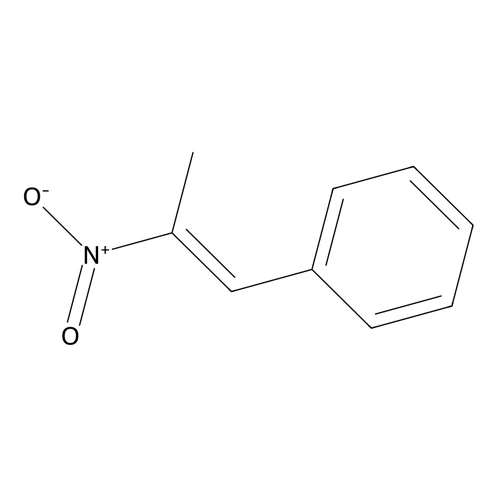
The chemical formula for 1-phenyl-2-nitropropene is C9H9NO2. It has a nitropropene moiety, which is defined by a nitro group (-NO2) bound to an aliphatic chain, and a phenyl group (a benzene ring) linked to it. The nitropropene segment's double bond gives the molecule stiffness and affects its reactivity. One way to sum up the structural arrangement is as follows:
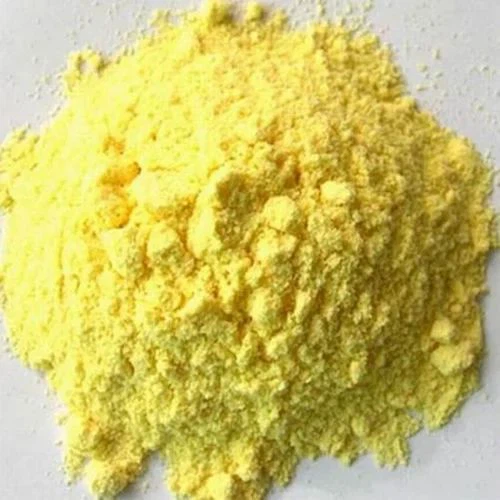
Weight in molecules: 163.17 g/mol Melting Point: Between 63 and 65 °C Boiling Point: Breaks down before boiling Visual: A solid yellow crystal. P2NP has unique chemical characteristics due to the inclusion of both aromatic and nitro groups in its structure, such as moderate polarity and reactivity towards electrophiles and nucleophiles.
 |
 |
Synthesis and Production Methods
Typically, 1-phenyl-2-nitropropene is produced by condensing benzaldehyde and nitroethane in the presence of a base. The Henry reaction, also known as the nitroaldol reaction, is a common method in organic chemistry for creating carbon-carbon bonds. The following steps can be used to summarize the process:
Condensation Reaction: Under simple conditions, benzaldehyde and nitroethane react to produce it.
Purification: To obtain the required purity and quality, recrystallization is a common method of purifying the crude product.
There are numerous versions of this technique that enable yield and purity to be optimized by modifying the reaction conditions. One of the most important variables affecting the synthesis's efficiency is the choice of base and solvent, as well as reaction temperature and duration.
Applications in Chemical Synthesis
It is an important chemical intermediate used in the production of several other compounds. Its reactivity makes it a key precursor in the production of:
Amphetamines and Derivatives: In order to create phenethylamine derivatives, such as amphetamines, which are utilized in both legal and illegal situations, P2NP is a well-known precursor. One important intermediary in the synthesis of amphetamines is phenyl-2-propanone (P2P), which can be formed by reducing 1-phenyl-2-nitropropene.
Pharmaceutical Compounds: P2NP can be employed in the production of other medications that use the nitroalkene structure as a building block, other from amphetamines.
Agricultural Chemicals: It is also used in the formulation of some herbicides and insecticides, where the nitroalkene structure enhances the compound's biological activity.
Safety and Handling Precautions
Because of 1-phenyl-2-nitropropene's chemical makeup and possible health risks, handling it calls for close adherence to safety procedures. Key precautions include:
Personal Protective Equipment (PPE): To avoid skin and eye contact, wear lab coats, gloves, and goggles.
Ventilation: using fume hoods or ensuring adequate ventilation to keep dust and fumes out of the air.
Storage: P2NP should be stored in a cool, dry location away from combustible items and strong oxidizers and acids.
Emergency Measures: Having emergency wash stations and suitable spill containment on hand in case of unintentional exposure. The substance is categorized as hazardous, and several chemical safety requirements govern how it is handled.
Environmental Impact and Regulatory Considerations
Because it may have an adverse effect on the environment, its manufacturing and usage are governed by regulations. Important things to think about are:
Waste Management: P2NP-containing waste products should be disposed of properly to avoid contaminating the environment.
Regulations: adherence to national and international laws regulating P2NP distribution and consumption, particularly in light of the drug's application in the production of prohibited compounds.
Because P2NP is used in the production of illegal drugs, the Drug Enforcement Administration (DEA) in the US keeps an eye on substances like it. To guarantee ethical and legal use, manufacturers and researchers need to comply with certain standards.
Conclusion and Future Prospects
A compound of great interest in many areas of chemical research and industrial applications is 1-phenyl-2-nitropropene. Its significance is highlighted by its function as an intermediary in the manufacture of agricultural chemicals, medicines, and other organic molecules. To guarantee safety and adherence to legal requirements, P2NP handling and use must be carefully monitored. New synthesis techniques and applications for P2NP might surface as research develops, hence increasing its usefulness. For more detailed information about it, including purchasing options and technical specifications, please contact sales@achievechem.com.
Research Papers and Scientific References
Synthesis and Reactivity of 1-Phenyl-2-Nitropropene: A Review
The Henry Reaction and Its Applications in Organic Chemistry
Environmental Impact of Nitroalkenes: Case Study of 1-Phenyl-2-Nitropropene
Regulatory Guidelines for Handling and Disposal of Nitroalkenes
Pharmaceutical Applications of Nitroalkenes: A Comprehensive Analysis
These references provide further insights and detailed studies on various aspects of it, supporting the information presented in this article.