


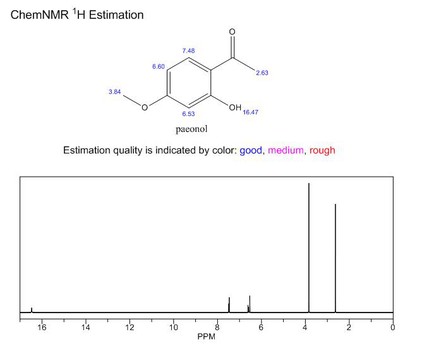
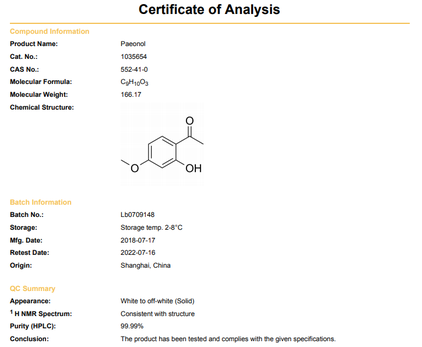
Paeonol(link:https://www.bloomtechz.com/synthetic-chemical/api-researching-only/paeonol-powder-cas-552-41-0.html), Chinese name Paeonol, is a natural organic compound commonly found in the root of Chinese herbal medicine Paeonia lactiflora. Existing as white to pale yellow crystals or crystalline powder, it has a distinctive aromatic odor, often described as floral, woody, or vanilla. The solubility in water is low, about 1.9 g/L (25°C). It has good solubility in polar organic solvents such as ethanol (alcohol), methanol and acetone. Produces black smoke and a characteristic odor when burned with an open flame. It also has relatively high solubility in non-polar solvents such as methylene chloride and benzene. A gradual fading reaction to light may occur, so prolonged exposure to sunlight should be avoided. Slightly acidic, the pH of its solution is usually between 4-6. It is stable under acidic conditions, but may decompose under alkaline conditions. It is an organic compound and active ingredient extracted from the dry root bark of the ranunculaceae plant peony. It can effectively inhibit the growth and reproduction of a variety of bacteria, and has a good effect on the treatment of skin infections such as skin inflammation. Reduce redness, swelling, pain and other symptoms caused by skin inflammation, and at the same time promote skin repair. Paeonol can shrink the pores on the skin surface, reduce sebum secretion, and achieve astringent effect.
|
|
|
1. It has the effects of sedative, hypnotic, antibacterial, anti-inflammatory, anti-oxidant, and hypotensive. It can relieve various types of pain, including neuropathic pain, inflammatory pain and musculoskeletal pain. Therefore, it is used in traditional herbal medicine to treat symptoms such as headaches and toothaches.
 2. Antibacterial effect: Paeonol has inhibitory effect on a variety of bacteria and fungi, including Staphylococcus aureus, Escherichia coli and other pathogenic bacteria. Therefore, it can be used as a natural antibacterial agent and is widely used in food preservation, antiseptic and pharmaceutical fields.
3. Cardiovascular protection: Paeonol can inhibit platelet aggregation and thrombus formation, reduce blood viscosity, regulate blood lipid levels, and protect cardiovascular health. It is also used in traditional Chinese medicine to treat cardiovascular diseases such as hypertension and coronary heart disease.
4. Dermatological treatment: Due to its anti-inflammatory, antioxidant and antibacterial properties, Paeonol is widely used in the treatment of skin-related problems, including eczema, psoriasis and itching, etc. It reduces symptoms, promotes wound healing and skin repair.
5. Antithrombotic effect: Paeonol can inhibit platelet aggregation and thrombus formation, and reduce the risk of thrombotic diseases, such as deep vein thrombosis and atherosclerosis.
6. In terms of daily chemistry, it can inhibit the generation of O2 free radicals in cells, whiten the skin, reduce and lighten the pigment deposited in the skin, eliminate silt and spots; it also has anti-inflammatory, swelling and pain-relieving, anti-allergic, anti-viral and other effects . It has good therapeutic and health care effects on pigmentation, muscle pain, itchy skin, psoriasis, shingles, eczema, etc.
7. In addition, it also plays a good role in toothpaste, mouthwash, tooth powder, and toothache water. It has obvious analgesic effect on the pain caused by physical or chemical factors such as tail pressure and acetic acid.
8. Can significantly inhibit the inflammatory response caused by carrageenan, egg white, formaldehyde, histamine, 5-hydroxytryptamine, bradykinin, xylene, endotoxin, etc.
9. It has obvious antipyretic effect on the rise in body temperature caused by typhoid vaccine and triple vaccine. Can inhibit type II, type III, type IV allergies.
10. Paeonol has certain potential value in the development and application of functional health products, but there is still a lack of systematic and in-depth toxicological safety evaluation data.
11. Antibacterial and anti-inflammatory effects
Paecortol has an inhibitory effect on the inflammatory response of microglia. Pae can inhibit the expression of inflammatory cytokines induced by lipopolysaccharide in macrophages, and Pae has a good resistance to lipopolysaccharide-induced inflammation in macrophage RAW 264.7 cells and mouse models. In the study of tissue inflammation and injury in periodontitis rats, it was shown that the anti-injury effect can be observed when Pae is added. Pae may inhibit pro-inflammatory cytokines, thereby inhibiting gingival tissue inflammation and alveolar bone damage caused by periodontitis.

12. Antioxidant effect
Pae prevents premature aging of endothelial cells by regulating sirtuin (SIRT1) pathway. The expression of p53 and the expression of acetyl H3K14 and H4K16 were also decreased by the pretreatment of Pae. These findings indicate that Pae protects endothelial cells against oxidative stress by regulating the expression of acetylase SIRT1 protein and its substrate. Premature aging caused by stimulation.
13. Regulating the effect on immune function
Pae down-regulates the levels of ALT and AST in mouse serum in the liver tissue of scald-induced liver injury, thereby regulating the expression of autophagy protein LC3, and studies have shown that Pae can effectively up-regulate the expression of The damage achieves the protective effect. Studies have shown that Paeonol can regulate the function of immune cells and enhance the immune response and resistance of the immune system. It can increase the activity of lymphocytes, regulate the production of inflammatory factors, and has anti-allergic effects.