


Ticks are more than just a nuisance. They carry serious pathogens like Borrelia burgdorferi and Rickettsia species, making tick control a genuine public health priority. Among the modern compounds developed to address this challenge, fluralaner stands out for its precise mechanism and lasting efficacy. But what actually makes it so effective against ticks at a biological level? Understanding how fluralaner works helps explain why it has become a trusted compound in veterinary and parasitic control applications worldwide.
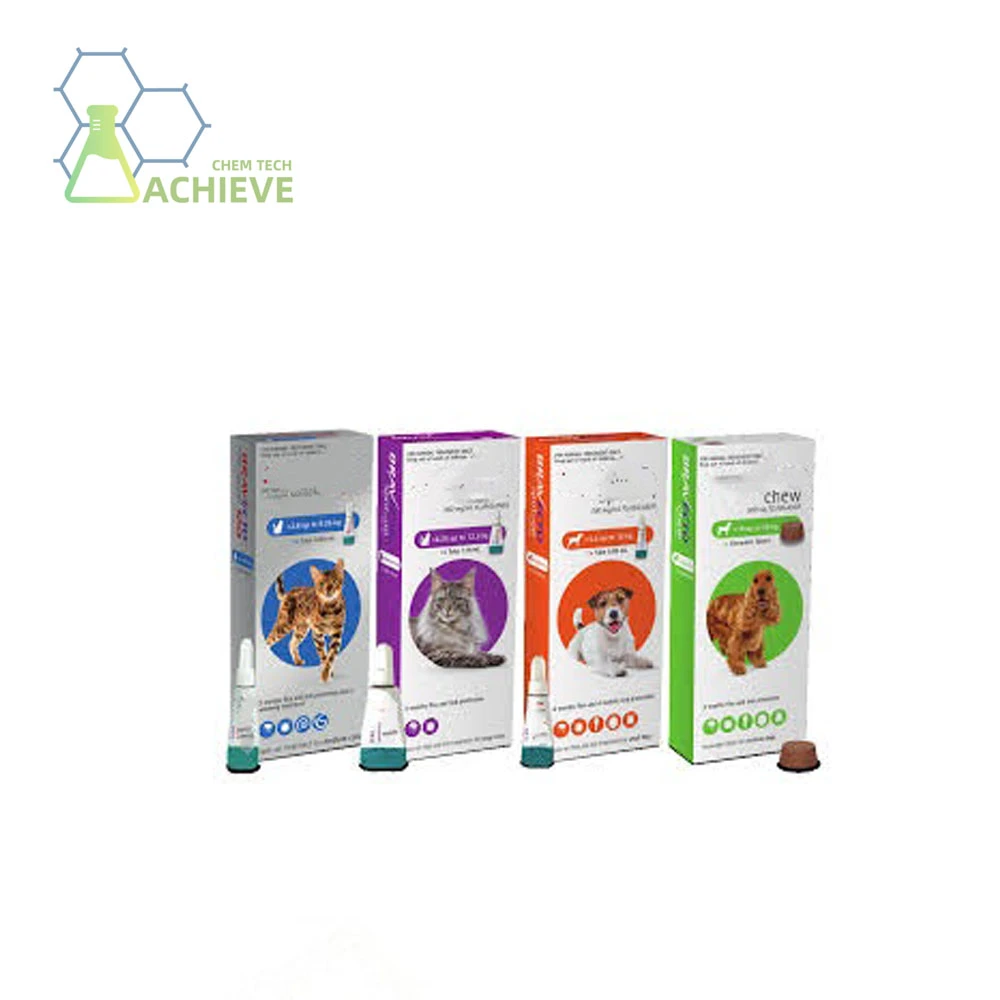
Fluralaner Tablet
1.General Specification(in stock)
(1)Solution
(2)Tablet
(3)Injection
(4)Spray
(5)Drops
2.Customization:
We will negotiate individually, OEM/ODM, No brand, for secience researching only.
Internal Code:BM-2-079
Fluralaner CAS 864731-61-3
Main market: USA, Australia, Brazil, Japan, Germany, Indonesia, UK, New Zealand , Canada etc.
Manufacturer: BLOOM TECH Xi'an Factory
Analysis: HPLC, LC-MS, HNMR
Technology support: R&D Dept.-4
How Does Fluralaner Reach Tick Neural Targets After Exposure?
Systemic Absorption and Distribution
Fluralaner is an isoxazoline, which is a type of compound. When given to a host animal, it quickly enters the bloodstream and spreads to all of the cells in the body. It takes in fluralaner through its blood meal when it feeds on its host. This way of systemic delivery makes sure that ticks get a lethal amount no matter where on the body they connect.
Studies have shown that fluralaner hits its highest levels in the blood within hours of being taken by mouth and stays at a medicinal level for a long time-in some forms, up to 12 weeks. A big part of what makes fluralaner effective over time is that it stays in the body for a long time.
Crossing into Tick Neural Tissue
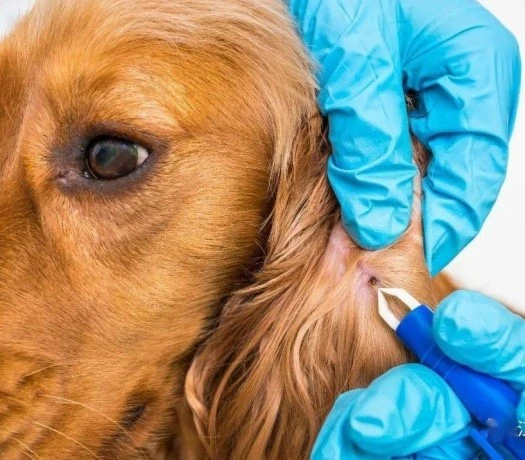
As soon as the tick eats fluralaner, it goes through its digestive system and into its hemolymph, which is like blood in insects. After that, the chemical gets into brain cells. The tick's nervous system is pretty simple and small, which lets the fluralaner move quickly. Neural damage starts within hours of ingestion. This is why ticks that are introduced to treated hosts quickly change how they act before detaching.
Fluralaner and the GABA-Gated Chloride Channels of Ticks
What GABA Receptors Do in Arthropods
GABA is a neurotransmitter that slows down nerve signals. It is found in both mammals and other animals. Ticks and other insects and spiders have GABA-gated chloride channels that control how easily nerve cells can fire by letting chloride ions into the cells. When this system works right, it controls and balances the activity of the tick neurons.
Fluralaner goes straight for these GABA-gated chloride channels. It stops chloride ions from getting in by attaching to certain spots on these receptor complexes. The result is a lack of inhibitory control, which means that neural activity is no longer managed. This causes the tick's nervous system to become excited without any control.
Selectivity Between Tick and Mammalian Receptors
One of the most interesting things about fluralaner's effectiveness is that it only hurts certain cells. The shapes of crustacean GABA receptors are very different from those in mammals. Mammalian GABA receptors have different subunit ratios that make fluralaner much less likely to bind. Because of this difference in structure, fluralaner has strong effects on tick nervous systems while posing little risk to the host animal. This is a pharmaceutical benefit that is backed up by multiple safety assessments found in peer-reviewed literature.
Why Are Tick Ion Channels Important to Fluralaner Activity?
Ion channels are the basic way that all nervous systems talk to each other. Chloride channels controlled by GABA and glutamate receptors control every part of a tick's brain behavior, from coordinating eating to moving around. Fluralaner basically breaks down the tick's ability to work at every level when it blocks these channels.
Isoxazoline compounds, like fluralaner, have a strong affinity for arthropod ligand-gated chloride channels, according to research published in Pest Management Science (Ozoe et al.) and other related pharmacological journals. This means that the molecule doesn't compete with GABA for binding, but instead locks the channel in a shape that doesn't let it work. This makes it harder for ticks to become resistant to fluralaner through simple processes of receptor overload.

Fluralaner-Induced Neural Hyperexcitation in Tick Control
When the flow of chloride is stopped, the inhibitory balance in tick neurons is lost.
The result is neurons responding nonstop and without control, which is called hyperexcitation. Ticks in this state shake, move around randomly, and become paralyzed all at the same time. They are unable to feed properly, reproduce, or stay alive in the wild.
This is not a unique way for isoxazolines to work, but fluralaner has a much higher affinity for binding to tick GABA receptors than many other compounds that have been used before. IC₉₀ values, which show the dose needed to stop 50% of receptor activity, have shown that fluralaner is one of the most effective drugs in its class for tick-specific targets. The speed with which hyperexcitation happens is also useful: ticks start to leave their hosts before they've finished feeding on blood, which cuts down on the time that pathogens can be transmitted.
From Ion Channel Inhibition to Tick Paralysis: How Fluralaner Acts
There is a clear biological pathway that goes from blocking ion channels to paralyzing the tick completely. Fluralaner attaches to the chloride channel receptor site and stops signals that inhibit the channel from working. Motor neurons fire without being controlled, which makes muscles tighten over and over again. As energy stores run out and metabolic needs rise above supply, the tick moves closer to losing all motor function.
This chain reaction happens at different times of a tick's life. Fluralaner works against tick eggs, nymphs, and adults, which is important because nymphal ticks are often the ones who spread diseases to people and animals the most.Control strategies are made a lot easier when you can target multiple stages of life with a single compound.
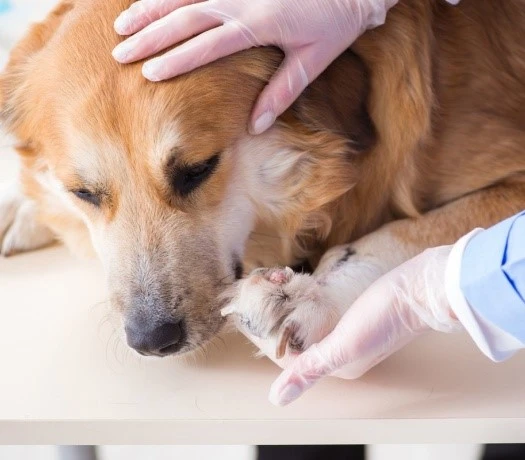
Within 24 to 48 hours of being bitten by most tick species tested, including Ixodes scapularis, Rhipicephalus sanguineus, and Dermacentor variabilis, the person becomes paralyzed and then dies. When it comes to disease, these tick species are some of the most important in North America and Europe.
Conclusion
Fluralaner has a well-defined and scientifically proven way of working: it gets into the tick's nervous system, targets GABA-gated chloride channels, and causes neural hyperexcitation quickly. This leads to paralysis and death. Because it works best on arthropod receptors and not human ones, it is both useful and safe for the uses it was made for. As tick populations grow and the risk of virus spread rises, compounds with this level of accuracy and effectiveness will continue to be very important for managing tick populations and public health.
Frequently Asked Questions
Q1: How long does fluralaner work after it is given?
+
-
Some oral veterinary formulations of fluralaner can keep therapeutic blood levels at therapeutic levels for up to 12 weeks, demonstrating its ability to maintain effective systemic concentrations. This time frame relies on the type of formulation, the amount, and the metabolic rate of the host animal.
Q2: Does fluralaner only kill ticks, or does it also kill other parasites?
+
-
Fluralaner works well against many different types of ectoparasites, not just ticks. It even works on fleas. It works by blocking arthropod GABA-gated chloride channels in a way that works for many species. Pharmacological tests have shown that specific activity levels are different for each species.
Q3: Can bugs become immune to fluralaner?
+
-
It is not as easy for the normal resistance route of receptor saturation to work with fluralaner because it doesn't directly compete with GABA but instead blocks chloride channels through non-competitive binding. Over long periods of time, resistance can't be ruled out, but current data don't show that resistance has spread widely in field tick populations.
Partner with Bloomtechz for Your Fluralaner Supply Needs
If you need to find fluralaner for research, veterinary formulation, or pharmaceutical intermediate uses, Bloomtechz has a reliable and fully certified supply chain. Bloomtechz has been a qualified fluralaner provider for over 12 years and has GMP-certified production facilities that have been inspected and cleared by the US-FDA, EU-GMP, CFDA, and PMDA. They bring this experience to every order. Our triple-link quality assurance system includes factory inspection, in-house QA/QC analysis, and verification by a third-party authority. This makes sure that you get a product that exactly meets your needs. Our clients are in the pharmaceutical, specialty chemicals, and research and development fields. We give them exact wait times, clear pricing, and all the paperwork they need to clear customs. Get in touch with us to see what a trustworthy partnership with a fluralaner supplier looks like.
Send us a message at Sales@bloomtechz.com.
References
1. Ozoe, Y., Asahi, M., Ozoe, F., Nakahira, K., & Mita, T. (2010). The antiparasitic isoxazoline A1443 is a potent blocker of insect ligand-gated chloride channels. Biochemical and Biophysical Research Communications, 391(1), 132–136.
2. Fisara, P., & Jonsson, N. N. (2015). Efficacy of fluralaner against naturally acquired tick infestations in dogs. Parasites & Vectors, 8, 567.
3. Taenzler, J., de Vos, C., Roepke, R. K. A., Wolken, S., Fourie, J. J., & Heckeroth, A. R. (2014). Efficacy of fluralaner against Ixodes ricinus and Rhipicephalus sanguineus tick infestations in dogs. Parasites & Vectors, 7(1), 576.
4. Kilp, S., Ramirez, D., Allan, M. J., Roepke, R. K. A., & Nuernberger, M. C. (2014). Pharmacokinetics of fluralaner in dogs following a single oral administration. Parasites & Vectors, 7(1), 85.
5. Shoop, W. L., Hartline, E. J., Gould, B. R., Waddell, M. E., McDowell, R. G., Kinney, J. B., & Lahm, G. P. (2014). Discovery and mode of action of afoxolaner, a new isoxazoline parasiticide for dogs. Veterinary Parasitology, 201(3–4), 179–189.
6. Dryden, M. W., Smith, V., Bennett, T., Math, L., de Vos, C., & Fourie, J. J. (2014). Evaluation of fluralaner topical solution and fluralaner oral chewable tablet for speed of kill of Ctenocephalides felis and Ixodes scapularis on dogs. Veterinary Parasitology, 201(3–4), 226–233.