


Discover where fluralaner fits within the isoxazoline class - its unique mechanism, chloride channel targeting, and how it stands apart in modern ectoparasite control. When researchers and formulators talk about next-generation ectoparasiticides, the isoxazoline class consistently draws serious attention. Within that class, fluralaner occupies a particularly well-defined space - one shaped by its molecular selectivity, long-lasting activity, and growing relevance across veterinary and research applications. This article unpacks how fluralaner relates to other isoxazolines, what makes its mechanism distinctive, and why understanding these differences matters for anyone working in pharmaceutical intermediates or specialty chemical sourcing.
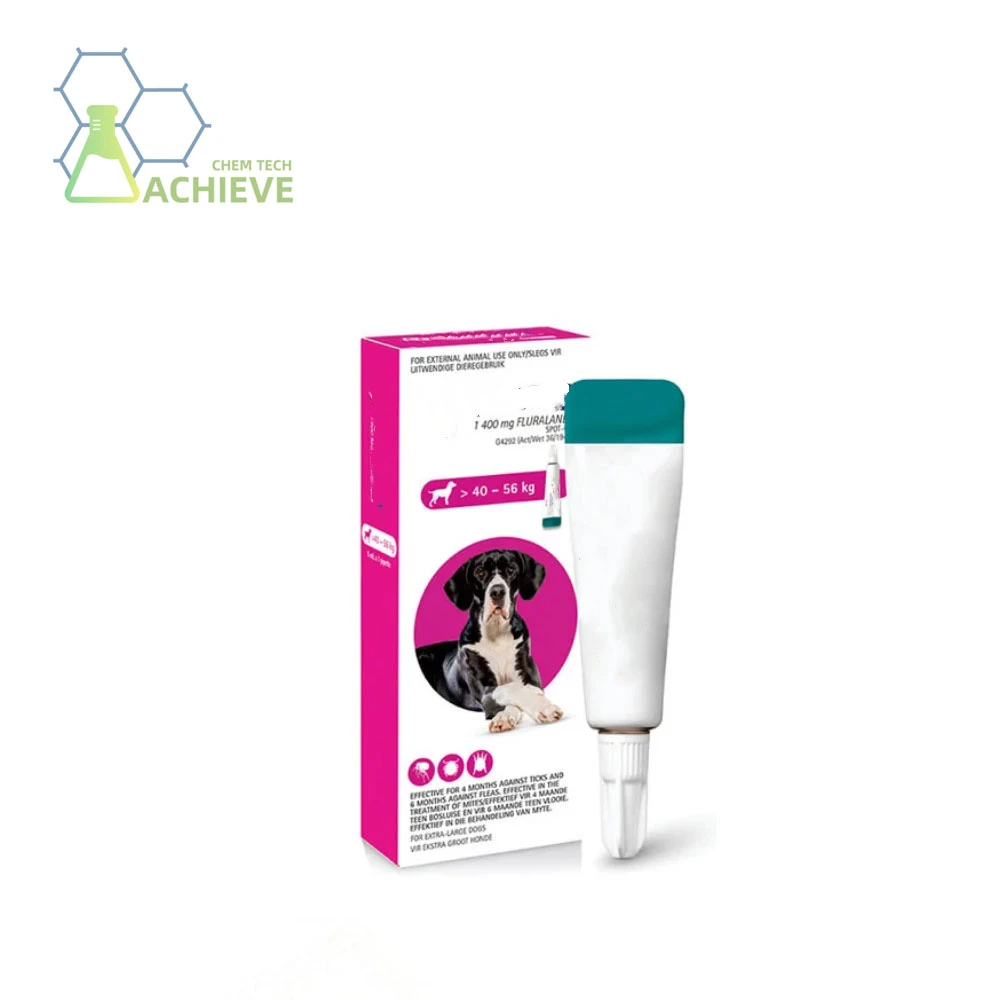
Fluralaner Drops
1.General Specification(in stock)
(1)Solution
(2)Tablet
(3)Injection
(4)Spray
(5)Drops
2.Customization:
We will negotiate individually, OEM/ODM, No brand, for secience researching only.
Internal Code:BM-9-007
Fluralaner CAS 864731-61-3
Main market: USA, Australia, Brazil, Japan, Germany, Indonesia, UK, New Zealand , Canada etc.
Manufacturer: BLOOM TECH Xi'an Factory
Analysis: HPLC, LC-MS, HNMR
Technology support: R&D Dept.-4
How Does Fluralaner Differ From Other Isoxazoline Ectoparasiticides?
Structural Distinctions That Shape Performance
Several active compounds share the isoxazoline scaffold, but the chemical changes between these compounds cause important behavioral differences. Fluralaner has a unique trifluoromethyl sulfonyl group and an aromatic substitution pattern that help it bind and stay stable in the body's metabolism. These traits make it different from other isoxazoline chemicals in terms of how well it works and how long it lasts.
Fluralaner is taken throughout the body and gets insect ectoparasites through blood meals. This is different from how topical or contact-acting agents work. Multiple peer-reviewed studies, such as Rohdich et al. (2014), which confirmed 12-week flea and tick control in companion animals, have shown that this product works for a long time because it is distributed throughout the body.

Duration and Selectivity Compared to Structural Analogues
Other drugs in the isoxazoline class work in a similar way to block enzymes, but they have different half-lives, ways of being administered, and ability to target specific species. Fluralaner has a plasma half-life of about 12–15 days in dogs, which is why it can be given over a longer period of time. This pharmacokinetic profile isn't always seen in the isoxazoline family. This makes fluralaner a better chemical choice for situations where long-term exposure is needed.
Fluralaner as an Isoxazoline Targeting Arthropod Chloride Channels

The Role of Ligand-Gated Chloride Channels in Invertebrate Physiology
In arthropods, ligand-gated ion channels control how excited neurons can get. GABA-gated and glutamate-gated chloride channels are two of the most important for connecting brain and muscle activity. Fluralaner is a strong blocker of both types of channels, stopping the flow of chloride and setting off chaotic neuronal activity in parasites that it targets.
This blocking of two channels is a well-known feature of fluralaner's pharmacodynamics. The study by Ozoe et al. (2010) in the British Journal of Pharmacology figured out how isoxazoline works at the molecular level at invertebrate chloride channels. This gave scientists a way to explain why chemicals like fluralaner kill fleas, ticks, and mites quickly and effectively.
Why Arthropod Selectivity Matters in Chemical Sourcing
Because the structures of these chloride channel subtypes are different in arthropods and vertebrates, fluralaner has a high selectivity gap that supports its safety profile in mammals. This biochemical specificity isn't just a point of discussion in pharmacology; it has a direct effect on how sellers and researchers classify fluralaner as a pharmaceutical intermediate and why it's always in high demand in the fine chemical market.
What Defines Fluralaner's Mechanism Within the Isoxazoline Class?
Targeting Ligand-Gated Chloride Channels
Fluralaner blocks ligand-gated chloride channels necessary for proper nerve signalling in sensitive parasites. By disrupting these channels it alters the balance of nerve activity and inhibits the parasites from maintaining regular mobility and function. This mechanism is a characteristic of the isoxazoline class and contributes to the understanding of the efficient action of fluralaner against target ectoparasites. Unlike broad toxic effects, its activity is linked to specific neurological targets, providing formulators and veterinary professionals with a clear pharmacologic rationale for its use in parasite control.
Isoxazoline Structure and Selective Activity
Fluralaner belongs to the isoxazoline class of molecules,


which were created to selectively target the parasite's neurological system. Its interaction with ligand gated chloride channels is different from antiparasitic drugs directed to other biological targets. This target-oriented mechanism is of special relevance for the assessment of fluralaner with other drugs of the same class. It also helps producers and researchers understand the link between its chemical structure and receptor function, as well as determine formulation needs, product performance, and the role of fluralaner in current ectoparasite control tactics.
From Channel Disruption to Parasite Control
Fluralaner acts at the level of the receptor, but the final result is impairment of mobility and survival of the parasite. By blocking the normal signalling of chloride channels, the parasite's nervous system is prevented from correctly regulating activity.
The neurological disruption causes paralysis and death of sensitive parasites. This relationship between molecular action and biological response is valuable for product makers since it reveals the basis of fluralaner's antiparasitic efficacy. It also offers a helpful context for comparing fluralaner to other isoxazoline drugs acting via similar targets.
Fluralaner, GABA Channels, and the Evolution of Ectoparasite Control
A Targeted Approach to Parasite Nerve Signaling
Fluralaner is a novel technique to ectoparasite management that targets ligand-gated chloride channels in parasites. These channels play a vital role in controlling activity of the nerves, and damage to their regular functioning may lead to uncontrolled neural activity, paralysis and death of the parasite. This technique offers a more specific manner for fluralaner to attack fleas, ticks and other vulnerable ectoparasites than previous methods that may target diverse biological targets. Its action on the neurological system is strongly connected to the pharmacological features that characterise the isoxazoline class.


How GABA-Related Activity Helps Control Ectoparasites
GABA-gated chloride channels are an essential inhibitory mechanism in the neural systems of many invertebrates. Fluralaner disrupts such channels and hence interferes with the natural balance of nerve signalling in vulnerable parasites. When this inhibition is lost the parasite nervous system goes haywire and finally loses control of movement and other vital processes. One reason why isoxazoline chemicals are a significant advance in current flea and tick management is their capacity to operate on these parasite-specific neuronal targets.
From Broad Control to More Targeted Ectoparasite Management
Fluralaner's development is part of a larger trend in the creation of medicines that aim at particular molecular targets.
Modern ectoparasite management is more and more based on distinctions in host and parasitic biology rather than on broad toxic effects. This method is consistent with fluralaner, which belongs to the isoxazoline class and acts on ligand-gated chloride channels. This information is helpful to product developers and providers of veterinary medicines when considering the potential of emerging antiparasitic therapies to deliver effective ectoparasite control with a selective mode of action.
Comparing the Molecular Targets of Fluralaner and Other Isoxazolines
Shared Scaffold, Divergent Selectivity Profiles
It is true that all isoxazolines work on invertebrate chloride channels, but the level of selectivity between GABA- and glutamate-gated subtypes varies within the class. Fluralaner blocks both with about the same level of strength, which makes it different from similar drugs that are stronger against one subtype than the other. Its broad-spectrum effectiveness against fleas, several types of ticks, and mites is due in part to this dual inhibition.
Implications for Pharmaceutical Intermediate Applications
It is useful for researchers to know these differences when they are making isoxazoline derivatives or looking for fluralaner as a reference molecule or intermediate.

It helps with making choices about designing derivatives, planning comparison bioassays, and writing regulatory paperwork. More and more, companies that work in pharmaceutical research and development or specialty chemical procurement see fluralaner not only as an active ingredient but also as a standard molecule in the isoxazoline class.
Conclusion
Fluralaner has a clear place in the isoxazoline class. It has dual chloride channel inhibition, systemic transport, and a pharmacokinetic profile that allows for long-interval doses. It is different from older ectoparasiticide classes and its isoxazoline analogs because of how it works with specific structures and receptors. Fluralaner is a strong and reliable chemical that can be used as a starting point for anyone buying, studying, or formulating in this area.
Frequently Asked Questions
Q1: What is fluralaner, and which drug class does it belong to?
+
-
Fluralaner is an antiparasitic chemical belonging to the isoxazoline class. It is meant to target certain ligand-gated chloride channels that are implicated in the neurological systems of vulnerable parasites.
Q2: How does fluralaner work against parasites?
+
-
Fluralaner disrupts normal nerve signals in parasites by inhibiting ligand-gated chloride channels. This may result in uncontrollable nerve activity, paralysis and finally death of sensitive parasites.
Q3: What makes fluralaner different from other antiparasitic compounds?
+
-
The place of fluralaner in the isoxazoline class is due to its specific action against parasite chloride channels. This method separates it from other antiparasitic drugs acting via various biological targets.
Source Your Fluralaner Supply Through Bloomtechz - A Trusted Isoxazoline Fluralaner Supplier
Bloomtechz is ready to help you find a reliable fluralaner supplier whose production is GMP-certified and whose quality standards have been checked. Bloomtechz has been in business since 2008 and has a 100,000 m² cooperative GMP plant that is approved by the US-FDA, EU-GMP, JP, and CFDA. They bring over 12 years of experience in organic synthesis to every order. Our quality control method has three levels: in-factory, in-house QA/QC, and third-party authority proof. These levels make sure that every shipment meets the terms of your contract. We sell to specialty chemical buyers, pharmaceutical companies, and R&D labs all over the world. Send us a message right now, and we'll do our best to match your technical needs with accurate prices and dependable lead times. Email us at Sales@bloomtechz.com, and our team will answer you correctly, not guessing.
References
1. Rohdich, N., Roepke, R. K. A., & Zschiesche, E. (2014). A randomized, blinded, controlled, and multi-centered field study comparing the efficacy and safety of Bravecto (fluralaner) against Frontline (fipronil) in flea- and tick-infested dogs. Parasites & Vectors, 7, 83.
2. Ozoe, Y., Asahi, M., Ozoe, F., Nakahira, K., & Mita, T. (2010). The antiparasitic isoxazoline A1H displays antagonism on GABA receptors differently from fipronil. Biochemical and Biophysical Research Communications, 391(1), 744–749.
3. Prichard, R., & Geary, T. (2008). Perspectives on the utility of moxidectin for the control of parasitic nematodes in the face of developing anthelmintic resistance. International Journal for Parasitology: Drugs and Drug Resistance, 1(1), 66–71.
4. Gassel, M., Wolf, C., Noack, S., Williams, H., & Ilg, T. (2014). The novel isoxazoline ectoparasiticide fluralaner: Selective inhibition of arthropod γ-aminobutyric acid- and glutamate-gated chloride channels and insecticidal/acaricidal activity. Insect Biochemistry and Molecular Biology, 45, 111–124.
5. Casida, J. E., & Durkin, K. A. (2013). Neuroactive insecticides: Targets, selectivity, resistance, and secondary effects. Annual Review of Entomology, 58, 99–117.
6. Shoop, W. L., Hartline, E. J., Gould, B. R., Zakson-Aiken, M., & Olczyk, R. G. (2014). Discovery and mode of action of afoxolaner, a new isoxazoline parasiticide for dogs. Veterinary Parasitology, 201(3–4), 179–189.