


GLP-1 is encoded by the glucagon gene (GCG) and is cleaved by protease PC1/3 to produce two active forms: GLP-1 (7-36) amide (80%) and GLP-1 (7-37) (20%). The former is the main active form, while the latter also has biological activity after amidation. However, natural GLP-1 has a fatal weakness: it is easily cleaved and inactivated by DPP-4 at the N-terminal alanine position 2, with a plasma half-life of less than 2 minutes. In addition, it can be quickly cleared by the kidneys. It is precisely this "congenital defect" that has forced two major drug strategies: GLP-1 receptor agonists (GLP-1 RAs) - which resist DPP-4 degradation through structural modification; DPP-4 inhibitor - prolongs the action time of endogenous GLP-1 by inhibiting degradation enzymes.
1.General Specification(in stock)
(1)API(Pure powder)
2.Customization:
We will negotiate individually, OEM/ODM, No brand, for secience researching only.
Internal Code: BM-1-187
GLP-1 7-37 CAS 106612-94-6
Molecular formula: C151H228N40O47
Molecular weight: 3355.67
Manufacturer: BLOOM TECH Wuxi Factory
Analysis: HPLC, LC-MS, HNMR
Main market: USA, Australia, Brazil, Japan, Germany, Indonesia, UK, New Zealand , Canada etc.
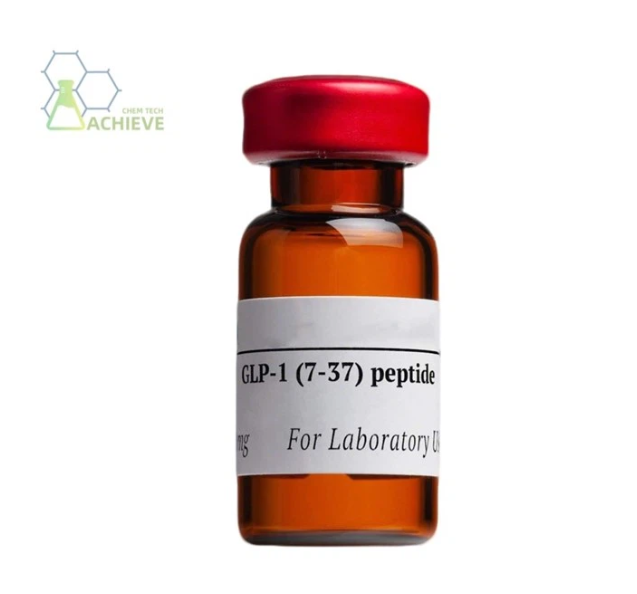
We provide GLP-1, please refer to the following website for detailed specifications and product information.
Product: https://www.bloomtechz.com/synthetic-chemical/api-researching-only/glp-1-7-37-peptide.html
The world's first GLP-1 gene therapy has been approved for clinical use
On May 11, 2026, Fractyl Health announced that it has obtained approval for a clinical trial application in the Netherlands and will launch the first candidate drug RJVA-001 on its Rejuvea Smart GLP-1 gene therapy platform! /The first human clinical trial.
RJVA-001 is a one-time targeted gene therapy for pancreatic beta cells, which can achieve physiological secretion of GLP-1 with nutrient intake in the pancreas, and is expected to avoid various side effects caused by excessive drug circulation concentration in systemic GLP-1 therapy. The drug is directly infused into pancreatic tissue through minimally invasive endoscopic ultrasound-guided technology, relying on the company's self-developed and modified human insulin promoter and transport signal to induce GLP-1 secretion in transduced pancreatic islet cells after feeding.
RJVA-001 is the world's first adeno-associated virus (AAV) gene therapy for type 2 diabetes to enter the clinical stage, and also the world's first GLP-1 gene therapy to enter the clinical stage. The company plans to complete the administration of RJVA-001's first patient in the second half of 2026, and release preliminary research data.
Pfizer's acquisition of ultra long acting GLP-1 receptor agonists has been approved for clinical trials in China for the first time

On May 12, 2026, the official website of the China National Center for Drug Evaluation (CDE) announced that Pfizer's Class 1 new drug PF-08653944 Injection has been approved for clinical use in long-term weight management for adults with an initial body mass index (BMI) of 228 kg/m2 (obesity) or 224 kg/m2 (overweight) and at least one weight related complication (such as hyperglycemia, hypertension, hyperlipidemia, obstructive sleep apnea, cardiovascular disease, etc.), based on controlled diet and increased exercise. Public information shows that this is the first time PF-08653944 has been clinically approved in China.
Use
Firstly, glucose dependent promotion of insulin secretion. The GLP-1 receptor acting on the surface of pancreatic beta cells activates the cAMP PKA signaling pathway, enhancing insulin synthesis and release. The key is that this promoting effect strictly depends on blood sugar levels - it only exerts force when blood sugar is above 5 mmol/L, and automatically stops when blood sugar is normal. Therefore, using GLP-1RA alone will hardly cause hypoglycemia, which is its core safety advantage compared to sulfonylurea drugs.


Secondly, inhibit the secretion of glucagon. By acting on adjacent pancreatic alpha cells through paracrine secretion, it inhibits the release of glucagon, reduces liver glycogen breakdown and gluconeogenesis, and synergistically lowers blood sugar from the "open source" end.
Thirdly, delay gastric emptying. Acting on gastric wall cells and vagus nerve afferent fibers, significantly slowing down the rate of gastric contents being discharged into the duodenum. This mechanism not only smooths out the sharp increase in postprandial blood sugar, but also prolongs physical satiety, making it one of the important contributors to its weight loss effect.
