




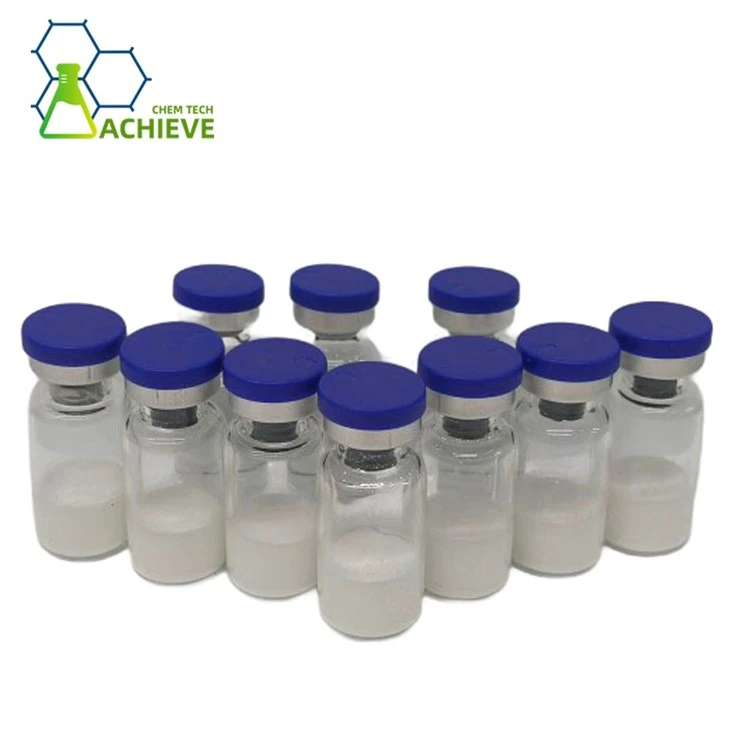

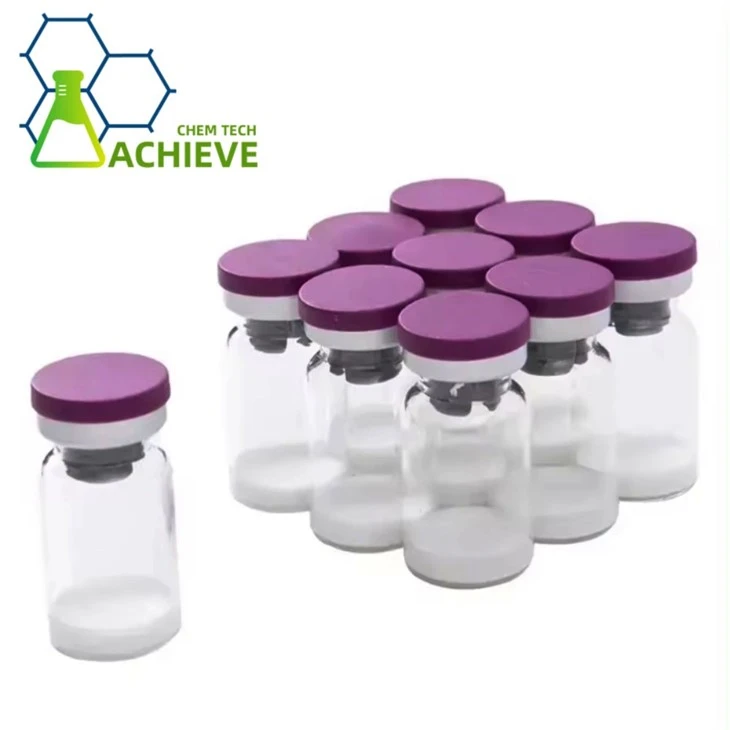
Shaanxi BLOOM Tech Co., Ltd. is one of the most experienced manufacturers and suppliers of cosyntropin 250 mcg in China. Welcome to wholesale bulk high quality cosyntropin 250 mcg for sale here from our factory. Good service and reasonable price are available.
Cosyntropin (CAS: 16679-58-6) is a synthetic peptide compound with stable physicochemical properties. It appears as fine freeze-dried powder, featuring good solubility in physiological saline and sterile water for injection. To retain its complete molecular structure and biological activity, the product requires sealed storage in a cool, dry and dark environment; exposure to high temperature or excessive humidity will lead to activity decline and quality deterioration. As an artificially synthesized adrenocorticotropic hormone (ACTH) analog, it acts as a potent agonist targeting melanocortin receptor (MC2R). It specifically binds to and activates ACTH receptors on adrenal cortex cells, effectively driving the synthesis and secretion of cortisol and other glucocorticoids.
This mechanism makes it a reliable agent for the diagnosis of adrenal insufficiency, and it also serves for multiple clinical therapeutic purposes. Presented in freeze-dried form, the product must be reconstituted with physiological saline or water for injection prior to administration. Cosyntropin 250 mcg is the mainstream specification, with each vial containing 250 micrograms of the active ingredient, and it can be delivered safely through intravenous or intramuscular injection in clinical practice.
Our Products Form


Tetracosactide Acetate COA

As the core drug of the standard dose ACTH stimulation test (HD-CST), Cosyntropin 250 mcg (synthesized ACTH 1-24, ticapeptide) has a significant impact on HPA axis inhibition beyond the conventional understanding of simply evaluating adrenal reserve.

Its value lies in the non physiological activation of super physiological doses, induction of adrenal cortex "stress desensitization", transient reset of HPA axis negative feedback loop, precise capture of hidden inhibition, regulation of adrenal plasticity after chronic inhibition, and bidirectional intervention for pituitary adrenal function recovery. Compared with low-dose 1 μ g (LD-CST), 250 μ g has a unique niche effect of saturating activated MC2R, breaking through partial adrenal resistance, revealing deep inhibition, and inducing transient functional remodeling, making it a "dual tool" for diagnosing and intervening in HPA axis inhibition.
Molecular pharmacology of 250 μ g Cosyntropin: physiological activation and non classical pathways
Cosyntropin 250 mcg corresponds to the biologically active 1–24 amino acid fragment of adrenocorticotropic hormone (ACTH). It exhibits markedly stronger binding capacity toward the melanocortin 2 receptor (MC2R) located in the zona fasciculata of the adrenal gland, with its receptor affinity reaching 1.5 times that of natural endogenous ACTH. When administered at a standard dose of 250 μg, the agent can achieve a supraphysiological saturation concentration in the bloodstream. To put it in perspective, the physiological peak concentration of ACTH in the human body is normally below 100 pg/mL, while the blood level of the active ingredient rises to more than 10⁴ pg/mL after a 250 μg dose.


This dosage is sufficient to trigger full activation of MC2R. Specifically, cosyntropin 250 mcg can fully occupy nearly 100% of MC2R on adrenal cortical cells, which in turn activates the downstream cAMP-PKA signaling pathway. This cascade reaction strongly stimulates key cortisol synthases including StAR, P450SCC and 11β-hydroxylase to work at full capacity. Since virtually no functional receptors remain unactivated, the adrenal gland is driven to release glucocorticoids to its maximum potential. This pharmacological characteristic forms the core theoretical basis for clinical assessment of hypothalamic-pituitary-adrenal (HPA) axis suppression.
It also enables clinicians to capture even subtle and mild adrenal dysfunctions that are hard to detect via routine tests, delivering high accuracy for auxiliary diagnosis.Cold door desensitization effect: Hyperphysiological concentrations induce transient endocytosis and phosphorylation of MC2R (peak 30-60 minutes after administration), reducing receptor sensitivity to subsequent ACTH and forming transient adrenal desensitization. Animal experiments showed that 2 hours after administration of 250 μ g, the adrenal gland's response to secondary ACTH stimulation decreased by 40%, and gradually recovered after 24 hours. This effect is often overlooked in routine diagnosis, but is crucial in repeated stimulation and HPA axis function interventions.


Non-MC2R Receptor Cross-Activation and Downstream Actions
Non MC2R receptor cross activation: High concentrations of 250 μ g can mildly activate MC1R, MC3R, and MC5R (immune cells, endothelial cells, central nervous system), initiating non adrenal dependent anti-inflammatory, immune regulatory, and neuroprotective effects, indirectly affecting the HPA axis feedback loop (such as inhibiting central pro-inflammatory cytokines and reducing abnormal CRH secretion).
Half life and concentration curve:
The half-life of intravenous administration is 15-20 minutes, while intramuscular injection takes 30-45 minutes. The peak blood concentration (>10 ^ 4 pg/mL) is reached within 30 minutes, and rapidly drops below physiological levels within 60 minutes.
Uncommon feature:
Although the drug is rapidly cleared, the activation effect of adrenal function lasts for 48-72 hours - upregulating the expression of cortisol synthase through epigenetic modifications (histone acetylation), forming a long-lasting functional imprint that differs from short-term pharmacological effects.


Organizational distribution niche
High doses can penetrate the blood-brain barrier and blood-brain fluid barrier (low doses are almost impossible to penetrate), directly acting on the membrane-bound MC receptors of hypothalamic CRH neurons and pituitary ACTH cells.
Temporarily inhibiting endogenous CRH/ACTH secretion (negative feedback enhancement).
Forming a bidirectional loop regulation of "exogenous ACTH → transient inhibition of endogenous ACTH → adrenal activation".
Whole pathway activation:
Simultaneously stimulating the entire process of cholesterol transport, pregnenolone synthesis, and 11 deoxycortisol conversion to cortisol, rather than a single link - conventional physiological ACTH only activates partial pathways,
And 250 μ g can break through the "enzyme activity bottleneck" caused by chronic HPA axis inhibition.


Cortisol binding globulin (CBG) regulation:
Hyperphysiological stimulation induces an increase in the proportion of free cortisol secreted by the adrenal gland (from the conventional 4% -10% to 15% -20%)
Reducing the CBG binding rate, accelerating biological activity, and more accurately reflecting the "cortisol efficacy under stress state".
Inhibition of aldosterone cross secretion: 250 μ g has low affinity for MC2R in the zona pellucida and only mildly stimulates aldosterone (<10%), without interfering with the renin-angiotensin system (RAAS), ensuring specificity in HPA axis evaluation - distinct from natural ACTH (mildly stimulating aldosterone).

Diagnostic effect of 250 μ g Cosyntropin on HPA axis inhibition

HPA axis inhibition can be classified into central (pituitary/hypothalamic), adrenal, and mixed types. 250 μ g can detect hidden, chronic, and partial inhibition that cannot be recognized by low doses (1 μ g), especially suitable for exogenous glucocorticoid (GC) - induced HPA axis inhibition (GIAI).Accurate stratification of central inhibition (secondary AI)
Mild inhibition: Insufficient secretion of pituitary ACTH, but no atrophy or reserve of adrenal gland -1 μ g stimulation test can be normal (false negative).
250 μ g saturation activation can detect insufficient peak cortisol (<500mol/L) and decreased increment (<200nmol/L), confirming occult central inhibition.Moderate to severe inhibition: Adrenal atrophy (long-term ACTH deficiency) - no significant increase in cortisol after 250 μ g stimulation (<300nmol/L), diagnosed with complete central inhibition; Accurate differentiation between combined basal ACTH (low/normal low) and primary AI (significantly elevated basal ACTH).The unpopular recognition of 'insufficient stress reserve-Some patients have normal basal cortisol levels (350-500nmol/L), but insufficient secretion under stress -250 μ g simulated extreme stress ACTH levels. If the peak value is less than 550nmol/L, it indicates a deficiency in stress reserve and is a hidden HPA axis inhibition, which can easily induce adrenal crisis during infection and surgery.


Deep evaluation of chronic GC induced inhibition
Long term GC (≥ 3 months) leads to atrophy of the adrenal cortex fasciculus, decreased enzyme activity, and decreased MC2R density -250 μ g can break through the low expression restriction of MC2R, and evaluate residual adrenal reserve:
Peak value of 300-500 nmol/L: partial inhibition, HPA axis can gradually recover;
Peak<300nmol/L: complete inhibition, recovery takes 6-12 months, and long-term replacement is required.
The obscure difference from low dose of 1μg: reversal of diagnostic sensitivity and specificity
Conventional knowledge suggests that 1 μ g is more sensitive, but in the HPA axis inhibition scenario, 250 μ g has higher specificity and stronger ability to detect deep inhibition:
| Dimension | 250μg Cosyntropin(HD-CST) | 1μg Cosyntropin(LD-CST) | Clinical Significance |
| Adrenal activation degree | Saturation activation(100% MC2R) | Partially activated(30% -50% MC2R) | HD-CST detects severe inhibition with extremely low residual reserves |
| Central inhibitory sensitivity | High (detected hidden/chronic) | Low (prone to false negatives) | GIAI, HD-CST is preferred for pituitary microadenomas |
| Specificity | High (with very few false positives) | Low (susceptible to stress and drug interference) | HD-CST results are more reliable, avoiding overdiagnosis |
| Transient desensitization | Yes (30-60 minutes) | None (insufficient concentration) | Repetitive stimulation should be spaced at least 24 hours apart |
| Passing through the blood-brain barrier | Can be achieved through (central effects) | Cannot pass through | HD-CST indirectly evaluates central HPA feedback |
The increase, peak, and peak time of cortisol after 250 μ g stimulation can accurately predict the recovery rate and reversibility of HPA axis inhibition:Peak value of 500-550nmol/L, increment>250nmol/L: mild reversible inhibition, recovered 1-3 months after discontinuation;Peak value of 300-500 nmol/L, increment of 100-250 nmol/L: moderate reversible inhibition, recovery within 3-6months.Peak<300nmol/L, increment<100nmol/L: severe/irreversible inhibition, requiring long-term replacement, recovery>12 months.Mechanism: The peak of cortisol after activation at 250 μ g directly reflects the number of adrenal cortex cells, MC2R density, and total activity of synthase, and is a core biological marker for HPA axis recovery.

Reference information source
- European Society of Endocrinology. Guideline: Diagnosis of Glucocorticoid-induced Adrenal Insufficiency. J Clin Endocrinol Metab, 2024.
- BMJ Best Practice. Cosyntropin Stimulation Test in HPA Axis Suppression. 2026.
- Labcorp. ACTH Stimulation Test (Cosyntropin 500mcg) Interpretation Guidelines. 2025. Test
- Adrenocorticotropic Hormone (Cosyntropin) Stimulation (https://www.ncbi.nlm.nih.gov/books/NBK555940//0
- Cortrosyn (https://www.pdr.net/drug-summary/?drugLabelId=Cortrosyn-cosyntropin-1545)
Frequently Asked Questions
What is 250 mcg cosyntropin stimulation test?
+
-
The cosyntropin stimulation test is a common clinical assay used to evaluate adrenal gland function. This testing procedure calls for serial measurements of serum cortisol concentrations: firstly, a baseline reading is taken prior to drug administration, followed by additional assessments at 30 minutes and 60 minutes after cosyntropin is given to the patient. For adult patients, the universally recognized standard dosage of cosyntropin is 0.25 mg, equivalent to 250 μg. The medication can be delivered safely via either intravenous injection or intramuscular injection according to clinical needs and patient conditions.
How does cosyntropin make you feel?
+
-
Side effects of cosyntropin include nausea, anxiety, sweating, dizziness, itchy skin, redness and or swelling at injection site, palpitations, and facial flushing. 18 Rarely seen side effects include fainting, headache, blurred vision, severe swelling, severe dizziness, trouble breathing, or an irregular heartbeat.
What is the best time to do the Cosyntropin test?
+
-
From a purely physiological perspective, conducting this test during the nadir of endogenous adrenocorticotropic hormone (ACTH) secretion, which generally occurs around midnight, would yield more biologically accurate results. Nevertheless, in routine clinical practice, the test is typically scheduled between 8:00 and 9:00 in the morning. This arrangement greatly simplifies the process of sample collection for medical staff and patients alike. More importantly, it allows test outcomes to be directly compared against established standard reference data, which have been uniformly gathered during this specific morning time window, ensuring consistent interpretation and reliable diagnostic conclusions.
Hot Tags: cosyntropin 250 mcg, suppliers, manufacturers, factory, wholesale, buy, price, bulk, for sale