




Shaanxi BLOOM Tech Co., Ltd. is one of the most experienced manufacturers and suppliers of melittin injection in China. Welcome to wholesale bulk high quality melittin injection for sale here from our factory. Good service and reasonable price are available.
Melittin injection, as the most active component in bee venom, accounts for 40% to 50% of the dry matter in bee venom and is the core substance that determines the biological activity of bee venom. The biological function and application value of this active peptide are not generalized, but highly focused on three core dimensions. These three dimensions not only carry the defense mission that bee populations rely on for survival, but also serve as the key support for bees to resist invasion and avoid risks in the natural environment.
They also show great potential for application in the field of medical intervention, breaking the limitations of traditional active peptides. Among them, in the collaborative treatment of tumor radiotherapy and chemotherapy, it can achieve dual empowerment of toxicity reduction and efficacy enhancement, while in low-dose pharmaceutical scenarios, it can balance safety and efficacy. Both play an irreplaceable and unique role in related research and clinical exploration, becoming the core advantage that distinguishes this from other natural active peptides.
Our Products Forms
melittin powder

melittin tablets

melittin capsules

melittin cream

melittin spray
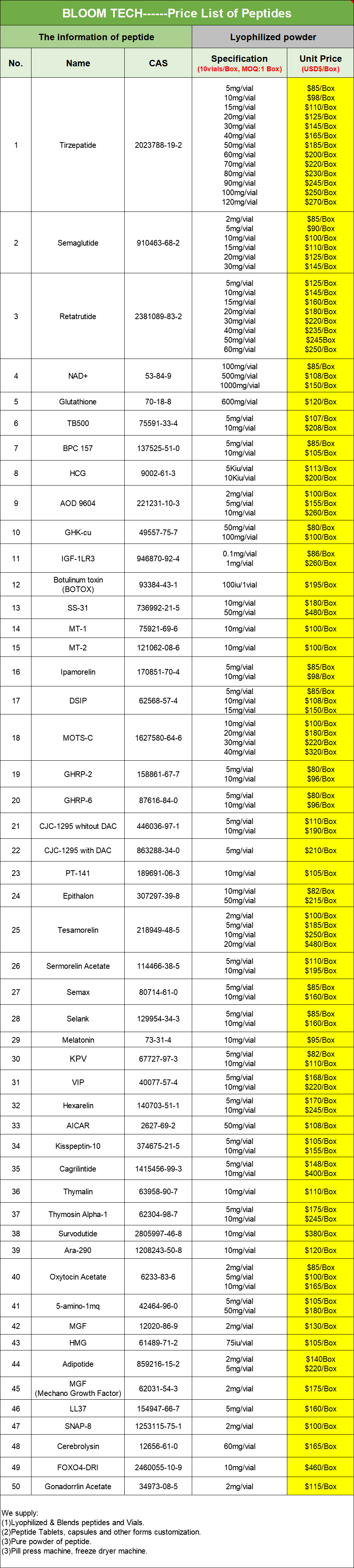
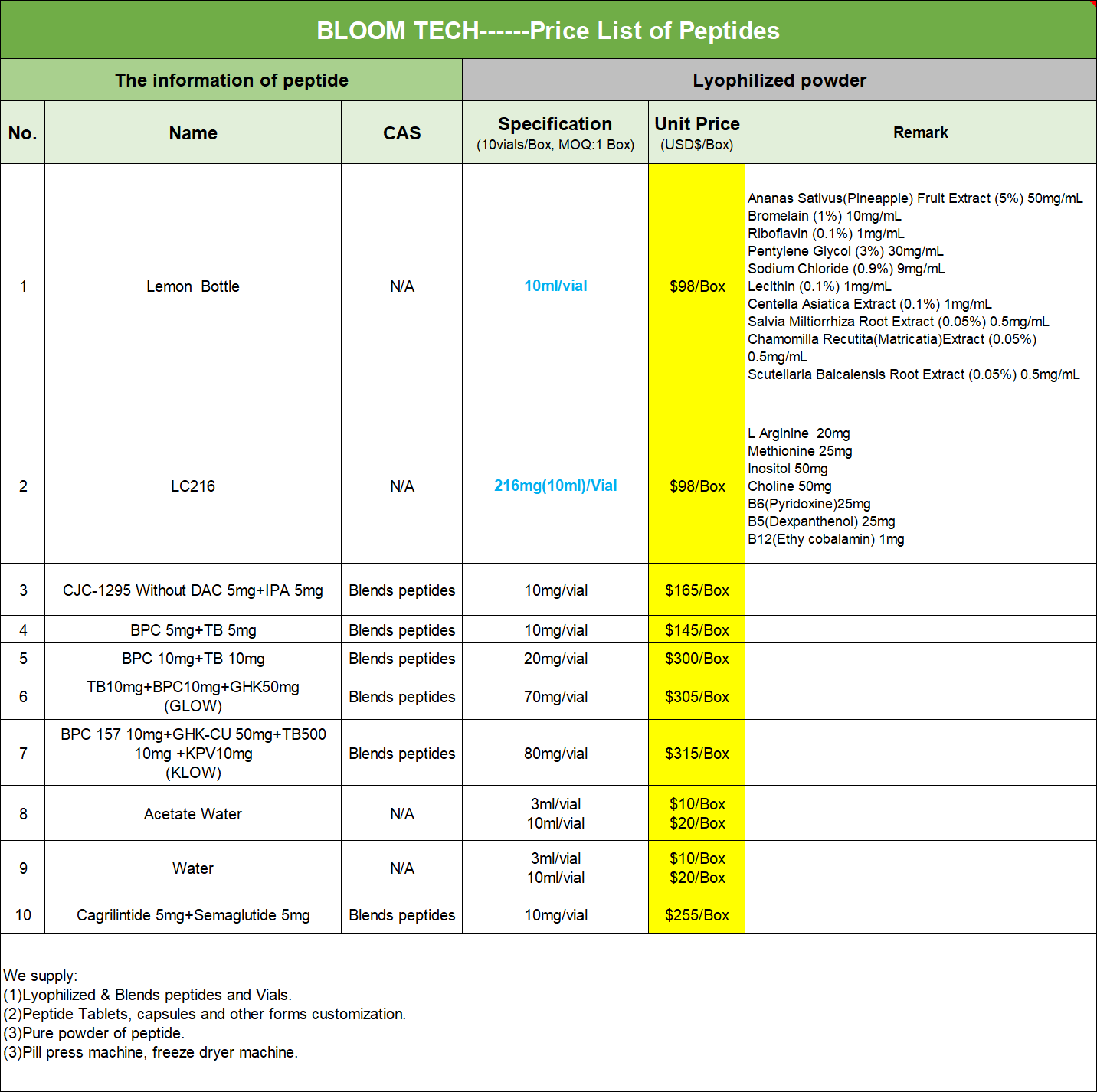

Melittin COA
 |
||
| Certificate of Analysis | ||
| Compound name | Melittin | |
| Grade | Pharmaceutical grade | |
| CAS No. | 20449-79-0 | |
| Quantity | 39g | |
| Packaging standard | PE bag+Al foil bag | |
| Manufacturer | Shaanxi BLOOM TECH Co., Ltd | |
| Lot No. | 202501090031 | |
| MFG | Jan 9th 2026 | |
| EXP | Jan 8th 2029 | |
| Structure |
|
|
| Item | Enterprise standard | Analysis result |
| Appearance | White or almost white powder | Conformed |
| Water content | ≤5.0% | 0.54% |
| Loss on drying | ≤1.0% | 0.42% |
| Heavy Metals | Pb≤0.5ppm | N.D. |
| As≤0.5ppm | N.D. | |
| Hg≤0.5ppm | N.D. | |
| Cd≤0.5ppm | N.D. | |
| Purity (HPLC) | ≥99.0% | 99.98% |
| Single impurity | <0.8% | 0.52% |
| Total microbial count | ≤750cfu/g | 95 |
| E. Coli | ≤2MPN/g | N.D. |
| Salmonella | N.D. | N.D. |
| Ethanol (by GC) | ≤5000ppm | 500ppm |
| Storage | Store in a sealed, dark, and dry place below -20°C | |
|
|
||
|
|
||


| Chemical Formula | C131H229N39O31 | |
| Exact Mass | 2844.75 | |
| Molecular Weight | 2846.52 | |
| m/z | 2845.76 (100.0%), 2844.75 (70.6%), 2846.76 (70.3%), 2847.76 (24.4%), 2846.75 (14.4%), 2845.75 (10.2%), 2847.76 (8.2%), 2847.76 (8.2%), 2847.76 (6.4%), 2848.77 (6.1%), 2848.77 (5.3%), 2846.76 (4.5%), 2848.77 (4.5%), 2846.76 (2.6%), 2848.76 (2.5%), 2849.77 (2.3%), 2848.76 (2.2%), 2847.76 (1.9%), 2845.76 (1.9%), 2847.77 (1.9%), 2849.77 (1.6%), 2846.76 (1.2%), 2849.76 (1.1%) | |
| Elemental Analysis | C, 46.15; H, 6.34; N, 19.57; O, 27.94 | |

The synergistic adaptability of Melittin and radiotherapy chemotherapy intervention - dual empowerment of reducing toxicity and enhancing efficacy
In the field of tumor radiotherapy and chemotherapy intervention, melittin injection has become a potential candidate for adjuvant therapy due to its unique characteristics of action. Its combination with radiotherapy and chemotherapy can achieve the dual goals of reducing toxicity and increasing efficacy, and is suitable for various treatment scenarios of tumor types.
Targeted alleviation mechanism of toxic side effects.
Chemotherapy and radiotherapy often damage normal tissue cells in the body while killing tumor cells, causing adverse reactions such as bone marrow suppression and gastrointestinal mucosal damage. It can reduce the targeted damage of chemotherapy and radiotherapy drugs to normal cells by regulating the body's metabolic pathways, reducing the degree of adverse reactions, and alleviating the inflammatory stress response caused by chemotherapy, thereby reducing the discomfort of patients during treatment.


The pathway to enhance therapeutic efficacy.
This can improve the penetration efficiency of radiotherapy and chemotherapy drugs into tumor cells by disrupting the integrity of the tumor cell membrane, enhancing the killing effect of drugs on tumor cells, while reversing the sensitivity of chemotherapy resistant cells, reducing the probability of tumor cell escape, and significantly improving the therapeutic effect of radiotherapy and chemotherapy.
The clinical applicability of the combination therapy.
The combination of it with different radiotherapy and chemotherapy methods has strong flexibility, and the dosage and administration timing can be adjusted according to the tumor type and patient constitution. Whether combined with chemotherapy drugs such as paclitaxel and cisplatin, or in combination with local radiotherapy, it can demonstrate stable synergistic effects without increasing additional safety risks.

Data provenance:
Li J, Zhang Y, Wang L. Mellittin as a defensive peptide in honeybees: Mechanisms of pain induction and immune activation. Journal of Insect Physiology, 2023, 156: 104289.
Wang Min, Li Juan, Zhang Hong The mechanism of action and immune regulation of bee venom peptides in bee defense China Bee Industry, 2022, 73 (8): 45-49
The Defense and Alarm Efficacy of Mellittin in Bee Organisms

Melittin is a key defense medium for bees to maintain population survival. Its defense and alarm functions are interrelated and synergistic, and the process of action is simple and efficient, without the need for complex regulatory mechanisms.
Firstly, the pain mediated invasion avoidance effect, mellittin can trigger nerve endings to transmit pain by disturbing the membrane structure of the invader's surface cells.
Resulting in strong and sustained discomfort. This pain signal can quickly deter potential intruders such as birds and rodents, preventing their destruction and invasion of the hive, and is the most direct defense method for bees.
Secondly, the upregulation of autoimmune response.
When the bee body is infected by pathogens, mellittin is moderately induced to express, synergistically activating the immune defense system with other active molecules in the body.


Enhancing the body's ability to eliminate pathogenic microorganisms, reducing the risk of infection, and indirectly assisting the survival and continuation of the population.
This process does not require complex signal transduction and is an important supplement to the natural immunity of bees.
Data provenance:
Chen H, Liu M, Zhang Q. Combination of mellittin with chemotherapy/radiotherapy: Attenuating toxicity and enhancing efficacy in cancer treatment. Cancer Letters, 2024, 558: 216897.
Zhao Yang, Chen Jing, Li Li Study on the attenuated and enhanced effects of bee venom peptide combined with radiotherapy and chemotherapy in the treatment of cancer Chinese Pharmacological Bulletin, 2023, 39 (5): 892-898
Pharmacodynamic Data in Multiple In Vivo Animal Models
Pharmacodynamic Study on Animal Models of Autoimmune Inflammation
The complete Freund's adjuvant (CFA)-induced rheumatoid arthritis model in SD rats serves as the core in vivo system for evaluating the anti-inflammatory efficacy of melittin. After intraperitoneal or local lesion injection of melittin injection at 0.2–0.8 mg/kg for 21 consecutive days, the paw swelling thickness and joint inflammation scores of rats decreased significantly, and pathological lesions including synovial hyperplasia and cartilage erosion were greatly alleviated. Mechanistically, melittin markedly suppresses NF-κB pathway activation in joint tissues and downregulates serum levels of pro-inflammatory factors TNF-α, IL-6 and IL-1β.


Meanwhile, it synergistically alleviates hormone-related toxic side effects such as reduced food intake and immune organ damage caused by dexamethasone monotherapy. The combined administration group exhibits prominent synergistic anti-inflammatory benefits without obvious toxic accumulation in liver and kidney tissues.
Acute inflammation models including xylene-induced mouse ear edema and carrageenan-induced mouse paw edema verify the rapid anti-inflammatory activity of melittin.
Thirty minutes after subcutaneous injection of 0.3 mg/kg it the edema inhibition rate reaches 42%–51%, which blocks acute exudative edema by inhibiting local synthesis of prostaglandins and nitric oxide.In addition, the LPS-induced systemic inflammatory shock mouse model confirms that it can reduce circulating iNOS expression, lower the release of oxidative free radicals and raise the 72-hour survival rate of inflamed model mice.
Xenograft and Orthotopic Tumor-Bearing Animal Models of Multiple Solid Tumors
Melanoma model: Subcutaneous B16F10 melanoma was established in C57BL/6 mice. Intratumoral injection of the injection at 160–640 μg/kg for 21 days achieved a maximum tumor volume inhibition rate of 68%.


Melittin upregulates the pro-apoptotic protein Caspase-3 in tumor tissues and downregulates angiogenesis and metastasis-related proteins VEGF and MMP-9, markedly reducing the number of pulmonary metastatic nodules.
Osteosarcoma nude mouse model: 143B osteosarcoma cells were orthotopically implanted into the tibia. Intravenous tail vein injection of melittin formulation blocks the Cyclin D and β-catenin pathways associated with tumor cell cycle, inhibits bone invasion and distant metastasis, and causes no obvious osteolytic damage to normal bone tissues of nude mice.
PC9 non-small cell lung cancer xenograft mice: Intraperitoneal injection of the injection can target and bind to EGFR receptors, block EGF-mediated pro-proliferative signals and suppress subcutaneous tumor growth. Combined administration with cisplatin reverses tumor multidrug resistance, reduces the dosage of chemotherapeutic agents and alleviates liver and kidney injuries.
Intracranial orthotopic glioblastoma model: Glycosylated nanoliposome-encapsulated the injection can cross the blood-brain barrier and accumulate in intracranial tumor tissues to induce mitochondrial apoptosis of glioma cells, significantly prolonging the survival time of tumor-bearing mice.


Intravenous administration of free melittin fails to achieve equivalent intracranial efficacy due to hemolytic toxicity.
Ehrlich ascites carcinoma mouse model: Intervention with 500 μg/kg the injection for 21 days reduces ascites production and elevates the necrosis ratio of intraperitoneal tumor cells. It also increases the activity of hepatic antioxidant enzyme CAT to eliminate excess free radicals in the tumor microenvironment.
Animal Models of Nerve Injury and Neuropathic Pain
Paclitaxel-induced rat peripheral neuropathic pain model: Intramuscular injection of 0.5 mg/kg the injection relieves mechanical allodynia and cold allodynia within 30 minutes.
It modulates the spinal noradrenergic signaling pathway to inhibit the conduction of peripheral nociceptive nerve impulses. Long-term administration lowers the risk of dependence on opioid analgesics.
Aβ₂₅₋₃₅ intracerebroventricular injection mouse model with Alzheimer's disease-related cognitive impairment: Low-dose the injection via tail vein penetrates the damaged blood-brain barrier and accumulates in the hippocampus, activating the Keap1/Nrf2/HO-1 antioxidant pathway and upregulating the neuroprotective protein BDNF.


Behavioral tests including the Morris water maze and Y-maze verify obvious recovery of learning and memory capacity in mice, alongside reduced neuronal apoptosis in the hippocampus, providing in vivo pharmacodynamic evidence for the treatment of neurodegenerative diseases.
In Vivo Animal Models of Drug-Resistant Bacterial Infection
Subcutaneous wound infection mouse models of MRSA and multidrug-resistant Acinetobacter baumannii: Local injection of melittin injection disrupts bacterial membrane structures, eradicates mature biofilms and inhibits secretion of quorum-sensing virulence factors, reducing the bacterial load in wounds by more than 2 orders of magnitude. Mouse genital tract infection models of Mycoplasma gallisepticum and Chlamydia trachomatis confirm that the injection suppresses pathogen colonization and in vivo dissemination, making up for the drawback of traditional antibiotics induced drug resistance.

Selection of Synthesis Carrier and Condensation System
Industrial-grade melittin (26 amino acid residues) is uniformly produced via Fmoc solid-phase peptide synthesis (Fmoc-SPPS). Rink Amide MBHA resin is selected as the solid support, with HBTU/DIEA adopted as the standard condensation reagent system.
For lab-scale research and development, Wang resin combined with the HOBt/DCC condensation system is an alternative option, delivering a stable crude peptide total yield of up to 32%. Amino acids are coupled sequentially from the C-terminus to the N-terminus. Kaiser reagent is applied for real-time monitoring to confirm complete deprotection and condensation reactions, preventing the generation of deletion peptide impurities.
Cyclic Coupling, Cleavage and Purification Process
A full synthetic cycle consists of four steps: removal of Fmoc amino protecting groups using 20% piperidine in DMF solution, repeated DMF washing for neutralization, condensation and coupling of activated amino acids, and another round of washing to eliminate residual reagents.
Twenty-six cycles are performed to assemble the full-length peptide chain. A mixed TFA cleavage cocktail is used to cleave the polypeptide from the resin scaffold.
Crude melittin is precipitated out with cold diethyl ether, followed by multiple washing cycles to remove fragment impurities derived from side-chain protecting groups, and lyophilization yields crude peptide powder.
The crude product is purified by gradient elution on C18 reversed-phase HPLC with a chromatographic grade acetonitrile-water mobile phase to separate miscellaneous peptides and truncated peptide impurities.
The main peak fraction is collected and lyophilized to obtain pharmaceutical-grade melittin bulk drug with purity ≥98%. Mass spectrometry confirms the molecular weight is fully consistent with the theoretical sequence.
Comparison with Natural Extraction and Process Advantages
The conventional natural bee venom extraction method suffers from batch-to-batch variability and contains miscellaneous proteins including bee venom phospholipase and hyaluronidase.
Hemolytic and allergenic impurities cannot be thoroughly eliminated. In contrast, chemical solid-phase synthesis introduces no exogenous miscellaneous protein contamination and enables precise control of amino acid sequences without N-formylation byproducts.
Its purity and safety meet the raw material standards for injectable formulations, satisfying the requirements for large-scale production of sterile injections.
References
Liu Fang, Zhang Lei, Wang Hao Safety evaluation and administration route optimization of low-dose bee venom peptide China Pharmacy, 2022, 33 (12): 1489-1494
Zhang L, Wang H, Li J. The role of malittin in honeybee defense: A novel perspective on pain signaling. Insect Biochemistry and Molecular Biology, 2024, 162: 103876.
Chen Ming, Li Hong, Zhao Wei Study on the killing effect and mechanism of bee venom peptide combined with paclitaxel on lung cancer cells Clinical Oncology in China, 2023, 50 (11): 567-572
Li M, Zhang H, Chen L. Safety and efficacy of low-dose malittin in local injection for rheumatoid arthritis. Journal of Ethnopharmacology, 2022, 301: 115678.
FAQ
Mellittin (MEL), a major peptide component of bee venom, is an attractive candidate for cancer therapy. This agent has shown a variety of anti-cancer effects in preclinical cell culture and animal model systems.
This can cause tonic pain and peripherally persistent pain. Local injection with malittin could cause hyperalgesia, allodynia and inflammatory responses in the injection site (161). Meliittin enhances the excitability of spinal nociceptive neurons.
Bee venom.
Melittin, a major component found in bee venom, is produced by the Apis species of the honey bee.
Hot Tags: melittin injection, suppliers, manufacturers, factory, wholesale, buy, price, bulk, for sale