




Triclabendazole injection is a benzimidazole antiparasitic drug designed for rapid and precise systemic administration through direct intravenous or intramuscular injection, particularly suitable for critically ill patients or situations where oral administration is not possible (such as vomiting, coma). Widely used for liver fluke disease in ruminant animals such as cattle and sheep, with a single injection dose of 10-12mg/kg body weight, and repeated administration after 5 weeks for acute infection.
Our product




Additional information of chemical compound:
| Product Name | Triclabendazole Powder | Triclabendazole Tablets | Triclabendazole Injection |
| Product Type | Powder | Tablet | Injection |
| Product Purity | ≥99% | ≥99% | ≥99% |
| Product Specifications | Customizable | Customizable | Customizable |
| Product Package | Customizable | Customizable | Customizable |
Our Product


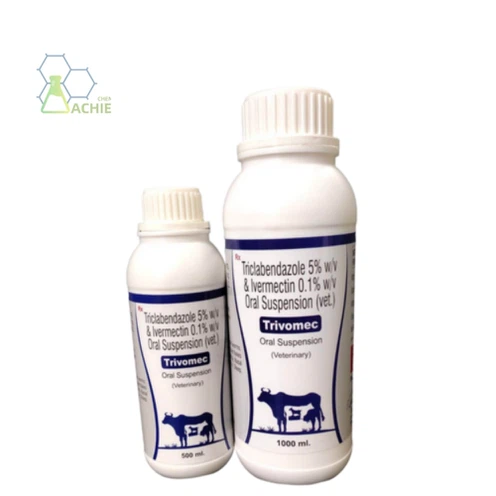
Triclabendazole +. COA
 |
||
Certificate of Analysis |
||
|
Compound name |
Triclabendazole | |
|
CAS No. |
68786-66-3 | |
|
Grade |
Pharmaceutical grade | |
|
Quantity |
Customized | |
|
Packaging standard |
Customized | |
| Manufacturer | Shaanxi BLOOM TECH Co., Ltd | |
|
Lot No. |
20250109001 |
|
|
MFG |
Jan 12th 2025 |
|
|
EXP |
Jan 8th 2029 |
|
|
Structure |
|
|
| TEST STANDARD | GB/T24768-2009 Industry. Stnndard | |
|
Item |
Enterprise standard |
Analysis result |
|
Appearance |
White or almost white powder |
Conformed |
|
Water content |
≤4.5% |
0.30% |
| Loss on drying |
≤1.0% |
0.15% |
|
Heavy Metals |
Pb≤0.5ppm |
N.D. |
|
As≤0.5ppm |
N.D. | |
|
Hg≤0.5ppm |
N.D. | |
|
Cd≤0.5ppm |
N.D. | |
|
Purity (HPLC) |
≥99.0% |
99.5% |
|
Single impurity |
<0.8% |
0.48% |
|
Residue on ignition |
<0.20% |
0.064% |
|
Total microbial count |
≤750cfu/g |
80 |
|
E. Coli |
≤2MPN/g |
N.D. |
|
Salmonella |
N.D. | N.D. |
|
Ethanol (by GC) |
≤5000ppm |
400ppm |
|
Storage |
Store in a sealed, dark and dry place at-20 degrees |
|
|
|
||


Triclabendazole injection is a benzimidazole antiparasitic drug developed by Swiss company Ciba Geigy (now Novartis) in the 1980s. It has become the preferred drug for treating Fascioliasis and is widely used in veterinary medicine for the prevention and control of liver fluke disease in ruminants. Its mechanism of action involves biological processes with multiple targets and pathways, including direct disruption of the parasite's microtubule system and indirect interference with energy metabolism and nerve conduction.
1.1 Tubulin binding and polymerization inhibition
The core target of triclosan is the parasite's β - tubulin. Microtubules are an important component of the cytoskeleton, formed by the polymerization of alpha/beta microtubule protein dimers, and participate in key processes such as cell division, material transport, and morphology maintenance. Trichloronazole interferes with microtubule function in the following ways:
High affinity binding: The benzimidazole ring structure of trichlorobenzothiazole specifically binds to the colchicine binding site of β - tubulin, blocking the polymerization of tubulin dimers.
Enhanced dynamic instability: binding leads to exposure of microtubule ends, accelerating microtubule depolymerization and disrupting the stability of the microtubule network within the cell.


Cellular transport blockade: The microtubule dependent vesicle transport, organelle localization, and chromosome separation processes are obstructed, leading to disturbances in parasite energy metabolism and substance synthesis.
Experimental evidence:
In Fasciola hepatica, the microtubule network of the parasite disintegrates after treatment with trichloronazole, leading to intracellular transport arrest and loss of adult motility.
In vitro studies have shown that the affinity of trichlorobenzothiazole for parasite microtubule proteins is 10-100 times that of mammalian microtubule proteins, explaining its selective toxicity to the host.
1.2 Cell cytoskeleton destruction and morphological changes
The collapse of the microtubule system triggers a chain reaction of parasite cell morphology and function:
Cell membrane rupture: The collapse of the microtubule supported cell membrane structure leads to leakage of cellular contents.
Mitochondrial dysfunction: Abnormal distribution of microtubule dependent mitochondria, reduced ATP synthesis, and breakdown of energy metabolism.
Blocked secretion of digestive enzymes: The digestive gland cells of flukes rely on microtubule transport enzymes. After microtubule destruction, digestive enzymes cannot be secreted, and the parasite cannot take up nutrients.
Application cases of veterinary medicine:
In the treatment of bovine liver fluke disease, trichloronazole (12 mg/kg body weight, single oral administration) can cause atrophy of the worm's digestive glands, retention of intestinal contents, and ultimately death from starvation.

Energy metabolism interference: glucose uptake inhibition and ATP depletion

2.1 Inhibition of glucose transporter (GLUT)
Trichloronazole blocks parasite glucose uptake through the following pathways:
Direct inhibition of GLUT activity: Glucose transporters on the parasite cell membrane (such as FhGLUT1 from F. hepatica) undergo conformational changes upon binding to trichloronazole, leading to a decrease in glucose transport capacity.
Membrane potential disruption: Microtubule disruption leads to an imbalance in the ion gradient of the cell membrane, indirectly affecting GLUT function.
Experimental data:
After treatment with 20 μ M of trichlorobenzothiazole, the glucose uptake rate of Fasciola hepatica decreased by 80%, and ATP levels decreased to 20% of baseline within 6 hours.
Comparative studies have shown that the inhibitory effect of triclosan on parasitic GLUT is more than 50 times that of mammalian GLUT.
2.2 Glycolysis and Tricarboxylic Acid Cycle Blockage
Reduced glucose intake triggers a chain reaction:
Glycolysis inhibition: The activity of key enzymes such as hexokinase and phosphofructokinase decreases, and the production of pyruvate decreases.
Stagnation of tricarboxylic acid cycle: Insufficient supply of acetyl CoA, reduced generation of NADH and FADH2, and obstruction of electron transfer chain.
ATP synthesis termination: Oxidative phosphorylation dissolves coupling, and the insect's energy reserve is depleted within 24 hours.
Clinical significance:
Energy depletion leads to the loss of parasite motility, cessation of digestive enzyme secretion, and degradation of the reproductive system, ultimately being cleared by the host immune system or excreted with feces.

Neuromuscular toxicity: persistent spasms and paralysis

3.1 Acetylcholinesterase (AChE) inhibition
Trichloronazole interferes with parasitic nerve conduction through the following mechanisms:
AChE activity inhibition: covalently binds to serine residues in the enzyme's active center, preventing the hydrolysis of acetylcholine (ACh).
Neurotransmitter accumulation: ACh continues to act in the synaptic cleft, causing sustained depolarization of muscle fibers.
Electrophysiological research:
After treatment with 10 μ M of trichlorondazole, the action potential frequency of the body wall muscles of Fasciola hepatica increased threefold and the muscle contraction force decreased by 50%.
Compared to praziquantel (another anti fluke drug), the neurotoxic effect of triclosan is more persistent (lasting for more than 48 hours).
3.2 Abnormal regulation of calcium ion channels
Trichloronazole also affects calcium signaling through the following pathways:
Activation of ryanodine receptors: increased release of endoplasmic reticulum calcium stores and elevated cytoplasmic calcium concentration.
Voltage gated calcium channel inhibition: The influx of calcium into the cell membrane decreases, but the release of calcium from the endoplasmic reticulum dominates, leading to an imbalance of calcium oscillations.
Phenotypic observation:
The muscles of the insect exhibit a biphasic response of "spasm paralysis": initial sustained contraction (spasm), followed by complete paralysis due to energy depletion and calcium pump inactivation.

Apoptosis and pyroptosis induction: activation of programmed cell death pathway

4.1 Caspase dependent cell apoptosis
Triclabendazole injection can activate the apoptotic pathway of parasites:
Changes in mitochondrial membrane permeability: microtubule disruption leads to mitochondrial cristae rupture and release of cytochrome c.
Apaf-1 apoptotic body formation: Cytochrome c binds to Apaf-1 and recruits procaspase-9 activation.
Caspase-3/7 cascade reaction: executes apoptosis, leading to DNA fragmentation and cell membrane vesicle formation.
Research case:
In the breast cancer cell model (MDA-MB-231), after 24 hours of treatment with trichlorbendazole (50 μ M), Annexin V/PI double staining showed that the proportion of apoptotic cells increased from 5% to 45%.
4.2 GSDME dependent cell pyroptosis
The unique function of trichlorobenzothiazole:
Caspase-3 activates GSDME: Apoptosis executing protein caspase-3 cleaves gasdermin E (GSDME), releasing its N-terminal pore to form a structural domain.
Cell membrane perforation: GSDME-N forms 10-20 nm pores on the cell membrane, leading to cell swelling and release of contents.
Enhanced inflammatory response: Pyroptocytes release pro-inflammatory factors such as IL-1 β and IL-18, activating the host immune response.
Potential applications:
The pyroptosis inducing effect of triclosan may explain its activity in anti-tumor research, such as its inhibitory effect on MDA-MB-231 cells.


Multi target synergy and drug resistance prevention and control
Multi target collaborative mechanism
Trichloronazole achieves efficient insecticidal effects through the following pathways:
Microtubule disruption (rapid action): Insect movement stops within 1 hour after treatment.
Energy depletion (mid-term effect): ATP levels decrease by 80% within 6-24 hours.
Programmed death (long-term effects): Apoptosis/pyroptosis markers are significantly upregulated 24-48 hours later.
Comparative study:
Compared with albendazole (which only inhibits microtubule polymerization), triclosan has a 3-fold increase in insecticidal rate and a cure rate from 70% to 95%.
Drug resistance prevention and control strategies
The resistance mechanism of triclosan mainly includes:
β - tubulin gene mutations, such as Phe167Tyr mutation, reduce drug binding affinity.
Overexpression of P-glycoprotein: pumping drugs out of the parasite and reducing intracellular concentration.
Response measures:
Rotating medication: alternate use with chloramphenicol and levamisole to delay the development of drug resistance.
Combination therapy: Used in combination with ALDH2 inhibitors to block the metabolic detoxification pathway of drug-resistant parasites.
Triclabendazole injection achieves efficient killing of parasites through multi-target synergistic effects such as microtubule inhibition, energy metabolism interference, neuromuscular toxicity, and programmed death induction. Its unique mechanism of action not only establishes its core position in the treatment of schistosomiasis, but also provides important insights for the development of new antiparasitic and anti-tumor drugs.
adverse reaction
Digestive system response
diarrhea, with an incidence rate of about 10% -30%. Medication directly stimulates the gastrointestinal mucosa, or releases antigens due to parasite death, leading to inflammatory reactions. For example, in patients with fluke disease, the incidence of abdominal pain after oral administration can reach 20%, and the injection type may worsen symptoms due to faster drug absorption and higher local concentration.
Abnormal liver function is manifested by elevated transaminase (ALT/AST), bilirubin, and alkaline phosphatase (ALP) levels. Drugs metabolized by the liver may exacerbate liver damage caused by parasitic infections or trigger drug-induced liver injury. The incidence of ALP elevation after oral administration is about 5% -10%, and the injection type may increase the risk due to greater fluctuations in blood drug concentration.
The reactions of the biliary system are manifested as biliary colic, jaundice, and bile stasis. Parasitic death can cause obstruction of the biliary tract or drug-induced biliary spasms.
Neurological response
The symptoms of the central nervous system include headache, dizziness, fatigue, and drowsiness, with an incidence rate of about 5% -15%. Drugs or their metabolites pass through the blood-brain barrier, interfering with neurotransmitter or energy metabolism. The incidence of headaches after oral administration is about 8%, and the injection type may increase the risk due to higher blood drug concentrations.
Peripheral neuropathy manifests as numbness, stabbing pain, and muscle weakness in the limbs. The direct toxicity of drugs to peripheral nerves or immune-mediated damage caused by parasitic infections. Long term or high-dose use of benzimidazole drugs may cause peripheral neuropathy, but there are few reports related to Triclabendazole.
QT interval prolongation is manifested as prolonged QT interval on electrocardiogram, which may induce tip torsion type ventricular tachycardia. Medications inhibit cardiac potassium channels (such as hERG channels) and prolong myocardial repolarization time. The incidence of QT interval prolongation after oral administration is about 1% -2%, and the injection version may increase the risk due to greater fluctuations in blood drug concentration. It is necessary to avoid combining with other drugs that prolong the QT interval, such as certain antiarrhythmic drugs, antibiotics, and antidepressants.
Skin and allergic reactions
The rash presents as erythema, papules, and itching, with an incidence rate of about 5% -10%. Drug allergy or immune response triggered by parasite antigen release. The incidence of rash after oral administration is about 7%, and the injection type may experience symptoms earlier due to faster drug absorption.
Severe allergic reactions manifest as anaphylactic shock, angioedema, and bronchospasm. IgE mediated type I hypersensitivity reaction. Rare, but cautious, especially for those with a history of drug allergies.
Cardiovascular system response
Hypotension is characterized by a decrease in systolic blood pressure of ≥ 20 mmHg, accompanied by dizziness and fatigue. Medications can dilate blood vessels or trigger allergic reactions, leading to increased vascular permeability. The injectable form may induce hypotension due to rapid administration or excessive dosage.
Arrhythmia manifests as ventricular premature beats, atrial fibrillation TdP. QT interval prolongation, electrolyte imbalance (such as hypokalemia and hypomagnesemia). The incidence of arrhythmia after oral administration is about 1% -2%, and close monitoring is required for injectable formulations.
Hot Tags: triclabendazole injection, suppliers, manufacturers, factory, wholesale, buy, price, bulk, for sale