





Quinidine is a type of alkaloid extracted from the bark of the cinchona tree and belongs to the class Ia anti-arrhythmic drugs. It has the effects of sodium channel blockade and potassium channel prolongation. It is mainly used to treat atrial and ventricular arrhythmias, such as atrial fibrillation, atrial flutter, and ventricular tachycardia. It restores sinus rhythm by prolonging the action potential duration and effective refractory period of cardiac muscle cells. In addition, quinidine also has anti-malarial properties, but due to its high toxicity, it has been replaced by other drugs.
Its pharmacological mechanism includes inhibiting sodium ion influx (reducing conduction speed) and blocking potassium channels (lengthening repolarization time), while also showing anticholinergic effects and alpha receptor blocking actions, which may lead to a decrease in blood pressure. Common side effects include gastrointestinal reactions (diarrhea, nausea), cinchonism (tinnitus, headache), arrhythmias (such as torsades de pointes ventricular tachycardia), and allergic reactions. Due to interactions with various drugs (such as digoxin, warfarin), strict monitoring of blood drug concentrations and electrocardiograms is required. Due to potential serious side effects, clinical use has decreased and is only used cautiously in specific circumstances.

|
|
|

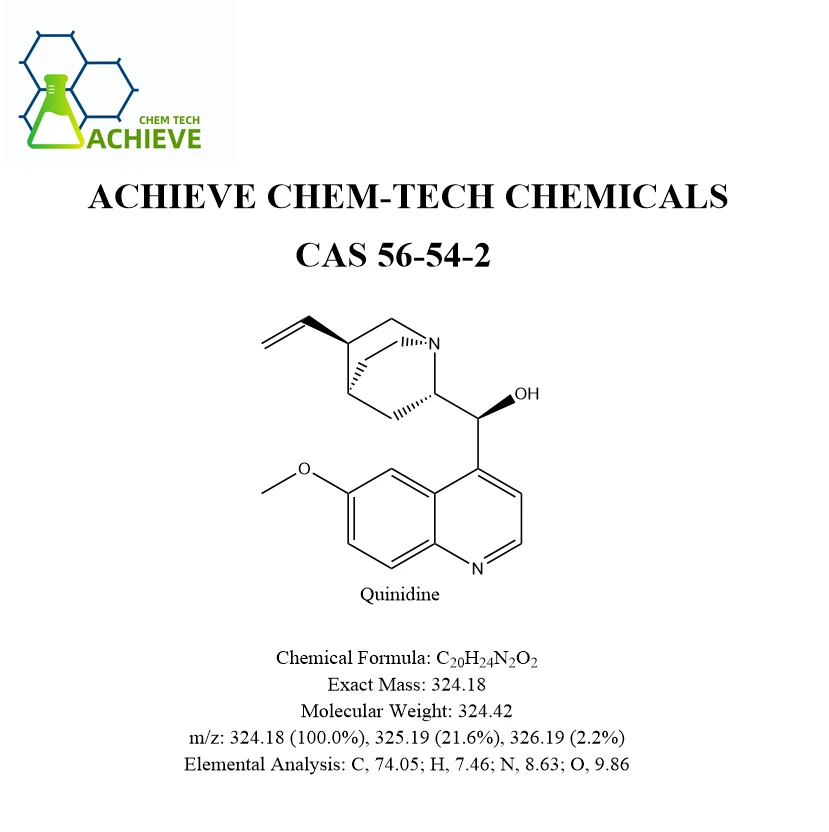
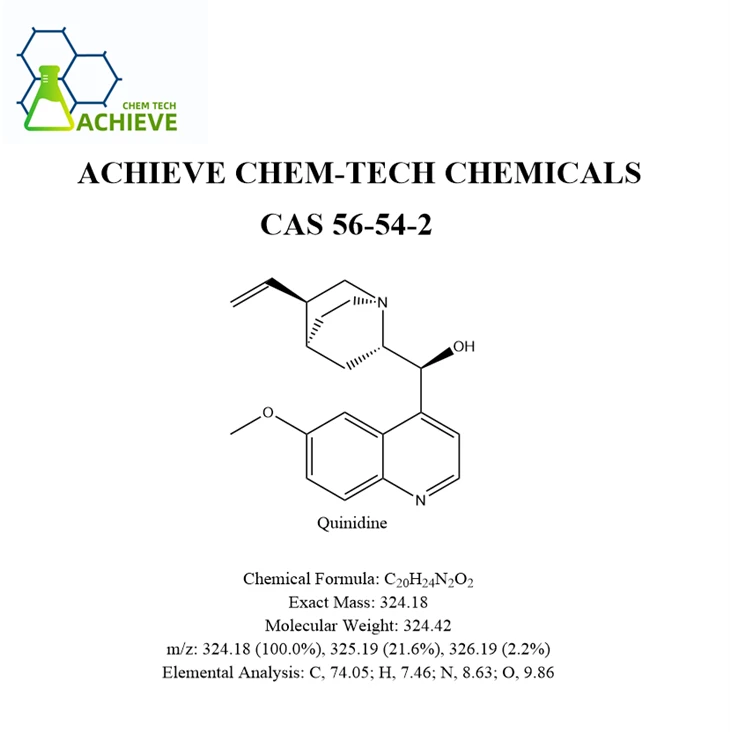
| Chemical Formula | C20H24N2O2 |
| Exact Mass | 324.18 |
| Molecular Weight | 324.42 |
| m/z | 324.18 (100.0%), 325.19 (21.6%), 326.19 (2.2%) |
| Elemental Analysis | C, 74.05; H, 7.46; N, 8.63; O, 9.86 |


Anti-arrhythmic Agent
Quinidine is primarily used as a membrane-inhibitory anti-arrhythmic drug. It acts directly on the myocardial cell membrane, significantly prolonging the myocardial refractory period, reducing autonomy, conduction, and myocardial contractility.
It is particularly effective against non-sinus ectopic rhythms. For sinus node cells, it may have no effect or prolong the action potential duration, reduce conduction velocity, prolong the effective refractory period, and decrease excitability.
The prolongation of the atrial refractory period is more significant than that of the ventricle, while the atrioventricular junctional refractory period is shortened.
Orally administered, it is suitable for the treatment of premature atrial contractions, atrial fibrillation, paroxysmal supraventricular tachycardia, pre-excitation syndrome with supraventricular arrhythmias, ventricular premature beats, ventricular tachycardia and fibrillation, or the maintenance therapy after electrical cardioversion of atrial flutter.
Clinical application
The antiarrhythmic pharmacological effects are mainly to prolong the refractory period of myocardium, reduce myocardial stress, autonomic and conductivity, and is used to treat atrial or ventricular tachycardia, and to reverse atrial flutter and atrial fibrillation. and prevent its recurrence. When using it, due to different causes and individual differences, the therapeutic dosage and tolerance are also inconsistent in different cases. People with hyperthyroidism, chronic atrial fibrillation, and significantly enlarged heart have a higher tolerance. Long-term heart failure, bundle branch block, and coronary heart disease have low tolerance, and sometimes a normal therapeutic dose can cause poisoning. Although it poisoning is related to the dose, in individual cases, a small amount can cause arrhythmia. It is currently believed that its inhibitory effect on conduction can induce reentrant activation of diseased myocardium. In order to reduce the poisoning, changes in heart rate, rhythm, blood pressure and electrocardiogram must be strictly observed during medication.

Usage & Dosage
Oral
0.2g each time on the first day, once every 2 hours, for 5 times in a row. If it is ineffective and there is no obvious adverse reaction, increase to 0.3g each time on the second day, 0.4g each time on the third day, once every 2 hours, for 5 times in a row. The total daily amount should generally not exceed 2g. After the normal heart rhythm is restored, change to a maintenance dose of 0.2-0.4g per day. If it is ineffective or has adverse reactions after taking it for 3-4 days, the drug should be discontinued. Children are first given a test dose of 2mg/kg. If there is no adverse reaction, treatment will begin after 1-2 hours. On the first day, 6mg/kg each time, once every 2 hours, for 4-5 times; if the effect is not obvious and there are no symptoms of poisoning, the original dose can be continued on the second day or increased by 20% of the original dose. If necessary, the original dose can be maintained on the third day.
Intravenous injection or intravenous drip
0.25g each time, diluted to 50ml with 5% glucose injection, and injected slowly. For children, the first test dose is 2 mg/kg, diluted with 100 ml of 5% glucose injection and dripped intravenously. Observe for 1 hour. If there is no allergic reaction, then give 6 mg/kg each time, once every 3 hours. The total daily dose should not exceed 30 mg/kg.
Drug interactions
Has an additive effect when used in combination with other antiarrhythmic drugs.
When used in combination with anticoagulants, the two drugs may affect each other, and attention should be paid to adjusting the dosage of the two drugs.
Phenobarbital and phenytoin sodium can accelerate the metabolism of this product in the liver and reduce the blood concentration.
When used in combination with digoxin, the blood concentration of digoxin can be increased.
When used in combination with anticholinergic drugs, the efficacy of anticholinergic drugs can be increased; when used in combination with cholinergic drugs, the efficacy of cholinergic drugs can be weakened; when used in combination with neuromuscular blockers, especially tubocurarine and succinylcholine, the respiratory depressant effect can be enhanced.
When used in combination with potassium preparations, the efficacy of this product can be enhanced, while hypokalemia can reduce the efficacy of this product.
When used in combination with beta-blockers, the inhibitory effect on the sinoatrial node and atrioventricular node can be aggravated.
When used in combination with antihypertensive drugs, the antihypertensive and vasodilation effects can be enhanced.
When used in combination with rifampicin, the blood concentration of this product can be reduced.
Urine alkalinizing agents such as acetazolamide, antacids or bicarbonates can increase the reabsorption by the renal tubules, resulting in an increase in the blood concentration of this product, thus causing a toxic reaction.

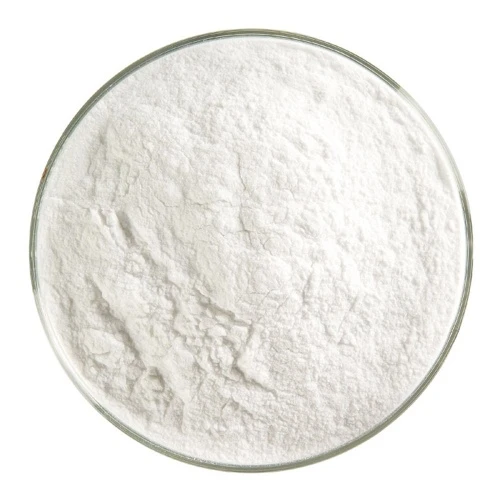
Quinidine is an antiarrhythmic drug. Its sulfate is commonly used, but hydrochloride and gluconate are also used. Which sulfate is a white crystalline powder, odorless, extremely bitter, with a melting point of 175-176°C, easily soluble in water, and slightly soluble in ethanol.
It is an alkaloid extracted from the bark of Cinchonaledgeriana (Moens), a plant of the Rubiaceae family. It has a direct effect on cell membranes, mainly inhibiting the transmembrane movement of sodium ions, and has a direct inhibitory effect on the autonomy, conductivity, irritability and contractility of the heart, and also has an anticholinergic effect on the heart. It is suitable for the cardioversion and prevention of atrial fibrillation, atrial flutter, supraventricular and ventricular tachycardia, and the treatment and prevention of malignant premature beats.


It is the dextrorotatory form of quinine. The two have similar pharmacological properties, but it has a 5-10 times stronger effect on the heart than quinine. It binds to the lipoprotein of the sodium channel on the myocardial cell membrane, narrows the channel gate, and prevents the influx of Na+, resulting in a decrease in the depolarization rate of phase 0 and a slowing of conduction. The slowing of the depolarization rate of phase 4 reduces myocardial automaticity and inhibits ectopic rhythm points. It slows down the outflow of K+ in phase 3, thereby prolonging the refractory period. In addition, it also inhibits myocardial contractility and has anti-parasympathetic and anti-sympathetic effects. It blocks α receptors, causing vasodilation, especially when injected intravenously, which can cause a sharp drop in blood pressure, so it cannot be administered intravenously.
Adverse reactions
Quinidine is an Class IA antiarrhythmic drug that exerts antiarrhythmic effects by inhibiting sodium ion channels in myocardial cells, prolonging action potential duration and effective refractory period. However, its treatment window is narrow, and there are many and severe adverse reactions, with about 30% of patients needing to discontinue medication due to adverse reactions. The following is a detailed explanation of its adverse reactions:
Cardiovascular system adverse reactions
Arrhythmia: Quinidine can induce or exacerbate pre-existing arrhythmias. Common types include ventricular premature beats, ventricular tachycardia, ventricular fibrillation, etc. The incidence is higher in patients with pre-existing heart disease (such as heart failure, myocardial ischemia) or in combination with drugs such as digoxin. At therapeutic concentrations, quinidine can slow down intraventricular conduction, leading to widening of the QRS complex; At high concentrations, it can cause atrioventricular block, sinoatrial block, and even cardiac arrest.
Hypotension: Quinidine can dilate blood vessels and cause hypotension, especially when administered intravenously or at high doses. Severe hypotension may be accompanied by vasculitis, and close monitoring of blood pressure changes is necessary.
Heart failure: Quinidine can inhibit myocardial contractility and worsen symptoms of heart failure, especially in patients with pre-existing heart disease.
Gastrointestinal adverse reactions
Quinidine has a direct stimulating effect on the gastrointestinal mucosa, and common adverse reactions include:
Nausea and vomiting
The incidence is relatively high, which may be related to the stimulation of gastrointestinal mucosa or central nervous system response by drugs.
Abdominal pain and diarrhea
Quinidine can increase gastrointestinal motility, leading to abdominal pain, diarrhea, and in severe cases, painful spasms.
Decreased appetite
Medications affect gastrointestinal function, leading to decreased appetite in patients.
Lobular hepatitis and esophagitis
Long term or excessive use of quinidine may cause liver damage and esophagitis.
Central nervous system adverse reactions
Quinidine can cross the blood-brain barrier and trigger central nervous system responses, collectively known as Cinchonism, including:
Hearing impairment
Tinnitus and hearing loss: Quinidine has a toxic effect on the outer hair cells of the cochlea, and reversible hearing loss is common in high-dose or long-term treatment. Prolonged use may lead to irreversible hearing loss.
Dizziness and balance disorders: Quinidine does not affect vestibular structure, but dizziness and balance disorders may still occur, which may be related to drug accumulation in the inner ear lymphatic fluid.
Visual impairment
Blurred vision, photophobia, diplopia, color vision impairment, dilated pupils, dark spots, and night blindness.
Other central nervous system symptoms
Headache, redness, palpitations, convulsions, tremors, excitement, coma, anxiety, etc. Long term use of quinidine may lead to dementia, and symptoms may improve after discontinuation of the medication.
Frequently Asked Questions
Is quinidine a sodium channel blocker?
+
-
Quinidine reduces Vmax presumably by blocking cardiac sodium channels. In therapeutic concentrations, quinidine causes a small amount of tonic block. Upon depolarization of the cardiac cell membrane, a use-dependent block develops.
How does quinidine affect the heart?
+
-
Quinidine is a Class 1a antiarrhythmic. It works in the heart to slow down the electrical impulses that make the heart muscle contract and pump blood. During an arrhythmia, heart muscle contractions are irregular. Slowing down the electrical impulses can regulate the heartbeat and stop the arrhythmia.
What should I avoid while taking quinidine?
+
-
Therefore, based on currently available information, people taking quinidine should avoid drinking grapefruit juice or eating grapefruit. Pomegranate juice has been shown to inhibit the same enzyme that is inhibited by grapefruit juice. The degree of inhibition is about the same for each of these juices.
Hot Tags: quinidine cas 56-54-2, suppliers, manufacturers, factory, wholesale, buy, price, bulk, for sale, daidzein powder, L Sulforaphane CAS 142825 10 3, Pure Tetracaine, articaine hydrochloride powder, Octreotide Acetate Powder, DL Sulforaphane CAS 4478 93 7