




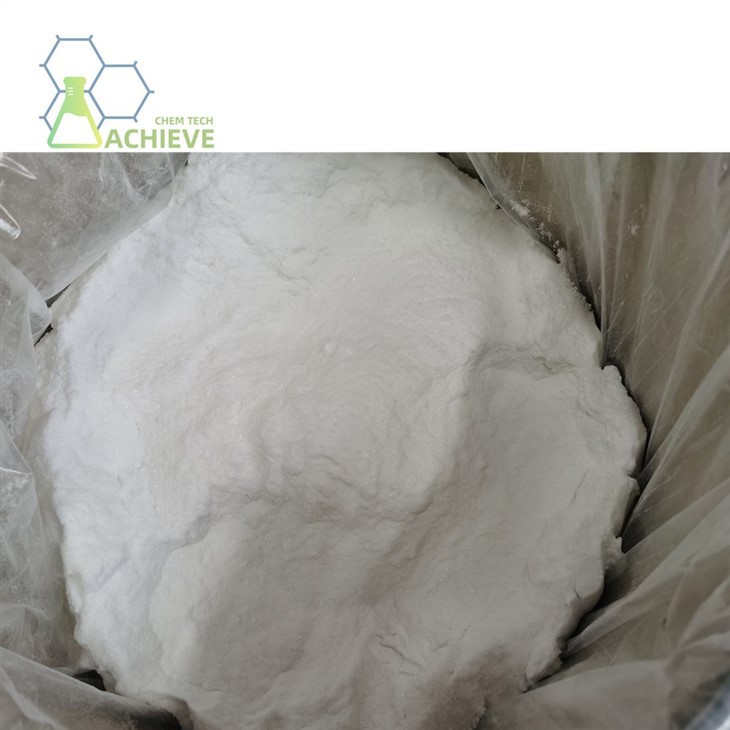


Shaanxi BLOOM Tech Co., Ltd. is one of the most experienced manufacturers and suppliers of 2,5-dihydroxyterephthalic acid cas 610-92-4 in China. Welcome to wholesale bulk high quality 2,5-dihydroxyterephthalic acid cas 610-92-4 for sale here from our factory. Good service and reasonable price are available.
2,5-Dihydroxyterephthalic acid, also known as AI3-17877 or 1,4-Benedictic acid, 2,5-dihydroxyl -, 2,5-dihydroxybenzene-1,4-dicarboxylic acid, DHTA, etc. are important organic compounds that appear as white solids and are soluble in hot formamide. They also have some solubility in ethanol, but have poor solubility in most organic solvents and water. It can be synthesized through various methods, among which a common synthetic route is to react hydroquinone with potassium hydroxide or potassium carbonate to form potassium salt, then undergo electrophilic substitution reaction with carbon dioxide, introduce carboxyl groups on the aromatic ring, and finally be acidified to form it. In addition, it can also be prepared by aromatization of diethyl succinylsuccinate mediated by bromine/sulfuric acid, followed by hydrolysis. It is an important intermediate for organic synthesis, which can be used to produce colorants and fluorescent substances, and is also an important intermediate for manufacturing high solubility organic luminescent polymers. Mixtures with phthalic acid can react with ethylene glycol to produce linear polyesters or copolyethers with fiber and film-forming properties. This compound is a very important monomer for the synthesis of PIPD (poly (p-phenylenediamine) fibers, and its yield and purity directly affect the polymerization process of PIPD fibers.

Additional information of chemical compound:
|
Chemical Formula |
C8H6O6 |
|
Exact Mass |
198.02 |
|
Molecular Weight |
198.13 |
|
m/z |
198.02 (100.0%), 199.02 (8.7%), 200.02 (1.2%) |
|
Elemental Analysis |
C, 48.50; H, 3.05; O, 48.45 |
|
Melting point |
>300 °C (lit.) |
|
Boiling point |
498.9±45.0 °C(Predicted) |
|
Density |
1.779±0.06 g/cm3(Predicted) |
|
|
|


2,5-dihydroxyterephthalic acid is an important organic compound with a molecular formula of C ₈ H ₆ O ₆ and a molecular weight of 198.13. As an organic synthesis intermediate, it has demonstrated extensive application value in multiple fields. The following is a detailed explanation of its purpose:
Application in Organic Synthesis
DHTA is one of the important monomers for synthesizing high-performance fibers such as PIPD fibers. PIPD fiber is a fiber material with excellent properties such as high strength, high modulus, and high temperature resistance, widely used in aerospace, automotive manufacturing, sports equipment, and other fields. DHTA is one of the important raw materials for synthesizing various colorants and fluorescent substances. These colorants and fluorescent substances have wide application value in industries such as textiles, coatings, plastics, etc. By reacting DHTA with other compounds, compounds with specific color and fluorescence properties can be prepared. For example, DHTA can react with aniline compounds to generate azo dyes with bright colors. These azo dyes have good dyeing performance and light fastness, and are widely used in the textile industry. In addition, DHTA can react with compounds containing fluorescent groups to generate compounds with fluorescent properties. These fluorescent compounds have potential application value in fields such as biomarkers and optical sensors.

Synthesis of organic luminescent polymers&synthesis of pharmaceutical intermediates

DHTA is one of the important raw materials for preparing organic light-emitting polymers (OLEDs). OLED is a new type of display technology that has advantages such as self emission, bright colors, wide viewing angle, and fast response speed. DHTA can be copolymerized with other organic compounds to prepare OLED materials with high luminescence performance. In the preparation process of OLED materials, DHTA is usually used as one of the materials for the light-emitting layer or hole transport layer. As a pharmaceutical intermediate, DHTA can be used to synthesize compounds with specific biological activities. These compounds have significant value in drug development and can be used to develop new drugs or improve the efficacy and safety of existing drugs. For example, DHTA can react with compounds containing amino or hydroxyl groups to generate heterocyclic compounds with specific biological activities. These heterocyclic compounds have shown excellent performance in antibacterial, antiviral, anti-tumor and other fields, and are important candidate compounds in drug development. In addition, DHTA can also react with other pharmaceutical intermediates to generate drug molecules with complex structures. These drug molecules play an important role in treating diseases, relieving pain, and other aspects.
Application in Materials Science
2,5-Dihydroxyterephthalic acid is one of the key monomers for synthesizing high-intensity organic light-emitting polymers (OLEDs). OLED, as a new type of display technology, has the advantages of self illumination, bright colors, wide viewing angle, and fast response speed, and has been widely used in electronic products such as smartphones, tablets, and televisions. DHTA can be copolymerized with other organic compounds (such as aromatic amines, fluorenes, etc.) to prepare OLED materials with high luminescence performance. These polymers exhibit excellent performance in terms of luminous efficiency, stability, and film-forming ability, making them important materials for preparing high-performance OLED devices. For example, the polymer obtained by copolymerization of DHTA and aromatic amine monomers can be used as the luminescent layer or hole transport layer of OLED devices, improving the luminescence efficiency and stability of the devices. Currently, OLED materials based on DHTA have achieved successful commercial applications. Some well-known electronic product manufacturers have launched products such as smartphones and tablets that use OLED screens. These products not only have excellent display effects, but also have lower power consumption and longer service life.

High strength organic fibers

DHTA is also one of the important monomers for synthesizing high-strength organic fibers, such as PIPD fibers. PIPD fiber is a fiber material with excellent properties such as high strength, high modulus, and high temperature resistance, widely used in aerospace, automotive manufacturing, sports equipment, and other fields. DHTA can prepare PIPD fibers by condensation reaction with compounds such as p-phenylenediamine. PIPD fibers not only have excellent mechanical properties, but also have good heat resistance and chemical corrosion resistance. The application of PIPD fiber is particularly prominent in the aerospace field. Due to its high strength and high modulus characteristics, PIPD fibers can be used to manufacture structural components and parts for aircraft, rockets, and other aerospace vehicles. In addition, PIPD fibers can also be used to manufacture high-performance sports equipment such as bulletproof vests and protective gear.
DHTA can also be used as a ligand for the synthesis of metal organic framework materials (MOFs). MOFs are porous materials composed of metal ions or metal clusters connected to organic ligands through coordination bonds, with advantages such as high porosity, large specific surface area, and excellent chemical stability. The hydroxyl and carboxyl groups in DHTA molecules can form stable coordination bonds with metal ions (such as zinc ions, magnesium ions, etc.), thereby constructing MOFs materials with specific structures and functions. MOFs based on DHTA have achieved significant results in the field of gas adsorption and separation. For example, researchers have synthesized MOFs materials with high specific surface area and excellent selectivity using DHTA and zinc ions for the separation of carbon dioxide and methane. The experimental results indicate that the material has a high degree of selective adsorption capacity for carbon dioxide and can effectively achieve the separation of carbon dioxide and methane. In addition, MOFs based on DHTA can also be used in catalytic reactions as catalyst carriers or active centers to improve the efficiency and selectivity of catalytic reactions.

Application in the field of environmental protection
With the increasing global awareness of environmental protection, finding environmentally friendly materials to replace traditional petroleum based materials has become a research hotspot. DHTA, as a bio based chemical, has environmental characteristics such as renewability and degradability, and is one of the important candidates to replace traditional petroleum based materials. DHTA can serve as an important raw material for synthesizing bio based plastics. Biobased plastics have good biodegradability and renewability, which can replace traditional petroleum based plastics and reduce environmental pollution. For example, DHTA can be copolymerized with other biobased monomers to prepare biobased polyesters for the production of biodegradable packaging materials, agricultural films, and more. DHTA can also be used to produce biobased coatings. Biobased coatings have good environmental performance and durability, and can be used for coating various buildings, automobiles, ships, etc. Compared with traditional petroleum based coatings, bio based coatings produce fewer volatile organic compounds (VOCs) during use, and have a smaller impact on the environment and human health. As a biobased material, it has environmental characteristics such as renewability and degradability, which meets the requirements of sustainable development.

As a pollutant adsorbent

Water and soil pollution is one of the environmental problems currently facing the world. Finding efficient pollutant adsorbents is of great significance for environmental governance. DHTA molecules contain multiple functional groups such as hydroxyl and carboxyl groups, which can chelate or electrostatically adsorb pollutants in water and soil, effectively removing pollutants. DHTA can serve as an adsorbent for heavy metal ions, organic pollutants, and other pollutants in water bodies. For example, DHTA can form stable complexes with heavy metal ions such as lead and cadmium in water, thereby reducing the concentration of heavy metal ions in the water. At the same time, DHTA can also adsorb organic pollutants in water, such as phenol and toluene, to improve the purification effect of water bodies. DHTA can also be used for soil pollution control. Pollutants such as pesticide residues and heavy metal ions in soil can be fixed or removed through the adsorption of DHTA, thereby reducing the impact of soil pollution on the environment and ecosystem.
Catalysts play an important role in the process of environmental governance. Finding efficient catalyst supports is of great significance for improving the activity and stability of catalysts. DHTA molecules contain multiple functional groups such as hydroxyl and carboxyl groups, which can form stable chemical bonds with active components of catalysts such as metal ions or nanoparticles, making them suitable for use as catalyst carriers. DHTA can be used as a carrier for photocatalysts to degrade organic pollutants in water. For example, by loading photocatalysts such as titanium dioxide onto DHTA, efficient composite materials for photocatalytic degradation of organic pollutants can be prepared. This composite material can generate strong oxidative free radicals under light conditions, effectively degrading organic pollutants in water. It can also serve as a carrier for exhaust gas treatment catalysts. For example, by loading precious metal catalysts onto 2,5-Dihydroxyterephthalic acid, efficient exhaust gas treatment catalysts can be prepared. This catalyst can convert harmful substances in exhaust gas into harmless substances at lower temperatures, thereby reducing the pollution of exhaust gas to the environment.

Adverse reactions
2,5-dihydroxyterephthalic acid, as an organic compound, has certain applications in industry and scientific research. The following is a detailed explanation of its adverse reactions:
Potential adverse reactions
Skin irritation and allergic reactions
This compound may cause irritation to the skin, leading to contact dermatitis or allergic reactions. Long term or high concentration exposure may cause symptoms such as redness, swelling, and itching.
Eye irritation
If accidentally entered into the eyes, it may cause serious eye irritation, manifested as pain, tears, conjunctival congestion, etc. It is necessary to immediately rinse with plenty of water and seek medical attention.
Respiratory irritation
Inhaling its dust or smoke may irritate the respiratory tract, causing symptoms such as coughing and wheezing, especially in enclosed or poorly ventilated environments where the risk is higher.
Systemic toxicity risk
Although there is no clear evidence of systemic toxicity, long-term exposure in large quantities may cause potential damage to organs such as the liver and kidneys through skin absorption or respiratory tract entry into the body.
Hot Tags: 2,5-dihydroxyterephthalic acid cas 610-92-4, suppliers, manufacturers, factory, wholesale, buy, price, bulk, for sale, CAS 1762 84 1, 4 bromo 2 chlorospiro fluorene 9 9 xanthene , CAS 606129 90 2, Mercury Reagent, naphtholbenzein indicator, CAS 1246308 85 9