


It's so hard to see a dog or cat scratch so obsessively. If fleas are the cause, the irritation will be significantly more than just a basic itch. One flea bite is all it takes to trigger an overzealous immune reaction in dogs with flea allergy dermatitis (FAD), leading to raw skin, hair loss and chronic inflammation. And so compound fipronil drops have become a trusted tool in interrupting the cycle - not by treating the allergic response itself, but by attacking the fundamental cause before it rises to a boil.
In this article, we'll cover how fipronil-based topical formulations operate, why continuous flea management is a must for dogs prone to allergies, and how a well-planned preventative approach may really enhance a pet's quality of life.
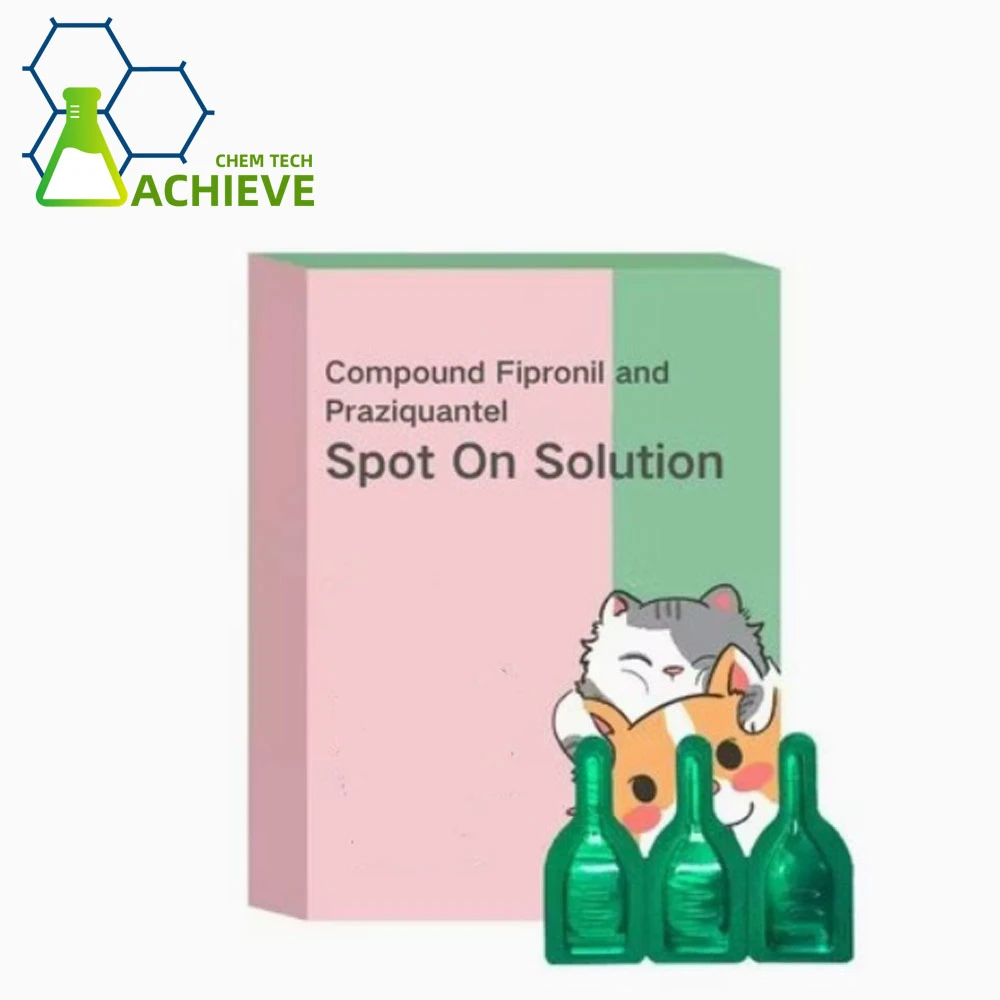
Compound Fipronil And Praziquantel Spot On Solution
1.General Specification(in stock)
(1)Solution
2.Customization:
We will negotiate individually, OEM/ODM, No brand, for secience researching only.
Internal Code: BM-9-022
Compound Fipronil and Praziquantel Spot On Solution
Main market: USA, Australia, Brazil, Japan, Germany, Indonesia, UK, New Zealand , Canada etc.
Manufacturer: BLOOM TECH Xi'an Factory
Analysis: HPLC, LC-MS, HNMR
Technology support: R&D Dept.-4
How Can Compound Fipronil Drops Help Manage Flea-Related Skin Problems?
The Link Between Flea Bites and Dermatitis
It's not the fleas that create flaky skin, but the proteins in flea saliva. When a flea bites, it sends a little saliva into the skin. This leads to a hypersensitive response in animals that are already sensitive, mediated by IgE antibodies and the production of mast cells. The outcome is intense itching, redness, papules, and eventually secondary bacterial or yeast infections due to repeated self-injury.
Research published in the journal Veterinary Dermatology reveals that even modest numbers of fleas may elicit clinical indications in animals who are particularly susceptible to them.This indicates that the purpose of therapy is to eliminate flea contact, not only reduce it.


How Fipronil Acts at the Molecular Level
Fipronil is an insecticide in the phenylpyrazole group. It works by blocking chloride channels in the nervous system of insects that are controlled by gamma-aminobutyric acid (GABA). This gets in the way of normal nerve signals, which makes fleas' and ticks' brains work too fast and causes them to die quickly. Importantly, the structure of GABA-gated channels in animals is different, which explains why the compound is selectively poisonous.
Compound fipronil drops frequently contain S-methoprene as a synergist.This two-step method kills both adult fleas and their early stages of growth,
giving you more protection and lowering the environmental pressure to get fleas again.
Compound Fipronil Drops for Reducing Flea Exposure in Dogs and Cats
Topical Application and Absorption Dynamics
Spot-on versions put fipronil right on the skin's surface, where it moves through the coat's fatty layer and spreads out. Researchers have found that fipronil builds up in the sebaceous glands and stays there for weeks after just one use on the skin and hair. This reservoir effect is what makes the product work for a long time-about 30 days in normal conditions for fleas on dogs and cats.
This technique is especially useful for managing FAD. Because animals that are sensitized react to even small amounts of flea contact, the active ingredient stays high in the skin,killing fleas quickly-ideally before they salivate or bite too many times.


Environmental Reinfection and Its Impact on Allergic Pets
The home climate is an important part of managing flea allergies that is often forgotten. Flea eggs, larvae, and pupae can gather in rugs, beds, and floor cracks, making them a constant source of new infestations. Only about 5 percent of the fleas in a home are adults at any given time; the other 95 percent are in the environment as immature stages.
Compound fipronil drops applied consistently to all pets in a home help lower the number of adult fleas that eat and have babies.Over the course of multiple treatment cycles, this reduces the overall number of fleas, which is very important for pets whose skin reacts to even light exposure.
Why Does Flea Control Matter for Pets Prone to Flea Allergy Dermatitis?
Sensitization Worsens With Repeated Exposure
In many animals, flea allergy dermatitis develops worse over time. Mild symptoms may be seen with early exposure, but repeated exposure to allergens sensitizes the body and reduces the threshold for responses over time. If your pet used to be comfortable with fleas biting them once in a while, they may be highly disturbed by only one bite after being exposed to them so many times. Thus, rigorous flea management to prevent future sensitization is a proactive therapeutic goal, not only a comfort measure.
Veterinary immunologists say the best strategy to manage IgE-mediated allergy reactions in dogs is to keep them away from allergens.


The aim may be attained in a practical fashion by utilizing fast-acting, long-lasting adulticides with regular frequency.
The Role of Year-Round Treatment
In many areas, thinking about flea control in terms of the seasons is no longer useful. Indoor temperatures stay high enough all year for fleas to live and breed, and weather data shows that flea-active months have grown in many places. When compound fipronil drops are used all year, they fill in any gaps in coverage that let flea populations grow and expose animals again. Veterinary doctors generally suggest long-term protection, especially for cases of FAD that have been proven.
How Does Fipronil Target Fleas Before Repeated Bites Become a Bigger Problem?
Speed of Action as a Protective Factor
When taking care of animals that are allergic, speed of kill is an important factor. Fipronil quickly kills fleas; studies show that it kills more than 95% of fleas within 24 hours of being applied in controlled settings. Fewer bites mean less exposure to allergens for a pet with FAD, which directly leads to fewer clinical flare-ups.
Products based on fipronil work faster than other options that work more slowly. If your pet is already sensitive to flea saliva, even a short time of flea activity on the skin can be enough to cause an episode of dermatitis.

Speed of Action as a Protective Factor
When taking care of animals that are allergic, speed of kill is an important factor. Fipronil quickly kills fleas; studies show that it kills more than 95% of fleas within 24 hours of being applied in controlled settings. Fewer bites mean less exposure to allergens for a pet with FAD, which directly leads to fewer clinical flare-ups.Products based on fipronil work faster than other options that work more slowly. If your pet is already sensitive to flea saliva, even a short time of flea activity on the skin can be enough to cause an episode of dermatitis.
Compound Fipronil Drops as Part of a Targeted Flea Management Strategy

Integration With Veterinary Dermatology Protocols
Veterinary dermatologists usually treat FAD with three main goals: keeping the animal away from allergens, using anti-inflammatory drugs when needed, and keeping the condition from happening in the future. Topical products with fipronil are in line with the allergen avoidance pillar. Compound fipronil drops are the chemical backbone of a well-thought-out management plan when used with medical advice, which includes treating all family pets for parasites and treating specific areas of the environment.
Consistency and Compliance as Outcome Drivers
The effectiveness of any topical flea repellent depends a lot on how often it is used.If you stop treating your pet for even a few weeks, fleas will be able to reproduce and cause allergens to be exposed again. Structured reminder systems and clearly labeled dosing times help pet owners take care of animals that have been identified with FAD. Quality of the formulation is also important. Compound fipronil drops that are well-made keep their active ingredient stable throughout the product's shelf life, making sure that each use gives the right amount.
Conclusion
Flea allergy dermatitis in pets is a pretty painful problem, and it's more than simply treating the response to get it under control. Compound fipronil drops function at the site of the allergic trigger, preventing flea activity at the neurological level and maintaining skin levels for lengthy periods of time. Used consistently on all dogs in a household and as part of a broader flea control approach, Fipronil-based spot-on solutions may help decrease the frequency and severity of FAD occurrences. Knowing how the product works is highly beneficial for both vets and pet owners. "Compliance and results are much better."
Frequently Asked Questions
Q1: How often should compound fipronil drops be applied to manage flea allergy dermatitis effectively?
+
-
Most veterinary guidelines say that pets that are likely to get FAD should use compound fipronil drops once a month. Veterinarians may suggest treating all family pets at the same time to lower the risk of cross-infection in areas with a lot of parasites or in animals that have been tested and found to be severely sensitive. The best long-term results come from consistent timing instead of applying based on symptoms.
Q2: Can compound fipronil drops be used on both dogs and cats?
+
-
Yes, there are spot-on formulas based on fipronil that work for both species, but the concentration and amount are different. There are metabolic differences between dogs and cats that are taken into account by formulas made just for cats. For example, cats don't have some hepatic enzymes that dogs do. Always use products that are right for the species and check with a vet to make sure you're giving the right amount.
Q3: Does treating the pet alone provide sufficient flea control for an allergic animal?
+
-
Treating the pet is important, but it's rarely enough on its own. Immature flea stages (eggs, larvae, and pupae) make up most of the flea population in homes. Regular vacuuming, washing pet bedding at high temperatures, and using premise sprays with IGRs work well with compound fipronil drops to lower the number of fleas that come back and protect animals more effectively from FAD.
Partner With Bloomtechz for Reliable Compound Fipronil Drops Supply
If you need to find high-quality compound fipronil drops for animal formulation, pharmaceutical development, or unique chemical uses, Bloomtechz has the skills and facilities to precisely meet your needs.
Bloomtechz is a reliable company that supplies compound fipronil drops. They run a 100,000-square-meter GMP production site that is approved by the US FDA, the EU, Japan, and the CFDA. Bloomtechz has been making active pharmaceutical ingredients and intermediates for more than 12 years and has a total of three levels of quality assurance: in-factory analysis, internal QA/QC review, and proof from a third-party authority agency.
Bloomtechz is a qualified supplier to 24 well-known companies around the world that work in pharmaceuticals, research and development, and specialty chemicals. Prices with a fixed margin, exact wait times, and full documentation help for customs clearance are all things that come as standard.
Reach out today and experience the reliability that over a decade of GMP-certified production brings to your supply chain. Contact the Bloomtechz team at Sales@bloomtechz.com to discuss your sourcing needs.
References
1. Auxilia, S. T., & Hill, P. B. (2000). Mast cell distribution, epidermal thickness and hair follicle density in normal canine skin: possible explanations for the predilection sites of atopic dermatitis.
2. Dryden, M. W., & Payne, P. A. (2004). Biology and control of ticks infesting dogs and cats in North America.
3. Fourie, J. J., Crafford, D., Horak, I. G., & Stanneck, D. (2012). Prophylactic treatment of flea-infested dogs and cats with topical formulations of fipronil and (S)-methoprene against Dipylidium caninum tapeworm infection.
4. Griffin, C. E., & DeBoer, D. J. (2001). The ACVD task force on canine atopic dermatitis (XIV): clinical manifestations of canine atopic dermatitis.
5. Rust, M. K. (2005). Advances in the control of Ctenocephalides felis (cat flea) on cats and dogs. Trends in Parasitology, 21(5), 232–236.
6. Wilkerson, M. J., Bagladi-Swanson, M., Wheeler, D. W., Floyd-Hawkins, K., Lee, K. W., Lees, G. E., & Dryden, M. (2004). The immunopathogenesis of flea allergy dermatitis in dogs: an experimental study.