


When your pet comes home scratching relentlessly, the culprit is almost always fleas or ticks. Pet owners worldwide trust fipronil spot-on treatments to solve this problem quickly and reliably. But what actually makes fipronil work so well? Understanding the science behind this active ingredient helps you make smarter choices for your pet's health - and helps professionals source the right product for their business.
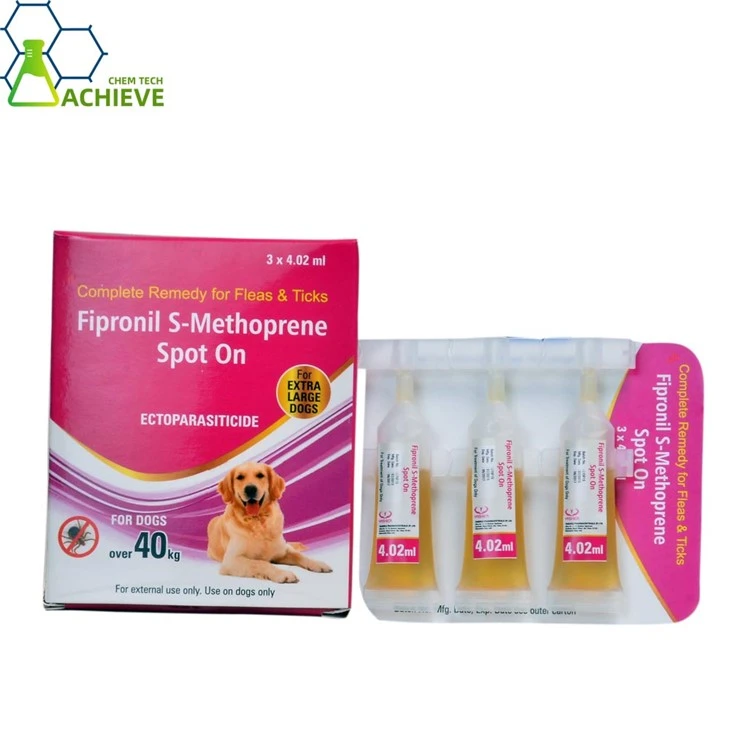
Fipronil Spot-On
1.General Specification(in stock)
(1)API(Pure powder)
PE/Al foil bag/ paper box for Pure powder
(2)Spot-On
cat:0.5ml
dog:0.67ml:2-10kg/1.34ml:10-20kg/2.68ml:20-40kg/4.02ml:40-60kg
(3)Solution
(4)Drops
2.Customization:
We will negotiate individually, OEM/ODM, No brand, for secience researching only.
Product Code:BM-9-018
Fipronil CAS 120068-37-3
Analysis: HPLC, LC-MS, HNMR
Technology support: R&D Dept.-3
What Is Fipronil and Why Is It Used in Spot-On Treatments?
The Science Behind the Active Ingredient
Fipronil (CAS 120068-37-3) is a chemical that belongs to the phenylpyrazole family and kills a wide range of insects. It was made to target the nervous systems of insects and spiders, and when used properly, it doesn't have the same strong effects on humans. Because of how its molecules are structured, it can very specifically bind to nerve receptors on insects. This is why it is used as the basis for modern topical parasiticides.
Veterinary health officials and regulatory bodies like the US EPA have recognized fipronil as a safe active compound for controlling ectoparasites in pets.It stays stable in high temperatures and high humidity,


which makes it a great ingredient for making skin products.
Why Spot-On Delivery Works
With this method, a precise amount of liquid is put directly on the pet's skin, usually on the back of the neck, where it can't be easily licked. The active ingredient spreads across the body's surface through the sebaceous glands after being applied. This creates what researchers call a persistent dermal reservoir.
This way of targeted application maximizes area coverage while minimizing exposure to the whole body. Studies on dermal absorption show that fipronil spot-on treatments use fipronil's natural lipophilic traits to bind with skin oils.
This keeps the ingredient working for weeks after just one use.
Fipronil Spot-On and Its Targeted Action on Fleas and Ticks
How Parasites Encounter the Active Compound
Ticks and fleas don't have to bite the pet for fipronil to work. The drug reaction starts as soon as the treated skin surface is touched. When a flea or tick comes into contact with fur or skin that has been treated with fipronil, the chemical is taken in through the cuticle and goes to the parasite's brain.
This way of killing on contact is a big part of why fipronil spot-on products are so popular for treating ectoparasites. Veterinary parasitology literature regularly shows that fleas are killed at rates of 98% or higher within 24 hours of treatment,


and ticks are kept away for more than 30 days.
Spectrum of Parasite Control
Fipronil is effective against a wide range of parasites. It can get rid of adult fleas, flea larvae, flea eggs, lice, and a lot of different kinds of ticks. This wide range of protection means that pet owners and vets can use a single product to deal with a wide range of infestations.
Fipronil is strategically useful because it breaks the flea life cycle, which is very important. Re-infestation rates drop by a lot when larvae are killed before they become adults. This is an advantage that traditional treatments don't always provide.
How the Fipronil Active Ingredient Interferes With Parasite Nerve Signals
The GABA Receptor Blocking Mechanism
In the nervous system of insects, fipronil blocks chloride channels that are controlled by gamma-aminobutyric acid (GABA). In bug brain circuits, GABA is the main neurotransmitter that stops signals. Fipronil blocks chloride ions from entering nerve cells when it binds to the chloride channel receptor. This throws off the balance between nerve cell excitation and inhibition.
This makes nerves fire without control, which makes the target parasite overexcited, paralyzed, and eventually kills it. This way of working has been studied in insects a lot, which is why fipronil works so quickly on the skin's surface, even at low concentrations.


Selectivity Between Insects and Mammals
The fact that fipronil only binds to bug GABA receptors and not to animal receptors explains why it is safe for cats and dogs. Fipronil has a much lower affinity for mammalian GABA receptors because their binding site configuration is structurally different.
At very high doses, this difference binding isn't completely gone, which is why exact dosing based on the species and body weight of the pet is still very important. Bloomtechz's fipronil spot-on formulations are carefully calibrated: 0.5 mL for cats and graduated amounts from 0.67 mL to 4.02 mL for dogs in four weight groups, so they are therapeutically accurate without being too much.
Fipronil Spot-On Formulation and Active Ingredient Distribution
Solvent Systems and Skin Penetration
The solvent carrier system has a big impact on how well fipronil works in a spot-on product. As entry boosters, isopropanol and light mineral oil help the active molecule get through the keratin layer of the stratum corneum and settle in the sebaceous gland network.
The way cats' and dogs' skin works is very different. There are 50–80 hair follicles per cm² on cat skin compared to 30–50 follicles per cm² on dog skin, and cats produce more sebum per unit area every day. These changes have a direct effect on how fipronil spreads after it is used.


Studies show that a 0.5 mL application of the drug can reach a concentration of about 0.12 mg/cm² on the skin of a cat's neck, but only 0.08 mg/cm² on the skin of a dog's back.
Duration of Efficacy and Stability
Because fipronil is lipophilic, it binds tightly to skin oils and is released slowly over time instead of washing off fast. A six-month accelerated stability test at 40°C and 75% relative humidity shows an average annual degradation rate of 2% or less, which means that properly manufactured goods can be kept for three years.
On average, 30 days after applying a well-made fipronil spot-on product,
cats still have about 60% of the concentration that was on their skin at the start, while dogs only have about 40%. This difference explains why treatments for cats seem to work for a little longer.
What Makes Fipronil the Core Ingredient in Flea and Tick Treatments?
Proven Track Record Across Markets
As of the mid-1990s, fipronil has been sold in veterinary dermal products. It is still the most popular ectoparasite treatment on the world market, which makes up about 35% of all sales of parasite control products for pets. It is the standard active ingredient in this group because it works the same way in all regions, with all pet types, and with all levels of infestation.
Regulatory approvals from many places, such as the FDA, the EU, and others, show how much safety and effectiveness data has been gathered over decades of use.


Manufacturing Integrity and Quality Assurance
The quality of a fipronil spot-on product depends on both how pure the active ingredient is (usually at least 95% purity) and how well the product was made. The final product's performance is checked by high-speed vacuum emulsification at controlled temperatures (40–50°C), careful HPLC-based content analysis, and a strict GMP production environment.
Positive pressure, a controlled temperature range of 20 to 25°C, and a humidity range of 40 to 60% are all things that production environments must have in order to meet microbiological testing standards (total colony count ≤100 CFU/g).
For a product that will be put on the skin of a live animal, these production controls must be followed.
Conclusion
Fipronil is still the best active ingredient in external parasite control products because it works so precisely at the molecular level-blocking bug GABA receptors, spreading through sebaceous channels, and staying on the skin's surface for weeks. Learning about this science isn't just for school; it helps you make better decisions about where to get your materials, how to give them, and how to come up with new products. Bloomtechz has the manufacturing credibility and technical depth to meet the needs of businesses and researchers looking for a reliable, GMP-certified source of high-quality fipronil spot-on formulations.
Frequently Asked Questions
Q: What is the active ingredient in fipronil spot-on, and how does it work?
+
-
Fipronil, a phenylpyrazole-class insecticide, is what makes it work. Insect pests like fleas, ticks, and lice are killed when it blocks GABA-gated chloride channels in their nervous system. This leads to uncontrollable neural activity, paralysis, and death.
Q: How long does a fipronil spot-on treatment stay effective?
+
-
Depending on the quality of the formulation and the species being treated, a single application can protect against damage for up to eight weeks. Because cats have more hair follicles and make more sebum, their skin tends to keep higher amounts for longer.
Q: Is fipronil spot-on safe for both cats and dogs?
+
-
Yes, as long as the right amount is used for the species and body weight. Fipronil has a much lower affinity for GABA receptors in mammals than for receptors in insects. This means that medicinal amounts of it are well tolerated. Always choose the recipe and amount that are specifically made for your pet's species and weight range.
Partner With Bloomtechz - Your Trusted Fipronil Spot-On Supplier
Bloomtechz has been a committed manufacturer and fipronil spot-on supplier since 2008. They have over 12 years of experience in organic chemistry and a 100,000 m² GMP-certified production plant that is approved by the US FDA, the EU GMP, Japan, and the CFDA. Every batch goes through three levels of quality control: testing in the plant, review by our own QA/QC department, and review by a third-party authority agency. This makes sure that you get exactly what the contract says you will get. Our profit structure is clear (10% to 30% fixed margin), our ERP system keeps accurate records of our lead times, and our shipping paperwork is designed to make it easy for customs to clear our goods. You can get help from our R&D team with any part of the product development process, from lab scale to full commercial volume. They can provide bulk API, ready-to-sell spot-on formats, or OEM/ODM customization. Get in touch with us right away to find out why 24 big companies around the world trust Bloomtechz as their reliable chemical provider.
Contact us: Sales@bloomtechz.com.
References
1. Gunning, R. V., Moores, G. D., & Jewess, P. J. (2000). Insecticide resistance mechanisms and their importance in the management of parasites. Pest Management Science, 56(10), 900–907.
2. Tingle, C. C. D., Rother, J. A., Dewhurst, C. F., Lauer, S., & King, W. J. (2003). Fipronil: Environmental fate, ecotoxicology, and human health concerns. Reviews of Environmental Contamination and Toxicology, 176, 1–66.
3. Pollmeier, M., Lampe, K., Schroeder, I., & Holste, S. (2004). Evaluation of the efficacy of fipronil formulations against Ixodes ricinus in dogs and cats. Veterinary Parasitology, 120(3), 207–218.
4. Rust, M. K., Dryden, M. W., & Payne, P. (2003). Efficacy and longevity of fipronil-based topical treatments for flea control on cats and dogs. Journal of Medical Entomology, 40(6), 853–860.
5. Cochet, P., Birckel, P., Bromet-Petit, M., Bromet, N., & Weil, A. (1997). Skin distribution of fipronil by microautoradiography following topical administration to the beagle dog. European Journal of Drug Metabolism and Pharmacokinetics, 22(3), 211–216.
6. Kolar, J., Gupta, R. C., & Srivastava, A. K. (2008). Fipronil toxicology and veterinary therapeutic applications. In Veterinary Toxicology: Basic and Clinical Principles (pp. 520–529). Academic Press.