




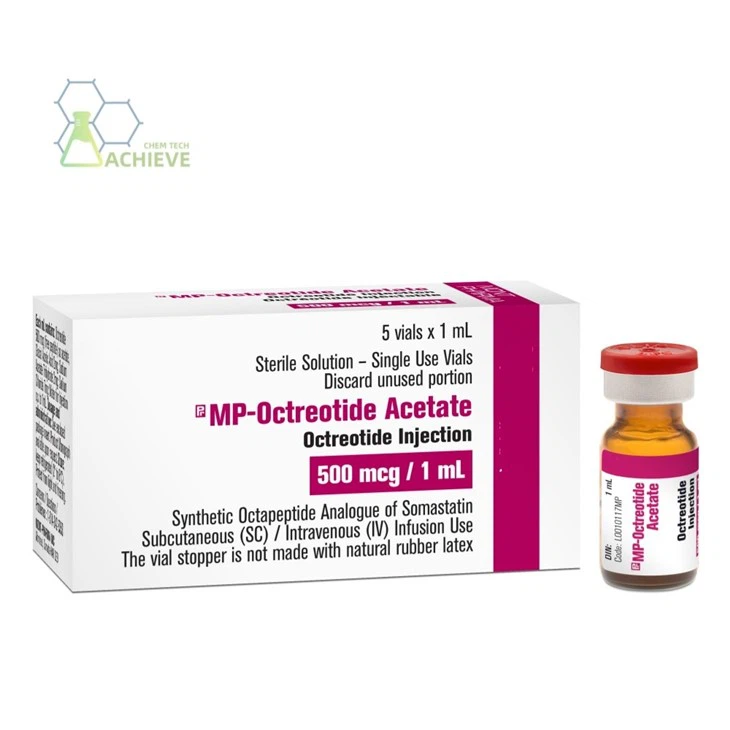


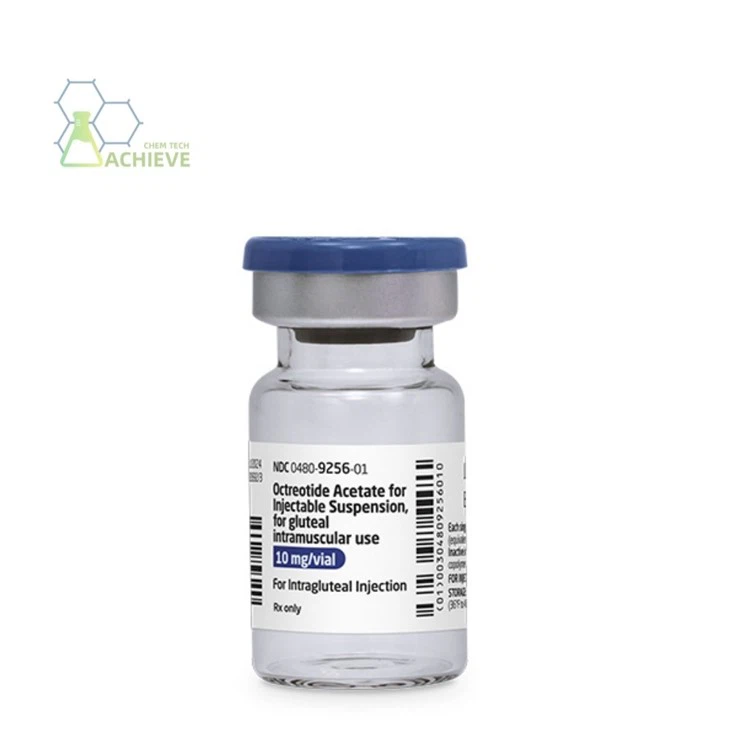

Octreotide acetate injection is an artificially synthesized octapeptide somatostatin analog that simulates the function of natural somatostatin and exerts a wide range of physiological effects by binding to specific receptors. The core mechanism is to inhibit adenylate cyclase activity, reduce intracellular adenosine monophosphate levels, thereby blocking hormone synthesis and release.
In terms of hormone secretion regulation, this drug can inhibit the pathological secretion of growth hormone (GH), thyroid stimulating hormone, gastrointestinal and pancreatic endocrine hormones. For patients with acromegaly, it can reduce serum insulin-like growth factor-1 levels and alleviate symptoms such as headache and joint pain; For gastrointestinal and pancreatic endocrine tumors, it can inhibit the secretion of gastrin, glucagon, and reduce symptoms such as diarrhea and abdominal pain.In terms of vascular function regulation, octraotide acetate injection can selectively reduce the blood flow and pressure of the portal vein and its collateral circulation, lower the pressure of esophageal and gastric varices, and reduce the risk of esophageal and gastric variceal bleeding by 20% -30% in the treatment of portal hypertension in cirrhosis.
In terms of cell proliferation inhibition, this drug can directly inhibit the proliferation of gastrointestinal, pancreatic, neuroendocrine tumor cells, induce cell cycle arrest, and inhibit tumor angiogenesis, prolonging the progression free survival of patients.



| Product Name | Octreotide Acetate Powder | Octreotide Acetate Solution | Octreotide Acetate Injection |
| Product Type | Powder | Solution | Injection |
| Product Purity | ≥99% | ≥99% | ≥99% |
| Product Specifications | Customizable | Customizable | Customizable |
| Product Form | Organic synthesis | Organic synthesis | Organic synthesis |
Octreotide Acetate COA
 |
||
| Certificate of Analysis | ||
| Compound name | Octreotide Acetate | |
| Grade | Pharmaceutical grade | |
| CAS No. | 83150-76-9 | |
| Quantity | Customized | |
| Packaging standard | Customized | |
| Manufacturer | Shaanxi BLOOM TECH Co., Ltd | |
| Lot No. | 202601090049 | |
| MFG | Jan 9th 2026 | |
| EXP | Jan 8th 2029 | |
| Structure |
|
|
| Item | Enterprise standard | Analysis result |
| Appearance | White or almost white powder | Conformed |
| Water content | ≤5.0% | 0.49% |
| Loss on drying | ≤1.0% | 0.32% |
| Heavy Metals | Pb≤0.5ppm | N.D. |
| As≤0.5ppm | N.D. | |
| Hg≤0.5ppm | N.D. | |
| Cd≤0.5ppm | N.D. | |
| Purity (HPLC) | ≥99.0% | 99.90% |
| Single impurity | <0.8% | 0.47% |
| Total microbial count | ≤750cfu/g | 80 |
| E. Coli | ≤2MPN/g | N.D. |
| Salmonella | N.D. | N.D. |
| Ethanol (by GC) | ≤5000ppm | 500ppm |
| Storage | Store in a sealed, dark, and dry place below -20°C | |
|
|
||
|
|
||


Basic information of drugs
The main ingredient is octreatide acetate, and the excipients include lactic acid, mannitol, and sodium bicarbonate. Its properties are colorless and clear liquids.This drug needs to be stored in a dark place at 2-8 ℃ for refrigeration to ensure its stability and effectiveness, and its shelf life is usually 36 months.In addition, some products may offer a specification of 0.5mg/1ml, but it is relatively rare.
The common specifications for octreotide acetate injection are in the form of 1ml solution corresponding to different octraotide contents. The mainstream specifications include 0.05mg/1ml, 0.1mg/1ml, 0.2mg/1ml, 0.3mg/1ml, and some products may offer a specification of 0.5mg/1ml.
Common specifications include:
This specification of injection is suitable for patients who require smaller doses, such as the initial treatment stage of certain gastrointestinal and pancreatic endocrine tumors.
This is a common specification widely used for various indications, such as esophageal gastric variceal bleeding, prevention of pancreatic postoperative complications, gastrointestinal pancreatic endocrine tumors, and acromegaly.
For patients who require larger doses, such as late stage treatment of certain gastrointestinal and pancreatic endocrine tumors or long-term treatment of acromegaly, this specification of injection may be chosen.
This specification of injection is used in certain specific situations, such as when patients have poor response to lower doses or when rapid control of the condition is required.

Acetate octreotide is suitable for the treatment of various diseases, mainly including the following categories:

Cirrhosis related bleeding:
Used for emergency treatment of esophageal gastric variceal bleeding caused by cirrhosis, usually combined with special treatments such as endoscopic sclerotherapy. Due to impaired liver function and increased pressure in the portal vein system, patients with cirrhosis are prone to esophageal gastric variceal rupture and bleeding. Acetate octraotide injection plays an emergency role in stopping bleeding and preventing rebleeding by reducing portal vein pressure.
Preventing postoperative complications of pancreatic surgery:
Complications such as pancreatic fistula and intestinal fistula may occur after pancreatic surgery. Acetate octreotide injection can reduce digestive fluid secretion, promote fistula healing, and reduce the risk of complications. Generally, 0.1mg subcutaneous injection is used, three times a day, for a continuous treatment of 7 days. The first injection should be given at least 1 hour before surgery.


Treatment of pancreatitis:
For acute pancreatitis, especially in its early stages, octreotide acetate injection can quickly control the condition and alleviate clinical symptoms. It can inhibit the basal secretion and stimulated secretion of the pancreas, suppress the activity of pancreatic enzymes and phospholipase A2, reduce the pressure inside the pancreatic duct, eliminate toxins that cause necrosis, stimulate the reticuloendothelial system, enhance the activity of the mononuclear phagocytic cell system, control the cascade reaction induced by cytokines, thereby protecting pancreatic cells and preventing the progression of pancreatic lesions in acute pancreatitis.
Gastrointestinal and pancreatic endocrine tumors:
It can significantly alleviate a wide range of clinical symptoms and physical signs closely associated with functional gastrointestinal and pancreatic neuroendocrine tumors. Abundant clinical trial data and real-world research evidence fully demonstrate that this pharmaceutical product delivers reliable therapeutic efficacy against multiple common subtypes of such hormone-secreting tumors.


Carcinoid tumors with carcinoid syndrome:
Patients with carcinoid tumors often experience carcinoid syndrome, manifested as facial flushing, diarrhea, asthma, and other symptoms. Acetate octraotide injection can alleviate these symptoms by regulating the secretion of relevant hormones.
VIP tumor:
VIP tumor patients secrete large amounts of vasoactive intestinal peptide, leading to severe diarrhea, hypokalemia, etc. This drug can effectively inhibit the secretion of vasoactive intestinal peptide and improve patient symptoms.


Glucagon tumor:
Patients diagnosed with malignant glucagonoma will suffer from sustained excessive secretion of glucagon into systemic circulation, triggering a series of typical clinical symptoms including secondary diabetes mellitus and characteristic necrolytic migratory erythema skin lesions. Injectable octreotide acetate is capable of markedly lowering abnormally elevated plasma glucagon concentrations and effectively relieving the full spectrum of disease-related clinical manifestations.
Gastrinoma/Zollinger Ellison syndrome:
Usually combined with selective H2 receptor antagonists, and antacids may be added as appropriate. Patients with gastrinoma have excessive secretion of gastrin, which stimulates gastric acid secretion and leads to digestive ulcers and other diseases. Acetate octreaotide injection can inhibit gastrin secretion, reduce gastric acid production, and promote ulcer healing.


Insulin tumor:
It is clinically applied for preoperative prevention of severe hypoglycemia and long-term maintenance of stable normal blood glucose levels in patients suffering from pancreatic islet cell tumors. Individuals diagnosed with insulinoma frequently face uncontrolled excessive insulin secretion accompanied by obvious hypoglycemia-related clinical manifestations. This therapeutic injection can potently suppress abnormal insulin over-secretion and effectively avoid the sudden onset of hypoglycemic episodes.
Growth hormone releasing factor tumor:
It can effectively inhibit the abnormal secretion of growth hormone-releasing factor, significantly lower excessively elevated serum growth hormone levels, and gradually relieve various uncomfortable clinical symptoms caused by hormone disorder.


Acromegaly:
For patients with acromegaly who have failed surgery, radiation therapy, or dopamine receptor agonist therapy, symptoms can be controlled by reducing the concentration of growth hormone (GH) and growth hormone mediator C. It is also applicable to patients with acromegaly who are unable or unwilling to undergo surgery, as well as patients in the interval period where radiation therapy has not yet taken effect. By inhibiting the secretion of growth hormone, patients can improve symptoms.

Drug interactions
Octreotide Acetate Injection, as a somatostatin analogue, involves multiple drug interactions that may affect the absorption, metabolism, or efficacy of other drugs. At the same time, its own efficacy may also be interfered with by other drugs. The following is a detailed introduction to its drug interactions:
Cyclosporine
Octreotide acetate can reduce intestinal absorption of cyclosporine, thereby affecting its immunosuppressive effect. If co administration is necessary, monitoring the blood concentration of cyclosporine should be considered, and appropriate dosage adjustments should be made based on clinical response.
Cimetidine
Octreatide acetate may delay the absorption of Cimetidine, affecting its ability to inhibit gastric acid secretion. Therefore, when used in combination, attention should be paid to observing changes in the patient's symptoms and adjusting the medication plan if necessary.
Enhance the efficacy of other drugs or increase the risk of adverse reactions. Bromocriptin: When combined with octraotide acetate, it may increase the bioavailability of Bromocriptin, thereby enhancing its dopamine receptor agonistic effect. This may increase the risk of adverse reactions such as orthostatic hypotension and arrhythmia. Therefore, when used in combination, it is necessary to closely monitor the patient's blood pressure and heart rate changes, and if necessary, reduce the dosage of bromocriptine.Beta blockers and calcium channel blockers: These drugs are commonly used to treat hypertension and heart disease.


Octreotide acetate may enhance the inhibitory effect of these drugs on myocardial function, leading to bradycardia or hypotension. Patients need to closely monitor their cardiovascular condition and adjust their medication plan in a timely manner when using it in combination.Affects the activity of drug metabolizing enzymes.CYP3A4 metabolic drugs: Octreotide acetate may inhibit growth hormone secretion, thereby affecting the clearance rate of drugs metabolized by cytochrome P450 (CYP) 3A4 enzyme. Especially for drugs with narrow therapeutic ranges, such as quinidine and terfenadine, caution should be exercised when combined with octraotide acetate. The blood drug concentrations of these drugs may increase due to the influence of octraotide acetate, increasing the risk of adverse reactions.
Other special drug interactions
Insulin and oral hypoglycemic drugs
Octreotide acetate may affect blood glucose levels, so when used in combination with insulin or oral hypoglycemic drugs, the dosage of these hypoglycemic drugs may need to be adjusted. This is because octreotide acetate can inhibit the secretion of insulin and glucagon, thereby altering blood glucose control.
Rifampicin
As an anti tuberculosis drug, rifampicin may accelerate the metabolism of octreotide acetate and reduce its plasma concentration.


This may lead to a decrease in the efficacy of octreotide acetate, therefore the dosage of octreotide acetate needs to be adjusted according to clinical response.Lipid regulating drugs, such as statins, may require attention to the increased risk of muscle toxicity when used in combination with octreotide acetate. This is because octreatide acetate may affect the metabolic processes of muscle cells, and when used in combination with statins, it may increase the risk of muscle injury. Therefore, regular monitoring of patients is necessary when used in combination to promptly detect and manage muscle toxicity reactions.
Interaction with cyclosporine and cimetidine:
Octreotide acetate can reduce the intestinal absorption of cyclosporine and delay the intestinal absorption of cimetidine.
Dosage adjustment with other drugs:
When combined with beta adrenergic receptor blockers, calcium channel blockers, drugs that control fluid and electrolyte balance, insulin.
The impact on CYP3A4 metabolism drugs:
Somatostatin analogs may reduce the clearance rate of drugs known to be metabolized by cytochrome P450 (CYP) 3A4.
Therefore, caution should be exercised when using octreotide acetate injection in combination with drugs that are metabolized by CYP3A4 and have a narrow therapeutic index, such as quinidine and terfenadine. The patient's response should be closely monitored, and the drug dosage should be adjusted if necessary.
references
Lamberts S W J, van der Lely A J, de Herder W W, et al. Octraotide[J]. The New England Journal of Medicine, 1996, 334(4): 246-254.
Zhang T, Liu C, Wang H, et al. Meta-analysis of octreotide acetate for preventing postoperative pancreatic complications after pancreatic resection[J]. Medicine, 2019, 98(39): e17196.
Colao A, Ferone D, Marzullo P, et al. Long-term effects of long-acting octreotide on hormone levels and tumor volume in acromegalic patients[J]. The Journal of Clinical Endocrinology & Metabolism, 2001, 86(6): 2779-2786.
FAQ
Q1: What is octreotide acetate, and what core pharmacological mechanisms support its clinical effects?
A1: Octreotide acetate is a synthetic long-acting somatostatin analogue with stronger receptor affinity and longer half-life than endogenous somatostatin. It selectively binds somatostatin receptors (SSTR2, SSTR5) distributed on pituitary, pancreatic, gastrointestinal and neuroendocrine tumor cells. Its core pharmacological effects include: suppressing excess secretion of growth hormone (GH) and IGF-1 for acromegaly; inhibiting overproduction of VIP, serotonin and gastrin to relieve diarrhea, flushing caused by neuroendocrine tumors; reducing pancreatic exocrine secretion to prevent postoperative pancreatic complications; constricting visceral blood vessels to control esophagogastric variceal bleeding induced by cirrhosis. Unlike natural somatostatin, it avoids rapid enzymatic degradation and supports subcutaneous or intramuscular sustained-release administration.
Q2: What common adverse reactions, monitoring indicators and contraindications should users pay attention to?
A3: The most frequent mild adverse reactions are gastrointestinal discomfort (nausea, abdominal distension, loose stool) and injection site pain, which generally ease after continuous use. Long-term medication raises gallstone risk by inhibiting gallbladder contraction, so regular gallbladder ultrasound monitoring is required. Metabolic risks include mild hyperglycemia or hypoglycemia, especially when combined with insulin or hypoglycemic agents; thyroid function needs periodic testing due to potential TSH suppression. Absolute contraindication: hypersensitivity to octreotide acetate or any formulation excipients. Patients with severe renal impairment, cholecystitis or gallstone complications need close clinical evaluation before administration.
Q3: What are the official clinical indications and two mainstream dosage forms of octreotide acetate?
A2: Its approved indications cover four core scenariosNovartis:
Acromegaly: Long-term maintenance therapy for patients with poor response to pituitary surgery/radiotherapy, to normalize GH and IGF-1 levels;
Neuroendocrine tumors: Relieve severe diarrhea and flushing of metastatic carcinoid tumors, and massive watery diarrhea of VIPomas;
Emergency hemostasis: Combined with endoscopic treatment for cirrhotic esophagogastric variceal hemorrhage;
Perioperative protection: Prevent pancreatic fistula and inflammation after pancreatic surgery.
Hot Tags: octreotide acetate injection, suppliers, manufacturers, factory, wholesale, buy, price, bulk, for sale