




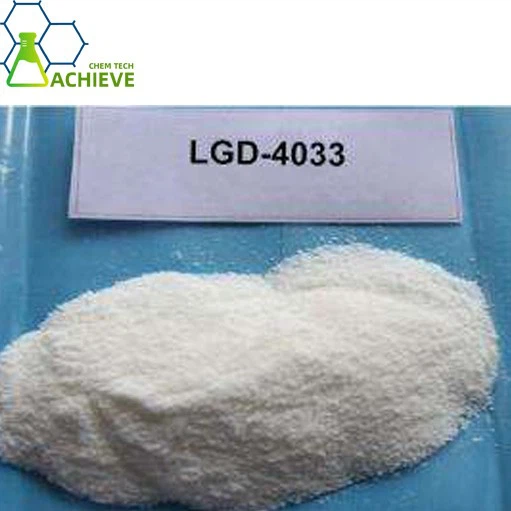

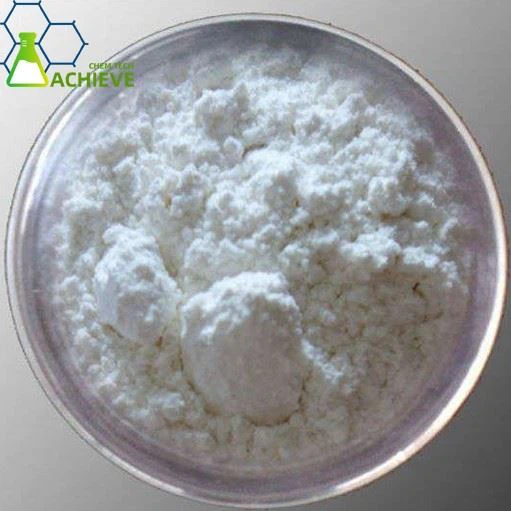

Shaanxi BLOOM Tech Co., Ltd. is one of the most experienced manufacturers and suppliers of ligandrol (lgd-4033) in China. Welcome to wholesale bulk high quality ligandrol (lgd-4033) for sale here from our factory. Good service and reasonable price are available.
Ligandrol (LGD-4033) is a selective androgen receptor modulator (SARM), mainly used for treating muscle atrophy and osteoporosis. It selectively activates the androgen receptors in skeletal muscles, promoting muscle growth and strength enhancement, while reducing side effects on tissues such as the prostate and skin. Preclinical studies have shown that LGD-4033 can significantly increase lean body mass, and has high oral bioavailability with a half-life of approximately 24-36 hours.
Although not yet approved by the FDA, LGD-4033 has been abused by athletes and fitness enthusiasts due to its potential muscle-building effects. Common side effects include mild testosterone suppression, headaches and fatigue. The long-term safety is unknown. The World Anti-Doping Agency (WADA) prohibits its use. Further research is needed to verify its medical potential and risks. Currently, it is still in the experimental stage and is not legally sold as a drug.
|
|
|



Ligandrol (LGD-4033) Powder COA


Ligandrol (chemical name LGD-4033, CAS number 1165910-22-4) is a new type of non-steroidal oral selective androgen receptor modulator (SARM). Its chemical nature is 4-[(2R)-2-[(1R)-2,2,2-trifluoro-1-hydroxyethyl]pyrrolidin-1-yl]-2-(trifluoromethyl)benzamide, with the molecular formula of C₁₄H₁₂F₆N₂O and a molecular weight of 338.25 g/mol. Its chemical properties can be analyzed from the following aspects:


Physical properties
Appearance and form: White to light beige crystalline solid, hygroscopic, needs to be stored in a dry environment.
Melting point and boiling point: Melting point range is 108-111°C, predicted boiling point is 439.9±45.0°C (high boiling point indicates strong intermolecular forces).
Density and solubility: Predicted density is 1.45±0.1 g/cm³, slightly soluble in acetone, chloroform (under heating conditions), and methanol. Solubility is significantly affected by temperature and solvent polarity.
Acidity coefficient (pKa): Predicted value is 12.06±0.20, indicating that it exists as an anion in the physiological pH environment, which may affect its transmembrane transport and receptor binding ability.
Chemical structure and activity relationship
Core skeleton: Composed of pyrrolidine ring and benzoyl group. A (1R)-2,2,2-trifluoro-1-hydroxyethyl side chain is introduced at the 2 position of the pyrrolidine ring, and a trifluoromethyl group is connected at the 2 position of the benzoyl group, forming a highly fluorinated molecular structure.
The role of fluorination modification:
Enhances lipid solubility, improves blood-brain barrier penetration ability (although not a main target, it may affect distribution and metabolism).
Stabilizes the receptor binding conformation through electronic effect, enhances affinity for androgen receptor (AR) (Ki ≈ 1 nM).
Chiral center: The molecule contains two chiral carbons (1R and 2R configurations), stereoselective synthesis ensures high selectivity for AR binding, avoiding non-target tissue (such as prostate, liver) non-specific interactions.
Pharmacokinetic characteristics
Oral bioavailability: As a non-steroidal SARM, LGD-4033 can achieve efficient oral absorption without 17α-alkylation modification, avoiding the liver toxicity of traditional steroids.
Half-life and accumulation: Elimination half-life is 24-36 hours, supporting once-daily administration; pharmacokinetics shows linear accumulation characteristics, and blood drug concentration is stable after multiple administrations.
Metabolic stability: Exhibits good metabolic stability in animal models, mainly metabolized by the liver, but no significant liver toxicity was observed (except for high-dose short-term use).
Chemical stability and storage conditions
Thermal stability: Melting point data indicates stability at normal temperatures, but avoid high-temperature environments to prevent decomposition.
Light stability: No information on phototoxicity has been reported, but fluorinated aromatic compounds usually require protection from light to prevent photooxidation degradation.
Storage requirements: Recommended for freezing at -20°C, storage in solvents requires -80°C ultra-low temperature to maintain long-term stability; during transportation, use ultra-low-temperature ice packs to maintain a low-temperature environment.
Safety and toxicity
Acute toxicity: Preclinical studies show that in primate animal models, no severe toxic reactions were observed after 13 weeks of administration (maximum dose 15 mg/kg), but the 75 mg/kg dose group was terminated due to toxicity.
Long-term effects: As a research compound, long-term safety data is limited, but in the I-phase clinical trial, healthy male subjects (1 mg/day, 21 days) did not report serious adverse events, and testosterone levels returned to normal after 56 days of discontinuation.
Impurity control: High-purity (≥97%) formulations can reduce the risk of unknown impurities, and quality control methods such as HPLC and NMR are required to ensure chemical consistency.

Research Background: From the Challenges of Androgen Therapy to the Birth of SARMs
In the late 20th century, traditional androgen therapies (such as testosterone replacement therapy) revealed significant flaws in their clinical application for muscle atrophy disorders (such as cancer cachexia, AIDS-related muscle wasting, and osteoporosis):
Organ selectivity deficiency: The anabolic effects of testosterone on muscle and bone do not significantly differ from the androgenic activity of tissues such as the prostate and sebaceous glands, resulting in side effects such as prostate hyperplasia, acne, and gynecomastia.
Pharmacokinetic limitations: Testosterone needs to be administered by injection, and its oral bioavailability is low. Moreover, oral steroids modified by 17α-alkylation (such as methyltestosterone) have hepatotoxicity.
Treatment window is narrow: The dose of anabolic effect is dose-dependent on androgenic side effects, limiting its application in elderly patients or women.
In 1998, the concept of selective androgen receptor modulators (SARMs) was proposed, with the core goal being to achieve through molecular design:
Tissue-specific activation: It exerts an anabolic effect in muscles and bones, while avoiding androgenic activity in tissues such as the prostate.
Oral bioavailability: It can be absorbed without the need for liver toxicity modification.
Safety optimization: It reduces the inhibition of the hypothalamic-pituitary-gonadal axis (HPTA) and lowers cardiovascular and metabolic risks.
Discovery and Early Development: Ligand Pharmaceuticals' Breakthrough (2007-2010)
Molecular Design
Ligandrol (LGD-4033) was synthesized by the American biopharmaceutical company Ligand Pharmaceuticals in 2007. Its chemical structure is based on the pyrrolidine ring and fluorinated aromatic groups. The selectivity was achieved through the following design:
Fluorination modification: The trifluoromethyl and hydroxyethyl side chains on the benzene ring enhance the lipid solubility of the molecule, promoting the specific recognition of the receptor binding pocket.
Stereoconfiguration locking: The two chiral centers (1R,2R) ensure that the molecule binds to the LBD domain of the androgen receptor (AR) at a specific angle, avoiding interaction with the co-activating factors of AR in prostate tissues.
Preclinical Studies (2008-2010)
Rat Model: In castrated rats, after administration of LGD-4033 at a dose of 0.1-3 mg/kg for 14 days, the mass of the quadriceps femoris increased by 20%-35%, while the volume of the prostate showed no significant change, and the ratio of anabolic/androgenic selectivity was >500:1 (testosterone was 2:1).
Primate Model: In rhesus monkeys, oral administration of LGD-4033 (0.6-15 mg/kg/day) for 13 weeks resulted in an increase of 8%-15% in lean body mass, without observing liver toxicity or prostate hyperplasia. The 75 mg/kg group was terminated due to toxicity.
Osteoporosis Model: In ovariectomized rats, oral administration of LGD-4033 (1 mg/kg/day) for 12 weeks resulted in an increase of 8.3% in lumbar spine bone density and a 42% decrease in trabecular bone conversion rate, with effects comparable to estradiol.
These data indicate that LGD-4033 achieved the goal of "treating the benefits of testosterone without its side effects" in preclinical models.
Clinical Development: Viking Therapeutics' Progress (2010-2020)
In 2010, Ligand Pharmaceuticals granted LGD-4033 to Viking Therapeutics, which the latter named VK5211 and took the lead in subsequent clinical development:

Phase I trial (2015-2017)
76 healthy male subjects received doses ranging from 0.1 to 1.0 mg/day. After 21 days:
Lean body mass increased by 1.21 kg (1 mg group), and stair climbing ability improved by 15.2%.
Testosterone levels decreased by 35%-50%, but fully recovered after 56 days of discontinuation.
No serious adverse events were reported. Blood lipid and liver enzyme indicators fluctuated briefly and returned to normal.
Phase II trial (2018-2020)
The VK5211-201 study (NCT02946278) for patients with hip fractures showed:
After 12 weeks of treatment, femoral neck bone density increased by 1.8%, and walking speed improved by 0.12 m/s.
Muscle strength improved continuously until 24 weeks after the end of treatment, and no prostate hyperplasia or male breast development was observed.

Controversies and Regulatory Challenges (2017-present)

Anti-doping issues
In 2018, the World Anti-Doping Agency (WADA) included LGD-4033 in the prohibited list, and its metabolites can be detected in urine tests for up to 40 days.
In 2019, Australian swimmer Shayna Jack was suspended for 4 years due to a positive drug test, becoming the first public case.

Market abuse
Synthetic LGD-4033 produced by underground laboratories is often mixed with anabolic steroids such as Methyltestosterone, resulting in severe androgenic side effects.
Testing showed that 63% of "research chemicals" did not match the label in actual content, and the rate of heavy metal pollution reached 28%.

Legal status
USA: Unapproved drug, personal use may face a $1,000 fine, distribution is a federal felony.
China: Managed under the "Anti-Doping Regulations", illegal use can be subject to up to 15 days of detention and a fine of up to 30,000 yuan.
Future Directions: From Treatment to Personalized Medicine
New derivatives development
LGD-4033-d3 (deuterated version) is undergoing Phase I trials, aiming to extend the half-life to 72 hours and reduce the dosing frequency.
Combination therapy exploration
The II phase trial of combining with ActRIIB inhibitors for the treatment of spinal muscular atrophy (SMA) showed that 6-month treatment increased the patient's 6-minute walking distance by 47 meters.
Personalized medicine application
Analysis of AR gene polymorphisms can predict individual response rates to Ligandrol (LGD-4033), and individuals with CAG repeat numbers < 22 have a 40% improvement in muscle growth effect.
adverse reaction
Ligandrol (LGD-4033) is a selective androgen receptor modulator (SARM) synthesized by the American biotechnology company Ligand Pharmaceuticals in 2007. It was initially developed for the treatment of musculoskeletal degenerative diseases such as muscular atrophy and osteoporosis, as it can specifically activate androgen receptors in muscle and skeletal tissues, avoiding side effects on other tissues such as the prostate and liver. However, with the widespread application of LGD-4033 in the fields of fitness and sports, its adverse reactions have gradually received attention.
Endocrine disruption effect
Testosterone inhibition
LGD-4033 has a significant inhibitory effect on the hypothalamic pituitary testicular axis (HPTA), leading to a decrease in endogenous testosterone levels. In Phase I clinical trials, healthy men who took 1 mg of LGD-4033 daily for 3 weeks experienced a 50% decrease in total testosterone levels and a 40% decrease in free testosterone. After 56 days of discontinuation, testosterone levels returned to baseline. However, in actual use, the dosage is usually higher (5-10 milligrams/day), which may lead to more severe testosterone suppression, manifested as decreased libido, fatigue, weakened muscle strength, and other symptoms.
Elevated estrogen levels
When LGD-4033 binds to androgen receptors, it competitively inhibits the action of natural testosterone, making it easier for testosterone to be converted into estrogen. This may cause estrogen related side effects, such as bloating and male breast development. Although LGD-4033 itself does not directly stimulate estrogen receptors, the indirect increase in estrogen levels caused by it still requires caution.
Decreased sex hormone binding globulin (SHBG)
LGD-4033 can lower SHBG levels, allowing more free testosterone to take effect. However, this effect may exacerbate endocrine disorders and affect overall hormone balance in the context of testosterone inhibition.
Hot Tags: ligandrol (lgd-4033), suppliers, manufacturers, factory, wholesale, buy, price, bulk, for sale, BH4 Synthesis, Orlistat Powder CAS 96829 58 2, Promethazine Hydrochloride Powder CAS 58 33 3, sapropterin dihydrochloride powder, Paliperidone powder, tetravisc