




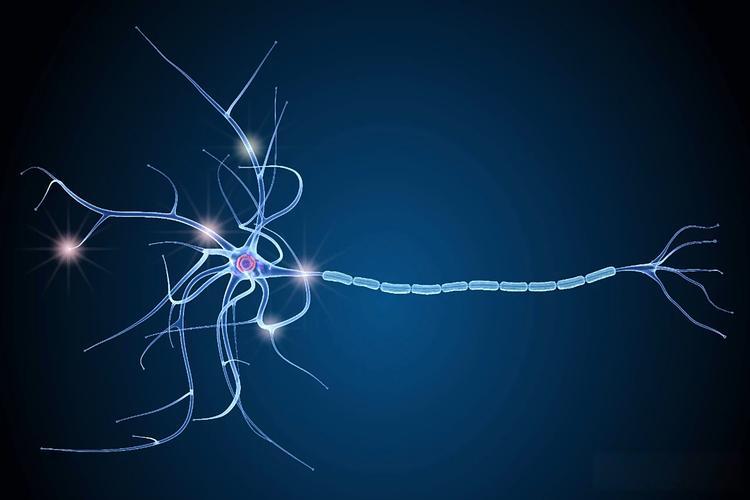
PACAP-38 (Adenylate cyclase activating peptide-38), CAS 137061-48-4, molecular formula C203H331N63O53S1, is a peptide composed of 38 amino acid residues with a specific sequence arrangement, which enables it to perform specific biological functions in organisms. It is an important endogenous neuropeptide with various biological activities, including serving as a neurotransmitter, neuroregulatory substance, neurotrophic factor, and immune modulator. It is widely distributed in the central nervous system, especially with the highest content in the hypothalamus, and plays a key regulatory role in various physiological processes. Having specific optical properties.
Due to the presence of chromophores in its molecular structure, such as phenolic hydroxyl groups of tyrosine and conjugated structures of peptide bonds, it undergoes electronic transitions under specific wavelength light irradiation, resulting in absorption spectra.
|
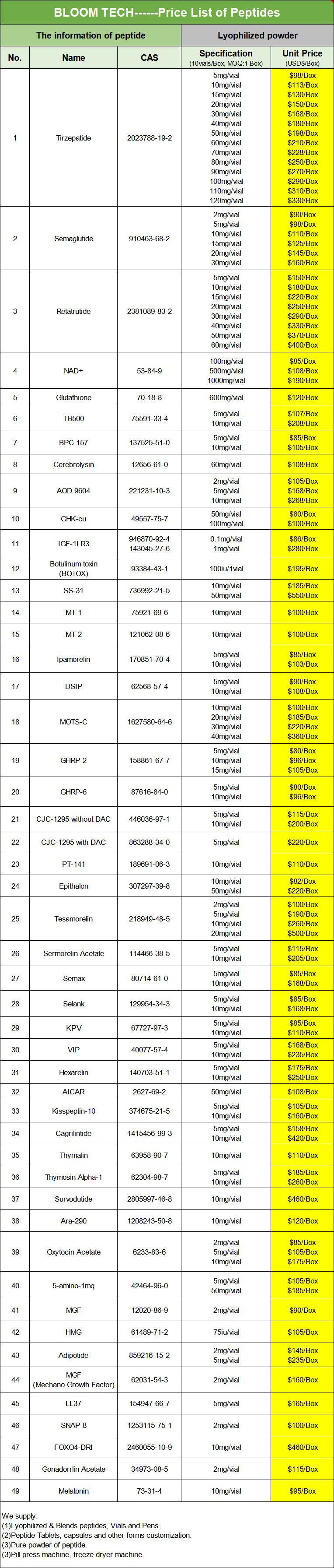
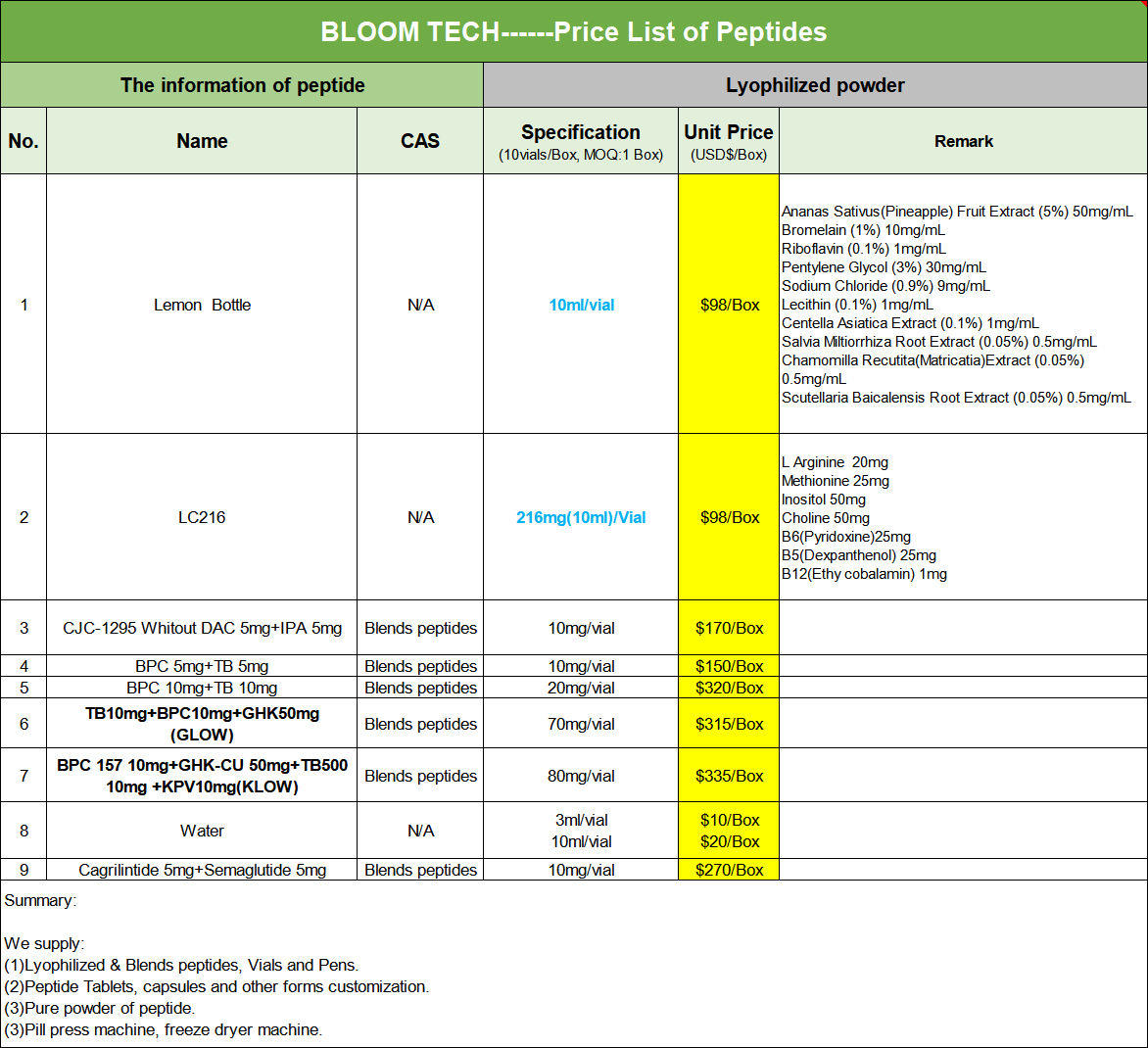
Customized Bottle Caps And Corks:
|
 |

PACAP-38 COA
 |
||
| Certificate of Analysis | ||
| Compound name | PACAP-38 | |
| Grade | Pharmaceutical grade | |
| CAS No. | 124123-15-5 | |
| Quantity | 33g | |
| Packaging standard | PE bag+Al foil bag | |
| Manufacturer | Shaanxi BLOOM TECH Co., Ltd | |
| Lot No. | 202601090088 | |
| MFG | Jan 9th 2026 | |
| EXP | Jan 8th 2029 | |
| Structure | N/A | |
| Item | Enterprise standard | Analysis result |
| Appearance | White or almost white powder | Conformed |
| Water content | ≤5.0% | 0.21% |
| Loss on drying | ≤1.0% | 0.62% |
| Heavy Metals | Pb≤0.5ppm | N.D. |
| As≤0.5ppm | N.D. | |
| Hg≤0.5ppm | N.D. | |
| Cd≤0.5ppm | N.D. | |
| Purity (HPLC) | ≥99.0% | 99.98% |
| Single impurity | <0.8% | 0.44% |
| Total microbial count | ≤750cfu/g | 79 |
| E. Coli | ≤2MPN/g | N.D. |
| Salmonella | N.D. | N.D. |
| Ethanol (by GC) | ≤5000ppm | 600ppm |
| Storage | Store in a sealed, dark, and dry place below -20°C | |
|
|
||


PACAP-38 is an important endogenous neuropeptide with extensive biological activity and diverse physiological functions, therefore, it has potential value in medical research and clinical applications.

1. The molecular mechanism and signal transduction of PACAP 38
The biological activity mainly depends on its interaction with specific receptors on the cell membrane. These receptors belong to the G protein coupled receptor family, including types such as PAC1, VPAC1, and VPAC2. After binding to these receptors, PACAP 38 can activate various intracellular signaling pathways, thereby exerting its physiological effects.
After binding to the PAC1 receptor, it can activate adenylate cyclase (AC), thereby increasing the level of intracellular cyclic adenosine monophosphate (cAMP).
As a second messenger, cAMP further activates protein kinase A (PKA) and regulates various biological processes within cells, including gene expression, ion channel activity, and cell proliferation and differentiation.
In addition, its function can also be exerted through other signaling pathways. For example, it can participate in intracellular signaling processes by activating phospholipase C (PLC) and calcium ion channels, leading to an increase in intracellular calcium ion concentration.


2. Role in the nervous system
In the nervous system, it plays an important regulatory role. It can promote the growth, differentiation, and synaptic formation of neurons, thereby participating in the development and regeneration process of the nervous system. In addition, it can also regulate the release of neurotransmitters and the excitability of neurons, affecting the efficiency of nerve conduction and synaptic transmission.
Research has shown that it has potential therapeutic effects on various neurological diseases. For example, in neurodegenerative diseases such as Parkinson's disease and Alzheimer's disease, it can protect neurons from damage and promote the repair and regeneration of nerve tissue. In addition, it can also improve the recovery of neurological function after cerebral ischemia and brain injury, and alleviate symptoms such as neuropathic pain.


3. Role in metabolic regulation
It also plays an important role in metabolic regulation. It can affect the metabolic processes of fat and carbohydrates, promote energy consumption and fat breakdown, thereby helping to control weight and improve metabolic diseases such as obesity. In addition, PACAP 38 can also regulate insulin secretion and sensitivity, affecting the regulation of blood sugar levels.
4. The role in immune regulation
In the immune system, it has an immunomodulatory effect. It can affect the proliferation, differentiation, and function of immune cells, regulate the intensity and duration of immune responses. By regulating the activity of immune cells, it helps to maintain the balance of the immune system and prevent excessive or insufficient immune responses.


The development history of PACAP-38 can be traced back to early research on its biological activity and function. With the progress of science and technology and the deepening of research, people's understanding of it gradually deepens, thereby promoting its application in drug development, disease treatment and other fields.
1. Early Discovery and Basic Research
In the early stages of development, scientists first discovered its widespread presence and important role in the nervous system.
Through a series of experiments and studies, they gradually revealed the homology between PACAP 38 and vasoactive intestinal peptide (VIP), as well as its position in the trypsin/glucagon/VIP family. These findings lay the foundation for subsequent research and application.
2. Clinical Application and Progress
With the deepening of clinical trials, good therapeutic effects have been demonstrated in the treatment of some diseases. For example, in the field of neurological diseases, it has been used to treat neurodegenerative diseases such as Parkinson's disease and Alzheimer's disease, achieving significant results. In addition, it has shown potential application value in the treatment of metabolic diseases and immune system diseases.
However, its development and application still face some challenges. For example, its stability and bioavailability need to be further improved to ensure its effectiveness and safety in vivo. In addition, further in-depth research is needed on its mechanism of action and targets to optimize its therapeutic effect and reduce side effects.
What is the relationship between this substance and Alzheimer's disease?

Improving cognitive function
In the AD transgenic mouse model, long-term daily intranasal PACAP application stimulated the non amyloid protein production process of amyloid precursor protein (APP) and increased the expression of brain-derived neurotrophic factor and anti apoptotic Bcl-2 protein, improving the cognitive function of the animals.
Regulating amyloid beta peptide (A β) levels
PACAP can significantly reduce the A β transporter receptor at the mRNA level of advanced glycation end products (RAGE), and enhance the expression of A β degrading enzyme enkephalinase in the mouse brain by activating the somatostatin enkephalinase cascade reaction, thereby affecting A β metabolism.


Immune regulatory effects
PACAP and VIP (vasoactive intestinal peptide) are upregulated in neurons and immune cells after injury and/or inflammation, known to protect neurons but also exert strong in vivo immune regulatory effects, mainly anti-inflammatory.
Autophagy effect
Studies have shown that PACAP-Sirturin3 alleviates cognitive impairment in Alzheimer's disease through autophagy. Autophagy impairment is a key step in the deposition of beta amyloid protein (A β) and Tau; PACAP enhances autophagy and alleviates cognitive impairment.


Targeting PAC1R as a therapeutic strategy
Studies have found that targeting the activation of PAC1R (PACAP1 receptor) may be a potential strategy for preventing toxic tau protein aggregation and treating Alzheimer's disease and other tau protein disorders.
In summary, PACAP-38 is associated with Alzheimer's disease through multiple mechanisms, including neuroprotection, regulation of A β levels, immune regulation, autophagy, and the therapeutic potential of targeting PAC1R, providing a new perspective and possible treatment strategies for the treatment of AD.

How does this substance interact with the metabolic process of A β?
Pituitary Adenylate Cyclase-Activating Polypeptide 38 The interaction between the metabolic processes of A β (amyloid beta peptide) and A β is mainly reflected in the following aspects:

Neuroprotective effect: Pituitary Adenylate Cyclin Activating Polypeptide 38 has neuroprotective and neurotrophic properties, which can slow down Alzheimer's disease like pathology in transgenic mice with amyloid precursor protein. Long term daily intranasal PACAP application stimulated the non amyloid protein production process of amyloid precursor protein (APP) and increased the expression of brain-derived neurotrophic factor and anti apoptotic Bcl-2 protein.
- Regulating the A β transporter receptor: Pituitary Adenylate Cyclin Activating Polypeptide 38 leads to a significant decrease in the amyloid beta peptide (A β) transporter receptor at the mRNA level of advanced glycation end products (RAGE). By activating the somatostatin enkephalinase cascade reaction, it enhances the expression of A β degrading enzyme enkephalinase in the mouse brain.
- Inhibition of A β aggregation: Pituitary Adenylate Cyclinase Activating Polypeptide 38 can exert neuroprotective effects by inhibiting A β aggregation, which has been demonstrated by its potential in diagnosing Alzheimer's disease.


- Autophagy function: In Alzheimer's disease, impaired or restricted autophagy function is an important cause of disease occurrence. Autophagy is a necessary pathway for A β clearance, and weakened autophagy may lead to the onset of AD and damage to the nervous system. Pituitary Adenylate Cyclin Activating Polypeptide 38 may regulate the metabolism of A β by affecting autophagy.
- Immune regulatory effect: Pituitary Adenylate Cyclin Activating Polypeptide 38 plays a role in immune regulation, reducing the inflammatory response of zebrafish hair cells induced by chemical damage.
Copper treatment increased the expression of IL-1 β, IL-6, ATF3, and IL-8, while Pituitary Adenylate Cyclinase Activating Polypeptide 38 treatment significantly reduced the mRNA expression levels of these stress-induced markers, indicating its inhibitory effect on inflammatory response. This may be related to the clearance and metabolism of A β, as inflammatory responses are closely related to the production and accumulation of A β.

The correlation between elevated levels in cerebrospinal fluid and risky behavior after infection with Toxoplasma gondiiA
The neuroregulatory function

Molecular characteristics
The produc is a neuropeptide containing 38 amino acids, belonging to the VIP/secretin family. Its receptor PAC1 is widely expressed in the central nervous system, especially highly enriched in regions related to emotion regulation such as the hippocampus, amygdala, and prefrontal cortex. This molecule has a dual regulatory function: it promotes neuronal survival and synaptic plasticity at physiological concentrations, while in pathological states it may participate in the amplification of neuroinflammation.
Role in stress response
The produc is an important regulatory factor of the hypothalamic pituitary adrenal axis (HPA axis). Animal experiments have shown that restraint stress can increase cerebrospinal fluid concentration by 2.3 times within 30 minutes, and this rapid response is closely related to the release of glucocorticoids. In human studies, patients with post-traumatic stress disorder (PTSD) have a 40% increase in cerebrospinal fluid it levels compared to healthy controls, and are positively correlated with the severity of anxiety symptoms.


Neural Circuit Regulation of Adventure Behavior
Functional magnetic resonance imaging (fMRI) studies have revealed that it enhances risk seeking behavior by activating the ventral tegmental area (VTA) - nucleus accumbens (NAc) dopaminergic pathway. When the produc is injected into rat NAc, its selection probability in high-risk high reward tasks increases by 65%, and this effect can be completely blocked by PAC1 receptor antagonists.
Evidence of the association between Toxoplasma gondii infection and The product
Causal relationships in animal models
In a mouse model infected with Toxoplasma gondii, the level of cerebrospinal fluid it significantly increased from day 14 after infection and reached its peak at day 28 (2.8 times higher than baseline). This increase is highly consistent with the occurrence time of adventurous behavior: infected mice increased their stay time in the central area of the open field experiment by 40%, and the number of arm opening entries in the elevated cross maze increased by 55%.

Validation using PAC1 receptor knockout mice revealed that although neuroinflammation persisted after infection, risky behavior completely disappeared, confirming the crucial role of the produc in behavioral changes.
Supporting evidence for human research
Analysis of cerebrospinal fluid from 327 individuals with positive serum for Toxoplasma gondii showed that the average concentration of the produc was 128 ± 32 pg/mL, significantly higher than the 89 ± 21 pg/mL in healthy controls (p<0.001).
Further stratified analysis revealed that the the produc level in the high adventure behavior group (based on the Barratt Impulsive Scale score) was 37% higher than that in the low adventure behavior group.Longitudinal tracking studies have shown that after 6 months of anti Toxoplasma treatment (sulfamethoxazole+ethambutol), patients' cerebrospinal fluid the produc levels decreased to 95 ± 25 pg/mL, and their risk behavior scores decreased by 28%.


Preliminary Analysis of Molecular Mechanisms
Transcriptome sequencing revealed that Toxoplasma gondii infection can upregulate the expression of PACAP gene in host neurons by up to 3.2-fold, which is closely related to the activation of the NF - κ B signaling pathway.In vitro experiments have confirmed that soluble antigen of Toxoplasma gondii (STAg) stimulates microglia to release IL-1 β in a dose-dependent manner, which induces neuronal PACAP synthesis through the p38 MAPK pathway. In addition, the activity of PACAP degrading enzymes (NEP, IDE) in the brain tissue of infected mice decreased by 40%, leading to an extension of the half-life of endogenous the product.

PACAP-38 is an amidated neuropeptide consisting of 38 amino acid residues. Currently, Fmoc solid-phase peptide synthesis (Fmoc-SPPS) serves as the dominant process for both industrial production and laboratory preparation, combined with liquid-phase post-treatment and chromatographic purification. Microbial recombinant expression is also adopted for partial large-scale manufacturing, among which solid-phase synthesis enjoys the widest application.
The synthesis starts with low-substitution Tentagel S-Ram or MBHA amide resin to meet the structural requirement of C-terminal amidation, with the resin substitution degree controlled within 0.2–0.5 mmol/g. Firstly, the linker is coupled to the resin in DMF solvent using HBTU/DIEA as the condensation system. Upon reaction completion, unactivated sites are capped with acetic anhydride to prevent the formation of by-product peptides. The functionalized solid support is obtained after repeated solvent washing and vacuum drying.
Peptide chain elongation is carried out strictly in accordance with the amino acid sequence of the produc via the Fmoc orthogonal protection strategy throughout the process. Each reaction cycle consists of deprotection and amino acid coupling. The N-terminal Fmoc protecting group is removed with 20% piperidine in DMF, and the reaction endpoint is monitored by the ninhydrin colorimetric method.
The resin is thoroughly washed after full deprotection. Subsequently, side-chain protected amino acid monomers are incorporated: Boc for lysine, Pbf for arginine, and Trt for glutamine, which effectively inhibit side reactions during synthesis. The monomers undergo coupling at room temperature for 30 to 60 minutes in the presence of condensing agents, with a single-step conversion rate exceeding 99%. The cycle is repeated sequentially to complete the assembly of all 38 amino acid residues.
After the full-length peptide chain is assembled, global cleavage and side-chain deprotection are performed. A cleavage cocktail mainly composed of trifluoroacetic acid (TFA) is prepared with water, DTT, triisopropylsilane and p-cresol added as scavengers. The mixture reacts at room temperature for 2 to 3 hours to simultaneously cleave the peptide from the resin and remove all side-chain protecting groups.
Resin debris is removed by filtration, and the filtrate is poured into pre-cooled anhydrous diethyl ether to precipitate the crude peptide. The solid precipitate is collected by centrifugation, washed repeatedly with cold diethyl ether and vacuum-dried to yield crude the produc.
The crude product is further purified by preparative reversed-phase HPLC with a C18 column. Gradient elution is performed using an acetonitrile-water mobile phase containing 0.1% TFA, and target fractions are collected based on UV absorption signals. Qualified fractions are combined, concentrated under reduced pressure and lyophilized to obtain the final product with purity no less than 98%. The structure and molecular weight of the finished product are verified by LC-MS, MALDI-TOF mass spectrometry and amino acid composition analysis.
In addition to chemical solid-phase synthesis, recombinant expression is widely applied in mass production. Engineered strains are constructed through codon optimization to express fusion proteins in Escherichia coli. The target product is purified via chitin affinity chromatography, and native amidated the produc is released relying on the self-cleavage property of intein. This process features lower costs and superior environmental friendliness, acting as a complementary technology to solid-phase peptide synthesis.
FAQ
What is the role of PACAP in migraines?
+
-
Pituitary adenylate cyclase-activating polypeptide (PACAP) is a neuropeptide that plays a major role in migraine pathophysiology by acting as a potent vasodilator, promoting neurogenic inflammation, and sensitizing pain pathways. It operates independently of the well-known CGRP pathway, making it a critical target for new migraine therapies.
Where is PACAP expressed?
+
-
The most abundant source of PACAP in the CNS is the hypothalamus; other limbic areas with PACAP-expressing neurons include the BNST, amygdala, prefrontal cortex, hippocampal dentate hilar mossy cells, and the parabrachial nucleus.
Hot Tags: pacap-38 cas 137061-48-4, suppliers, manufacturers, factory, wholesale, buy, price, bulk, for sale, Tesamorelin CAS 218949 48 5, CJC 1295 Peptide, Lpamorelin Powder CAS 170851 70 4, Selank Peptide CAS 129954 34 3, Melanotan ii powder, Epitalon Powder CAS 307297 39 8