


Steroid hormones regulate practically all major functions of the body, from fluid balance to metabolic stability. Veterinarians and researchers will often utilize a drug to stop the overproduction of cortisol at a certain point in the enzymatic pathway. Trilostane capsules have been investigated widely as a technique to limit adrenal steroid synthesis, primarily because it targets a single enzyme rather than suppressing the whole adrenal gland. To understand how this chemical works you need to look at the steroidogenesis pathway, the enzymes involved and the downstream hormonal changes when the system is suppressed. In this article, we break down the chemical process of trilostane capsule formulations, explain why the molecule is vital for steroid control, and how Bloomtechz aids researchers and manufacturers that are seeking for a reliable supply of this material.
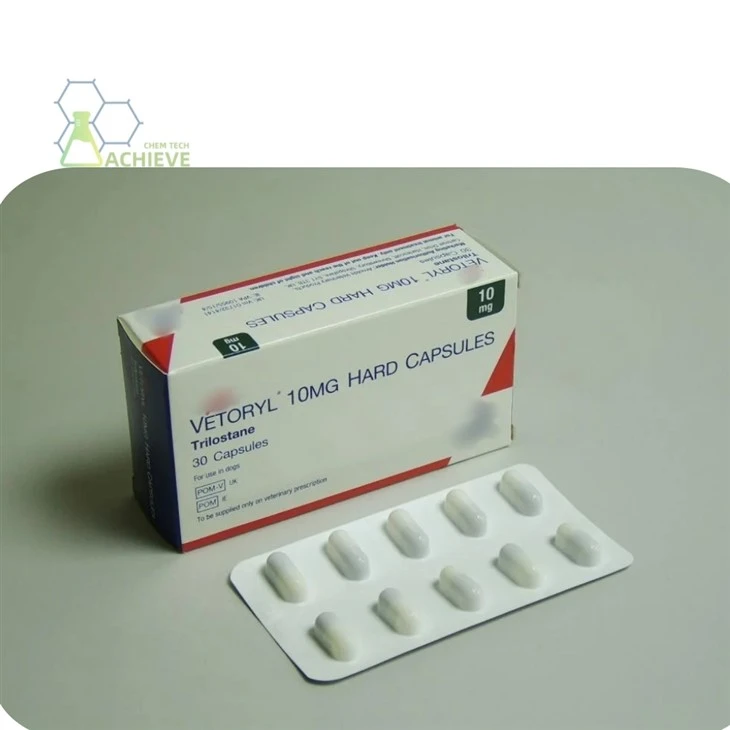
Trilostane Capsule
1.General Specification(in stock)
(1)Injection
Customizable
(2)Tablet
Customizable
(3)API(Pure powder)
PE/Al foil bag/ paper box for Pure powder
HPLC≥99.0%
2.Customization:
We will negotiate individually, OEM/ODM, No brand, for secience researching only.
Internal Code: BM-6-010
How Does Trilostane Capsule Inhibit the 3β-Hydroxysteroid Dehydrogenase Enzyme?
Steroid hormone synthesis is a sequence of chemical reactions and one of the earliest and most important steps is performed by an enzyme known as 3β-hydroxysteroid dehydrogenase, usually abbreviated 3β-HSD. This enzyme is positioned at a critical juncture inside the adrenal cortex and gonadal tissue that transforms precursor molecules into usable steroid hormones. Trilostane capsules work by competitively blocking this enzyme . This is suggestive of the chemical occupying the active site used by 3β-HSD to metabolize its substrate .
The Structural Basis of Enzyme Competition
Trilostane has a very similar chemical structure to the natural substrates normally metabolized by 3β-HSD. They are similar enough that the enzyme attaches to trilostane instead of its typical target molecule. This competition for binding slows the rate at which the enzyme may go through its normal catalytic cycle. Adrenal physiologists have proven that this form of structural mimicry results in reversible blocking rather than destruction of the enzyme, which is critical for flexibility in dosage and for recovery of adrenal function after discontinuation of medication.
Dose-Dependent Enzyme Suppression

Trilostane capsule degree of inhibition relates to dosage and plasma concentration. Smaller doses cause partial inhibition, bigger doses offer a more complete inhibition of the enzyme.

This dose dependent behavior gives the therapist a tool to fine tune adrenal production, not shut it down totally. So following dosing , you check hormone levels . This verifies that the enzyme is inhibited to the therapeutic aim , without the adrenal glands generating too little hormone .
Reversibility and Enzyme Recovery
Trilostane acts on 3β-HSD reversibly, unlike to certain enzyme inhibitors that permanently inactivate their targets. When the chemical is removed from circulation, the enzyme slowly resumes its normal catalytic activity. This feature takes account of the fact that levels of steroid hormones will generally return toward baseline within a predictable period after treatment is stopped.
This reversibility has been taken advantage of by pharmacokinetic research laboratories to establish dose intervals which lead to a steady enzyme inhibition without excessive accumulation of inhibition over time.
Trilostane Capsule and the Conversion of Pregnenolone Into Progesterone
Pregnenolone is the parent compound for practically all of the steroid hormones of the adrenal cortex. 3β-HSD converts pregnenolone to progesterone which the body needs to make cortisol, aldosterone and other downstream hormones. Trilostane capsules inhibit this step in the conversion directly. This is a bottleneck restricting the amount of progesterone accessible for production of other hormones.
Why Pregnenolone Conversion Matters
Pregnenolone itself does not have much direct hormone activity. Biologically it is significant as a precursor for various branching pathways that ultimately lead to cortisol , aldosterone and sex hormones . By delaying the conversion of pregnenolone to progesterone you are decreasing the quantity of substrate available downstream on all pathways. Therefore this single enzymatic step has a disproportionate impact on the full steroidogenic cascade and this explains why targeting it has such far-reaching effects on adrenal hormone synthesis.
Measuring the Bottleneck Effect


Laboratory investigations of samples of adrenal tissue have demonstrated that a reduction in the activity of 3b-HSD leads to buildup of pregnenolone while the concentration of progesterone declines in proportion to the degree of inhibition of the enzyme . The alteration creates a chemical signature that researchers may check for and use to confirm that a capsule of trilostane is performing its job. This pattern is typically detected on blood panels before and after therapy, and is a helpful tool for veterinarians and researchers to evaluate enzymatic suppression without invasive testing.
Clinical Relevance of Reduced Progesterone Availability
Progesterone is an intermediate metabolite in the steroidogenesis of the glucocorticoid and mineralocorticoid pathways.So a deficiency of progesterone will affect the production of both cortisol and aldosterone. It's the twin wallop that makes trilostane distinct from the medications further downstream that just target one kind of hormone. If someone wishes to reduce overall adrenal production rather than targeting one hormone alone, trilostane is a feasible method considering the massive repercussions of this one step conversion.
How Does Trilostane Capsule Interrupt the Adrenal Steroid Synthesis Pathway?
The adrenal cortex is composed of three separate zones that produce three major classes of steroid hormones: mineralocorticoids in the zona glomerulosa, glucocorticoids in the zona fasciculata, and androgens in the zona reticularis. The early enzymatic machinery, including 3β-HSD, is the same in all zones, then diverges into zone-specific pathways. The trilostane capsule interferes with this early common phase so that the action is distributed throughout all three hormone classes and not isolated to one location.
Shared Enzymatic Dependency Across Adrenal Zones
The three adrenal zones produce separate hormones yet they all rely on the conversion of pregnenolone into progesterone as an early common step. Trilostane inhibits this common enzyme . So the effect of trilostane is all across the adrenal cortex , not just one hormone pathway . This is the general process by which trilostane causes quantifiable changes in many hormone panels concurrently, including cortisol, aldosterone, and precursor androgens.
Timing and Sequence of Pathway Disruption
Trilostane interrupts early in the chain of synthesis before it breaks in zone specific branches.

The timing is key , since enzymes farther down the line never get their usual quantity of substrate .

You can foresee the sequence of disruption. First pregnenolone increases. Then progesterone becomes less accessible. Then the synthesis of every hormone that depends on progesterone as a precursor falls. This mechanism has been tracked by researchers and proven to have similar patterns in different models of adrenal tissue.
Comparing Trilostane to Other Steroidogenesis Inhibitors
Steroidogenesis inhibitors may potentially target enzymes later in the pathway, affecting just one class of hormones and leaving the others unaffected. Trilostane works on an early common step, and hence has a larger but more balanced effect across hormone classes.
This distinction is essential for those researchers choosing a chemical based on whether they seek a particular effect of a single hormone or a more general shift in the adrenal hormone balance. The choice is determined on the individual research or clinical question being asked.
Trilostane Capsule and the Changes in Glucocorticoid and Mineralocorticoid Production
Trilostane inhibits the enzymatic activity of two major hormones, cortisol and aldosterone. Glucocorticoids ( cortisol ) - metabolic, blood sugar, and stress response Mineralocorticoids ( aldosterone ) - sodium / potassium balance and fluid retention Trilostane ( in a pill ) limits the availability of precursor molecules required for both kinds of hormones , therefore both will show noticeable alterations .
Glucocorticoid Reduction and Its Downstream Signals
Inhibition of 3β-HSD leads to decreased availability of progesterone, which in turn causes a decrease in the synthesis of 17-hydroxyprogesterone and subsequent precursors of cortisol. This reduction decreases the amounts of circulating cortisol that is sensed by the pituitary gland via feedback signaling involving adrenocorticotropic hormone, usually abbreviated as ACTH. One of the main reasons trilostane is used to help manage adrenal overactivity is to alleviate symptoms associated with the overproduction of glucocorticoids . This is accomplished by lowering the amount of cortisol produced .

Mineralocorticoid Shifts and Electrolyte Monitoring
There is an analogous pathway for the synthesis of aldosterone which also involves progesterone as an intermediate.Since trilostane has a broad effect on the availability of progesterone, the synthesis of aldosterone, as well as cortisol, may decrease.

This makes the monitoring of electrolytes an important part of any trilostane operation since changes in mineralocorticoid synthesis may affect the sodium-potassium balance. In veterinary and research programs, blood panels are routinely conducted regularly to check electrolyte levels and hormone levels.
Balancing Both Hormone Classes During Treatment
Trilostane acts on both glucocorticoid and mineralocorticoid pathways and the therapeutic advantage from cortisol reduction must be weighed against the danger of over-suppression of mineralocorticoids. Most dose regimens are cautious to start and adjusted based on follow up testing.
This allows researchers and doctors to identify the middle ground that resolves glucocorticoid excess without causing mineralocorticoid insufficiency. And it's this balancing act that makes expert aid and thorough monitoring such important parts of any program that incorporates this medicine.
The Relationship Between 3β-HSD Inhibition and Reduced Cortisol Synthesis by Trilostane Capsule
The rationale for the use of trilostane is based on the correlation between 3β-HSD inhibition and suppression of cortisol generation. Better knowledge of this relationship will explain why the drug is dependable in various adrenal conditions and which factors influence the degree of cortisol drop that is achieved.
The Direct Biochemical Link
The manufacture of cortisol involves a series of enzymatic conversions . It passes from pregnenolone to 17-hydroxyprogesterone to make cortisol . This blocks an early stage in the cascade and all later reactions that employ progesterone as a building block will be slowed down accordingly. So the trilostane capsule method offers a direct and demonstrable biochemical link between enzyme suppression and decreased cortisol production, rather than an indirect or hypothetical correlation.
Feedback Loops Involving ACTH

The hypothalamic-pituitary-adrenal (HPA) axis attempts to compensate for the low cortisol levels by releasing more ACTH to stimulate cortisol production.

This feedback loop indicates that the effect of trilostane on cortisol is not just attributable to direct inhibition of enzymes, but also to the compensatory hormonal response of the body. Researchers interested in this connection will often look at ACTH stimulation test results and baseline cortisol levels together to get a complete picture of the feedback system's reaction to extended blockage of the enzyme.
Factors That Influence the Degree of Cortisol Reduction
Individual differences in adrenal gland size, baseline hormone production and metabolic clearance rate all contribute to the degree of cortisol decrease that will be achieved with a given dose of trilostane.
A single universal dose is normally not used, but dosage regimens are adapted individually according to follow-up tests. Weight and absorption characteristics are factors to be taken into account. Such variability highlights the necessity for a stable, well-characterized source of trilostane to ensure consistent potency and predictable biochemical activity from batch to batch.
Conclusion
Trilostane works by blocking an enzyme in the steroid biosynthesis pathway (3-beta hydroxysteroid dehydrogenase). This one site of interference reduces the conversion of pregnenolone to progesterone and the ripple effect of that is an inhibition of the production of cortisol and aldosterone across the adrenal cortex. Thus, the enzyme suppression and hormone reduction are directly correlated, measurable and dose-dependent. It acts as a dependable tool for physicians and scientists to manage adrenal steroid excess. This mechanistic knowledge accounts for the continued interest in the trilostane capsule formulations by the pharmaceutical researchers and producers as a dependable chemical for adrenal-related studies and formulations.
FAQ
1. Does trilostane permanently damage the adrenal gland?
+
-
No. The suppression of 3β-HSD by trilostane is reversible, and enzyme activity usually recovers toward normal as the molecule is eliminated from the body.
2. Why does trilostane affect both cortisol and aldosterone?
+
-
Both hormones have a common precursor molecule in progesterone . Trilostane decreases the availability of progesterone by inhibiting the enzyme that makes it from pregnenolone .
3. How is the effectiveness of trilostane typically monitored?
+
-
Researchers and doctors routinely employ ACTH stimulation tests and electrolyte panels to check that the predicted changes in cortisol and aldosterone levels have occurred following treatment.
Partner With Bloomtechz for Trilostane Capsule Supply
Bloomtechz has over 10 years expertise in synthesis of organic compounds and manufacturing of pharmaceutical intermediates, and has a GMP-certified production facility recognized by US, EU, Japanese and Chinese regulatory agencies. The quality assurance method has a three-layer verification process, which incorporates testing at the factory level, internal QA/QC review, and validation by a third-party authority. This way, each batch meets the requirements stated in the contract documentation. Bloomtechz is an accredited supplier for over two dozen worldwide pharmaceutical and research organizations and offers simple pricing, precise lead times and comprehensive documentation to assist hassle-free customs clearance. If your organization is in need of a trustworthy supplier of trilostane capsules for research, formulation or bulk manufacturing purposes, please reach out to our team at Sales@bloomtechz.com to discuss specifications, quantities and timelines.
References
1. Loar, Ann S. "Adrenocortical Function and Dysfunction in Companion Animals." Journal of Veterinary Internal Medicine, American College of Veterinary Internal Medicine, 2007.
2. Ramsey, Ian K. "Trilostane in Dogs." Veterinary Clinics of North America: Small Animal Practice, Elsevier, 2010.
3. Neiger, Reto, et al. "Trilostane Treatment of 78 Dogs with Pituitary-Dependent Hyperadrenocorticism." Veterinary Record, British Veterinary Association, 2002.
4. Chapman, Phillip S., et al. "Comparison of Trilostane and Mitotane for the Treatment of Pituitary-Dependent Hyperadrenocorticism in Dogs." Journal of the American Veterinary Medical Association, 2004.
5. Wenger, Marion, et al. "Effect of Trilostane on Serum Concentrations of Aldosterone, Cortisol, and Potassium in Dogs with Pituitary-Dependent Hyperadrenocorticism." American Journal of Veterinary Research, 2004.
6. Alenza, D. Perez, et al. "Clinical Endocrinology of the Adrenal Gland in Small Animal Medicine." Textbook of Veterinary Internal Medicine, Saunders Elsevier, 2010.